
Carbon Copy 1981

Directed by
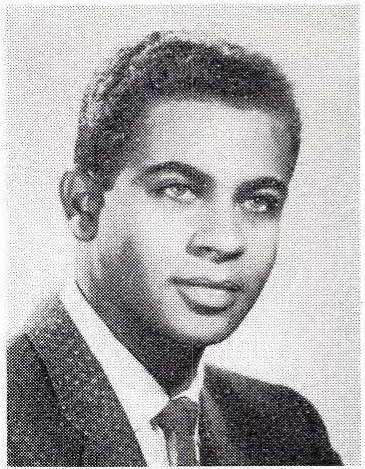
Michael Schultz
Made by

First City Features Ltd.
Carbon Copy Plot Summary
Read the complete plot summary and ending explained for Carbon Copy (1981). From turning points to emotional moments, uncover what really happened and why it matters.
Roger Porter, Denzel Washington, is a 17-year-old African-American boy who turns up in the life of Walter Whitney, a successful businessman living in the exclusive, predominantly white enclave of San Marino, California. Walter Whitney, George Segal, is secretly Jewish and carries the weight of a life split between his ambitions and the quiet compromises of a gated community, where he must beg his wife for intimacy and endure the antics of his outspoken step-daughter Mary Ann. The arrival of Roger shakes the surface of Walter’s carefully curated world and sparks questions about belonging, loyalty, and what it means to be a family.
The boy’s presence is shocking and charged with history: Roger is the product of Walter’s long-ago relationship with Lorraine Porter, a Black woman who is now dead. The only person who appeared to know the truth was Walter’s anti-Semitic, racist father-in-law and boss, Nelson Longhurst, who had once forced Walter to change his surname from Wiesenthal and who had threatened Walter with dismissal when he learned of the relationship. Walter had written Lorraine a letter proposing a pause in their relationship, but Lorraine never replied, and Roger later learns of the letter only after Lorraine’s death, delivered to him by his Aunt Clara. The backstory lays bare the racial and religious tensions that shadow Walter’s life and foreshadow the difficult road ahead.
Despite initial shock and resentment, Walter tries to make amends. He asks Vivian Whitney, Susan Saint James, to let Roger spend the summer with them as a foster son. Vivian agrees, but her relief is short-lived—she quickly regrets the decision once she grasps the full truth of Walter’s past and the complexity of Roger’s presence. The couple’s fragile arrangement is further strained when Nelson Longhurst, Walter’s formidable father-in-law, remains unyielding in his bigoted stance. The family’s finances begin to crumble as Nelson fires Walter and Vivian and Mary Ann’s lives become more entangled with power plays and divisions. With his money tied up in Vivian’s and Mary Ann’s names, Walter finds himself with almost nothing left but the coins in his wallet, and a network of professionals who have been pressured to cut him off.
Pushed to the edge, Walter takes a job shoveling horse manure at a stable, while Roger helps him secure a cheap furnished apartment. To make ends meet, Roger hocks Walter’s golf clubs to fund a move into a rundown apartment in Watts, Los Angeles. The plan is simple but fragile: Roger wants Walter to land steady work, and Walter promises not to throw in the towel on their bond. Yet the couple’s fragile survival is tested when a policeman pursues Roger on suspicion of wrongdoing, prompting Walter to stage a diversion and end up in custody himself—taking the fall to protect his son. In jail, Roger visits Walter and speaks with a quiet, earnest honesty: he never sought material support; he simply wanted to be accepted as Walter’s son.
The turning point comes with Walter’s return to San Marino, his job and his family momentarily restored, though Nelson’s influence still looms large. Walter seeks another chance to reconnect with Roger, and Bob Garvey, Paul Winfield, who becomes his counsel, reveals a crucial truth: Roger did not abandon his ambitions—he has graduated high school at 16 and is a pre-med student at Northwestern University. This revelation reframes Walter’s decision to step back into Roger’s life on a more hopeful footing. Walter and Roger are brought together again beside the road where Roger works on his car, and Walter announces his intent to live nearby, pursuing employment so he can remain close to Roger.
In a defining moment of belonging, Walter lets Roger call him “dad,” and, moved by the possibility of a real family, he resolves to become a present, active presence in Roger’s life. The film closes on a note of reconciliation and renewed purpose as Walter heads toward Aunt Clara’s home, ready to be a true father and partner to the young man he has grown to respect and love. The closing image—Walter riding alongside Roger in his jalopy—symbolizes a future where differences are acknowledged, and a fragile family is rebuilt on a foundation of shared effort and unconditional support.
Carbon Copy Timeline
Follow the complete movie timeline of Carbon Copy (1981) with every major event in chronological order. Great for understanding complex plots and story progression.
Roger reveals he is Walter's son
Roger shows up at Walter's office and reveals he is the son Walter had with Lorraine Porter. The revelation comes with the knowledge of Lorraine's death and the secret Walter kept from his in laws. Walter is unsettled but begins to consider how Roger could fit into his life.
Walter offers Roger a summer foster arrangement
Walter tells Vivian he wants Roger to live with them for the summer as a foster son. He hopes to repair their strained family dynamic and give Roger a chance at a better life. Vivian agrees at first, but her acceptance is shadowed by the truth behind their relationship.
Vivian fires Walter after learning the truth
Vivian learns the full truth about Roger and angrily pushes Walter away. Nelson fires Walter for refusing to disown his son. The family fracture leaves Walter facing financial and social ruin.
Walter and Roger move to a sleazy motel; jobless and cut off
Walter and Roger check into a sleazy motel after the fallout. Walter cannot land a corporate job or obtain a loan because Nelson has blacklisted him. The two scramble to survive with slim prospects.
Roger finances their move by hocking Walter's clubs; Walter takes a stable job
Roger hocks Walter's golf clubs to fund their move into a rundown Watts apartment. Walter then takes a job shoveling horse manure at a stable to make ends meet. They begin adjusting to life in a harsh neighborhood while clinging to hope.
Vivian and Nelson visit; plan to care for Roger
Vivian and Nelson visit the new apartment and pretend to care, but their main aim is to ease Walter out of Roger's life. They plan to look after Roger so Walter can detach without guilt. The confrontation underscores the couple's fragile union.
A cop chases Roger; Walter is arrested protecting him
A police officer chases Roger on suspicion of trouble, and Walter creates a diversion to shield him. Walter is arrested in Roger's place. The act deepens Roger's gratitude and solidifies his view of Walter as family.
Roger visits Walter in jail; asks for acceptance as his son
Roger visits Walter in jail and tells him he never wanted material things, just for Walter to accept him as his son. The moment marks a turning point in their relationship and in Walter's understanding of fatherhood.
Return to San Marino; life stabilizes but Nelson stays distant
Back in San Marino, Walter's career and family life begin to stabilize, yet Nelson remains unwilling to help. Walter walks out on Nelson, reaffirming his commitment to Roger. The sense of a hard-won reconciliation grows.
Garvey reveals Roger's graduation and plans
Bob Garvey reveals that Roger did not drop out but graduated high school at 16 and is now a pre-med student at Northwestern University. The news reframes Walter's priorities and fuels his determination to be a real father.
Roadside reunion; Walter chooses to be near Roger
Garvey leads Walter to the side of the road where Roger is working on his car. Walter tells him he plans to work for an old acquaintance so he can live nearby and finally asks Roger to call him dad. The moment seals the sense that they are building a real family.
Decision to join Roger at Aunt Clara's home
Walter decides to become a full member of Roger's life and to stay with Aunt Clara. He moves toward a stable family life rather than pursuing a separate existence. The plan signals a true reconciliation and commitment.
Ending: Walter rides with Roger in his car
Walter proudly rides along in Roger's jalopy, basking in the sense that he is finally Roger's dad. The film closes on their renewed bond and a hopeful future together.
Carbon Copy Characters
Explore all characters from Carbon Copy (1981). Get detailed profiles with their roles, arcs, and key relationships explained.
Walter Whitney (George Segal)
George Segal’s Walter is a successful, secretly Jewish businessman who tries to balance loyalty to his family with the pressures of a racist, status-conscious society. He displays stubborn resilience, a willingness to change, and a deep desire to provide Roger with a real father. His journey is about choosing sincerity and connection over social ease.
Roger Porter (Denzel Washington)
A 17-year-old Black teen who is the long-lost son of Walter. Roger is resourceful, determined, and hopeful for acceptance and a place to belong. He pushes Walter toward a more honest, committed relationship and demonstrates maturity beyond his years.
Vivian Whitney (Susan Saint James)
Walter’s wife, a socialite who clings to appearances and status. She is initially resistant to Roger, contributing to the marital strain, but eventually faces the consequences of her choices and the possibility of reconciliation.
Nelson Longhurst (Jack Warden)
Walter’s anti-Semitic, racist father-in-law and boss who wields power to fire Walter and blacklist him. He embodies the entrenched prejudice and privilege that undermine the family’s chance at union.
Bob Garvey (Paul Winfield)
An African-American lawyer who helps Walter navigate his legal and financial crisis. Garvey provides pragmatic support and reveals how money and assets are tangled through the divorce, playing a key role in Walter’s plan to rebuild his life.
Mary Ann (Vicky Dawson)
Vivian’s spirited step-daughter whose presence adds tension to the domestic dynamic and exposes the conflict between youthful swagger and the reality of a fractured family.
Carbon Copy Settings
Learn where and when Carbon Copy (1981) takes place. Explore the film’s settings, era, and how they shape the narrative.
Location
San Marino, California, Watts, Los Angeles
The film largely unfolds in San Marino, an upscale suburb in Los Angeles County known for its private gates and pristine estates. It contrasts with the nearby Watts neighborhood where Walter and Roger later relocate, highlighting the stark wealth divide. The setting uses the tension between exclusive suburbia and urban hardship to frame the characters’ struggles with race, class, and belonging.
Carbon Copy Themes
Discover the main themes in Carbon Copy (1981). Analyze the deeper meanings, emotional layers, and social commentary behind the film.
🤝
Family Acceptance
A central thread is Walter’s desire to embrace Roger as his son despite social pressures and Vivian’s initial resistance. The story tracks how forgiveness, patience, and acts of loyalty gradually soften long-held grudges. It highlights the emotional cost of withheld acceptance and the redemptive power of choosing family over status.
🧭
Identity & Belonging
Walter’s hidden Jewish identity and Roger’s Black heritage juxtapose two generations navigating cultural expectations in a predominantly white, affluent milieu. The film explores what it means to belong to a family that transcends bloodlines and social labels. Both men learn that true belonging comes from mutual respect, not from appearances or money.
⚖️
Power & Prejudice
Nelson and the social circle wield influence that can ruin careers and futures. The plot shows how wealth, connections, and prejudice shape choices and limit opportunity. As Walter fights back, the story critiques systemic bias and questions what justice looks like when people are judged by status rather than character.

Coming soon on iOS and Android
The Plot Explained Mobile App
From blockbusters to hidden gems — dive into movie stories anytime, anywhere. Save your favorites, discover plots faster, and never miss a twist again.
Sign up to be the first to know when we launch. Your email stays private — always.
Explore the mobile appCarbon Copy Spoiler-Free Summary
Discover the spoiler-free summary of Carbon Copy (1981). Get a concise overview without any spoilers.
In the sun‑drenched, meticulously manicured streets of San Marino, California, an exclusive enclave of white affluence, Walter Whitney has built a life that looks as composed as the perfectly trimmed hedges surrounding his home. A driven corporate executive with a hidden Jewish heritage, he moves through a world of boardrooms, country clubs, and the quiet expectations of a gated community that prizes conformity above all else. Married to the polished Vivian Whitney and sharing a house with outspoken step‑daughter Mary Ann, Walter’s daily rhythm is a carefully orchestrated performance of success and social propriety.
The delicate balance shatters when Roger Porter, a sharp‑witted seventeen‑year‑old from a working‑class Black neighborhood, appears on Walter’s doorstep, claiming him as his father. The revelation of a long‑ago romance with Lorraine Porter—a relationship that was never meant to survive the era’s racial taboos—forces Walter to confront a past he has dutifully buried. The presence of a teenage son eager to be accepted by the ultra‑white, affluent world of San Marino introduces a collision of cultures that the community isn’t prepared to ignore.
Against a backdrop of polished facades and understated tension, the film unfolds as a satirical yet heartfelt examination of identity, privilege, and the uneasy alliances that form when old prejudices are exposed. Walter’s father‑in‑law, Nelson Longhurst, looms as a reminder of the pressures that once compelled a name change and career sacrifice, embodying the generational expectations that still haunt the family. As Roger navigates this new environment, his desire for belonging becomes a catalyst that pushes each character to reassess the assumptions that have defined their lives.
The tone balances biting social commentary with moments of genuine humor, allowing the audience to sense both the absurdity and the poignancy of a family forced to redefine itself. In a world where appearances are everything, Carbon Copy invites viewers to watch the fragile dance between legacy and change, leaving the true depth of its characters—and the community’s capacity for transformation—hanging in the air, just out of reach.
Movies with Similar Twists and Themes
Uncover films that echo the narrative beats, emotional arcs, or dramatic twists of the one you're exploring. These recommendations are handpicked based on story depth, thematic resonance, and spoiler-worthy moments — perfect for fans who crave more of the same intrigue.




Featured on this page

What's After the Movie?
Not sure whether to stay after the credits? Find out!
Check out our other apps:

SAT Sphere
Build confidence for the Digital SAT.

Mori Atlas
Discover wild places worth protecting.

Luntero
Search smarter for a home in Amsterdam.

Plot Explained
Unravel movie endings and hidden clues.

Pokechamp
Dive into Pokémon data and battle logic.

Driving Theory
Get ready for your European theory test.

Movie Dust
Plan your next cinema trip with ease.

Musemap
Find art and culture as you travel.

Selkobase
Compare credentials before committing.

Local Manual
Turn an unfamiliar country into practical next steps.

Lernavi
Compare school systems before your next move.

GymRoam
Find a workout stop wherever your plans take you.
Explore Our Movie Platform
New Movie Releases (2026)
Famous Movie Actors
Top Film Production Studios
Movie Plot Summaries & Endings
Major Movie Awards & Winners
Best Concert Films & Music Documentaries
Movie Collections and Curated Lists
© 2026 What's After the Movie. All rights reserved.
Privacy Policy