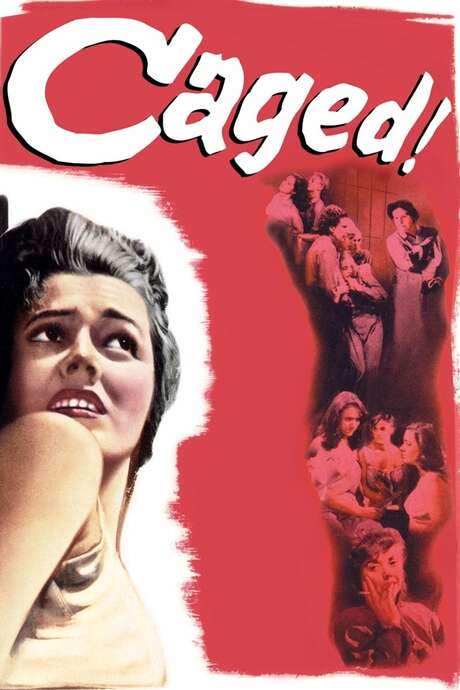
What Is Caged About?
The premise of Caged in 276 words, with nothing given away. The full story follows below.
In Marie Allen’s world, a single misstep has turned a bright, newly‑wed future into the unforgiving corridors of a women’s correctional facility. The film opens on the stark reality of a prison that feels more like a closed ecosystem than a place of rehabilitation, where routine blends with an ever‑present undercurrent of fear. The stark architecture, the clanging of metal doors, and the muted murmurs of inmates create an atmosphere that is both claustrophobic and oddly intimate, hinting at a society that thrives on hidden hierarchies and unspoken codes.
At the heart of this environment stands the Isolation Matron, a figure whose authority is as rigid as the iron bars that surround her. Her presence casts a long shadow over every interaction, embodying the institutional power that governs the lives of the women inside. The matron’s strict oversight and the relentless enforcement of discipline set the tone for the daily grind that Marie must learn to navigate, while also spotlighting the systemic tension between control and humanity.
Within these walls, Marie discovers that survival hinges on more than just endurance; it demands a careful balance of resilience, adaptability, and the ability to read the subtle dynamics among the incarcerated community. The prison is portrayed as a micro‑world where alliances form, rivalries simmer, and the line between vulnerability and strength is constantly redrawn. As Marie adjusts to the harsh routines and learns the unspoken rules that dictate life behind bars, the film immerses the audience in a gritty, unflinching portrait of confinement—one that asks what it means to retain hope, identity, and agency when every day is a negotiation with an institution designed to strip them away.
What Happens in Caged?
The complete story of Caged, from the first scene to the last, in 707 words (about 3 minutes). Spoilers throughout. Names in the text link to 3 cast member pages.
Spoilers ahead
Marie Allen is a 19-year-old newlywed who ends up in prison after a failed armed robbery with her husband Tom, who is killed. During her first prison physical examination, she discovers she is two months pregnant. The story unfolds under the tight, harsh control of the Isolation Matron, a stern figure whose authority casts a shadow over everything that happens behind the walls of the women’s ward. Marie’s arrival drops her into a world defined by routine cruelty, clipped smiles, and unspoken rules that demand obedience and resilience in equal measure.
Inside the facility, Marie struggles to adapt to the monotony and the cutthroat atmosphere. She encounters Kitty Stark, a calculating shoplifter with a dangerous edge, who lectures Marie on toughness and survival and even hints at teaching her to steal once she’s released. Kitty’s hard-edged worldview is a stark, unsettling lesson in how quickly power shifts in the prison social structure, and it foreshadows the volatile dynamics that will pull Marie deeper into a network of crime and fear.
As months pass, the possibility of parole becomes a distant beacon. Marie watches others receive parole only to remain jailed because they cannot secure work for themselves—parole officers fail to deliver on the promises of freedom, and one hopeless prisoner even takes her own life. The system that promises liberation instead tightens its grip, slowly eroding Marie’s fragile hope for an easy exit. The birth of Marie’s child marks a bright, fragile moment in the midst of despair: a healthy but premature baby arrives, and Marie plans to place temporary custody with her mother so she can reclaim the child after release. Yet her stepfather refuses to allow the baby into his home, and when parole is denied, Marie’s attempt at a half-hearted escape is not met with punishment so much as a heavy-handed reminder of the state’s power. Ultimately, she must surrender her newborn to adoption, a crushing concession in a system that treats motherhood as a slippery liability.
The arrival of the infamous Elvira Powell intensifies the prison’s power struggle. Elvira’s presence triggers a fierce rivalry with Kitty, and she manipulates the situation by bribing the matron to place Kitty in solitary confinement, where she is beaten. A seemingly small catalyst—the discovery of a kitten in the prison yard—spirals into a riot when Marie tries to claim the kitten as a pet, and Harper moves to take it away. The chaos ends with the kitten’s accidental death and Marie being punished for resisting the matron’s authority. The incident exemplifies how everyday objects, like a tiny animal, can ignite a larger front in a prison economy built on fear, leverage, and punitive control.
Before leading Marie to solitary confinement, Harper shaves her head, a stark, symbolic stripping of innocence that intensifies the clash with Ruth Benton, the reform-minded superintendent who seeks a more humane approach. The political tension surrounding Harper—who is a political appointee—puts Benton in a difficult position. When Benton threatens a public hearing over the latest abuses, the authorities defuse the crisis by dropping the resignation demand, and the power balance within the prison remains unsettled but intact for the moment.
Kitty eventually returns from solitary after a month, visibly shaken and mentally fragile. Harper’s continued harassment in the cafeteria pushes Kitty over the edge, and she fatally stabs Harper while the inmates look on, doing nothing to intervene. The brutal act crystallizes the grim reality of the prison’s social order and further cements Marie’s hardened views, as she quietly helps to shape the outcomes around her in a world where loyalties are fluid and survival often overrides mercy.
With parole again within reach, Marie claims to have secured a job on the outside, but the supposed employment is merely a ruse designed to win her release so she can join Elvira’s shoplifting gang. The film closes on a bleak note as Marie steps out of the institution a cynical, unscrupulous woman, leaving the door open for a life already written by the people she has encountered inside. A final, understated exchange leaves Ruth Benton reflecting on Marie’s file, a stark reminder that in this system, some destinies never truly end—they simply stay active, waiting for a return:
Keep it active. She’ll be back.
Caged Timeline: Every Key Event in Order
12 key events in the order they happen, from “Marie's arrest and pregnancy reveal” to “Paroled again with a dangerous plan”. 12 events name a place, across 9 locations.
- 1
Marie's arrest and pregnancy reveal
Marie Allen is arrested following a botched armed robbery that kills her husband. During the prison intake physical, she learns she is two months pregnant, setting the stage for a difficult journey ahead. This discovery binds her fate to the prison system from the start.
When:immediately after arrest Where:Prison intake
- 2
First days inside: meeting Kitty and the hard edge of prison life
Marie struggles with the monotony and hostility of the women's prison. She befriends Kitty Stark, a murderous shoplifter, who warns her that toughness is essential for survival. Kitty promises Marie work when released, sowing a pragmatic but dangerous alliance.
When:early days Where:Women's prison
- 3
Parole hopes fade as harsh realities set in
Marie learns she might be paroled in ten months, but many inmates are released only to be kept jailed due to lack of employment for parolees. She witnesses a prisoner who hangs herself after being denied release, a grim reminder of the system's limits. The hope of an early exit continues to dim.
When:first months Where:Prison
- 4
Birth in captivity: Marie gives birth to her baby
Marie delivers a healthy but premature baby despite the brutal conditions and the sadistic matron's control. She plans to grant temporary custody to her mother, hoping to reclaim the child after release, but her stepfather blocks the baby's homecoming. Parole remains denied, sealing the baby's fate inside the jail.
When:late pregnancy / birth Where:Prison maternity ward
- 5
Parole denied; the attempt to escape and the forced surrender
With parole denied, Marie makes a half-hearted escape attempt, but she is not punished for the attempt itself. Instead, authorities force her to surrender her baby for adoption. The moment foreshadows Marie's growing pragmatism and loss of maternal ties.
When:post-birth Where:Prison
- 6
Elvira Powell's arrival, sparking a rivalry with Kitty
Notorious criminal Elvira Powell arrives and immediately clashes with Kitty. Elvira bribes matron Harper to place Kitty in solitary confinement, where she is beaten. The power struggle inside the prison begins to intensify as alliances shift.
When:after birth Where:Prison
- 7
The kitten incident and the riot
A kitten in the prison yard becomes a flashpoint as Marie tries to adopt it as a pet and Harper moves to seize it. This triggers a full-blown riot in the yard, and the kitten is accidentally killed during the chaos. Marie is punished for fighting with Harper.
When:during riot Where:Prison yard
- 8
Shaved head and the political fallout
Before taking Marie to solitary confinement, Harper shaves her head, symbolically stripping away her innocence. The act deepens the rift with reformist superintendent Ruth Benton, who resists Harper's authority. The political clash comes to a head as the police commissioner refuses to fire Harper.
When:before solitary confinement Where:Prison isolation area / administrative offices
- 9
Benton's threat of public hearing and the resignation
Benton pushes for transparency, threatening a public hearing over the harsh treatment. The commissioner drops the matter, choosing to protect Harper's position for political reasons. The standoff underscores the fraught politics of the prison's leadership.
When:aftermath of shaving incident Where:Prison administration
- 10
Kitty's release and mental unraveling
After a month in solitary confinement, Kitty rejoins the inmates but is visibly distraught and unstable. The isolation has not tamed her, and the prison environment continues to erode her sanity. The dynamics between Kitty and Harper heat up again.
When:one month after solitary Where:Prison
- 11
The fatal stabbing of Harper
Harper is stabbed to death by Kitty in the prison cafeteria while inmates watch and do nothing. Marie does not merely stand by; she openly encourages Kitty, showing how hardened she has become. The murder marks a chilling turning point in the jail's power dynamics.
When:during incident in cafeteria Where:Prison cafeteria
- 12
Paroled again with a dangerous plan
Marie is deemed eligible for parole once more, claiming to have secured a job outside. The job, however, is a ruse to join Elvira's shoplifting gang, signaling her moral descent. Upon leaving, an office assistant asks Ruth Benton what to do with Marie's file, and Benton replies that it should stay active—She'll be back.
When:parole decision Where:Prison / parole processing
Who Are the Main Characters in Caged?
5 characters, among them Marie Allen (Eleanor Parker), Kitty Stark and Evelyn Harper: who each one is and the part they play in the story. Every profile links to the actor’s page.
-

Marie Allen (Eleanor Parker)
Played by Eleanor Parker
A 19-year-old newlywed who discovers she is two months pregnant during the initial prison exam. She enters the women's penitentiary facing a harsh, cutthroat social order and confusing parole rules. Marie gradually hardens, trading her innocence for pragmatism as she witnesses the system's brutality and the rise of criminal influences inside.
- 🧭 Inmate
- 👶 Mother
- KS
Kitty Stark
Played by Betty Garde
A murderous shoplifter and rival inmate who pushes Marie toward toughness. Kitty embodies a ruthless streak that thrives in the prison's hierarchy, and her presence deepens the conflict with Marie and the guards. Her arc culminates in a brutal confrontation that leaves her mentally unmoored and the prison shaken.
- 🧭 Inmate
- 💥 Antagonist
- EH
Evelyn Harper
Played by Hope Emerson
The sadistic prison matron who rules with a mix of fear and ritualized cruelty. She shaves Marie's head and uses her authority to suppress dissent, clashing with reformist Ruth Benton. Her power is political, and the police commissioner refuses to fire her, forcing Benton to resign instead.
- 🔒 Matron
- 💢 Abuser
-

Ruth Benton
Played by Agnes Moorehead
A reformist prison superintendent who clashes with Harper, aiming to impose public accountability. She advocates hearings and transparency, but politics and authority hinder change. Her tension with Harper drives the moral debates about rehabilitation versus punishment.
- ⚖️ Reformist
- 🕊️ Integrity
-

Elvira Powell
Played by Lee Patrick
A notorious criminal whose arrival triggers a ruthless power play with Kitty. She bribes Harper to gain better treatment and helps fuel a riot when the inmates discover a kitten is threatened. Her presence destabilizes the prison's fragile order and accelerates Marie's hardening.
- 🧭 Inmate
- 🧨 Instigator
Where and When Is Caged Set?
Caged is set in Women's Prison. Here is why the place matters to the story.
Where
Women's Prison
Set inside a women's prison, the story unfolds across sterile corridors, crowded cells, and a rigid social order. The environment is ruled by a punitive matron and a brutal hierarchy. Prison yards and solitary confinement spaces become the stage for power struggles and desperate acts.
- 🔒 Prison
- 🎭 Drama
What Are the Themes of Caged?
3 ideas the story keeps returning to, among them Justice & Control, Motherhood and Corruption & Survival.
-
01
Justice & Control
Prison acts as a stage where authority asserts control through punishment and procedure. The matron Evelyn Harper embodies the coercive power that governs inmate lives, while parole is a fragile carrot used to maintain order. The system prioritizes order over rehabilitation, often leaving vulnerable inmates trapped between rules and fear. The tension between Benton's reformist ideals and Harper's hardline tactics exposes how justice can be co-opted to maintain domination.
-
02
Motherhood
Marie’s pregnancy tests the limits of institutional life, forcing her to confront motherhood under surveillance. The prospect of custody and adoption is a constant undercurrent, shaping her choices and loyalties. The prison becomes a site where vulnerability can lead to both strength and exploitation. The film uses this tension to question who gets to define family within a punitive system.
-
03
Corruption & Survival
Survival requires adaptability; Marie learns to navigate a world where crime and punishment intersect. Kitty's brutal ascendancy and the riot over a shared kitten illuminate how fear and power can warp moral judgment. As Marie becomes more cynical, she allies with criminals to secure safety and freedom, blurring lines between victim and participant. The ending implies that the system feeds the very cycles it pretends to control.
What Kind of Film Is Caged?
Bleak in tone, with steady pacing and a straightforward story, going by the plot summary.
- Tone
- Bleak
- Pacing
- Steady
- Story
- Straightforward
- Intensity
- High
- Ending
- Bleak
A relentlessly bleak and brutal descent into the soul-crushing despair of a women's prison, charting the systematic destruction of a young woman's hope and her ultimate transformation into a cynical criminal.
- oppressive
- claustrophobic
- hopeless
- brutal
- cynical
- anxious
- prison system
- corruption
- institutional cruelty
- loss of innocence
Content notes: suicide, animal death, solitary confinement, sadistic punishment, forced adoption, mental breakdown.
Quiz
How well do you remember Caged? Test yourself on the story.
Where to Watch Caged
Stream it on fuboTV and Plex, or rent or buy it from Amazon Video and Apple TV Store. US availability and prices from JustWatch.
 fuboTV
  Plex
Plex  Plex Channel
  Tubi TV




Streaming availability in the US, powered by