
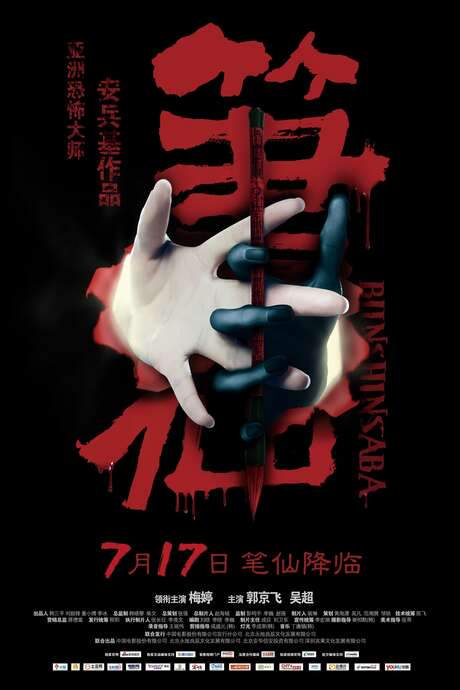
Bunshinsaba 2012

Directed by

Ahn Byeong-ki
Made by

China Film Group Corporation
Bunshinsaba Plot Summary
Read the complete plot summary and ending explained for Bunshinsaba (2012). From turning points to emotional moments, uncover what really happened and why it matters.
Xiao Ai, Mei Ting, is a struggling novelist whose horror manuscript has just been rejected by her publisher. When the publisher informs her that her husband, Qi Kun, Wu Chao, who was imprisoned on charges of domestic abuse, has been released, she decides to pack up and move with her asthmatic son, Xiao Xin, Zhu Jiangdi, to a remote mansion owned by her friend and Xiao Xin’s doctor, Yinan, Guo Jingfei. The new surroundings bring a tense quiet to their lives as they settle into the old house, where every creak seems to carry a memory and every shadow hints at a hidden past.
In the mansion, Xiao Ai discovers cut-out photos of a girl and her mother tucked away inside a wardrobe, and Xiao Xin finds a rag doll lying outside with a curious fondness for it. From the moment the doll appears, a chilling sense of a presence lingers, and the girl associated with the doll begins to terrorize Xiao Ai, while Xiao Xin behaves oddly, insisting that the girl is afraid of her abusive mother. The mood grows increasingly uneasy as Xiao Ai tries to write, only to find a story forming on her laptop that updates day after day, mirroring the tale Xiao Xin narrates: a girl who is harmed by her mother after her father leaves. The convergence of the supernatural with the personal history of the family deepens the sense of dread, as if the mansion itself is whispering secrets that refuse to stay buried.
Despite numerous attempts to dispose of the doll, it stubbornly reappears and returns to Xiao Xin’s possession, as if drawn by an unseen thread. The hauntings escalate from eerie to violent, and Xiao Ai’s paranoia grows alongside Xiao Xin’s insistence that the girl and her mother exist in some form. When Xiao Xin goes missing, Yinan calls in authorities to search the mansion, and Xiao Ai learns that the previous occupants were a girl and her mother who once lived there— the mother killed her daughter and then herself when a husband left. Rumors circulate that the girl survived and was taken to an orphanage, a detail that unsettles Xiao Ai even further as she faces the mystery of her own past.
Qi Kun arrives at the mansion in a bid to uncover Xiao Ai’s whereabouts, revealing that he has researched her background and learned she was raised in an orphanage and diagnosed with amnesia and asthma. A car crash on the way to the hospital injures Xiao Ai, and she is brought back to the mansion by Yinan and Qi Kun, who vow to protect her while the search for Xiao Xin continues. The drive back exposes more of the tangled history, and Xiao Ai presses on toward the truth she has avoided for so long.
Back at the mansion, Xiao Ai uncovers Qi Kun’s research documents, and a devastating truth emerges: the girl who haunts her is, in fact, a younger version of herself, and it is she who had harmed Xiao Xin in childhood—a consequence of her own mother’s abuse. The amnesia that clouded her memory had misled her to pin the blame on Qi Kun, a man who only ever wanted to protect his son. The revelation forces a confrontation with her past; she recognizes that she unknowingly wrote the self-updating story on her laptop because the memories were fractured and resurfacing. She is drawn to a secret room behind the wardrobe where her mother hanged herself years ago, and her younger self guides her to stay long enough to locate Xiao Xin. After saving him, she attempts to escape, but the mother’s spirit nearly suffocates her until she finally calls her mother “mother” for the first time, a moment that breaks the cycle and makes the haunting recede.
Months pass, and Xiao Ai remains in the mansion, choosing to build a life there. She delivers a quiet monologue about how her mother and son taught her to understand and forgive—an understanding that allows her to forgive herself as well. In a final, haunting image, a younger Xiao Ai walks toward the wardrobe, where she is again drawn into the room by an unseen force, hinting that the past may still reach forward to claim her, even as she tries to move forward.
Bunshinsaba Timeline
Follow the complete movie timeline of Bunshinsaba (2012) with every major event in chronological order. Great for understanding complex plots and story progression.
Move to the remote mansion
Xiao Ai receives news that Qi Kun has been released and decides to flee to safety with her asthmatic son, Xiao Xin. They move to a remote mansion owned by Xiao Ai's friend and doctor, Yinan. The move marks a new start, but the shadows of the past follow them.
Discovery of photos and the doll
Xiao Ai discovers cut-out photos of a girl and her mother inside a wardrobe, hinting at the mansion's dark history. Xiao Xin finds a rag doll outside the mansion and takes to it instantly. The two discoveries set the stage for the haunting that follows.
The haunting begins
Xiao Ai senses the doll's presence and the girl seems to haunt her, while Xiao Xin claims the girl fears his abusive mother. The tension grows as the supernatural activity targets Xiao Ai's psyche. The house feels watched, and Xiao Ai's paranoia deepens.
Self-writing story appears
While trying to draft a new chapter, Xiao Ai finds a story appearing on her laptop without her input, updating every day. The tale mirrors Xiao Xin's account of a girl abused by her mother after her father left. The coincidence deepens the sense that the mansion knows their secrets.
Doll proves indestructible
Despite multiple attempts to dispose of the doll, it keeps materializing back in Xiao Xin's possession. The objects at the mansion seem to obey a will separate from the living. The haunting gains momentum as the doll reappears where it was supposedly discarded.
Xiao Xin disappears
Violent hauntings escalate and Xiao Ai grows more paranoid about her son’s safety. Xiao Xin suddenly goes missing, sparking a frantic search and fear that the mansion has claimed him. The mystery ties the supernatural events to their family’s past.
The search begins
Yinan calls in authorities to scour the mansion and its environs for Xiao Xin. The family’s desperation grows as no clues—and no Xiao Xin—surface. The investigation hints at a deeper link between the house and Xiao Ai’s memories.
Past occupants’ history revealed
Xiao Ai learns that the previous occupants were a girl and her mother, who killed themselves after the husband left. Rumors say the girl survived and was raised in an orphanage. The mansion’s history eerily mirrors Xiao Ai’s own unexplained amnesia.
Confrontation with Qi Kun
Qi Kun arrives at the mansion, pressuring Xiao Ai to reveal Xiao Xin’s whereabouts. He reveals he researched her background, learning she was raised in an orphanage and diagnosed with amnesia and asthma. Xiao Ai’s past starts to collide with the present as old suspicions resurface.
Car crash and hospital
Xiao Ai sustains a head injury and is taken toward the hospital by Yinan and Qi Kun, but a car crash forces them to return to the mansion. The accident blurs the line between danger and salvation, underscoring the fragility of everyone’s safety. Xiao Ai resolves to confront the mansion’s secrets once more.
Revelation of the younger self
Back at the mansion, Xiao Ai finds Qi Kun’s research documents that reveal the haunting’s true target: Xiao Ai herself as a younger girl. It becomes clear that she, not Qi Kun, is the abuser of Xiao Xin, and her amnesia has hidden this truth. She realizes she unwittingly wrote the story on her laptop through the mind of her younger self.
Secret room and pact
Her younger self guides Xiao Ai to a secret room behind the wardrobe where her mother hanged herself years ago. Xiao Ai agrees to stay at the mansion in exchange for learning Xiao Xin’s location. The deal marks a surrender to the past in hopes of saving her son.
Rescue and near-break with the spirit
Xiao Ai rescues Xiao Xin from danger and tries to escape the mansion. She is nearly strangled by her mother’s spirit until she finally addresses her as ‘mother,’ which makes the spirit vanish. This moment signifies a fragile reconciliation with the memories that haunted both mother and child.
Several months later
Xiao Ai has moved to the mansion permanently and reflects in a monologue on how her mother and son taught her to understand family. She speaks of forgiveness and the healing that comes from accepting one’s past. The ending implies a fragile peace, even as the younger version of Xiao Ai remains trapped in the wardrobe.
Cycle continues
A younger Xiao Ai is seen walking toward the wardrobe, where she is forcibly taken by her mother inside. The final shot implies the haunting endures, with the cycle of abuse echoing through generations. The mansion remains a trap that continues to preserve their torment.
Bunshinsaba Characters
Explore all characters from Bunshinsaba (2012). Get detailed profiles with their roles, arcs, and key relationships explained.
Xiao Ai (Mei Ting)
A struggling novelist whose publisher rejects her work. She relocates to the remote mansion with her asthmatic son after learning her husband Qi Kun is released from prison. As memories surface and the story she writes mirrors the past, she must confront her own role in the family’s trauma and the amnesia that clouds her memory.
Xiao Xin (Zhu Jiangdi)
Xiao Ai's asthmatic son who becomes fascinated with a rag doll and claims a girl in the mansion is afraid of her abusive mother. His behavior grows unsettled as the haunting intensifies, and he vanishes at one point, prompting a desperate search that reveals deeper truths about his mother's past. His bond with the doll hints at a shared trauma crossing generations.
Qi Kun (Wu Chao)
Xiao Ai's husband, recently released from prison on domestic abuse charges. He barges into the mansion seeking his wife and son, driven by a desire to control and uncover the truth about Xiao Ai's past. His presence intensifies the danger and complicates the fight for truth and safety.
Yinan (Guo Jingfei)
Xiao Xin's doctor and the friend who owns the mansion. He provides care for Xiao Ai's son, facilitates the investigation into the past, and ultimately helps uncover the truth about the younger Xiao Ai and the family's history.
Bunshinsaba Settings
Learn where and when Bunshinsaba (2012) takes place. Explore the film’s settings, era, and how they shape the narrative.
Location
Remote Mansion
The remote mansion serves as the claustrophobic setting where Xiao Ai seeks refuge with her son. Its long corridors, hidden wardrobe, and a secret room become catalysts for memory and fear. The mansion's isolation mirrors Xiao Ai's psychological distance from her past and the truth about her family. The house's atmosphere drives the tension between the living and the traumatic memories that haunt them.
Bunshinsaba Themes
Discover the main themes in Bunshinsaba (2012). Analyze the deeper meanings, emotional layers, and social commentary behind the film.
🗝️
Family secrets
Hidden histories surface as the mansion reveals the truth about Xiao Ai's mother, her own abuse, and the origins of the haunting. The discovery of old letters, documents, and the younger self underscores how secrets shape present actions. The plot shows how denial and memory loss can shield or destroy a family. The doll and the wardrobe become symbols of these concealed pasts.
🧠
Memory and identity
Xiao Ai's amnesia blurs who she is and what she did, while a self written into her laptop guides the terrifying events. The younger Xiao Ai's presence forces a confrontation with a past she cannot fully remember. The narrative folds memory into reality, with the haunting acting as a mirror of internal conflict. Reclaiming memory becomes essential to understanding her true self and protecting her son.
👻
Supernatural trauma
The haunting manifests as a young girl and a sinister mother, reflecting Xiao Ai's own childhood abuses. The doll and the ghostly interference escalate the danger as they push the characters toward truth and reckoning. The supernatural elements serve as allegory for unresolved trauma and guilt. Ultimately, confronting the spectral past allows Xiao Ai to choose a future for herself and Xiao Xin.

Bunshinsaba Spoiler-Free Summary
Discover the spoiler-free summary of Bunshinsaba (2012). Get a concise overview without any spoilers.
In the quiet outskirts of a bustling city, aspiring novelist Xiao Ai finds herself at a crossroads when the man she once loved, Qi Kun, is released from prison. With her manuscript rejected and her future uncertain, she packs up her asthmatic son, Xiao Xin, and seeks refuge in a secluded mansion offered by a close family friend, the compassionate doctor Yinan. The house, perched amid mist‑cloaked woods, feels both a sanctuary and a stranger, its time‑worn rooms echoing the unspoken histories of those who have passed through its doors.
From the moment they settle in, an unsettling ambience settles over the household. The creak of floorboards and the soft rustle of curtains seem to breathe with hidden memory, while a solitary rag doll, discovered by the young boy, becomes an oddly comforting yet eerie presence. Xiao Ai wrestles with the pressure of caring for her son and finding a new voice for her writing, all while the mansion’s shadowed corners hint at stories long buried beneath its plastered walls. The atmosphere is thick with a subtle dread, a lingering sense that the house itself watches and perhaps remembers more than its occupants wish to know.
Against this backdrop, the film weaves a delicate tapestry of psychological tension and supernatural suggestion. Xiao Ai’s attempts to mend her fractured life are mirrored by the house’s quiet whispers, inviting questions about family legacies, forgotten trauma, and the thin veil between reality and imagination. The tone balances haunting melancholy with fleeting moments of fragile hope, drawing the audience into a world where every quiet corner promises a new revelation, and where the true mystery lies as much within the characters’ inner lives as in the looming, enigmatic walls surrounding them.
Featured on this page

What's After the Movie?
Not sure whether to stay after the credits? Find out!




Explore Our Movie Platform
New Movie Releases (2026)
Famous Movie Actors
Top Film Production Studios
Movie Plot Summaries & Endings
Major Movie Awards & Winners
Best Concert Films & Music Documentaries
Movie Collections and Curated Lists
© 2026 What's After the Movie. All rights reserved.