

What Is Buffet Froid About?
The premise of Buffet Froid in 326 words, with nothing given away. The full story follows below.
In a city that hums with a quiet dread, life moves along rain‑slick streets and dimly lit metro tunnels, where ordinary routines can unravel with a single stray conversation. Alphonse Tram drifts through this urban landscape, a solitary figure whose nocturnal ramblings and aimless wanderings hide a restless mind. One night, a chance encounter on a late‑hour train hints at something darker than his habitual detachment, and he soon finds himself inexplicably tethered to a string of murders he cannot recall committing. The film settles into this uneasy premise, letting the city’s shadows and the echo of distant footsteps amplify the sense that reality may be slipping just out of reach.
Across the narrow hallway of a nearly empty building lives Inspector Morvandieu, a weary law‑man whose own life is marked by fatigue and a growing cynicism toward the endless puzzles of his profession. When Tram confides his baffling situation, the inspector’s curiosity—and professional duty—draws the two into a reluctant partnership. Their interactions crackle with tension: Tram’s ambiguous honesty clashes with the inspector’s methodical suspicion, creating a dynamic where every shared glance feels like a move in a silent chess game. The uneasy alliance becomes the story’s core, a conduit for both men to confront the inexplicable forces that seem to conspire around them.
The tone balances stark, almost noirish visuals with a thread of dark humor that undercuts the gloom, suggesting that absurdity and tragedy are twin companions in this world. Cinematic composition favors muted palettes, lingering close‑ups, and the occasional sudden burst of colour that mirrors the characters’ fleeting moments of clarity. Themes of fate, coincidence, and the fragility of human connection are explored without ever spelling out the mechanisms behind the mystery, inviting the audience to linger on the question of how ordinary lives can be pulled into a vortex of suspicion and dread. The film’s mood is both contemplative and unsettling, promising a meditation on the thin line between coincidence and consequence.
What Happens in Buffet Froid?
The complete story of Buffet Froid, from the first scene to the last, in 547 words (about 2 minutes). Spoilers throughout. Names in the text link to 3 cast member pages.
Spoilers ahead
At the heart of the city, a quiet, drifting man named Alphonse Tram, Gérard Depardieu, strikes up a late-night chat with an exhausted accountant as they ride the rails toward home. The accountant, a man rooted in orthodox social norms, grows visibly uneasy as Tram’s meandering talk unfolds, even when Tram tries to hand him a bloodstained knife to defuse whatever danger he fears might come next. The two argue, and the knife is left on a seat a few feet away, only to disappear from sight as their conversation continues.
That same night, Tram encounters the same man again, this time in a tunnel linking metro lines, lying with the knife stabbed into his stomach. Tram has no ready explanation for Inspecteur Morvandieu, a wary and irritable lawman who is moving into a new apartment in a near-deserted building and who dismisses the incident with a sigh. Morvandieu suspects that the killer could be Tram himself, a notion the loner neither confirms nor denies, leaving the inspector with more questions than answers. The officer’s mood darkens, and he sends Tram away, signaling that he’s had enough of these grisly puzzles to last a lifetime. Soon after, Tram’s wife is killed, and the city’s strange orbit begins to tilt even further.
The situation escalates when the man responsible for the murder—Jean Carmet in the role of Le vieil assassin, the perpetrator—arrives at Tram’s doorstep and openly confesses. The moment unfolds with a surprising ease: the three men share a drink together as if the confession were a mere formality. A third figure then appears, claiming to have witnessed everything in the métro, and the plot threads tangle even more. Tram sets out to confront another man in a car, but the driver’s own intentions seem to align against him, as if fate is tilted toward tragedy.
Meanwhile, the widow is drawn into the orbit of this tangled trio, and a doctor arrives to treat her wounds. The doctor, Bernard Crombey, becomes involved in the precarious web of care and secrecy, and the widow ultimately shares a bed with him, compounding the sense that nothing is truly settled. The men decide to flee to the countryside, hoping to escape the pull of their own guilt and the city’s strange gravity; yet the pursuit of peace is abruptly interrupted when the murderer is killed, mistaken for Tram by someone lurking in the shadows.
What follows is a tense finale on the water. Tram is ensnared by a beautiful young girl, the moonlit danger closing in as he is led onto a boat. He manages to complicate the inspector’s trajectory and, in a cruel twist of fate, is shot by the very woman who trapped him—she is the daughter of the man found dead in the metro, a revelation that casts the entire sequence in a new, bleak light. The film leaves us with a lingering sense of how a single, dangerous misunderstanding can ripple through a city, pulling strangers into a web of murder, suspicion, and fragile moments of connection. The result is a stark, darkly humorous meditation on fate, coincidence, and the fragility of human lives.
If you’d like, I can tailor this summary to emphasize certain themes or adjust how the linked actors appear in the text.
Buffet Froid Timeline: Every Key Event in Order
12 key events in the order they happen, from “Opening encounter at La Défense” to “Final confrontation on the boat”. 12 events name a place, across 11 locations.
- 1
Opening encounter at La Défense
The film opens at La Défense station where Alphonse Tram chats with an exhausted accountant. Tram offers him his bloodstained knife to calm him, an action that unsettles the man. After their exchange, the knife mysteriously disappears.
When:Night Where:La Défense station (RER)
- 2
Murder in the metro tunnel
Later that night, Tram discovers the same man in a tunnel leading from another metro station, stabbed in the stomach with the knife. He cannot give a credible explanation to a puzzled police inspector. The scene marks a violent consequence linked to Tram.
When:Late night Where:Tunnel leading from another metro station
- 3
Tram recounts to Inspector Bernard
Tram recounts the incident to Inspector Bernard, who is moving into a new apartment in an otherwise deserted condominium. He suspects the murder could be connected to the knife, rather than to Tram directly. The inspector, irritated by the off‑duty case, pushes Tram out and refuses to officially engage.
When:Following the tunnel discovery Where:Inspector Bernard's apartment
- 4
Bizarre city events after the wife's death
Soon after, a wave of strange events sweeps the city following Tram’s wife’s murder. The atmosphere grows tense as fear and curiosity swirl around him. The police struggle to contain the increasingly bizarre chain of occurrences.
When:After wife's death Where:Citywide
- 5
The killer confesses to Tram
Jean Carmet’s killer arrives at Tram’s apartment and confesses to the crime. The confession is treated lightly by both the inspector and Tram, and the three share a drink. The confession ties Tram to the murder in a way that complicates both his innocence and culpability.
When:Shortly after wife's death Where:Tram's apartment
- 6
A new witness claims to have seen everything
Another man appears, claiming to have witnessed all events in the metro. His account adds a new dimension to the mystery and unsettles Tram further. The situation blurs lines between guilt, responsibility, and paranoia.
When:After confession Where:Metro area / Tram's apartment
- 7
Tram targets a man in a car
Following the confession, Tram goes to kill a man in a car, but the driver seems intent on ending his own life regardless. The encounter underscores how violence has spiraled beyond control. It leaves Tram more exposed to danger.
When:Soon after Where:Car (on the street)
- 8
Widow cared for by the trio; doctor visits
The widow of the man Tram killed is cared for by Tram, the inspector, and the murderer. When a doctor visits to treat her, she ends up sleeping with him, adding another twist to the tangled web. The care provided feels at once protective and morally ambiguous.
When:Following car incident Where:Widow's home
- 9
Trip to the countryside for peace
The three men depart for the countryside in search of peace away from the city. The quiet is short‑lived as danger seems to follow them. The idyll dissolves as events head toward a final confrontation.
When:Moving to countryside Where:Countryside
- 10
Murder in the countryside
Someone kills the murderer, mistaking him for Tram. The act exposes how quickly suspicion shifts and how violence can erase distinctions between perpetrator and victim. The pursuit tightens around Tram.
When:After leaving city Where:Countryside
- 11
Tram is trapped by a pretty girl
A pretty girl traps Tram and leads him onto a boat. He uses the opportunity to shake off the inspector’s pursuit. The setting shifts from land to water, heightening the sense of peril.
When:Final stretch Where:Boat
- 12
Final confrontation on the boat
On the boat, Tram is shot by the girl, who is revealed to be the daughter of the man found dead in the metro. The inspector is also eliminated in the ensuing confrontation. The finale leaves Tram dead and the case unresolved.
When:Climax Where:On a boat
Who Are the Main Characters in Buffet Froid?
8 characters, among them Alphonse Tram (Gérard Depardieu), Inspecteur Morvandieu (Bernard Blier) and Le tueur à gages (Jean Benguigui): who each one is and the part they play in the story. Every profile links to the actor’s page.
-

Alphonse Tram (Gérard Depardieu)
Played by Gérard Depardieu
A dreamy, socially detached loner whose presence triggers a chain of murders. He speaks with a casual, disarming demeanor and shows little concern for the consequences of violence. His enigmatic charm and passivity hide a troubling distance from normative social expectations.
- 🧭 Loner
- 💬 Detachment
- 🗺️ Urban enigma
-
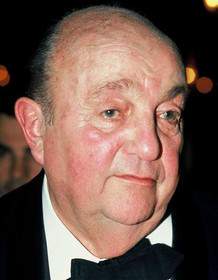
Inspecteur Morvandieu (Bernard Blier)
Played by Bernard Blier
Grizzled, irritable, and weary of crime, he treats murder as something to endure rather than solve. He alternates between annoyance and dark humor, resisting being drawn into Tram’s absurd sequence of events. His pragmatic approach collides with the film’s offbeat mood.
- 🕵️ Detective
- 🗺️ Urban official
- 🧊 Cynical
- LT
Le tueur à gages (Jean Benguigui)
Played by Jean Benguigui
A calm, professional killer who confesses to the metro murder, presented as a routine participant in the city’s crime network. He embodies the paradox of skilled violence that feels almost ordinary within the film’s deadpan world.
- 🔪 Assassin
- 🗺️ Urban crime
- LM
Le médecin (Bernard Crombey)
Played by Bernard Crombey
A practical medical professional who becomes entangled in the case as events unfold, reflecting the everyday roles that intersect with violence. He represents the ordinary world intruding into extraordinary circumstances.
- ⚕️ Doctor
- 🏥 Medical
-

La jeune fille (Carole Bouquet)
Played by Carole Bouquet
A captivating, enigmatic young woman who manipulates events and ultimately plays a pivotal role in the murders. She embodies charm and danger, driving the plot toward its final, tragic turn.
- 💃 Femme fatale
- 🗺️ Mysterious
-

Geneviève Léonard (Geneviève Page)
Played by Geneviève Page
A member of the Léonard circle, appearing in the extended social web surrounding the central drama. Her presence ties into the intersecting lives within the urban setting.
- 👩💼 Minor character
- 🏠 Family ties
- EL
Eugène Léonard (Jean Rougerie)
Played by Jean Rougerie
Husband in the Léonard family group, connected to the apartment setting that becomes a focal point in the story.
- 👔 Family member
- 🏠 Urban household
- LV
Le vieil assassin (Jean Carmet)
Played by Jean Carmet
An older killer who confesses to the crime, adding a noir, old-world note to the city’s violence. His presence frames the sense of experience and fatalism underlying the plot.
- 🔪 Assassin
- 🗺️ Crime figure
Where and When Is Buffet Froid Set?
Buffet Froid is set in La Défense station (RER), Paris metro tunnels, deserted Parisian condominium… (Late 1970s). Here is why the time and place matter to the story.
When
Late 1970s
Set in contemporary France of the late 1970s, the story uses modern infrastructure like La Défense and the metro to create a noirish mood. The era’s urban transformation and social detachment color the narrative with a sense of existential unease. The time period anchors the film’s blend of casual violence and offbeat humor in a recognizable, recent past.
Where
La Défense station (RER), Paris metro tunnels, deserted Parisian condominium, the countryside, a boat
The film unfolds across a cold, modern cityscape anchored by La Défense's metro hub and its tunnels, creating a claustrophobic urban labyrinth. A deserted condominium becomes a liminal space where danger lingers behind ordinary routines. The journey also takes the characters into the countryside and onto a boat, highlighting a stark shift from city anonymity to intimate, charged encounters.
- 🚇 Urban transit
- 🏙️ Modern city
- 🏚 Deserted spaces
- 🗺️ Countryside
- 🚤 Waterways
What Are the Themes of Buffet Froid?
4 ideas the story keeps returning to, among them Absurd Violence, Fate and Urban Isolation.
-
01
Absurd Violence
Violence in Buffet Froid is delivered with deadpan nonchalance, turning murders into routine, almost comic events. Alphonse Tram’s involvement triggers a cascade of killings that feel more like misadventure than moral drama. The film’s humor sits uneasily beside brutality, challenging the idea that crime must be solemn.
-
02
Fate
Events unfold through chance encounters and offhand remarks, blurring cause and effect. The city’s indifferent mood makes characters drift, leaving outcomes to improvisation rather than clear motives. The line between perpetrator, witness, and victim becomes porous, highlighting life’s randomness.
-
03
Urban Isolation
The film presents city life as a lonely, impersonal experience, with crowded spaces that feel emotionally empty. Tram’s dreamy detachment and the inspector’s irritability emphasize disconnection in modern urban living. The stark settings—the metro, empty apartments, and remote locales—amplify this sense of isolation.
-
04
Murder Satire
Murder is treated with a theatrical, deadpan humor, as though crime is a performance in which everyone plays a role. Relationships shift from suspicion to camaraderie to treachery, underscoring the absurd social masks people wear. The result is a satirical critique of motive, propriety, and the pretenses of civilization.
What Kind of Film Is Buffet Froid?
Dark in tone, with variable pacing and a moderate story, going by the plot summary.
- Tone
- Dark
- Pacing
- Variable
- Story
- Moderate
- Intensity
- Medium
- Ending
- Bleak
A darkly absurd and dreamlike journey through a series of inexplicable murders, where fate and coincidence intertwine to create a bleak and fatalistic atmosphere tinged with dry, unsettling humor.
- absurdist
- dreamlike
- uneasy
- fatalistic
- darkly humorous
- alienating
- murder investigation
- existentialism
- fate and coincidence
- amorality
Content notes: murder, uxoricide, homicide.
Quiz
How well do you remember Buffet Froid? Test yourself on the story.


