
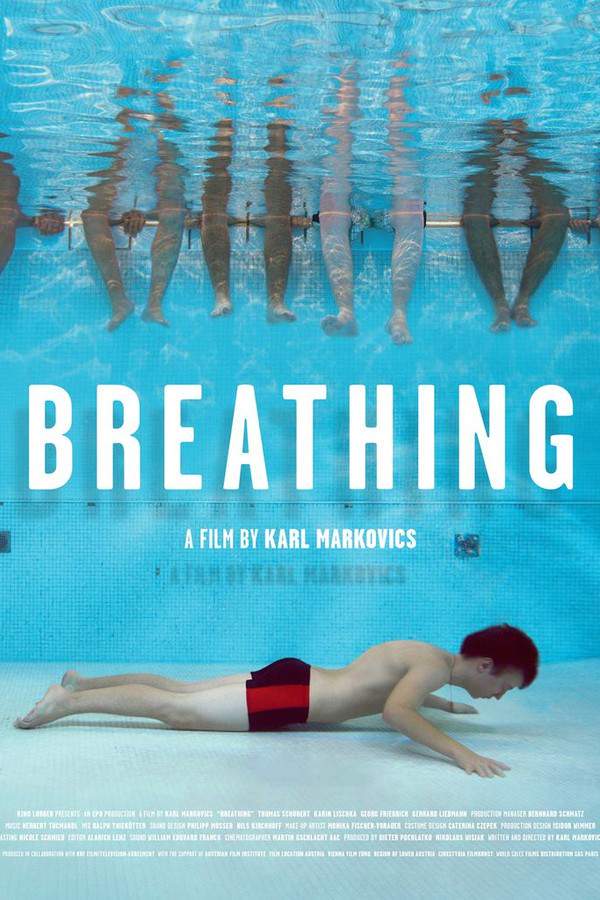
What Is Breathing About?
The premise of Breathing in 292 words, with nothing given away. The full story follows below.
In the austere outskirts of Vienna, a young man named Roman finds himself thrust into a stark rehabilitation program that pairs low‑pay work with the promise of a future beyond the walls of a juvenile detention center. The film opens on his reluctant entry into a series of menial jobs, each designed to test his willingness to follow rules he has long ignored. Among these, a placement at the city’s municipal mortuary becomes the unlikely backdrop for his tentative search for meaning, as the institution’s routine chores stand in sharp contrast to the turbulence of his past.
The world that surrounds Roman is rendered with a clinical precision that feels both oppressive and oddly beautiful. Gray corridors, relentless institutional cadence, and the quiet hum of machinery create a visual palette where every glance and gesture carries weight. The mortuary, with its solemn procession of bodies, is filmed in restrained, almost reverent tones, turning the act of handling the dead into a silent meditation on life’s fragility. The cinematography leans heavily on stark lighting and lingering shots, allowing the audience to feel the heavy stillness of the spaces while sensing an undercurrent of possibility.
Within this measured setting, Roman remains a figure of muted defiance, his isolation palpable yet slowly softening through subtle interactions. The film dwells on his internal shift—captured through nuanced facial expressions, the rhythm of his everyday tasks, and the rare moments when he allows himself to observe rather than withdraw. As he navigates the disciplined environment of the mortuary, a quiet curiosity begins to surface, hinting at an emerging sense of purpose. The story invites viewers to contemplate how a young man, once adrift in institutional routine, might discover a path toward acceptance and a tentative, hopeful new beginning.
What Happens in Breathing?
The complete story of Breathing, from the first scene to the last, in 839 words (about 4 minutes). Spoilers throughout. Names in the text link to 2 cast member pages.
Spoilers ahead
Roman Kogler Thomas Schubert is a 19-year-old prisoner in an Austrian juvenile detention center, and the film follows roughly two weeks leading up to his parole hearing. During this period he begins a trial month at a mortuary, a job that counts as a crucial qualification for his release. Kogler remains present in almost every scene, and the story traces his quiet, inward emotional shift through a combination of facial expressions, body language, stark visuals, and restrained dialogue. At the outset he is sullen and isolated—cut off from fellow inmates, from the earnest probation counselor who tries to help him, from the guards, and from his new coworkers. As the days pass, a stubborn, almost indifferent resilience keeps him going, yet small, ordinary moments gradually spark a change: a slow awakening of curiosity about his past and a renewed interest in forming humane connections.
The film opens with Roman interviewing for a job at a metal-working factory, where he lies about his welding skills to the foreman. When a welder’s mask is placed on his face, he recoils with a stifled scream. The subsequent sequence grows stark: a bleak road stretching to the horizon, then a car approaching, and Roman stepping into the car after a sudden, decisive movement. The car is driven by Walter Fakler Georg Friedrich, the probation counselor who has come to collect him after the metalworking fiasco. In the car, Roman’s sullen defiance is met with Fakler’s earnest but tiring insistence on responsibility. Back at prison, Fakler hands him a newspaper and urges him to look through the want ads, insisting they’ll meet again on Monday.
What follows is a relentless cadence of institutional routines. A routine strip search greets Roman each time he returns to his cell, conducted with clinical efficiency by a guard and an assistant. The day ends with the heavy doors of the cells sealing shut, leaving him alone in the quiet corridor. A singular recreational outlet is introduced: a visit to the indoor swimming pool where Roman, unlike the other boys, dives in and swims laps in quiet isolation. This scene repeats itself with slight variations, underscoring his detachment from the social world around him. Each workday he travels by train into Vienna, passing a billboard that promises “Tauchen Sie ein Ins Abenteuer”—an advertisement for adventure that mirrors his own tentative plunge into unfamiliar territory.
The mortuary where he works—Vienna’s large Bestattung Wien—places him among the routine movement of corpses from death to burial. At first he is assigned to observational tasks, watching as co-workers handle the delicate, sometimes unsettling work. His initial reaction is visceral disgust, and a coworker’s hostility adds friction to the early days. In a moment of quiet, Roman works alone in a small room, removing the cases used to transport corpses from a steam-cleaning machine; a small bird startles him, and he opens a door to set the bird free, a brief act of mercy that sits oddly within the mechanical world of the mortuary. The door bears the label “Notausgang” (Emergency Exit), a small detail that resonates with the film’s themes of escape and possibility.
A pivotal turn occurs when Roman encounters the naked corpse of a young woman who shares his surname. Panic shoots through him at the thought that this could be his mother, but he confirms the corpse is not her. This moment sets in motion a search that leads Roman to his mother’s neighborhood, and he eventually tracks her down to an IKEA store, where she lies on a bed as if resting in death. They reconnect, and he tells her he is now a diving instructor and headed to New Zealand, a line that nods to the subway advertisement they pass on the way. Back at her flat, their conversation is tense and intimate: he asks why she gave him up, and she responds with a bitter candor, declaring that letting him go was the best thing she did. She also confronts him about his work, revealing her knowledge of his occupation as an undertaker. The confrontation ends with a confession from her: the real reason she gave him up was that, as a baby, she had once tried to suffocate him to stop his crying.
The film’s final beat returns to the parole arc. After the hearing, Roman steps out into the world with a mixed sense of relief and ongoing weight, and the final image is his quiet, solitary visit to the grave of the teenage victim—a somber bookend to a life lived in the margins of institutional life and the mortuary world.
Throughout, the storytelling relies on restraint and implication. The audience is invited to read emotion in the smallest details—glances, posture, and the rhythm of daily routines—creating a portrait of a young man whose interior life begins to wake up to the possibility of empathy, connection, and a future beyond confinement. The film remains intimate, observational, and unsentimental, offering a humane meditation on guilt, memory, and the slow, arduous path toward understanding one’s own past.
Breathing Timeline: Every Key Event in Order
12 key events in the order they happen, from “Job interview and ride-back with probation counselor” to “Parole hearing and grave visit”. 12 events name a place, across 12 locations.
- 1
Job interview and ride-back with probation counselor
Roman interviews for a metal-working job and lies about his welding skills to the foreman. When the foreman attempts to place a welder's mask on his face, he recoils with a stifled scream, revealing a buried trauma. Walter Fakler, his probation counselor, arrives to fetch him after the disastrous attempt and returns him to prison with instructions to check the want ads.
When:Day 1 Where:Vienna – metalworking factory and road back to prison
- 2
Return to prison and routine strip search
Back in prison, Roman endures the ritualized strip search upon re-entry, performed with curt efficiency by a guard and his assistant. The procedure recurs later in the film with subtle dialogue changes, underscoring the routine that constrains him. The day ends with him alone in his cell as the heavy doors clang shut.
When:Day 1 Where:Prison
- 3
Prison swimming pool visit
A rare moment of recreation shows Roman at an indoor swimming pool with the other juvenile prisoners. He dives in and swims laps, largely ignored by the others, highlighting his isolation within the system. The scene recurs later with variations to emphasize his distance from the others.
When:Early in the two-week period Where:Prison recreation pool
- 4
Daily commute to Vienna for mortuary work
He commutes by train into Vienna for his mortuary work, a crucial qualification for parole. Along the route, a roadside advertisement depicts a South Seas paradise and reads Dive Into Adventure, hinting at his future dreams. The routine and the ad together begin to awaken small shifts in his hardened exterior.
When:During the workdays over two weeks Where:Vienna
- 5
First encounters at the mortuary; observer stage
Roman arrives at Bestattung Wien and is initially assigned to observe while his coworkers show hostility. He witnesses the large-scale handling of corpses and the clinical detachment of the mortuary staff, deepening his sense of horror. The experience marks the early, tense start of his immersion in the job.
When:Early in the mortuary assignment Where:Bestattung Wien mortuary, Vienna
- 6
Bird in the workroom and Notausgang
Working alone in a small room with an industrial steam cleaning machine, he releases a bird that startles him as he frees the transport cases. He spots a door labeled Notausgang (Emergency Exit) and the moment underscores his vulnerability within the clinical setting. The small incident foreshadows his ongoing struggle to regulate his fear.
When:Early shift Where:Mortuary workroom
- 7
Naked corpse with his surname; panic about his mother
A chance encounter with a naked corpse bearing his surname triggers a panic that the body might be his mother. He quickly confirms the corpse is not his mother, but the moment exposes the haunted past he carries. The episode pushes him to seek out his mother in the city.
When:First week Where:Mortuary
- 8
Locating his mother and IKEA meeting
Roman locates his mother’s address and follows her to an IKEA store, where he finds her lying on a bed as if dead. They become re-acquainted, and he tells her he’s a diving instructor headed for New Zealand, a reference to the subway advertisement. The reunion begins to lay the groundwork for hard truths to emerge.
When:Midpoint of the two-week period Where:Mother's flat and IKEA store, Vienna
- 9
Mother's confession; why she gave him up
Back at his mother’s flat, Roman asks why she gave him up. She reveals that giving him up was the best thing she did and then confesses that, when he was a baby, she tried to suffocate him with a pillow to stop his crying. The exchange exposes the blowback of her past choices and deepens Roman’s curiosity about his origins.
When:Evening during the two-week period Where:Mother's flat
- 10
Confrontation outside the mortuary
Outside the mortuary after his shift, his mother confronts him again and reiterates the reasons behind giving him up. The dialogue exposes the complexity of their relationship and the lasting impact of their separation. The moment underlines the film’s focus on haunted memory rather than external action.
When:After shift Where:Outside the mortuary
- 11
Emotional awakening through small events
Over the roughly two-week period, small events begin to awaken emotions in Roman and spark a growing interest in understanding his past and in forming sympathetic relationships. The quiet changes mark the start of an emotional awakening beneath his stoic exterior.
When:Two-week period Where:Various locations around prison and mortuary
- 12
Parole hearing and grave visit
The two-week arc culminates with Roman leaving his parole hearing and then visiting the grave of his teenage victim. The ending suggests a reckoning with the past and an ongoing search for meaning beyond institutional life.
When:End of the two-week period Where:Parole hearing venue; cemetery
Who Are the Main Characters in Breathing?
4 characters, among them Roman Kogler (Thomas Schubert), Walter Fakler (Georg Friedrich) and Mother (Karin Lischka): who each one is and the part they play in the story. Every profile links to the actor’s page.
- RK
Roman Kogler (Thomas Schubert)
Played by Thomas Schubert
A 19-year-old inmate whose stoic exterior masks an evolving sense of empathy. Over the two weeks before his parole hearing, he begins to see a future beyond the prison's routines as he learns the mortuary trade and confronts memories of his past.
- 🧊 Isolated
- 🧭 Growth
- 🕊️ Quiet resilience
-

Walter Fakler (Georg Friedrich)
Played by Georg Friedrich
The earnest probation counselor who pushes for rehabilitation and urges Kogler to engage with life outside prison. His persistent guidance contrasts with Kogler's initial resistance but remains a steady, supportive presence.
- 🧭 Guidance
- 🧰 Professional
- 😟 Frustration
- M(
Mother (Karin Lischka)
Played by Karin Lischka
Roman's mother who gave him up as a baby and later reveals she once tried to suffocate him. Their reappearance triggers emotional conflict and raises questions about forgiveness, identity, and family history.
- 🧪 Trauma
- 💔 Reunion
- 🪞 Confrontation
- C(
Co-worker (Mortuary)
Played by Gerhard Liebmann
A mortuary colleague who initially treats Roman with hostility as he adjusts to the grim routines of handling the dead.
- 🧰 Labor
- 🤝 Hostility
- 🧼 Sterile
Where and When Is Breathing Set?
Breathing is set in Vienna, Austria, Austrian juvenile detention centre, Bestattung Wien (Funeral… (Present day, early 21st century). Here is why the time and place matter to the story.
When
Present day, early 21st century
The action covers roughly two weeks in a contemporary Austrian setting, leading up to a parole hearing. It follows Roman through a modern juvenile justice system and a mechanized mortuary operation. The time frame emphasizes routine, surveillance, and the slow opening of emotional barriers.
Where
Vienna, Austria, Austrian juvenile detention centre, Bestattung Wien (Funeral Vienna), IKEA store in Vienna
The film unfolds in modern Vienna, anchored by its austere detention facilities and the large mortuary where Roman works. It contrasts the clinical, routine rhythms of a city institution with intimate, emotional moments. Key locations include the juvenile detention center, the funeral home, and everyday urban spaces like an IKEA store where a reunion with his mother occurs.
- 🏙️ Urban
- 🏛️ Institutional
- 🗺️ City life
What Are the Themes of Breathing?
3 ideas the story keeps returning to, among them Self-Discovery, Mortality and Mother Memory.
-
01
Self-Discovery
The story centers on Roman's slow emotional awakening as he learns the demanding mortuary job. Sparse dialogue and subtle facial cues trace his movement from isolation toward gradual empathy. Small, everyday events begin unlocking interest in his past and in forming connections with others.
-
02
Mortality
Death shadows Roman as he handles corpses and confronts the fragility of life. The mortuary setting forces him to face decay, vulnerability, and his own possible future. Through exposure to death, he assesses his capacity for feeling and change.
-
03
Mother Memory
Roman's reunion with his mother and her revelation about abandoning him bring memory and guilt to the surface. Their confrontation probes themes of forgiveness, identity, and what family means. The memory of his mother influences present choices and the longing for connection.
What Kind of Film Is Breathing?
Melancholic in tone, with slow pacing and a moderate story, going by the plot summary.
- Tone
- Melancholic
- Pacing
- Slow
- Story
- Moderate
- Intensity
- Medium
- Ending
- Bittersweet
A quiet, observant drama that immerses the viewer in a world of institutional routine and mortuary work, tracing a young man's slow, internal awakening with profound restraint and emotional weight.
- quiet
- somber
- introspective
- melancholic
- lonely
- restrained
- rehabilitation
- institutional life
- grief and loss
- self-discovery
Content notes: child endangerment, confinement, death.
Quiz
How well do you remember Breathing? Test yourself on the story.
