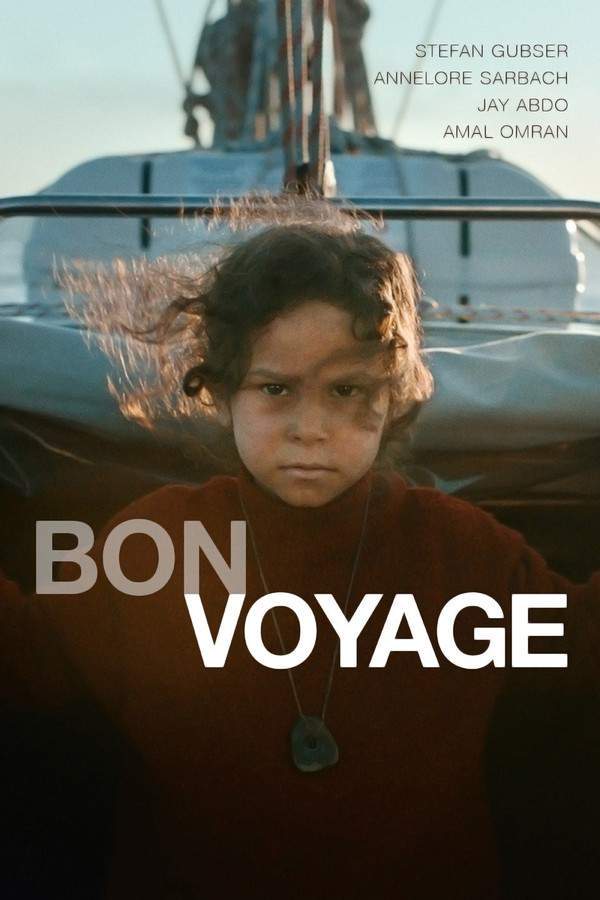
Bon voyage 2004

Directed by

Jean-Paul Rappeneau
Made by

Sony Pictures Classics
Where to Watch Bon voyage
See current US streaming, rental, and purchase options for Bon voyage (2004) via JustWatch.





Bon voyage Plot Summary
Read the complete plot summary and ending explained for Bon voyage (2004). From turning points to emotional moments, uncover what really happened and why it matters.
In 1939, film star Viviane Denvert, Isabelle Adjani, sits in the premiere crowd and is unsettled by a man who keeps staring her down. As the applause dies away and she is praised from the stage, she hastily returns to her apartment, only to discover that the same unnamed observer is now haunting her in private. The fear she feels is real and immediate, and when she confronts him she ends up escalating a dangerous conflict that ends with a violent confrontation on her balcony.
An hour later, Frédéric Auger, a young writer, receives a frantic call from Viviane. For years she has relied on his devotion, and now she asks him to come to her apartment right away. When Frédéric arrives, he finds a dead body that Viviane claims to have killed in self-defense after the man harassed her; she insists he help her dispose of the corpse. They haul the body into the trunk of his car, but the weather turns foul and rain slicks the streets. A fateful misstep occurs when Frédéric drives over a curb and triggers a police signaling device—the trunk pops open under the weight of the corpse, and the arriving officers arrest him.
As Paris braces for the looming German invasion, the city’s citizens are evacuated, and the chaos of this moment ripples through every life. Prisoners, including Frédéric, are paired up and handcuffed together for the journey. Seizing the opportunity, Frédéric and his cellmate Raoul slip away in the confusion. Frédéric boards a train headed to Bordeaux, hoping to lay low, while Raoul nudges him toward a seat near Camille, a young physicist working at the prestigious College de France under Professor Kopolski. Camille and her colleague are guarding critical stocks of heavy water—an essential resource they intend to ship to England before the Germans can reach it.
From this point, the film threads together a brisk, action-packed series of escapes, loyalties, and moral decisions as characters find themselves caught between two overwhelming forces: the advancing German occupation and the unpredictable melodrama that Viviane embodies so vividly. A brief, recognizable cameo by General Charles de Gaulle underscores the precarious political backdrop as the city trembles on the edge of war. Meanwhile, Frédéric’s path crosses with Camille, and a quiet bond grows between the two, even as danger closes in.
Frédéric eventually falls for Camille, and when he makes it back from England, he searches for her at an outdoor café. The moment the Germans spot them, they flee and slip into a movie theater to hide. Frédéric spots a German in the venue and, with tension rising, he turns to kiss Camille in a bid to anchor their humanity against the encroaching danger. The pursuers depart, and the lovers briefly part their lips in a kiss, only to redirect their attention to the screen, where Viviane Denvert’s world of song and dance fills the room. In that final breath of cinema and peril, Frédéric looks at Camille, and they resume their embrace as the film ends, leaving the couple and the audience suspended between love and survival.
This story unfolds as a meditation on fear, resilience, and the lines people cross when faced with a world swelling with threat. It moves from the glitter of a premiere into the shadow of war, weaving a tapestry of daring acts and intimate moments that test loyalty, courage, and the limits of romance. The performances—anchored by the luminous presence of Viviane Denvert and the evolving chemistry between Frédéric and Camille—give the film its pulse, while the backdrop of occupied Paris and the urgent, clandestine work surrounding heavy water adds a sense of historical gravity. The film’s momentum builds on the tension between personal melodrama and the larger stakes of a nation preparing for invasion, offering a long, layered narrative that invites viewers to stay engaged with every decision and every twist as the characters seek safety, meaning, and human connection in a city on the brink.
Bon voyage Timeline
Follow the complete movie timeline of Bon voyage (2004) with every major event in chronological order. Great for understanding complex plots and story progression.
Premiere night and a staring stranger
Viviane Denvert sits in the premiere audience and notices a man who keeps staring at her. The unsettling attention persists as the film plays and the audience praises her performance. After the credits roll, she rushes home, convinced she is being followed.
A call to the apartment
An hour after the premiere, Viviane reaches out to her childhood crush, Frédéric, and asks him to come to her apartment immediately. She explains that she’s been harassed by the stalker and insists on his help. Frédéric agrees and heads over, unsettled but protective.
The corpse is discovered
Upon arriving, Frédéric finds a corpse in Viviane's apartment. She claims the man harassed her and that she slapped him, causing him to fall from the balcony. The situation spirals as fear and panic set in.
Disposing the body and arrest
They shove the body into the trunk of Frédéric's car and attempt to escape. Rain lashes the streets, and a collision with a police signaling device exposes the dead man. The trunk opens and the police seize Frédéric, who is arrested and sent to prison.
Paris evacuates and an escape from custody
On the eve of the German occupation, Paris residents begin to evacuate, and prisoners are reluctantly paired and handcuffed together. Seizing the chaos, Frédéric and his cellmate Raoul manage a daring escape into the city’s upheaval. They disappear into the confusion as war looms larger.
Train to Bordeaux and the train crossing
Frédéric boards a train to Bordeaux in hopes of regrouping. On the journey, Raoul steers him toward another woman on the run, Camille, a physicist who becomes entwined in their uneasy circle. The train becomes a crossing point for destinies to collide.
Camille and Kopolski's heavy water secret
Camille, working at the College de France with Professor Kopolski, guards French stocks of heavy water that they intend to ship to England. Their mission adds a daring scientific twist to the wartime intrigue. The cargo becomes a focal point for the characters’ choices.
A country divided by invasion and melodrama
The survivors navigate a France torn by invasion and the melodramas of the people around them. Some decide to stay, some go underground, and others seek refuge in London. A fleeting cameo from General Charles de Gaulle punctuates the war's reach into everyday life.
Romance blooms amid the war
Frédéric grows closer to Camille and their bond deepens as they face danger together. He eventually leaves for England, returning later to reconnect with Camille. Their romance provides a fragile beacon amid the chaos of occupied Paris.
Reunion at the outdoor café
Frédéric returns from England and meets Camille at an outdoor café. They share a moment of relief and a budding affection, aware that danger still lingers around them. Their connection offers a small glow of normalcy in a fractured city.
Pursuit drives them into a theater
When German soldiers close in, the couple flees into a movie theater to hide from their pursuers. A tense chase unfolds among the crowd as they seek a safe refuge from the encroaching danger.
Final reveal: Viviane on screen
Inside the theater, a German enters and Frédéric seizes a kiss with Camille to buy time. He then looks up at the screen and sees Viviane singing and dancing in the film being shown. The pair resume their kiss as the film ends, tying their fates to the performance and the war outside.
Bon voyage Characters
Explore all characters from Bon voyage (2004). Get detailed profiles with their roles, arcs, and key relationships explained.
Viviane Denvert (Isabelle Adjani)
Viviane is a celebrated film star who uses others to protect herself. Her melodramatic instincts push her to involve Frédéric in disposing of a corpse, revealing a willingness to manipulate lovers and allies to avoid scandal. Her actions expose a cool calculation beneath a glamorous facade.
Frédéric Auger
Frédéric is a young writer whose devotion to Viviane pulls him into a dangerous plot. After a prison escape during the evacuation, he navigates a rapidly changing France, forming attachments and choosing sides amid wartime chaos.
Raoul
Raoul is Frédéric’s resourceful cellmate who helps him escape the prison transport. He uses the confusion of evacuation to steer Frédéric toward allies and away from danger, embodying opportunistic pragmatism.
Camille
Camille is a physicist at the College de France, guarding critical stocks of heavy water. She and Frédéric form a bond as they pursue a plan to move the material to England, placing her at the center of wartime scientific urgency.
Bon voyage Settings
Learn where and when Bon voyage (2004) takes place. Explore the film’s settings, era, and how they shape the narrative.
Time period
1939-1940
The film unfolds in the late 1930s, culminating as Europe teeters on the brink of war and Paris braces for the German invasion. It juxtaposes a glamorous film industry with political upheaval, as the city evacuates prisoners and citizens alike. The eve of occupation reshapes relationships and destinies.
Location
Paris, Bordeaux
Set around Paris on the eve of World War II, the story also moves to Bordeaux during an evacuation. The city environments shift from glamorous premieres to tense, life-or-death moments as the German threat looms. The film captures iconic Parisian nightlife, crowded theatres, and the confusion of a country preparing for occupation.
Bon voyage Themes
Discover the main themes in Bon voyage (2004). Analyze the deeper meanings, emotional layers, and social commentary behind the film.
🧭
Moral Ambiguity
Characters make choices that blur right and wrong. Viviane manipulates Frédéric into taking a murder’s blame, while Frédéric’s devotion blurs the line between accomplice and victim. The story forces readers to question loyalty, guilt, and self-preservation in crisis.
⚔️
War and Escape
The looming German invasion drives the action, pushing characters to flee, hide, or join underground networks. The heavy-water shipment subplot adds a layer of strategic risk amid wartime urgency. The film blends chase sequences with the uncertainty of wartime France.
💘
Love and Loyalty
Romantic relationships form under pressure as trust is tested by deception, danger, and the urge to survive. Frédéric’s growing affection for Camille contrasts with Viviane’s melodramatic manipulation. The ending ties personal bonds to larger choices about allegiance.

Coming soon on iOS and Android
The Plot Explained Mobile App
From blockbusters to hidden gems — dive into movie stories anytime, anywhere. Save your favorites, discover plots faster, and never miss a twist again.
Sign up to be the first to know when we launch. Your email stays private — always.
Explore the mobile appBon voyage Spoiler-Free Summary
Discover the spoiler-free summary of Bon voyage (2004). Get a concise overview without any spoilers.
On a sun‑washed stretch of the Mediterranean, the couple drifts between ancient ports, their days marked by the gentle rhythm of waves and the quiet intimacy of shared travel. The water’s endless horizon lends a sense of freedom, yet the open sea also carries a subtle undercurrent of uncertainty, hinting that the world beyond their sleek vessel is far from tranquil. Their journey feels like a pause from everyday life, a moment to savor the beauty of distant coastlines while the distant rumble of conflict whispers on the wind.
Against this backdrop, the couple’s peaceful passage is interrupted when they stumble upon a small, overcrowded boat teeming with refugees fleeing a war‑torn region. The sight of exhausted faces, clutching whatever they can salvage, turns the serene seascape into a tableau of desperation and hope. In the cramped, trembling vessel, humanity’s rawest instincts surface—fear, compassion, and the instinct to survive. The couple is thrust into an uneasy tableau where the luxury of their voyage collides with the stark reality of those clinging to life in the same waters.
The atmosphere hangs between the serene beauty of the Mediterranean and the urgent, unsettling plight of the stranded souls. As the couple watches the refugees’ fragile hope bob on the waves, they are forced to confront their own values, questioning what responsibility they hold to strangers in peril. The film’s tone balances the lyrical allure of sun‑drenched seas with a tense, introspective edge, inviting the audience to linger on the moral crossroads the pair must navigate. In this delicate dance of empathy and self‑preservation, every ripple of the water seems to echo a larger question: how far will they go when the safety of their world meets the desperate need of another?
Movies with Similar Twists and Themes
Uncover films that echo the narrative beats, emotional arcs, or dramatic twists of the one you're exploring. These recommendations are handpicked based on story depth, thematic resonance, and spoiler-worthy moments — perfect for fans who crave more of the same intrigue.



Featured on this page

What's After the Movie?
Not sure whether to stay after the credits? Find out!
Check out our other apps:

SAT Sphere
Build confidence for the Digital SAT.

Mori Atlas
Discover wild places worth protecting.

Luntero
Search smarter for a home in Amsterdam.

Plot Explained
Unravel movie endings and hidden clues.

Pokechamp
Dive into Pokémon data and battle logic.

Driving Theory
Get ready for your European theory test.

Movie Dust
Plan your next cinema trip with ease.

Musemap
Find art and culture as you travel.

Selkobase
Compare credentials before committing.

Local Manual
Turn an unfamiliar country into practical next steps.

Lernavi
Compare school systems before your next move.

GymRoam
Find a workout stop wherever your plans take you.
Explore Our Movie Platform
New Movie Releases (2026)
Famous Movie Actors
Top Film Production Studios
Movie Plot Summaries & Endings
Major Movie Awards & Winners
Best Concert Films & Music Documentaries
Movie Collections and Curated Lists
© 2026 What's After the Movie. All rights reserved.
Privacy Policy