
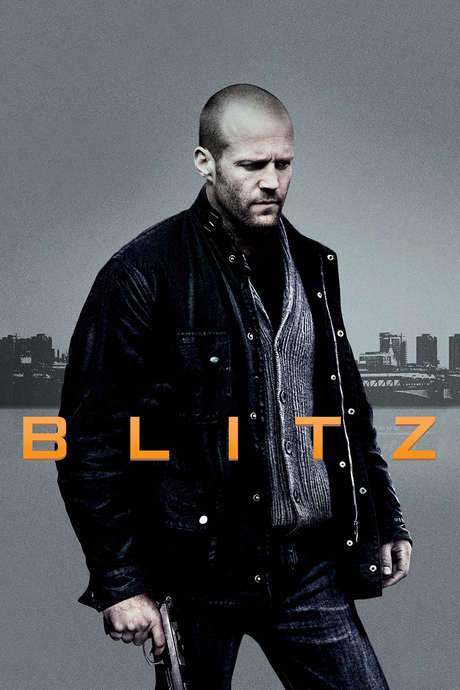
Blitz 2011

Directed by

Elliott Lester
Made by

Lipsync Productions
Blitz Plot Summary
Read the complete plot summary and ending explained for Blitz (2011). From turning points to emotional moments, uncover what really happened and why it matters.
Detective Sergeant Tom Brant is a hot-headed police officer based at a turbulent South East London station. In a brutal early moment, he uses a hurley to subdue three would-be car thieves, setting a tone for a man whose impulses often pull him toward the edge. When Elizabeth Falls asks for help with her Sergeant’s exam, Brant advises patience, noting that she recently left rehab after a self-destructive stretch undercover with the drugs squad. His concern for her is sharply tempered by caution from his superior, a warning that hints at the danger of Brant’s volatile style—an issue a police psychologist later flags as a possible burn-out fault line, recounting earlier incidents of bugging the Superintendent’s office, a billiards hall altercation, and the earlier assault on the three youths.
The thread pulls tight when Brant attends the funeral of Chief Inspector Roberts and, on the same night, PC Sandra Bates is shot by an unseen killer. The station’s mood shifts as Porter Nash is reassigned from West London to act as Inspector in Roberts’s absence. A troubled young boy seeks Falls’s help, convinced he’s killed someone in a gang attack, and she turns to Brant for a favor, steering him toward information about DI Craig Stokes. The shooter—Barry Weiss—reaches out to journalist Harold Dunlop, laying out a chilling challenge: he will kill a certain number of cops, choosing eight, to mark his trail. In the street, Weiss shoots PC Theo Nelson from a car, throwing the station into chaos.
As the investigation dives into Weiss’s footprint, Brant meets informant Radnor, who once boasted about harming a police dog and now points to Weiss as its target. The detectives grapple with Brant’s recurring blackouts, while Nash reveals his own hard-won lessons from past personal violence against a paedophile in his home, a confession that underscores the toll the job takes on anyone chasing justice. The lead lands Brant in a direct line with Weiss, who is recognized as a dangerous figure who once tangled with him in a billiards hall.
Weiss’s crime spree escalates as he kills [Roberts] in a brutal confrontation, pulverizing the chief inspector’s head with a hammer, stealing his police uniform and badge, and burning Roberts’s flat. He calls Dunlop to report the murder and adopts the alias “Blitz.” The police begin to weave a net around Weiss, but Radnor’s growing pressure—seeking a £50,000 payoff in exchange for Weiss’s identity—threatens to unravel the fragile case. Falls’s personal loyalties pull her toward Stokes, who asks her out after she pleads to bury the boy’s name, while Weiss’s shadow looms over the entire precinct.
Dunlop and Brant race to locate the parked car where Radnor describes evidence, but Weiss has already cleaned the scene as the CCTV footage proves unreliable. Falls and Stokes share a drink, all while Weiss watches from a distance, and a rift forms between Falls and Brant as the killer closes in on Falls herself. When Weiss continues his assault on the force, the tension spikes as Falls suffers a relapse, succumbing to drugs while the police scramble to protect her.
Weiss’s release from surveillance leads him back to Roberts’s funeral and, at Roberts’s old domain, to Brant. The stolen uniform and badge become a potent symbol of the killer’s control, and Weiss follows Brant to a parking garage where the evidence from the earlier scene is supposed to be kept. In a tense rooftop confrontation, Weiss aims his pistol at Brant, but the moment twists when Nash appears, and Brant takes the chance to strike. Brant executes a grim, calculated plan: there is no solid evidence tying Weiss to the killings, because Weiss was cleared, and the true target, Brant implies, is anyone in uniform. The final stand ends with Brant shooting Weiss in the head, a moment that seals the killer’s fate in a grim play of perception and power.
With Weiss defeated, Brant and Nash walk away from the rooftop, the danger momentarily contained. The film closes with a stark, unsettling note as Brant unleashes two police dogs on Harold Dunlop, leaving the audience with a chilling reminder that justice in this world can blur the line between order and vengeance, and that in Brant’s city, the hunt for truth can leave a heavy toll on everyone involved.
Blitz Timeline
Follow the complete movie timeline of Blitz (2011) with every major event in chronological order. Great for understanding complex plots and story progression.
Brant caps car thieves with a hurley
In an early burst of brute force, Detective Sergeant Tom Brant uses a hurley to subdue three would-be car thieves on the streets of South East London. The violent act sets the tone for a volatile officer whose impulses threaten his career. The scene establishes the rough, hands-on style that defines him.
Falls asks for help with her sergeant’s exam
Elizabeth Falls requests Brant's help to prepare for her sergeant’s exam, seeking guidance rather than brute force. Brant cautions patience and discipline, revealing Falls recently left rehab after undercover work with the drugs squad. The exchange hints at Falls' fragile recovery and Brant's protective but harsh approach.
Burn-out risk flagged by psychologist
A police psychologist flags a potential burn-out fault line for Brant, recounting a string of past incidents: bugging the Superintendent’s office, a billiards hall altercation, and an earlier assault on three youths. The assessment underscores the toll of the job on his impulse control. It foreshadows the volatility that could derail the investigation.
Roberts’ funeral and the night of the Bates shooting
During Chief Inspector Roberts’s funeral, PC Sandra Bates is shot by an unseen killer, shattering the station’s mood. Port Nash is reassigned in Roberts’s absence, and a troubled boy seeks Falls’s help, prompting her to ask Brant for information about DI Stokes.
Weiss challenges the police from the newsroom
Barry Weiss reaches out to journalist Harold Dunlop, outlining a chilling challenge: he plans to kill eight cops to mark his trail. This taunting communication signals the start of his public game and targets the police publicly. The threat injects a new dimension of danger into the investigation.
Weiss’s street killing escalates the chase
In a brutal street ambush, Weiss shoots PC Theo Nelson from a car, throwing the station into chaos. The killing marks a dramatic escalation of Weiss’s crime spree and tightens the noose around Brant and his team. The event demonstrates the killer’s willingness to strike in public and escalate the stakes.
Radnor points to Weiss; Brant’s blackout problem
Informant Radnor, who once boasted about harming a police dog, points to Weiss as the killer’s target and hints at payoff incentives. Brant’s recurring blackouts become a liability, while Nash shares hard-won lessons from past violence. The combination deepens the investigators’ personal toll and complicates the case.
Weiss kills Roberts and claims a uniform
Weiss’s crime spree culminates in the brutal kill of Chief Inspector Roberts, followed by the theft of his police uniform and badge and the arson of Roberts’s flat. The killer adopts the alias 'Blitz' and uses the uniform to project authority and confuse investigators. The case now moves into a dangerous phase of misdirection and peril.
Weiss reports the murder and adopts Blitz
Weiss calls Harold Dunlop to report the murder, cementing his chosen alias 'Blitz' and drawing more public attention to his rampage. The media tie-in raises the stakes for the police as the killer toys with them. The investigation starts to chase a shadowy phantom wearing a badge.
Falls and Stokes confront loneliness and loyalty
Falls and Stokes share a drink, and a rift grows between Falls and Brant as Weiss’s presence casts a shadow over the team. Falls pleads to bury the boy’s name and risks her own loyalties in the process. The tension on the force mirrors the external threat and foreshadows a fracture in trust.
Weiss closes in and Brant braces for confrontation
Weiss is released from surveillance and returns to Roberts’s funeral, then to Brant’s old domain. He dons the stolen uniform and badge and shadows Brant to a parking garage where evidence from an earlier scene is kept. The stage is set for a dramatic confrontation.
Rooftop showdown and the grim victory
On the rooftop, Weiss aims at Brant, but Nash arrives at the right moment and Brant shoots Weiss in the head, ending the killer’s rampage. Brant implies there was no solid evidence tying Weiss to the killings, suggesting the real target was anyone in uniform. The finale closes with Brant and Nash walking away as two police dogs are unleashed on Dunlop, leaving a bleak note on justice.
Blitz Characters
Explore all characters from Blitz (2011). Get detailed profiles with their roles, arcs, and key relationships explained.
Tom Brant (Jason Statham)
Tom Brant is a hot-headed detective from a turbulent South East London precinct who relies on force and instinct. His growing burnout and occasional blackouts threaten his judgment as the case tightens around him. He is fiercely loyal to colleagues like Nash, yet willing to bend rules when he believes they’ll stop the killer. In the climax, Brant crosses a line to ensure the killer cannot strike again.
Elizabeth Falls (Zawe Ashton)
Elizabeth Falls is a determined PC who has battled addiction and undercover work in the drugs squad. She seeks a promotion and challenges Brant, often clashing with his methods. The case pushes her to the edge, and she experiences a relapse that underscores the hidden scars of policing. She remains a key link between the pursuing officers and the vulnerable civilians they protect.
Barry Weiss (Aidan Gillen)
Barry Weiss is the calculating killer who adopts the moniker Blitz and taunts the police with his killings. He uses knowledge of the system, disguises, and manipulation to evade capture while escalating violence. Weiss’s cold, methodical approach creates a cat-and-mouse dynamic that tests Brant and Nash. His ultimate confrontation with Brant reveals the cost of pursuing vengeance.
Porter Nash (Paddy Considine)
Porter Nash is Brant’s steady colleague who shares a hard-edged realism. He carries his own dark past and provides a counterpoint to Brant’s reckless gusto. Nash helps steer the investigation when the pressure intensifies and ultimately supports Brant in the climactic takedown. His presence grounds the film’s action with a sense of weary loyalty.
Craig Stokes (Luke Evans)
Craig Stokes is the DI who oversees the investigation, offering support and connections within the force. He acts as a conduit between Brant and the broader department while navigating the political pressures of a high-profile case. He remains professional, balancing risk and responsibility in a tense urban environment.
Chief Inspector Roberts (Mark Rylance)
Chief Inspector Roberts is the respected leader whose death acts as a catalyst for the investigation’s escalation. His absence heightens the sense of vulnerability within the squad and magnifies the killer’s threat. Roberts’ legacy haunts the officers as they race to identify the killer before more lives are lost.
Harold Dunlop (David Morrissey)
Harold Dunlop is an ambitious crime reporter who fuels the narrative with sensational coverage. He becomes a pawn in Weiss’s game, his reporting shaping public perception and pressuring the police. Dunlop’s role underscores the tension between truth, spectacle, and accountability in crime reporting.
Radnor (Ned Dennehy)
Radnor is a streetwise informant who provides crucial leads about Weiss. His information helps Brant connect the killer’s past bravado with current actions. He becomes a pivotal figure whose cooperation hinges on trust in a volatile, crime-ridden landscape.
Theo Nelson (Joseph Dempsie)
Theo Nelson is a young police officer who becomes a casualty of the shooter’s rampage. His death underscores the film’s high-stakes menace and the vulnerability of frontline officers. The incident acts as a wake-up call to the squad about the cost of the hunt.
Blitz Settings
Learn where and when Blitz (2011) takes place. Explore the film’s settings, era, and how they shape the narrative.
Time period
Set in contemporary London over a tense, crime-filled period as police hunt a rogue killer. The narrative unfolds through fast-paced encounters, informant tips, and rapid shifts in the investigation. The mood is grim and urgent, reflecting modern urban crime dynamics.
Location
South East London, London
The action centers on a dense, crime-prone area of South East London, where a high-pressure police precinct battles a wave of violence. Key locations include the South East London police station, Weiss's apartment, a dim parking garage, and the funeral of Chief Inspector Roberts, all contributing to a gritty urban atmosphere. The city’s crowded streets become the backdrop for cat-and-mouse confrontations between officers and the killer.
Blitz Themes
Discover the main themes in Blitz (2011). Analyze the deeper meanings, emotional layers, and social commentary behind the film.
⚖️
Justice vs Vigilantism
The film questions whether lethal action outside the law can ever be justified when the system struggles to convict. Brant’s methods blur the line between police procedure and personal retribution. The killer’s taunting games test the limits of formal justice and due process. The ending suggests that true justice is messy and often morally ambiguous.
🔥
Burnout & Moral Strain
Brant is a hot-headed detective whose burnout and recurring blackouts threaten his judgment. A police psychologist notes the potential for deteriorating mental health under sustained stress. Nash’s guarded mentorship highlights how shared violence and fatigue strain even strong alliances. The film uses burnout to scrutinize police culture and the choices made under pressure.
💊
Trauma & Addiction
Elizabeth Falls’ history of rehab and a relapse show how trauma from undercover work can haunt officers off duty. The case exposes the fragility of personal lives when faced with relentless violence. The backdrop of addiction and recovery underscores the human cost of policing in a dangerous city. Recovery remains precarious amid ongoing threats.
📰
Media & Public Perception
The killer manipulates media outlets to shape the narrative and pressure the investigation. Dunlop’s role as a reporter exposes how headlines can influence police priorities and public fear. The story suggests that sensationalism and public opinion can impact justice as much as the criminals themselves. The ending underscores the uneasy power of the press in crime stories.

Blitz Spoiler-Free Summary
Discover the spoiler-free summary of Blitz (2011). Get a concise overview without any spoilers.
In the gritty underbelly of South East London, a police precinct teeters between routine enforcement and the looming shadow of an unseen threat. The city’s relentless pace is matched only by the urgency inside the squad rooms, where every call carries the weight of lives already on the line. A new, unsettling pattern has emerged: a relentless adversary seems intent on turning the badge itself into a target, forcing the force to confront a danger that knows its own uniforms better than anyone else.
Tom Brant is the precinct’s most volatile asset—a hard‑charging detective sergeant whose instinctive methods often clash with protocol. His reputation for diving headlong into conflict is matched by a personal recklessness that has earned both admiration and concern from his superiors. Beneath his abrasive exterior lies a simmering battle with fatigue and the pressure of living up to the street‑wise image he projects, setting the stage for a volatile partnership with those around him.
Elizabeth Falls arrives fresh from a period of rehabilitation, eager to prove herself and ascend the ranks. She carries the lingering scars of past undercover work, which have left her both cautious and fiercely determined. Her ambition to become a sergeant creates an uneasy alliance with Brant, whose own approach to the job is anything but conventional. Meanwhile, Porter Nash steps in as acting inspector, a seasoned officer whose calm demeanor masks a history of confronting darkness head‑on. His experience offers a steadier counterpoint, and his mentorship becomes a crucial anchor for the team’s morale.
Together, these three navigate a precinct fraught with tension, where trust is earned in fleeting moments and every hallway could hide the next clue. The film pulses with a visceral, street‑level energy, blending relentless action with a psychological cat‑and‑mouse game that tests the limits of loyalty, resilience, and the very definition of what it means to wear the badge.
Featured on this page

What's After the Movie?
Not sure whether to stay after the credits? Find out!




Explore Our Movie Platform
New Movie Releases (2026)
Famous Movie Actors
Top Film Production Studios
Movie Plot Summaries & Endings
Major Movie Awards & Winners
Best Concert Films & Music Documentaries
Movie Collections and Curated Lists
© 2026 What's After the Movie. All rights reserved.