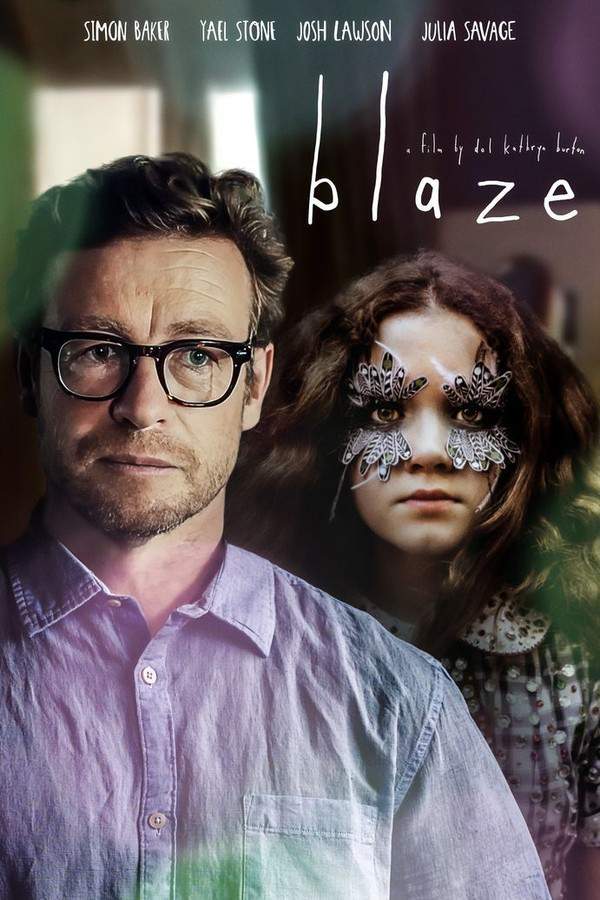
What Is Blaze About?
The premise of Blaze in 260 words, with nothing given away. The full story follows below.
In a modest Paddington terrace, Blaze lives in a tucked‑away roof‑space bedroom filled with a sparse collection of china animals and a single white dragon figurine. The house feels both familiar and confining, its quiet streets echoing the ordinary rhythm of a suburban life that suddenly feels off‑balance. When a shocking, unspoken incident shatters her sense of safety, Blaze retreats inward, seeking refuge in a vivid inner world where the lines between imagination and reality blur.
Her most constant companion in this fragile landscape is a flamboyant, ceiling‑high dragon she calls Zephy, a creature of glittering eyes and fire‑breath that she conjures to fill the silence left by loss. This fantastical friend becomes both a shield and a mirror, allowing her to explore the raw emotions she cannot yet name. The tone of the film hovers between haunting realism and lyrical surrealism, bathing everyday moments in a soft, unsettling glow that reflects her internal turbulence.
Anchoring her is her father, Luke, a solitary man whose own struggles with connection leave him ill‑equipped to bridge the widening gap between them. Their relationship is marked by careful distance, a mix of protective intention and uneasy uncertainty. Around them, ordinary settings—a judo class, school corridors, quiet streets—take on an almost dream‑like quality, hinting at the possibility of healing and redemption that may emerge from the shadows of her imagination. The film invites the audience to linger in the delicate space where childhood wonder meets trauma, asking what it means to find a voice when the world seems both too loud and too silent.
What Happens in Blaze?
The complete story of Blaze, from the first scene to the last, in 820 words (about 4 minutes). Spoilers throughout. Names in the text link to 2 cast member pages.
Spoilers ahead
Blaze, Julia Savage is a 12-year-old girl living in a Paddington terrace house, the only home she has ever known. Her bedroom is in the roof space, sparsely decorated apart from a display cabinet that holds a pair of cute china animals and a small white china dragon. She has an imaginary friend, a ceiling-high dragon with multiple breasts, a long snout and teeth like a crocodile, glistening eyes the size of bowling balls, and long black lashes that growls and breathes fire. She calls her friend Zephy.
Luke, Simon Baker is Blaze’s father, an otherwise solitary man who may work as an architect. He has no visible circle of friends or colleagues, and his own mother is his closest confidante. He is diligent and well-meaning, but unsure of how to be a father and often defensive in conversations with women.
Blaze is returning from a visit to the shops via a service lane, some short distance behind Hannah, [Yael Stone], and Jake, [Josh Lawson], who are unaware of her presence. Hannah and Jake were once lovers, and Jake wants to revisit that relationship, but Blaze feels embarrassed and hides while watching. Jake is insistent, and then violent: he throws Hannah to the bitumen. She tries to escape over a fence, but he forces her against an old tree and rapes her. Blaze drops her ice-cream and runs home, sobbing under her blanket. Luke asks after her distress, but she remains mute, and the distant wail of police sirens adds to the unease.
At the police station, Blaze’s phone is found at the scene, and she is treated as a potential witness; she is fingerprinted and a DNA swab is taken. A female doctor conducts a forensic examination.
Two weeks later Blaze is interviewed by Jade, a police psychologist, and at the committal hearing she identifies Jake as the rapist. Jake’s counsel asks intimidating questions that imply Blaze, by virtue of her age and naivety, might confuse rape with role-playing, and they question why, if concerned, she did not scream for help. Blaze’s response is symbolized on screen by flames from the white dragon on her wall. Luke learns that Blaze’s testimony has been discounted as unreliable. Jake has admitted to consensual sex with Hannah; any assault is suggested to be later, by someone else.
Blaze then finds Hannah’s surname Blum on the internet and discovers websites devoted to female attack victims. She locates Hannah’s social media page, and is drawn into her life story, filling Blaze’s wall with pictures of Hannah.
The relationship with her father remains tense. He drops Blaze at her regular judo class, but Blaze insists on returning by bus. At the dojo, she and her friend Anna discuss sex and virginity. On the ride home, Blaze recognizes Jake through the window and screams, beating the bus window with her forehead and drawing blood. Blaze is sedated and admitted to a psychiatric clinic, where she is cared for and later released into her father’s custody with medication to be taken with meals. She worries that under medication she will lose her dragon Zephy.
Weeks go by with no noticeable improvement. Blaze hides the capsules in a figurine; when the drugs wear off, her torpidity turns to manic activity—hanging the figures by woolen threads, attached to the ceiling with wax that she melts with a gas lighter. Luke is furious at the risk to their home. Blaze is chastened but no longer catatonic.
She returns to her judo class and competes bravely, cheered from the gallery by her father. When he sobs after embracing her, she feels embarrassed. Outside the dojo, she bravely stares down a loitering adult male until he turns and walks away.
Blaze and Anna discover Jake’s home address and confront him after school, saying, “I know what I saw.” His female companion is mystified; he shrugs and denies knowing what it is about. When she returns home, the photos, her laptop and china figures are gone; Luke has found the hidden capsules. She remains unrepentant. The next morning she starts the car in the garage and, with a squeal of tires, backs across the road, knocking down her father and causing minor damage. She is re-admitted to the psychology ward. A fellow patient—a boy diagnosed with bipolar disorder—offers comfort as they sleep beside each other. The next day she meets a counselor, a young woman with prominent tattoos and only one functioning eye; Blaze lets down her guard. The counselor candidly answers Blaze’s concerns. That night she experiences her first menstrual period.
In the closing scenes, now aged 13, the criminal trial is about to begin and Blaze has the option of testifying. She befriends an older schoolmate who advises her to speak the truth, and she passes him her white china dragon as a symbol of her resolve. Returning home, she confidently tells her father that she plans to take the stand.
Blaze Timeline: Every Key Event in Order
15 key events in the order they happen, from “Blaze's ordinary life at home” to “The path forward: testifying in court”. 15 events name a place, across 14 locations.
- 1
Blaze's ordinary life at home
Blaze is a 12-year-old girl living in a Paddington terrace house. Her bedroom sits in the roof space, sparsely decorated with a display cabinet of paired china animals and a small white dragon she calls Zephy. Her mother is absent, and Blaze’s everyday world feels quiet and isolated, tinged with imagination.
When:before the incident Where:Paddington terrace house
- 2
Blaze witnesses the assault
While returning from a shop, Blaze watches as Jake violently assaults Hannah in a service lane behind them. She hides but observes the confrontation, torn between fear and the urge to watch. The event marks Blaze’s first confrontation with brutal violence in her life.
When:the night of the incident Where:service lane behind Hannah and Jake
- 3
Immediate aftermath at home
Blaze drops her ice-cream and runs home, sobbing under her blanket. Her father Luke asks what happened, but Blaze remains mute, overwhelmed by what she witnessed. The distant wail of sirens suggests the case is already spiraling toward official attention.
When:immediately after the incident Where:Blaze's home
- 4
Police involvement begins
Blaze and her father go to the police station, where her phone is found at the crime scene. She is fingerprinted and given a DNA swab, and undergoes a forensic examination by a doctor. The investigation begins to place Blaze within the narrative of the crime.
When:shortly after the incident Where:police station
- 5
Two weeks later: Blaze's interview
Two weeks after the assault, Blaze is interviewed by Jade, a police psychologist who is unsympathetic to her situation. The interview probes her memory, fear, and reliability as a potential witness. It sets the tone for how her testimony will be treated in court.
When:two weeks after the incident Where:police psychologist's office
- 6
Committal hearing and Blaze's identification
At the committal hearing, Blaze identifies Jake as the rapist, though the defense questions whether a young girl can truly distinguish rape from role-playing. The courtroom atmosphere is tense and skeptical. Flames from Blaze’s chinaware dragon appear in close-up during the moment, signaling emotional eruption.
When:during committal hearing Where:courtroom
- 7
Doubts cast on Blaze's testimony
Luke is informed that Blaze’s testimony has been discounted as unreliable. The defense suggests the assault could have happened later and by someone else, leaving Blaze feeling sidelined in the pursuit of justice. The family dynamic strains under the weight of legal doubt.
When:after committal hearing Where:investigation/court context
- 8
Blaze researches Hannah Blum online
Blaze discovers Hannah Blum’s surname and finds websites devoted to female attack victims. She scrolls through Hannah’s life on social media and extends her vigil by adorning her wall with Hannah’s pictures. The search deepens Blaze’s fixation on the victim’s story and the case itself.
When:after learning Hannah's name Where:Blaze's home; internet
- 9
Bus confrontation and psychiatric admission
After a regular judo class, Blaze recognizes Jake on the bus and tries to confront him, banging the window and drawing blood. She is sedated and later admitted to a psychiatric clinic. The incident marks a shift from legal proceedings to intensive personal treatment.
When:after judo class Where:bus
- 10
Recovery begins: clinic and meds
Blaze is released into her father’s care and prescribed medication to be taken with meals. The treatment aims to stabilize her mood and anxiety, though she fears losing her dragon Zephy during therapy. Luke becomes a steady, if anxious, anchor in her recovery.
When:immediately after clinic admission Where:home; medical supervision
Show the other 5 events of Blaze Hide the last 5 events
- 11
Weeks of slow progress and relapse
Weeks pass with little noticeable improvement. Blaze begins hiding capsules in a figurine, and the drugs wear off, returning her to a torpid state. Her coping turns darker as she hangs figurines by wool and melts wax to ignite a dangerous display.
When:weeks after discharge Where:Blaze's home
- 12
Return to strength and public defiance
Blaze goes back to her judo class and is publicly supported by her father during a tense moment in the gallery. She also confronts danger outside the dojo, staring down a loitering adult male until he retreats. These moments signal a fragile but growing resolve.
When:after weeks Where:dojo and street outside
- 13
Confronting Jake and what remains behind
Blaze and Anna locate Jake’s home and confront him, insisting they know what happened. He denies knowledge of the case and the claim. When Blaze returns home, she finds that photos, her laptop, and china figures are gone, and Luke has found the hidden capsules Blaze kept for herself.
When:after confrontation Where:Jake's home; Blaze's home
- 14
Car incident and ward re-admission
In a desperate, dangerous act, Blaze starts the car and speeds across the road, injuring her father and causing minor damage. She is re-admitted to the psychology ward the next day. A counselor helps her process her fears, and she experiences her first menstrual period that night.
When:the day after the confrontation Where:garage/front road; psychology ward
- 15
The path forward: testifying in court
Now aged 13, Blaze faces the possibility of testifying in the criminal trial. An older schoolboy offers guidance, and Blaze passes him her white china dragon as a symbol of courage. She tells her father she will take the stand, signaling a decisive step toward seeking justice.
When:closing Where:home; courtroom
Who Are the Main Characters in Blaze?
5 characters, among them Blaze (Julia Savage), Luke (Simon Baker) and Jake (Josh Lawson): who each one is and the part they play in the story. 4 of them link to the actor’s page.
-

Blaze (Julia Savage)
Played by Julia Savage
A 12-year-old girl living in a Paddington terrace house with an imaginary dragon, Zephy, who symbolizes her attempt to hold onto control after a traumatic event. Blaze is perceptive, vulnerable, and determined to find a way to speak up as she navigates trauma, family dynamics, and the threat of violence around her. Her emotional world fractures and then slowly rebuilds as she moves toward testifying and reclaiming agency.
- 🧠 Trauma response
- 🥇 Resilience
- 🔥 Determination
-

Luke (Simon Baker)
Played by Simon Baker
Blaze's father, a solitary architect who wants to protect his daughter but struggles to connect and communicate openly. He is diligent and protective, yet often awkward in discussions about sex and trauma. His relationship with Blaze evolves as he learns to support her decision to testify while confronting his own vulnerabilities.
- 👨👧 Father-daughter
- 🛡️ Protection
- 🧠 Mental health
-

Jake (Josh Lawson)
Played by Josh Lawson
The antagonist who assaults Hannah; his behavior is controlling and deceptive, manipulating others and denying responsibility. His actions trigger Blaze's wake-up call and fuel the narrative about speaking up against violence, even when confronted with intimidations and defense strategies in court.
- ⚔️ Antagonist
- 💥 Violence
- 🗣️ Manipulation
-

Hannah (Yael Stone)
Played by Yael Stone
Jake's victim who is assaulted, her experience echoing through Blaze's investigation. She becomes part of the social and online landscape around female attack victims, which Blaze investigates to understand the broader context of violence and survivor stories.
- 🎗️ Survivor
- 🕊️ Recovery
- 🌐 Victim narrative
- A
Anna
Blaze's school friend who discusses topics like sex and virginity with Blaze, providing a window into Blaze's social world and the debate about adolescence.
- 👭 Friendship
- 🗣️ Conversation
Where and When Is Blaze Set?
Blaze is set in Paddington (Present day). Here is why the time and place matter to the story.
When
Present day
Set in contemporary Australia, Blaze's story unfolds in real-world surroundings that include schools, clinics, and police procedures. The events track her from age 12 to 13, highlighting how trauma intersects with adolescence. The film depicts modern processes—media coverage, court testimony, and psychiatric care—rather than a historical setting. The timeframe is present-day and ongoing, reflecting current social conversations about sexual violence and child witnesses.
Where
Paddington
Paddington is a quiet inner-suburban terrace-house enclave that frames Blaze's fragile home life. The setting emphasizes a close-knit community where adults and neighbors shape the girl's safety and perception of the world. The house and surrounding spaces like the service lane and dojo form a microcosm of ordinary life that is disrupted by a traumatic event.
- 🏠 Suburban setting
- 🗺️ Australia
- 🕰️ Contemporary
What Are the Themes of Blaze?
4 ideas the story keeps returning to, among them Trauma, Justice and Family.
-
01
Trauma
Blaze's experiences reveal how trauma from violence shapes a child's sense of safety and agency. The dragon Zephy embodies her need to externalize pain and control it. The film shows how trauma lingers, influencing behavior, memory, and relationships, including with her father. Healing arrives in small, difficult steps as she asserts her voice and choices.
-
02
Justice
The courtroom scenes foreground the complexities of testimony given by a young witness. Blaze's memory is challenged by defense tactics, highlighting how systems can doubt and discredit victims. The symbol of Blaze's dragon flame becomes a stand-in for truth and resistance against silencing. The film ultimately centers on the power of telling the truth, even under pressure.
-
03
Family
Luke's relationship with Blaze is fraught—duty and affection clash as he struggles to protect his daughter while letting her navigate her trauma. The mother's absence is felt as a throughline in Blaze's early life, shaping her reliance on icons like Zephy. The home becomes both a sanctuary and a pressure chamber where emotions erupt. The bond grows as Blaze gains courage to testify.
-
04
Coming of age
As Blaze moves from 12 to 13, she asserts autonomy, negotiates boundaries, and begins to question authority. Her journey is not only about processing trauma but also about discovering courage to stand up for herself and others. The dragon Zephy transitions from a coping mechanism to a symbol of agency and voice. The film maps a painful but hopeful path toward self-definition.
What Kind of Film Is Blaze?
Dark in tone, with steady pacing and a moderate story, going by the plot summary.
- Tone
- Dark
- Pacing
- Steady
- Story
- Moderate
- Intensity
- High
- Ending
- Happy
A deeply intense and emotionally heavy coming-of-age story that follows a young girl's raw psychological struggle with trauma, blending harsh reality with dreamlike fantasy as she grapples with violence and searches for inner strength.
- claustrophobic
- anxious
- dark
- dreamlike
- resilient
- traumatic
- trauma and recovery
- coming of age
- witness testimony
- father daughter relationship
Content notes: sexual assault, trauma, child psychological distress, blood.
Quiz
How well do you remember Blaze? Test yourself on the story.