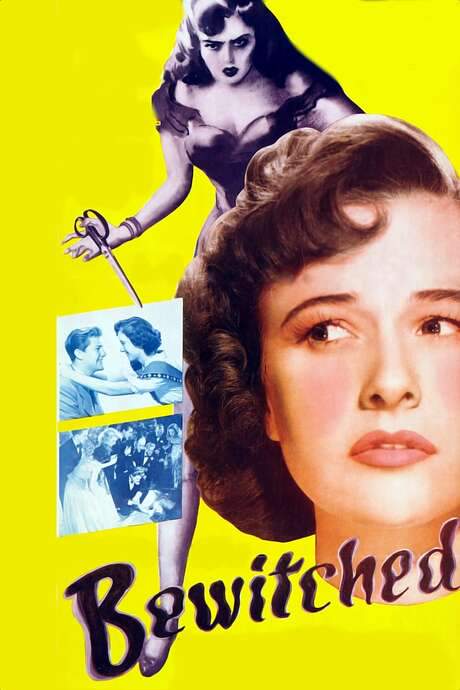
What Is Bewitched About?
The premise of Bewitched in 283 words, with nothing given away. The full story follows below.
In a muted, late‑night laboratory, Dr. Bergson records a case that feels as much like a confession as a clinical report. His voice, steady and almost hypnotic, frames a story that teeters between empirical psychology and something eerily beyond explanation. The tone is subdued yet tense, inviting the audience to listen to a mystery that unsettles even its own narrator.
At the heart of the tale is Joan Ellis, a small‑town darling whose life seems perfectly mapped out—engagement, family, and a close‑knit community. Beneath the surface, however, an inner presence she calls Karen begins to assert itself, a compelling whisper that pulls her away from the familiar comforts of home. This internal conflict sets up a delicate double‑life, hinting at a world where identity can fracture without warning.
Escaping to New York, Joan adopts a new name and steps into an unfamiliar urban rhythm. There she encounters Eric Russell, a seasoned attorney whose own world is orderly and measured. Their connection offers both a refuge and a catalyst, as Joan grapples with the simultaneous pull of her hidden voice and the desire for ordinary affection. The city itself becomes a character—shimmering, anonymous, and full of possibilities for a woman living two realities at once.
The film dwells on the unsettling notion of “double consciousness,” a theory Dr. Bergson explores with clinical curiosity and a growing sense of obsession. As the narrative unfolds, the audience is drawn into a psychological landscape where the boundaries between self and other blur, and where the search for truth feels as much an internal trial as an external one. The mood remains atmospheric and introspective, promising a haunting exploration of split identity without revealing the story’s ultimate resolutions.
What Happens in Bewitched?
The complete story of Bewitched, from the first scene to the last, in 547 words (about 2 minutes). Spoilers throughout. Names in the text link to 9 cast member pages.
Spoilers ahead
Dr. Bergson narrates the story in a late-night, clinical voice, tapping into a case that unsettles even him. He tells a secretary to keep writing, and she remains hooked by the mystery his notes reveal, a tale that blurs science with something almost supernatural.
At a party celebrating Joan Ellis’s engagement to Bob Arnold, the young woman is pressed by an inner voice—Karen—that swells into a compulsion she cannot control. Under this overwhelming pull, Joan flees her Midwestern roots for New York, leaving behind her loving family and a circle of friends who are shocked, bewildered, and frightened. She writes a note for her worried parents—John Ellis and Mrs. Ellis—begging them not to hunt her down, a request that only deepens the mystery around her.
In the city, she assumes a new life as Joan Smith and becomes involved with Eric Russell, a mature attorney who finds himself drawn to her secrecy and vulnerability. The voice Karen approves of this relationship, and during a river cruise, Karen briefly resurfaces, stealing a kiss with a fierce, possessive intensity that chills both Joan and Eric. When Joan regains control, she is shaken and asks, “What did I do?” but she cannot voice what the other self has done to her.
Back home, a devoted fiancé—Bob Arnold—rejoins Joan’s life, and the couple attempts to rebuild. Yet tragedy strikes when Karen forces Joan’s hand to stab Bob in the back, a moment that propels Joan into a high-profile murder trial. Dr. Bergson arrives as an expert witness and declares that Joan is not insane. The defense leans on the idea that there is more to the truth than a single conscience can bear, and Eric argues that Joan’s silence may hide a hidden guilt or innocence that the jury must weigh.
The jury finally finds Joan not guilty, a verdict that fills Karen with a cruel, gleeful confidence that she can claim Eric for herself. In the courtroom, Joan reacts with a throat-tight scream: > I’m guilty!
Sentenced to die, Joan withdraws into herself and refuses to explain the contradictions roiling inside her. In prison, she murmurs to Eric, “I want to die. When I die, she dies.” Dr. Bergson begins to entertain a radical theory—that two women share one body: a guilty entity and an innocent one, locked in a struggle for control.
To test the idea, the governor—Governor—and the governor’s wife—Governor’s Wife—are drawn into the experiment of mind and fate. Bergson retrieves a book on double consciousness from the governor’s library, adds a paper knife to the pages, and, with Eric present, prepares to press the experiment to a dramatic close.
Saying, “There will be an execution tonight,” Bergson hypnotizes Joan. On the stage of the mind, [Karen] and Joan become visible as transparent, spectral figures, standing on either side of Joan’s seated form. Karen’s makeup-heavy face wears a feral smile, while Joan remains silent. The ritual ends with Bergson narrating a grim balance of power: Karen grows weaker as Joan seems to gain strength, and the image of Karen fades away. In the end, Joan leans into Eric’s arms, the struggle resolved in a way that leaves her with a final, unsettling calm: a smile that suggests she has found the light—or the illusion of it—within a divided self.
Bewitched Timeline: Every Key Event in Order
14 key events in the order they happen, from “Dr. Bergson begins dictating the case” to “Karen fades; Joan resumes control, ending in a smile”. 14 events name a place, across 11 locations.
- 1
Dr. Bergson begins dictating the case
Late at night, Dr. Bergson sits at his desk dictating case notes to his secretary. The secretary is captivated by the case and begs him to continue, despite his suggestion to pause. The frame narrative is set as a flashback for the story.
When:late at night Where:Dr. Bergson's study
- 2
Engagement party and the seed of danger
On the night of a party celebrating Joan Ellis's engagement to Bob Arnold, a voice in her head begins to overtake her. She leaves her Midwestern home, abandoning a note asking her parents not to search for her. The departure foreshadows the split between her two identities.
When:night of the engagement party Where:Joan's Midwestern home
- 3
Joan flees to New York and starts anew
Joan travels to New York City and assumes the name Joan Smith, beginning a new life far from her past. She builds herself a new identity and society in the city. This marks the first major separation of her two selves.
When:shortly after the party Where:New York City
- 4
Joan falls for Eric Russell
In the city, Joan falls in love with attorney Eric Russell. The voice inside her approves of this mature relationship, hinting at the danger that lurks beneath. Their romance becomes a focal point of the escalating tension.
When:after moving to NYC Where:New York City
- 5
Karen manifests on a river cruise
During a river cruise, the voice once again emerges, calling itself Karen and kissing Eric with feral passion. When Joan regains control, she is stunned and asks what she did. Eric grows worried, though Joan remains unable to speak about the incident.
When:during the cruise Where:river cruise
- 6
Joan's silence fuels tension
Joan struggles to tell anyone about her experiences, and her inability to confide drives the suspense. The lack of trusted confidants heightens the fear that the truth will destroy her relationships. The secret gnaws at the core of her life.
When:ongoing after the cruise Where:NYC and surrounding circles
- 7
Bob finds Joan
After a long search, Bob finds the elusive Joan and is overjoyed to see her again. He is thrilled and helps her pack as they consider their next steps. The reunion sets the stage for the tragedy to come.
When:after her disappearance and return Where:Joan's location with Bob
- 8
Karen takes control and kills Bob
While Bob helps with packing, Karen seizes control of Joan's hand and uses a pair of scissors to stab him in the back. The murder triggers a legal nightmare and shatters those around Joan. The act intensifies the central mystery of the case.
When:the night of the packing Where:their home
- 9
The murder trial and expert testimony
Joan is tried for murder, with Dr. Bergson brought in as an expert witness arguing that she is not insane. She remains silent, and Eric uses that silence to suggest there is more to the story and that she may be innocent. The courtroom becomes a battleground between science, truth, and love.
When:during trial Where:courtroom
- 10
Not guilty verdict, and Joan's inner plea
After a long deliberation, the jury finds Joan not guilty. In her mind, Karen exults at the prospect of having Eric, but Joan interrupts with a cry of guilt, shouting 'I’m guilty!' The clash marks the collapse of the public verdict against her inner truth.
When:verdict time Where:courtroom
Show the other 4 events of Bewitched Hide the last 4 events
- 11
Joan in prison and her whispered plea
In prison awaiting execution, Joan refuses to explain what happened and whispers to Eric that she longs to die so that Karen will die with her. The secret weighs heavily as she faces a grim end. The scene foreshadows the dramatic confrontation to come.
When:before execution Where:prison
- 12
Dr. Bergson's dual-personality theory moves forward
Bergson explains his theory that two women live in one body—one guilty and one innocent—and persuades the governor to listen. He retrieves a book and enlists the governor's wife to help reveal the truth. The moment frames the scientific angle of the crisis.
When:on the night of execution Where:governor's office and library
- 13
The hypnotic confrontation begins
With execution imminent, Bergson hypnotizes Joan to uncover the truth. The two entities—Joan and Karen—appear as transparent figures on either side of her. He outlines the shifting balance of strength as the ritual unfolds.
When:moments before execution Where:prison cell (pre-execution)
- 14
Karen fades; Joan resumes control, ending in a smile
Under Bergson's method, Karen's presence wanes and disappears, leaving Joan weakened but momentarily free. Joan slumps into Eric's arms and then straightens, smiling in a chilling finish that underscores the film's theme of duality. The ending leaves the audience with a haunting ambiguity about truth and identity.
When:execution night Where:prison
Who Are the Main Characters in Bewitched?
5 characters, among them Joan Ellis (Phyllis Thaxter), Dr. Bergson (Edmund Gwenn) and Eric Russell (Horace McNally): who each one is and the part they play in the story. Every profile links to the actor’s page.
- JE
Joan Ellis (Phyllis Thaxter)
Played by Phyllis Thaxter
A demure young woman who flees her engagement to reinvent her life in New York City, while a second personality, Karen, vies for control. Her outward calm masks intense inner conflict and the fear of losing herself to Karen. The tension between promise and peril drives her decisions and relationships, especially with Eric.
- 🎭 Drama
- 🧠 Split Identity
- 🤔 Inner conflict
-
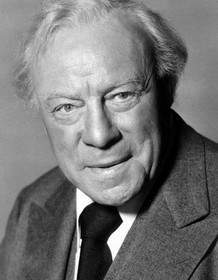
Dr. Bergson (Edmund Gwenn)
Played by Edmund Gwenn
A psychiatrist who theorizes multiple personalities and uses hypnosis to reveal the truth behind Joan's actions. He becomes the catalyst for the two-in-one theory, balancing clinical detachment with a moral concern for his patient. His intervention ultimately exposes the deeper guilt at the heart of the case.
- 🧠 Psychology
- 🔬 Science
- ⚖️ Ethics
- ER
Eric Russell (Horace McNally)
Played by Stephen McNally
An attorney who becomes Joan's lover and confidant, trying to understand her affliction while resisting Karen's hold. He represents rationality and compassion, pushing for a path that respects Joan's truth rather than the courtroom's verdict. His loyalty to Joan remains central amid mounting danger to both.
- 🎭 Drama
- 🧠 Psychology
- 💑 Romance
- BA
Bob Arnold (Harry H. Daniels Jr.)
Played by Henry H. Daniels Jr.
Joan's fiancé whose loving concern drives him to search for her, only to be caught in the web of Karen's influence. His murder becomes the focal point of the trial, testing the limits of marital trust and moral responsibility. He embodies the innocent victim around whom the mystery tightens.
- 💔 Tragedy
- ⚖️ Justice
- 🕊️ Innocence
- K(
Karen (voice) (Audrey Totter)
Played by Audrey Totter
The domineering voice that surfaces through Joan, representing a predatory, possessive facet of the psyche. Karen exerts control at crucial moments, steering actions and speeches, culminating in a chilling display of two-in-one consciousness. Her presence is the engine of suspense and the film's psychological tension.
- 🧠 Psychology
- 👻 Supernatural
- 🎭 Drama
Where and When Is Bewitched Set?
Bewitched is set in Midwest and New York City. Here is why the place matters to the story.
Where
Midwest, New York City
The story opens in a quiet Midwestern home, reflecting a traditional, family-centered setting. It then moves to bustling New York City, a world of opportunity and peril that tests Joan's resolve. A river cruise scene in the city marks the moment where the inner voice Karen first asserts itself and disturbs ordinary life.
- 🏡 Midwest
- 🗽 New York City
- 🎭 Drama
What Are the Themes of Bewitched?
3 ideas the story keeps returning to, among them Dual Identity, Guilt and Justice and Spectral Truth.
-
01
Dual Identity
Joan hosts two selves, Joan and Karen, inside one body, with Karen's predatory presence taking control at key moments. The plot follows the struggle between outward composure and inner turmoil as the two personalities contend for agency. The courtroom drama becomes a battleground for truth versus perception, forcing characters to question what constitutes a single person. The film frames identity itself as a contested terrain where guilt and innocence can reside in one body at once.
-
02
Guilt and Justice
Joan is tried for murder after Karen's acts surface, yet the jury's verdict hinges on appearances and interpretation rather than a clear confession. Not guilty feels like justice on the surface, but the film probes whether inner culpability can be absolved by exoneration. Dr. Bergson's theory and the eventual revelation challenge the boundary between legal verdicts and moral responsibility. The conclusion suggests that true accountability may extend beyond courtrooms.
-
03
Spectral Truth
The film hints at supernatural overtones as Karen's presence seems to shadow Joan, and the 'two-in-one' mind is dramatized in a ghostly display. The hypnotic revelation blurs lines between science and the unknown, implying some truths lie beyond ordinary perception. In the end, the story treats the haunting as a metaphor for an unresolved inner conflict that cannot be simply explained away as madness.
What Kind of Film Is Bewitched?
Tense in tone, with steady pacing and a moderate story, going by the plot summary.
- Tone
- Tense
- Pacing
- Steady
- Story
- Moderate
- Intensity
- High
- Ending
- Ambiguous
A clinically told, psychologically intense thriller that generates high tension as it charts the grim inner battle within a woman whose alternate personality commits murder, leading to a death row experiment with an ambiguous resolution.
- suspenseful
- claustrophobic
- anxious
- psychologically intense
- melancholic
- grim
- dissociative identity disorder
- murder trial
- inner struggle
- psychiatric treatment
Content notes: murder, psychological trauma, execution, mental illness.
Quiz
How well do you remember Bewitched? Test yourself on the story.