What Is Bao About?
The premise of Bao in 295 words, with nothing given away. The full story follows below.
In the gentle hum of a Toronto kitchen, the mother—an aging Chinese‑Canadian woman whose days have settled into the quiet rhythm of an empty nest—finds solace in the familiar rituals of home cooking. Surrounded by the warm scent of dough and soy, she moves between pots and pans with a practiced grace that hints at a lifetime of nurturing, even as the house feels emptier without her grown‑up son and the bustling chatter that once filled it. The city outside is a mosaic of cultures, yet within these four walls the world narrows to the comforting cadence of family recipes passed down through generations.
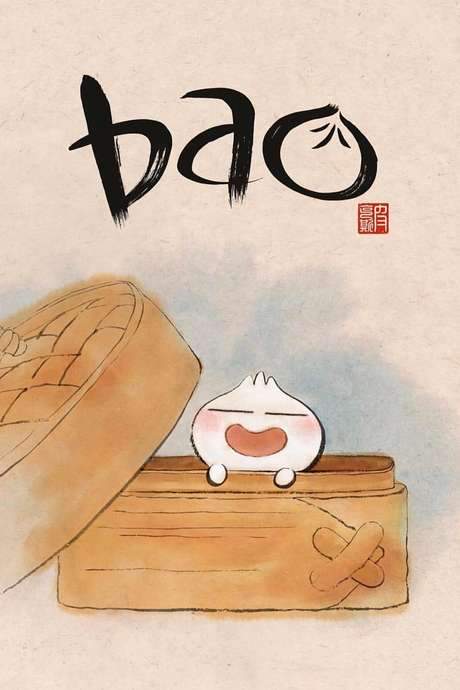
One evening, as steam curls from a tray of freshly steamed baozi, an unexpected shimmer of life flickers in the folds of a plump dumpling. The dumpling awakens with a bright, giggly energy that both startles and delights, igniting a playful dance of discovery between creator and creation. This whimsical twist of magical realism transforms the ordinary kitchen into a stage for quiet wonder, where the simple act of feeding becomes a tender exchange of affection and imagination. The tone balances lighthearted charm with an undercurrent of wistful longing, inviting viewers to linger on moments that feel both intimately personal and universally resonant.
As the two share meals, smiles, and silent conversations, a subtle tension builds between the desire to protect cherished new life and the inevitable pull of growth and independence. The film gently explores what it means to nurture, to let go, and to find fresh purpose when familiar roles begin to shift. Through warm, pastel‑toned visuals and a softly humorous soundtrack, the story offers a heartfelt meditation on love’s many forms—reminding us that even the smallest, most unexpected miracles can redraw the boundaries of family, hope, and self‑discovery.
What Happens in Bao?
The complete story of Bao, from the first scene to the last, in 251 words (about 1 minute). Spoilers throughout. Names in the text link to 4 cast member pages.
Spoilers ahead
In Toronto, Ontario, Canada, a Chinese-Canadian woman, Sharmaine Yeoh cooks a meal of baozi for herself and her husband, Tim Zhang. The kitchen fills with steam as one bun seems to stir on its own, a magical moment that startles them both.
She tends to the living bun as if it were a child, feeding it and cherishing the time they share. The bun, the TV Son Daniel Kailin, grows from a playful infant into a child who longs to join other children in play. Yet his overprotective mother Sindy Lau blocks that independence, leading to friction that slowly drives a wedge between them.
As the boy grows, he dreams of a future beyond home; he introduces his fiancée to his mother, defying the boundary she drew around him. The clash culminates in a desperate act: she eats the bun, then weeps for the consequences of her fear. The emotional weight of this choice presses on everyone involved.
Later, the mother lies in bed, and her real son enters the room, revealing that the sequence was an allegorical dream. The father Tim Zhang urges him to talk to his mother, but she rebuffs him. They sit on the edge of the bed, and the son offers her the same treat he once refused on the bus, a quiet, healing moment that hints at reconciliation. In the end, after healing begins to take root, the son and his fiancée join his mother in making buns, while the father looks on with approval.
Bao Timeline: Every Key Event in Order
11 key events in the order they happen, from “Bao comes to life in the kitchen” to “Making buns together again”. 11 events name a place, across 7 locations.
- 1
Bao comes to life in the kitchen
In Toronto's kitchen, a Chinese-Canadian mother prepares a meal of baozi for her and her husband. One bun suddenly animates, waking to life and surprising her. She decides to raise it as if it were her child, tending to its needs with care.
Where:Toronto, Ontario, Canada – mother's kitchen
- 2
A devoted mother and her living bun
She feeds and cherishes the bun as it grows, turning everyday meals into moments of wonder. The bun delights in the warmth of being cared for and forms a strong bond with its mother.
Where:Toronto, Ontario, Canada – mother's kitchen
- 3
The bun seeks companionship
As the bun grows, it longs to play with other children and see the wider world. The mother becomes overprotective, forbidding outside interactions and creating a quiet, growing tension between them.
Where:Home in Toronto, mother's home
- 4
Independence and a fiancé
The bun matures and signals a desire for independence. He introduces his fiancé to his mother, telling her he plans to leave home and start a life on his own.
Where:Home
- 5
The standoff over leaving
The mother protests the plan for him to depart, clinging to tradition and her desire to keep him close. The clash between care and autonomy deepens the rift between them.
Where:Home
- 6
Desperation leads to a drastic act
In a desperate bid to keep him from going, the mother eats the living bun. The act shatters her, and a surreal sequence begins to blur dream and reality.
Where:Home kitchen
- 7
The dream is revealed
Lying in bed, the mother discovers the previous sequence was an allegorical dream. Her real son enters the room, leaving the moment to reveal the truth behind the dream.
Where:Bedroom
- 8
A family nudge toward conversation
The father urges his son to talk to his mother, but she rebuffs him, indicating lingering hurt. The exchange underscores how far apart they have fallen.
Where:Bedroom
- 9
Bus memory returns as a bridge
A memory surfaces of the moment on a bus when the son refused the same bun the mother had offered. The memory becomes a bridge to reconciliation and understanding.
Where:Bus (memory)
- 10
A shared moment on the edge of reconciliation
On the edge of the mother's bed, the son offers her the same bun he once refused on the bus, and they share it. The exchange marks a turning point as old hurts begin to soften.
Where:Bedroom
- 11
Making buns together again
After reconciliation, the son and his fiancée join his mother in making buns, while the father looks on with approval. The family reconnects through a simple, intimate act of cooking.
Where:Kitchen
Who Are the Main Characters in Bao?
4 characters, among them Mom (voiced by Sindy Lau), Bao (the living bun) and Dad (voiced by Tim Zhang): who each one is and the part they play in the story. 3 of them link to the actor’s page.
- M(
Mom (voiced by Sindy Lau)
Played by Sindy Lau
A devoted mother who clings to protective instincts and traditional values. Her care for her family is intense, yet it fuels tension when independence and new life stages arise. Her emotional arc centers on guilt, longing, and ultimately seeking reconciliation.
- 🎭
- 🧶
- 💗
- B(
Bao (the living bun)
A sentient steamed bun who forms a bittersweet bond with his mother. He embodies curiosity and the desire to explore beyond the kitchen, challenging the mother’s control. His growing independence mirrors the family’s larger dynamics.
- 🥟
- ✨
- 🤝
- D(
Dad (voiced by Tim Zhang)
Played by Tim Zhang
The family patriarch providing steady support and a calming counterbalance to the mother’s protectiveness. He encourages open conversation and helps guide the family toward reconciliation. He values connection and shared moments of healing.
- 👨
- 🕊️
- 🤝
- TS
TV Son (voiced by Daniel Kailin)
Played by Daniel Kailin
The son who navigates the dream-reality line and returns to seek connection with his mother. He embodies a patient, reflective approach to family conflicts and ultimately helps bridge gaps between generations. His presence underscores the importance of communication.
- 🧒
- 💬
- 💖
Where and When Is Bao Set?
Bao is set in Toronto, Ontario and Canada (Present day). Here is why the time and place matter to the story.
When
Present day
The events unfold in contemporary Toronto, reflecting current urban life and immigrant family dynamics in Canada. The family navigates generational gaps and cultural expectations through the ritual of cooking and sharing meals. The dream sequence adds a symbolic layer to their relationship, emphasizing emotional growth over time.
Where
Toronto, Ontario, Canada
Set in modern-day Toronto, the story centers on a Chinese-Canadian family living in the city. The urban backdrop highlights multicultural neighborhoods and the everyday life of a family balancing tradition with contemporary life. Food, family, and cultural identity anchor the film against a bustling urban setting.
- 🌆 City
- 🧧 Immigrant community
- 🥟 Food culture
What Are the Themes of Bao?
4 ideas the story keeps returning to, among them Family Bonds, Tradition vs Modernity and Dreams & Reality.
-
01
Family Bonds
The film centers on the deep connection between mother and child, exploring how love, guilt, and effort to protect can shape a family. The emotional arc shows tenderness in caregiving and the pain of potential separation. Reconciliation ultimately reaffirms the power of family.
-
02
Tradition vs Modernity
The mother’s insistence on protection clashes with the bun’s desire for independence, mirroring broader tensions between preserving cultural traditions and embracing individual freedom. The mother’s actions reveal both devotion and overprotectiveness. The story suggests balance between heritage and personal growth.
-
03
Dreams & Reality
The entire encounter with the sentient bun is revealed as an allegorical dream, prompting reflection on fears and desires. The boundary between dream and reality becomes a narrative device to explore reconciliation. It invites audiences to consider how inner hopes shape outward relationships.
-
04
Food & Identity
Bao and the act of cooking become a conduit for cultural identity and family bonding. The buns symbolize nourishment, care, and the transmission of culture across generations. Through the shared meal, characters communicate love and heal rifts.
What Kind of Film Is Bao?
Bittersweet in tone, with steady pacing and a straightforward story, going by the plot summary.
- Tone
- Bittersweet
- Pacing
- Steady
- Story
- Straightforward
- Intensity
- Medium
- Ending
- Happy
A heartfelt animated short that explores themes of empty nest syndrome and generational reconciliation, creating an emotionally resonant journey through metaphor.
- nostalgic
- emotional
- heartwarming
- tender
- familial
- empty nest syndrome
- mother-son relationship
- reconciliation
- family reconciliation
- cultural identity
Content notes: emotional family themes.
Quiz
How well do you remember Bao? Test yourself on the story.