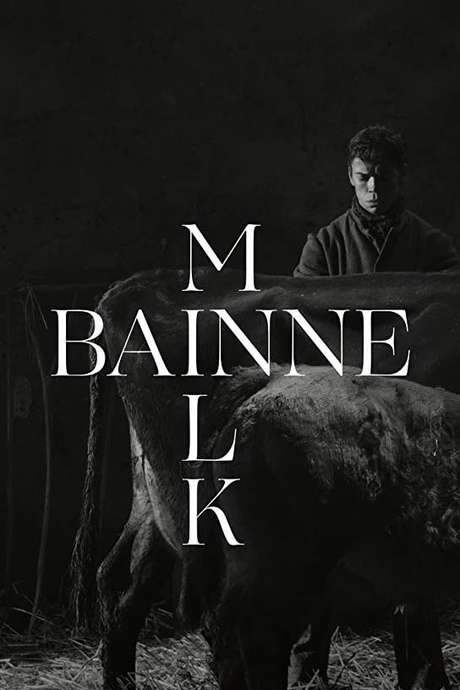


Bainne Plot Summary
Read the complete plot summary and ending explained for Bainne (2019). From turning points to emotional moments, uncover what really happened and why it matters.
During the waning year of the Great Irish Famine, a young, gaunt farmhand, Will Poulter, survives by tending livestock on the estate of an absent landlord. Scarcity has hardened him, as the hunger, repeated losses, and the indifference of overseers have stripped away much of his empathy. Each morning he milks a single surviving cow, guarding the yield as his sole means to stave off death. The routine is stark, quiet, and almost ritualistic, a small defiance against a world that has reduced life to mere subsistence.
One pre-dawn, a hooded female figure slips into the cowshed. Convinced someone is stealing the milk, he pursues her through mist-shrouded fields, the air heavy with cold and fog. She moves with a strange, almost unreal stillness, leaving no clear footprints, and she seems untroubled by the cold as she glides ahead of him. When he finally confronts her, she cups a tin vessel of milk close to her chest yet makes no attempt to flee. Her presence unsettles him deeply—she seems neither fully alive nor merely a spectre, a whisper of famine given flesh and breath.
Later, while keeping watch, he finds her again. She lingers at the cow’s flank, coaxing the animal with a quiet, patient touch while humming a lullaby in Irish. Though he erupts with anger at first, the farmhand hesitates, the sight of her emaciated frame reminding him of his own deprivation and fragility. The moment lingers between them as a storm begins to gather, and the wind seems to carry the soft strains of the lullaby into the night. A bolt of lightning briefly illuminates her hollowed features and distant gaze, hinting that she might be a famine victim long dead, returned to keep vigil over the living just long enough to be seen.
Haunted by the encounter, the farmhand is visited by stark dreams. He dreams of parched fields, skeletal cattle, and children crying out for sustenance, a vivid night-scape where the famine’s bite feels unrelenting and intimate. The morning after, the tension of fear and hunger softens, and a new, reluctant mercy begins to take root. Instead of driving her away, he allows the figure to draw milk freely, the act crossing a line from survival to a fragile solidarity. She looks to him with gratitude in her eyes, a quiet acknowledgment that kindness can endure even in the bleakest of times. As she recedes into the fog, her blurred form leaves behind only a faint echo of that lullaby.
He stands in the doorway of the cowshed, the milk vessel half full, torn between raw self-preservation and a dawning sense of connection. The famine endures outside, yet the encounter has rekindled a quiet humanity within him—an unspoken belief that life, however fragile, carries meaning beyond possession. The film frames this moment with a careful calm, suggesting that compassion can arise in the margins of catastrophe, giving shape to a life that might otherwise be measured only by what is saved or sold. In the end, the farmhand’s choice to share the milk becomes a small, resonant act that transcends the hunger around him, hinting at a deeper truth about survive-and-live that lingers long after the credits roll.
Bainne Timeline
Follow the complete movie timeline of Bainne (2019) with every major event in chronological order. Great for understanding complex plots and story progression.
Morning milking in a famine-haunted estate
Every morning the farmhand milks the lone surviving cow to keep himself alive as scarcity tightens its grip. Hunger hangs over the estate and he guards the fragile yield as his only lifeline. This routine establishes the bleak rhythm of life that shapes his outlook.
A hooded figure slips into the cowshed
Before first light a hooded woman slips into the cowshed to steal milk. The farmhand suspects theft and gives chase into mist-shrouded fields. The encounter leaves him unsettled by her calm, almost spectral presence.
Confrontation by the mist
He follows her into the cold dawn and confronts the silent intruder as she cups a tin of milk to her chest and does not run. The figure moves with uncanny quiet, leaving no clear footprints in the frost. The moment deepens the sense that she is more than a thief, something otherworldly.
Night meeting by the animal's flank
Near the cow’s flank they cross paths again as she coaxes the animal and hums an Irish lullaby. He is enraged at first, then tempered by her emaciated appearance and the reminder of shared deprivation. The air grows tense under a gathering storm.
Storm lit revelation
Lightning flashes illuminate her hollow features and distant gaze, suggesting she may be a famine victim long dead. The encounter feels like a visitation rather than theft. The mystery of her identity unsettles him even more.
Dream of a future ruined by famine
Haunted by the encounter, he dreams of parched fields, skeletal cattle, and children crying out for sustenance. The dream blurs the line between memory and omen, leaving him unsettled at dawn. It foreshadows what his choice may reveal about his humanity.
Morning mercy: milk freely drawn
The next morning, he does not drive her away; instead he allows the figure to draw milk freely. She looks at him with a grateful smile as she recedes into the fog, leaving only the echo of her lullaby. The act reframes his struggle around survival and generosity.
A flicker of humanity in the doorway
He stands in the doorway with a half-full vessel of milk, torn between clinging to what remains and offering what little he has. The encounter rekindles a sense that life carries meaning beyond possession. The famine's weight still presses, but his heart shifts.
The famine persists, but a seed is planted
Despite the ongoing hunger, the farmer's act of mercy signals a change that might outlive the moment. He recognizes that solidarity can outlast scarcity, even if the world around them remains indifferent. The era's grim reality remains a backdrop to their exchange.
Echo of lullaby lingers
As she vanishes, the lullaby trails in the fog, a fragile reminder of humanity that survives beyond possession. He is left with a half-full vessel and a choice to hold onto life or share it. The memory of the encounter stays with him.
A reshaped outlook
The encounter reframes his view of famine and survival, hinting that life can carry meaning even in scarcity. He begins to see the other as a fellow being rather than an obstacle to survival. The line between life and death feels thinner than before.
Ambiguous ending: humanity endures
The story closes with an ambiguous note: the famine continues, yet the farmer's moment of mercy holds a quiet promise. The figure's presence remains unseen, but the lullaby's echo suggests connection endures beyond the scene. Whether this changes the world remains uncertain, but the act has meaning.
Bainne Characters
Explore all characters from Bainne (2019). Get detailed profiles with their roles, arcs, and key relationships explained.
Farmhand
Gaunt and pragmatic, he has learned to bury empathy behind routine as hunger tightens his world. Day by day he milks the last surviving cow, guarding the yield as a fragile shield against death. The encounter with the hooded woman unsettles him, but also challenges his beliefs about survival and humanity.
Hooded Woman
An emaciated, hooded figure who appears in the cowshed, moving silently and remaining almost unseen. She seems neither fully alive nor entirely spectral, a presence that echoes famine memories and a forgotten life. Her silent lullaby and eerie calm unsettles the farmhand, hinting at a boundary between this world and memory.
Bainne Settings
Learn where and when Bainne (2019) takes place. Explore the film’s settings, era, and how they shape the narrative.
Time period
1840s
The action takes place in the waning years of the Great Irish Famine, a period marked by mass hunger and deprivation. Scarcity forces the farmhand to measure every drop of milk as a lifeline. Weather and illness contribute to a sense of encroaching doom, matching the characters' emotional bleakness.
Location
Ireland
Set on a rural Irish farm estate during the Great Famine, the story unfolds in a bleak, hunger‑stricken landscape. Mist‑laden fields and a deserted estate frame the daily struggle to secure even a single cow's milk. The harsh environment and indifferent overseers intensify the farmhand's isolation and numbness toward death.
Bainne Themes
Discover the main themes in Bainne (2019). Analyze the deeper meanings, emotional layers, and social commentary behind the film.
🕊️
Mercy
The encounter with the hooded woman disrupts the farmhand's fixation on possession and survival. In a world where life is precarious, he chooses to share milk rather than chase away what may be a specter. The act reframes humanity as something that persists through kindness, even at the edge of starvation. This mercy catalyzes a subtle shift from detachment to connection, hinting at life’s meaning beyond mere sustenance.
🌫️
Otherworldly
The woman's appearance blurs the boundary between living suffering and memory of famine victims. Lightning and mist emphasize a dreamlike, mythic atmosphere in which the supernatural seems tethered to real hunger. Her lullaby-humming presence unsettles the farmhand and invites questions about memory and guilt.
🌾
Survival
Scarcity drives the farmhand to extreme routines—milking a single cow becomes the only lifeline. The tension between possession and generosity reveals competing instincts: hoarding versus communal care. The film uses the physical landscape of parched fields and cold air to mirror internal deprivation, culminating in a moment of fragile humanity.

Coming soon on iOS and Android
The Plot Explained Mobile App
From blockbusters to hidden gems — dive into movie stories anytime, anywhere. Save your favorites, discover plots faster, and never miss a twist again.
Sign up to be the first to know when we launch. Your email stays private — always.
Explore the mobile appBainne Spoiler-Free Summary
Discover the spoiler-free summary of Bainne (2019). Get a concise overview without any spoilers.
In the waning year of Ireland’s Great Famine, the landscape is a shroud of mist‑filled fields and cracked, starving soil. The countryside is a living tableau of scarcity, where every breath feels heavy with loss and the promise of another cold morning weighs like a stone. Life on the isolated estates is marked by a relentless routine—tending the few surviving animals, guarding the meager yields, and surviving on the edge of oblivion.
The farmhand moves through this bleak world with a quiet, almost ritualistic resolve. Gaunt and hollow‑eyed, he has learned to cling to the single cow whose milk represents his only lifeline against starvation. His days are measured by the steady milking and the careful preservation of that liquid gold, a solitary act of defiance in a world that has stripped away most compassion. The silence around him is punctuated only by the low moan of the wind and the occasional distant rumble of a starving crowd.
One pre‑dawn, that fragile equilibrium is unsettled by the sudden sight of a hooded figure slipping into the cowshed. The woman—a ghostly presence who seems untouched by the biting cold—reaches for the milk with a calm that starkly opposes the farmhand’s hardened self‑preservation. Their brief, wordless encounter is set against the fog‑laden fields, stirring a ripple of curiosity and an inexplicable pull that hints at something deeper than mere theft.
The film breathes with a mournful yet strangely hopeful tone, balancing the stark realism of famine with moments of quiet wonder. Through muted colors, lingering shots of mist, and a subtle, haunting score, the story invites viewers to contemplate the fragile line between survival and humanity. As the farmhand watches the enigmatic figure vanish into the grey, a glimmer of unexpected connection begins to stir, suggesting that even in the direst of times, a whisper of kindness can emerge from the shadows.
Movies with Similar Twists and Themes
Uncover films that echo the narrative beats, emotional arcs, or dramatic twists of the one you're exploring. These recommendations are handpicked based on story depth, thematic resonance, and spoiler-worthy moments — perfect for fans who crave more of the same intrigue.



Featured on this page

What's After the Movie?
Not sure whether to stay after the credits? Find out!
Check out our other apps:

SAT Sphere
Build confidence for the Digital SAT.

Mori Atlas
Discover wild places worth protecting.

Luntero
Search smarter for a home in Amsterdam.

Plot Explained
Unravel movie endings and hidden clues.

Pokechamp
Dive into Pokémon data and battle logic.

Driving Theory
Get ready for your European theory test.

Movie Dust
Plan your next cinema trip with ease.

Musemap
Find art and culture as you travel.

Selkobase
Compare credentials before committing.

Local Manual
Turn an unfamiliar country into practical next steps.

Lernavi
Compare school systems before your next move.

GymRoam
Find a workout stop wherever your plans take you.
Explore Our Movie Platform
New Movie Releases (2026)
Famous Movie Actors
Top Film Production Studios
Movie Plot Summaries & Endings
Major Movie Awards & Winners
Best Concert Films & Music Documentaries
Movie Collections and Curated Lists
© 2026 What's After the Movie. All rights reserved.
Privacy Policy