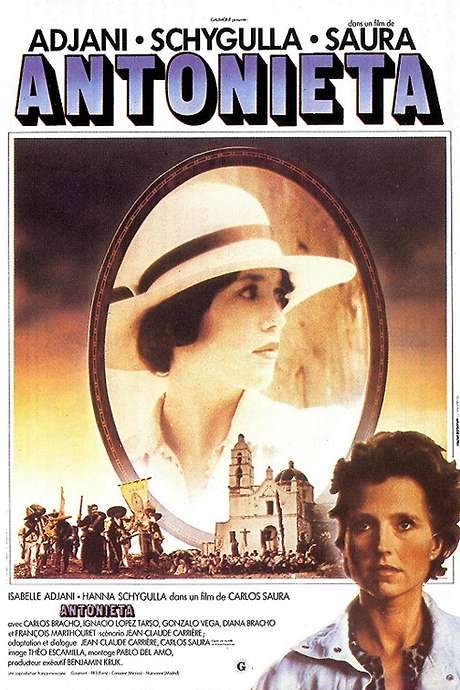
Antonieta 1982

Directed by

Carlos Saura
Made by

Nuevo Cine
Antonieta Plot Summary
Read the complete plot summary and ending explained for Antonieta (1982). From turning points to emotional moments, uncover what really happened and why it matters.
Anna, a modern-day Parisian psychologist, studies cases of women who took their own lives in the 20th century. She becomes fascinated by the life of Antonieta Rivas Mercado, a Mexican writer and social activist who died by suicide inside Notre Dame Cathedral in Paris. To uncover more about this remarkable woman, Anna travels to Mexico and speaks with people who knew her well. The first clues come from Juana, a Mexican librarian who frames Antonieta’s life within the stormy period of Mexico’s history—the turbulent decades of the 1910s and 1920s.
Antonieta’s life unfolds with equal drama: she is the daughter of a famous architect, and as a child she even posed for the golden angel atop the Column of Independence in Mexico City, a detail that hints at the early public gaze she attracted. The narrative moves back and forth between present and past as Vargas, a poet, recounts the life of the woman he once knew when he met Anna.
As a young woman, Antonieta marries but later leaves her husband and falls madly in love with Manuel Rodríguez Lozano, a painter who was married and whom many believed to be homosexual. Their relationship remains deeply platonic, lasting for several years, during which she writes him many passionate letters that would later be published in a book.
Leon, a Mexican historian, provides further context to Antonieta’s life for Anna, helping illuminate the pressures and expectations she faced. Still in love with the painter, Antonieta meets José Vasconcelos, a Mexican intellectual who is running for President on a platform of offering education to the masses. Antonieta becomes Vasconcelos’ lover and one of his closest advisers, entwining her personal longing with his political ambitions.
After Vasconcelos is politically defeated, she accompanies him into exile to Paris. The two have drifted from their earlier idealism, and she questions whether she still has a place in his world. He replies, in effect, that no one truly needs anyone—except perhaps God—a line that echoes through the tangled loyalties of their era.
In the end, the story culminates in a stark, devastating moment: Antonieta, feeling the weight of history and personal longing, presses a pistol to her heart in the pews of Notre Dame, a final act that resonates as a tragedy at the crossroads of art, politics, and memory.
Antonieta Timeline
Follow the complete movie timeline of Antonieta (1982) with every major event in chronological order. Great for understanding complex plots and story progression.
Anna begins her research on Antonieta
Anna, a modern-day Parisian psychologist, investigates female suicide cases from the 20th century and becomes fascinated by Antonieta Rivas Mercado's story. She outlines her goal to uncover patterns and motives by tracing Antonieta's life and correspondence. This sets up the unfolding investigation that threads present and past.
Anna travels to Mexico for firsthand accounts
Anna travels to Mexico to interview people who knew Antonieta and to gather firsthand clues about her life. She begins with Juana and other informants who frame Antonieta within the era's social and political upheavals. The journey marks the shift from theory to memory in the investigation.
Juana places Antonieta in a stormy era
Juana, a Mexican librarian, frames Antonieta's life within the stormy political landscape of the 1910s–1920s. She explains how the turmoil shaped Antonieta's choices and passions. Her perspective anchors the biographical exploration.
Antonieta's childhood and public image
Antonieta is the daughter of a famous architect, and as a child she posed for the golden angel atop the Column of Independence in Mexico City. This early public exposure foreshadows her later involvement with influential cultural figures. The image of ascent and visibility recurs throughout her life.
Vargas recounts his first meeting with Antonieta
Vargas, a poet, recounts for Ana how he first met Antonieta and how they became friends. The narration moves between present and past, reflecting the film's structure of memory and storytelling. These recollections link her intimate life with broader historical currents.
Antonieta marries and loves Manuel Lozano
As a young woman, Antonieta marries but soon leaves her husband and falls madly in love with painter Manuel Rodríguez Lozano. Manuel is married and homosexual, so the love remains unrequited, developing into a long, intense, but platonic bond. Antonieta channels this passion into her writing and advocacy.
Letters to the painter
During the years of unrequited love, Antonieta writes Manuel many letters that reveal her intellect, longing, and creative energy. These letters are later published in a book, ensuring her voice endures beyond their relationship. The correspondence underscores her inner life and literary talent.
Leon adds depth to Antonieta's story
Leon, a Mexican historian, provides further illustration of Antonieta's life, emphasizing her enduring devotion to the painter. He situates her within the cultural and political currents of the era and enriches the biographical portrait.
Antonieta meets Vasconcelos
Antonieta meets José Vasconcelos, a Mexican intellectual running for President on a platform of mass education, and becomes his lover and closest adviser. Her influence helps shape his political vision and strategies.
Exile to Paris and fading idealism
After Vasconcelos is politically defeated, Antonieta accompanies him into exile in Paris, and the couple's political idealism fades into disillusionment. They navigate a world of exile, writing, and shifting loyalties.
A defining moment of separation
In Paris, she asks Vasconcelos whether he still needs her, and his reply—'no one needs anyone, only God'—marks a turning point in their relationship and in her sense of purpose. The moment crystallizes a shift from mutual reliance to personal sovereignty or solitude.
Antonieta's final act in Notre Dame
In Notre Dame's pews, Antonieta levels a pistol to her heart and dies, the film's culmination that resonates as a dramatic and tragic testament to her life and the era she inhabited. The act is both a personal catastrophe and a symbol within Anna's investigation.
Antonieta Characters
Explore all characters from Antonieta (1982). Get detailed profiles with their roles, arcs, and key relationships explained.
Antonieta Rivas Mercado (Isabelle Adjani)
Mexican writer and social activist who moves between Mexico City's cultural milieu and Paris' intellectual circles. She forms a passionate, complex bond with Manuel Lozano and becomes Vasconcelos' lover and confidante, shaping both art and politics. Her life unfolds amid the era's stormy history and ends with a dramatic act inside Notre Dame.
Manuel Rodríguez Lozano (Gonzalo Vega)
Mexican painter whose marriage anchors him to convention, while Antonieta's feelings for him remain unrequited due to his sexuality. Their relationship is intense but platonic, sustained by a long correspondence that reveals longing and devotion. The dynamic highlights the tension between art, love, and social norms.
José Vasconcelos (Carlos Bracho)
Mexican intellectual and reformist politician who campaigns on education for the masses. Antonieta becomes his lover and closest adviser, linking personal influence to public reform. After political defeat, he goes into exile with her to Paris, underscoring the fragility of idealistic movements.
Vargas (Ignacio López Tarso)
Poet who recounts Antonieta's life to Anna, providing a narrator's lens that blends memory with historical perspective. He frames events and adds a literary texture to the timeline of the era.
Arq. Rivas Mercado (Narciso Busquets)
Architect and Antonieta's father figure, his status and achievements illuminate the social expectations and formative surroundings that shape her ambitions.
Esposo (Jos Lavat)
Husband whom Antonieta marries and later leaves; his role marks the personal cost of her autonomy and defiance of conventional marriage.
Porfirio Díaz (Víctor Junco)
Historical figure representing the older political order that sets the stage for the revolutionary times in which Antonieta lives.
Alvaro Obregon (Bruno Rey)
Historical leader whose era intersects with Vasconcelos' reformist thrust, illustrating the shifting sands of Mexican politics.
Orador (Victor Alcocer)
A public speaker whose words frame key political moments, underscoring the power of rhetoric in the era's social movements.
Norteamericana (Erika Carlsson)
A North American figure who appears in the cross-cultural backdrop of the story, reflecting foreign influence and perspective in the era.
Esposo Norteamericana (Sebastian Ligarde)
Husband of the North American figure, part of the ensemble that frames international ties and personal relationships within the narrative.
Antonieta Settings
Learn where and when Antonieta (1982) takes place. Explore the film’s settings, era, and how they shape the narrative.
Time period
1910s-1920s
The Mexican Revolution and its aftermath define the backdrop, with political turbulence, reformist dreams, and shifting loyalties. Antonieta's personal life unfolds against Vasconcelos' bid for power, and the era's upheavals shape how love and ideology collide. A present-day narrator revisits these events, anchoring the past in contemporary inquiry.
Location
Mexico City, Paris (Notre Dame Cathedral)
The narrative shifts between Mexico City, a hub of cultural life and political upheaval, and Paris, the city of exile where Antonieta's story reaches its dramatic turning point inside Notre Dame. In Mexico City, the era's revolutionary mood and public figures frame her life; Paris provides distance and reflection for memory and choice.
Antonieta Themes
Discover the main themes in Antonieta (1982). Analyze the deeper meanings, emotional layers, and social commentary behind the film.
💔
Love
Antonieta's intense affair with Manuel Lozano and her relationship with Vasconcelos pull personal longing into public life. Her letters to Lozano reveal a depth of feeling constrained by marriage, sexuality, and social norms. The theme treats love as a force that tests ambition, loyalty, and the price of pursuing happiness within a turbulent era.
🏛️
Politics
Vasconcelos' reformist platform and presidential ambitions place Antonieta at the center of political strategy and personal devotion. The story shows how intimate decisions intersect with public ideals, shaping alliances and betrayals. Exile to Paris signals a disillusionment with political dreams, even as memory of them persists.
🕯️
Memory
Anna's investigation frames Antonieta's life as a traceable memory rather than a static biography. The film moves fluidly between present and past, suggesting memory's power to illuminate and distort. The Notre Dame finale becomes a symbol of a life remembered as much as lived.
🎨
Art
Antonieta's writings and letters reveal her inner life as a writer and observer of society. The relationships with Lozano and Vasconcelos show how art, romance, and politics intertwine. The film treats writing as both personal confession and historical document.

Coming soon on iOS and Android
The Plot Explained Mobile App
From blockbusters to hidden gems — dive into movie stories anytime, anywhere. Save your favorites, discover plots faster, and never miss a twist again.
Sign up to be the first to know when we launch. Your email stays private — always.
Explore the mobile appAntonieta Spoiler-Free Summary
Discover the spoiler-free summary of Antonieta (1982). Get a concise overview without any spoilers.
In contemporary Paris, Anna works as a psychologist who has turned her scholarly curiosity toward a haunting question: what drives celebrated women of the twentieth‑century to end their own lives? Her research, a delicate blend of clinical insight and literary excavation, pulls her into the fragmented archives of a bygone era. The film establishes a measured, almost reverent tone, where the present‑day streets of Paris echo with the distant, unsolved whispers of forgotten tragedies.
Compelled to move beyond sterile case files, Anna journeys to Mexico, where she begins to stitch together the mosaic of a woman whose name still flickers in cultural memory. In a quiet library, a soft‑spoken Juana offers a panoramic view of the turbulent decades that shaped the nation, framing the personal narrative against a backdrop of revolution and reform. Through conversations with a meticulous historian named Leon, Anna discovers that Antonieta Rivas Mercado was more than a daughter of a famed architect; she was a child whose image once crowned a national monument, a symbol thrust into the public eye before she could choose it. These early impressions hint at a life lived under constant observation, where art and expectation intertwine.
The story deepens as Anna learns of Antonieta’s intense, largely unspoken connections—her platonic devotion to the painter Manuel Rodríguez Lozano, whose own secrets mirror the era’s ambiguities, and her passionate alliance with the charismatic intellectual José Vasconcelos, whose political aspirations intertwined with personal longing. Through the recollections of a poet named Vargas, whose verses echo the melancholy of a love that never fully materialized, the film paints a portrait of a woman whose desires, ambitions, and the weight of history coalesce into a singular, enigmatic presence. The tone remains introspective, inviting the audience to linger in the spaces between fact and feeling, and to wonder what unseen forces shape a soul caught between art, politics, and memory.
Movies with Similar Twists and Themes
Uncover films that echo the narrative beats, emotional arcs, or dramatic twists of the one you're exploring. These recommendations are handpicked based on story depth, thematic resonance, and spoiler-worthy moments — perfect for fans who crave more of the same intrigue.
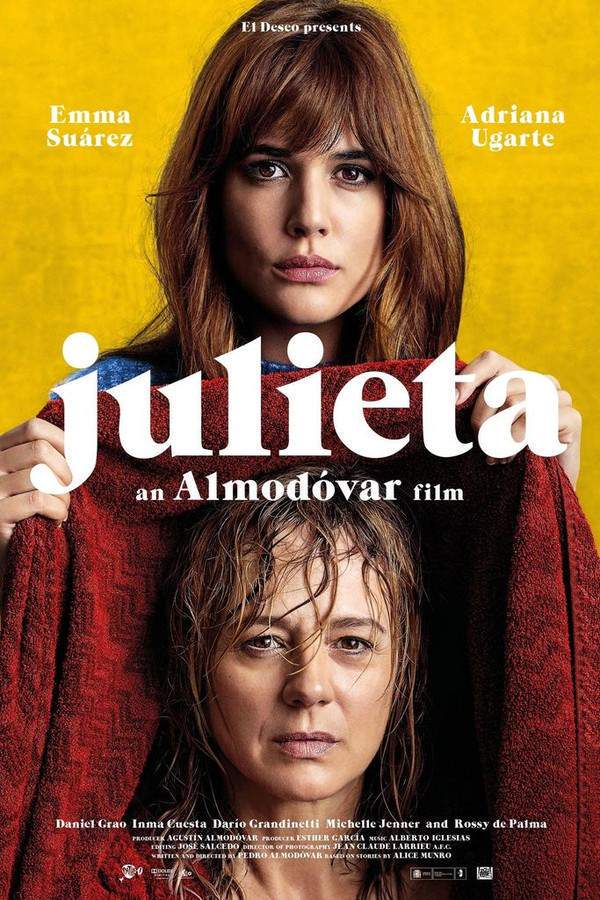
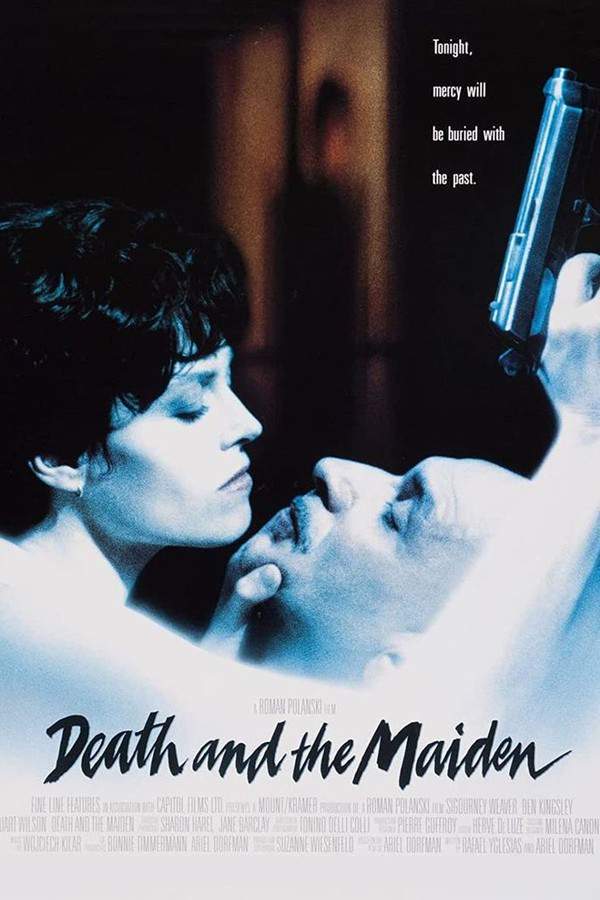
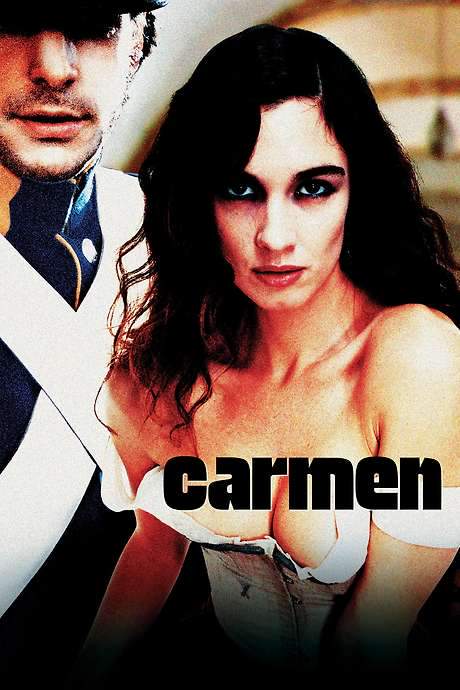

Featured on this page

What's After the Movie?
Not sure whether to stay after the credits? Find out!
Check out our other apps:

SAT Sphere
Build confidence for the Digital SAT.

Mori Atlas
Discover wild places worth protecting.

Luntero
Search smarter for a home in Amsterdam.

Plot Explained
Unravel movie endings and hidden clues.

Pokechamp
Dive into Pokémon data and battle logic.

Driving Theory
Get ready for your European theory test.

Movie Dust
Plan your next cinema trip with ease.

Musemap
Find art and culture as you travel.

Selkobase
Compare credentials before committing.

Local Manual
Turn an unfamiliar country into practical next steps.

Lernavi
Compare school systems before your next move.

GymRoam
Find a workout stop wherever your plans take you.
Explore Our Movie Platform
New Movie Releases (2026)
Famous Movie Actors
Top Film Production Studios
Movie Plot Summaries & Endings
Major Movie Awards & Winners
Best Concert Films & Music Documentaries
Movie Collections and Curated Lists
© 2026 What's After the Movie. All rights reserved.
Privacy Policy