What Is And Starring Pancho Villa as Himself About?
The premise of And Starring Pancho Villa as Himself in 344 words, with nothing given away. The full story follows below.
In 1923 a quiet studio executive receives an unexpected token—a Virgin of Guadalupe medallion—that pulls him back to a tumultuous chapter of Mexican history. The arrival of the charm awakens memories of a daring proposition made a decade earlier: a charismatic revolutionary who hoped the camera could turn his battlefield exploits into a source of arms and ammunition. The premise hinges on the uneasy marriage of early‑Hollywood ambition and the raw urgency of a war that still burns across the desert landscape, promising a story that blurs the line between documentary and legend.
The film’s core follows Frank N. Thayer, a young man climbing the studio ladder, who finds himself thrust into the role of liaison between a Hollywood syndicate and the larger‑than‑life figure of Pancho Villa. Villa, played by a striking Antonio Banderas, is presented not only as a feared commander but also as a man eager to sculpt his own myth through the emerging medium of cinema. By his side stands Sam Drebben, a savvy Jewish‑American lieutenant whose pragmatic vision bridges the worlds of revolution and entertainment. Within the traveling crew, Teddy Sampson emerges as a luminous rising star, offering both professional firepower and a personal connection that complicates Thayer’s already precarious position. Their interactions are set against the sprawling, sun‑bleached vistas of revolutionary Mexico and the bustling, smoke‑filled backlots of 1920s Los Angeles, creating a visual and tonal contrast that is as much about geography as it is about belief.
The atmosphere is one of restless curiosity, painted in sepia‑toned optimism and edged with the grit of a conflict that refuses to be fully romanticized. As cameras roll, questions about artistic license, moral responsibility, and the power of image to shape collective memory begin to surface, hinting at the delicate balance the characters must navigate. The story promises a compelling look at how a fledgling film industry reaches for grandeur while confronting the stark realities that lie behind its glossy veneer, leaving the audience to wonder just how far the lens can go before it becomes another weapon in the struggle.
What Happens in And Starring Pancho Villa as Himself?
The complete story of And Starring Pancho Villa as Himself, from the first scene to the last, in 791 words (about 3 minutes). Spoilers throughout.
Spoilers ahead
In 1923, an observant studio executive named Frank N. Thayer receives a letter that arrives with a Virgin of Guadalupe medallion, a symbol that will spark a deeper reflection on a long-ago chapter of history. This trinket nudges Thayer back to the height of the Mexican Revolution, when Pancho Villa [Antonio Banderas] faces serious funding gaps and a hostile media environment shaped by the Hearst press campaigns against him. To counter that pressure, Villa’s Jewish-American lieutenant, Sam Drebben [Alan Arkin], works to marshal interest from American film studios, hoping the camera can become a tool to spread his legend. Its initial appeal catches the attention of D. W. Griffith [Colm Feore], who quickly convinces Mutual Film Studios boss Harry Aitken [Jim Broadbent] to finance a project that could turn Villa’s exploits into a film epic.
Thayer, who starts as a lowly errand boy for the studio but earns Villa’s trust, is then placed in charge of steering the whole venture. He travels back to Mexico with a screened combination of director, actors, producers, cameramen, and screenwriters who aim to chronicle Villa’s deeds on screen. To capture the story with some distance, a younger actor is cast to portray a younger Villa, Raoul Walsh [Kyle Chandler]—the future film director—while Villa himself offers a cameo as an older version of the same man. Thayer, meanwhile, finds himself drawn into a personal entanglement, beginning a romance with Teddy Sampson [Alexa Davalos], a rising star in the production who brings warmth to a project that is as much myth-making as history.
As filming progresses, Villa’s questions about artistic license surface; the scriptwriters and director take some creative liberties to heighten drama, and Villa’s temper flares at what he sees as misrepresentation. Yet he agrees to participate, even allowing a cameo appearance, since the project could carry his name to audiences who have yet to meet him. Thayer also receives an unexpected gift in the form of two young child soldiers who are drafted by Villa to help with editing—an arrangement that underscores the gritty, almost uncanny blend of cinema and sanctified memory that the crew is helping to manufacture.
The production then shifts to the siege of Torreón. Thayer and his crew accompany Villa’s army as they advance toward the Federal fortress, marching through peril and danger toward a climactic confrontation. A skirmish en route snatches away one of Thayer’s assistants, and the siege that follows tests everyone involved. Villa’s forces press the attack, initially gaining ground, but with brutal costs as the Federal defenses hold firm and then crumble. The following bombardment and final assault decimate Torreón’s defenders, and in the moment that should crown triumph, the crew witnesses a grim act: Villa shoots a widow in the aftermath of the battle. Disgusted, Thayer and his team withdraw, their ambitions of cinematic glory colliding with a stark moral reckoning.
When The Life of General Villa premieres in the United States, it proves to be a resounding success—yet the crew carries with them a growing ambivalence about their role in shaping—and sanitizing—such a violent figure. Thayer’s romance with Teddy dissolves in the shadow of the story’s moral complexities, and he discovers that the project’s true cost goes beyond money. Nine years pass, and Thayer encounters Sam Drebben [Alan Arkin] again in a restaurant. Thayer has endured physical wounds of the era—having lost an eye and an arm—yet his disillusionment deepens as he speaks of a Mexican government that resembles the tyranny Huerta had represented. He also laments that he did not gift Villa with a copy of the film, a missing piece that now gnaws at him.
A letter from Thayer’s surviving assistant—who has grown to adulthood and even had Villa as his godfather—offers a different memory: Villa, despite being assassinated, remains revered by the people of Mexico. The assistant’s reflections breathe new life into Thayer’s purpose, prompting him to return to Mexico to screen the film for a living audience. The response is electric: a standing ovation greets Villa’s closing speech, and the history Thayer helped to record is reawakened in the theatergoers’ hearts. The tale concludes with Villa’s interment in Mexico City, the film itself having become a lost treasure of cinema, and Thayer’s own place in history reduced to a “footnote to a legend”—one that still illuminates the powerful bond between cinema and memory.
This synthesis of reality and myth invites viewers to consider how a filmmaker’s lens can shape a nation’s memory while also forcing us to confront the uneasy truths behind every dramatic recreation. The film’s arc, anchored by the larger-than-life figure of Pancho Villa and the behind-the-scenes drama of early Hollywood, remains a nuanced meditation on ambition, responsibility, and the way legends endure long after the screen goes dark.
And Starring Pancho Villa as Himself Timeline: Every Key Event in Order
15 key events in the order they happen, from “Thayer receives the Villa memory trigger” to “Villa interred; the film becomes a lost treasure”. 14 events name a place, across 12 locations.
- 1
Thayer receives the Villa memory trigger
In 1923, Frank N. Thayer, now a studio executive, receives a letter delivered with a Virgin of Guadalupe medallion that unsettles him. The emblem stirs memories of a long-ago chapter in the Mexican Revolution. The moment pushes him to revisit the Villa project and the boundary between myth and memory.
When:1923 Where:Studio office
- 2
Villa faces funding gaps and hostile media
Pancho Villa confronts funding shortages for his story while a hostile media landscape, fueled by Hearst campaigns, threatens to distort his image. Sam Drebben, Villa's Jewish-American lieutenant, begins to marshal interest from American film studios to tell his legend. He sees cinema as a tool to spread Villa’s narrative to broader audiences.
When:1910s Where:Mexico/early Hollywood
- 3
Griffith pitches a film project to finance Villa's exploits
D. W. Griffith latches onto the idea and persuades Mutual Film Studios boss Harry Aitken to back a feature about Villa. The plan is to turn Villa’s exploits into a cinematic epic that could reach wide audiences. The project moves quickly to secure resources and talent.
When:circa 1913-1914 Where:Hollywood
- 4
Thayer appointed to lead the venture; travels to Mexico with the crew
Thayer is promoted from an errand boy to the project lead and travels to Mexico with a screened team of director, actors, producers, cameramen, and writers. The mission is to chronicle Villa’s deeds on screen with some distance. Tensions between creative control and historical truth begin to simmer.
When:1913-1914 Where:Mexico
- 5
Casting and on-screen representation: younger Villa and cameo
To portray a younger Villa, a younger actor is cast to play the revolutionary, while Villa himself appears in a cameo as an older version. The meta-casting underscores the film’s blend of myth and history. The production juggles scenes that will shape the legend more than the documented facts.
When:1913-1914 Where:Mexico set
- 6
Thayer falls for Teddy Sampson
Thayer develops a romance with Teddy Sampson, a rising star on the production whose warmth anchors the project. Their relationship adds personal stakes to the filming process. The romance also mirrors the film’s tensions between spectacle and truth.
When:1913-1914 Where:On set
- 7
Creativity vs. accuracy: Villa questions licensing
As filming progresses, Villa questions the liberties taken in the script and director’s choices. Scriptwriters and directors push the drama to heighten effect, while Thayer and others face a moral dilemma about sanitizing violence for the screen. Villa agrees to participate despite concerns to help share his name.
When:Production period Where:Mexico set
- 8
Unconventional editing aid: child soldiers join the editing
Two young child soldiers are drafted by Villa to assist with editing, illustrating the blurring of reality and cinematic fantasy. The arrangement reveals the project’s gritty roots and the pragmatic, sometimes unsettling, methods used to craft memory. The crew recognizes they are shaping more than a film.
When:Production period Where:Editing room
- 9
The siege of Torreón: the battle unfolds
The production follows Villa’s army as they advance toward the Federal fortress of Torreón. Skirmishes erupt, a key assistant is lost, and the siege tests every member of the crew. The defenders eventually crumble under bombardment, and a grim act—Villa shooting a widow—shocks the crew and witnesses.
When:During siege Where:Torreón, Mexico
- 10
Premiere success but moral costs acknowledged
The Life of General Villa premieres in the United States to acclaim, yet the crew carries ambivalence about sanitizing violence and shaping a myth. Thayer’s own moral questions deepen as he contemplates what has been sacrificed for cinematic glory. The film’s triumph sits against a growing unease about memory and truth.
When:Post-production to premiere Where:United States
Show the other 5 events of And Starring Pancho Villa as Himself Hide the last 5 events
- 11
Thayer’s romance dissolves; the project ends its first arc
Thayer’s relationship with Teddy dissolves as the moral complexities of the project deepen. The romance recedes as the crew confronts the cost of their myth-making. The team disperses as the film’s initial arc closes with mixed feelings about the finished work.
When:Shortly after premiere Where:Hollywood
- 12
Nine years later: meeting Drebben; Thayer is scarred
Nine years pass and Thayer meets Sam Drebben again in a restaurant. He bears the scars of the era—an eye and an arm lost—and his perspective is colored by disillusionment with both politics and memory. He regrets not gifting Villa a copy of the film, a personal debt that gnaws at him.
When:Circa 1923 Where:Restaurant, USA
- 13
Surviving assistant’s letter reshapes memory
A letter from Thayer’s surviving assistant—now grown and having Villa as his godfather—confirms that Villa remains revered by the Mexican people. The assistant’s memory reframes what the film meant to history, breathing new life into Thayer’s purpose. The revelation challenges Thayer to reexamine his film’s legacy.
When:Post-1923
- 14
Return to Mexico: screening and standing ovation
Thayer travels back to Mexico to screen the film for a living audience, receiving a standing ovation during Villa’s closing speech. The moment reaffirms cinema’s power to revive historical memory and to redefine national legends. It demonstrates how performance can renew a nation’s connection to its past.
When:Post-1923 Where:Mexico City theater
- 15
Villa interred; the film becomes a lost treasure
Villa is laid to rest in Mexico City as the film itself becomes a lost treasure of cinema. Thayer’s place in history is reduced to a footnote, yet the legend persists in memory and in the idea that film can shape a nation’s recollection. The film’s legacy lingers as a meditation on ambition, memory, and responsibility.
When:1920s-1930s Where:Mexico City
Who Are the Main Characters in And Starring Pancho Villa as Himself?
8 characters, among them Pancho Villa (Antonio Banderas), Frank N. Thayer (Eion Bailey) and Sam Drebben (Alan Arkin): who each one is and the part they play in the story. Every profile links to the actor’s page.
-

Pancho Villa (Antonio Banderas)
Played by Antonio Banderas
A legendary Mexican revolutionary whose deeds become cinema-ready myth. He pushes for authenticity but remains wary of misrepresentation, balancing revolutionary ideals with the pressures of fame and narrative control. His presence drives the production's stakes and moral questions about how heroes are portrayed on screen.
- ⚔️ revolutionary
- 🧭 charismatic
- 🎖️ legend
- FN
Frank N. Thayer (Eion Bailey)
Played by Eion Bailey
An observant studio executive who starts as an errand boy and rises to shepherd the project. He navigates creative conflicts, romance, and the pragmatics of financing, gradually confronting the ethical costs of turning history into entertainment. His arc centers on the tension between ambition and responsibility.
- 💼 producer
- 🎭 conflicted
- 🧭 ambitious
-

Sam Drebben (Alan Arkin)
Played by Alan Arkin
Villa’s Jewish-American lieutenant who helps marshal interest from American studios. He acts as a bridge between revolutionary history and Hollywood’s commercial needs, weighing loyalty to Villa against the demands of the film industry. His perspective exposes the complexities of backing a controversial, war-torn figure.
- 🧭 strategist
- 🗽 loyal
- 🧠 pragmatic
-

Raoul Walsh (Kyle Chandler)
Played by Kyle Chandler
A younger actor portraying a younger version of Villa, embodying the film’s echo of the past. He represents the casting of history as performance and the way actors can shape a legend through portrayal. His role intertwines with the production’s drive for dramatic resonance.
- 🎭 performer
- 🧩 reflective
- 🗺️ tie to cinema
- TS
Teddy Sampson (Alexa Davalos)
Played by Alexa Davalos
A rising star in the production who brings warmth and vitality to the set. Her romance with Thayer highlights the human cost and personal life entangled in a project that aims to immortalize a legend. She embodies cinema’s ability to infuse humanity into grand historical narratives.
- 🎬 actress
- 💞 romantic
- 🌟 rising-star
-
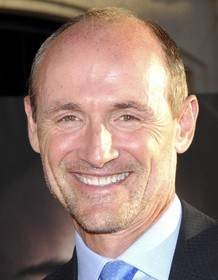
D. W. Griffith (Colm Feore)
Played by Colm Feore
A renowned director who becomes a financier for the project, shaping its scope and dramatic direction. His involvement marks a joining of classic cinema authority and modern studio ambition, guiding how the story is carved into a sweeping epic. He stands as a gatekeeper of cinematic mythmaking.
- 🎬 director
- 💼 financier
- 🧭 influential
-
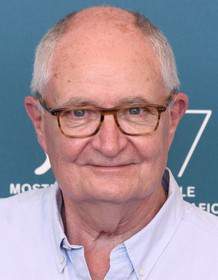
Harry Aitken (Jim Broadbent)
Played by Jim Broadbent
Mutual Film Studios boss driving the financial backing for the epic. He represents the commercial force behind early Hollywood productions, weighing potential profits against the ethical implications of how history is staged for audiences. His decisions steer the project toward a massive, marketable spectacle.
- 💼 studio-chief
- 💰 executive
- 🧭 opportunistic
-

Eli Morton (Saul Rubinek)
Played by Saul Rubinek
A figure within the production circle who occupies a behind-the-scenes role in the film’s development. He embodies the administrative and political machinery that keeps a large-scale historical epic moving, often balancing conflicting priorities of accuracy, publicity, and profit.
- 🗄️ administrator
- 🧩 intermediary
- 🧭 political
Where and When Is And Starring Pancho Villa as Himself Set?
And Starring Pancho Villa as Himself is set in Mexico (Torreón) and United States (Hollywood) (1923). Here is why the time and place matter to the story.
When
1923
Set in the early 1920s, the narrative begins in 1923 as a studio executive reevaluates a legendary figure and a proposed epic about Pancho Villa. It captures the era of silent cinema, where big-budget epics were used to shape public memory. The story also reflects the political climate of post-revolution Mexico and the U.S. film industry’s appetite for spectacle.
Where
Mexico (Torreón) and United States (Hollywood)
The story travels from Hollywood's backlots to the Mexican landscape during the Mexican Revolution, centering on the siege of Torreón. It contrasts production studios and screen-testing rooms with real battlefield scenes. The film inside the film moves between studio decisions and on-location filming in Mexico, highlighting the blend of myth-making and history.
- 🏜️ Torreón
- Mexico
- 🎬 Hollywood
- United States
- 🗺️ Mexican Revolution backdrop
What Are the Themes of And Starring Pancho Villa as Himself?
3 ideas the story keeps returning to, among them Myth Making, Moral Cost and Memory & Legacy.
-
01
Myth Making
The production encodes Villa’s legend into a cinematic artifact, blurring lines between historical record and filmic fantasy. Filmmakers and financiers steer the narrative with casting, pacing, and dramatic license to amplify appeal. The result questions what a legend is when it’s crafted for audiences rather than lived.
-
02
Moral Cost
The crew witnesses violence and moral compromise as the siege of Torreón unfolds, yet the film industry persists in shaping the story for entertainment. The revelation of a widow shot and other harsh realities forces a reckoning with the price of cinematic glory. The story weighs whether art justifies the cost of truth.
-
03
Memory & Legacy
Thayer’s evolving perspective reveals how a nation’s memory can be curated or corrupted by cinema. The living memory of Villa among the Mexican people contrasts with the studio’s marketing-driven memory. The audience’s reaction to the premiere redefines what part of the past remains alive.
What Kind of Film Is And Starring Pancho Villa as Himself?
Melancholic in tone, with steady pacing and a complex story, going by the plot summary.
- Tone
- Melancholic
- Pacing
- Steady
- Story
- Complex
- Intensity
- High
- Ending
- Bittersweet
A melancholic and morally complex epic that examines the brutal realities of revolution and the unsettling power of cinema to shape history, leaving the viewer with a profound sense of disillusionment and tragic grandeur.
- somber
- reflective
- disillusioned
- epic
- thought-provoking
- tragic
- media representation
- revolution
- cinema history
- myth-making
Content notes: war violence, child soldiers, murder of a civilian, battlefield death.
Quiz
How well do you remember And Starring Pancho Villa as Himself? Test yourself on the story.