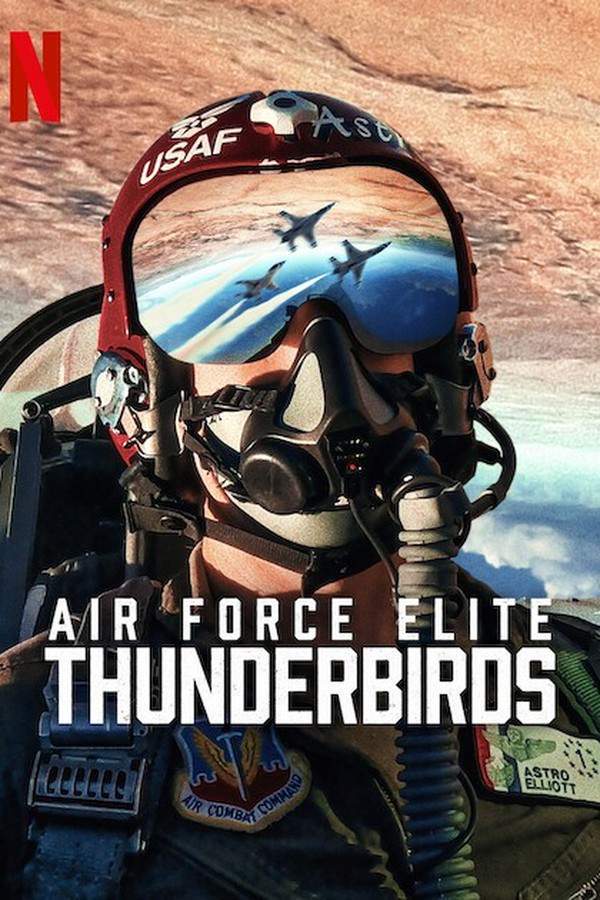
Air Force Elite: Thunderbirds 2025


Directed by

Matt Wilcox
Made by

Supper Club
Where to Watch Air Force Elite: Thunderbirds
See current US streaming, rental, and purchase options for Air Force Elite: Thunderbirds (2025) via JustWatch.


Streaming availability powered by 
Air Force Elite: Thunderbirds Plot Summary
Read the complete plot summary and ending explained for Air Force Elite: Thunderbirds (2025). From turning points to emotional moments, uncover what really happened and why it matters.
The U.S. Air Force Thunderbirds are the official aerial demonstration squadron of the United States Air Force, based at Nellis Air Force Base in Nevada and operating under the 57th Wing. Formed in 1953, they are among the oldest and most recognizable flight demonstration teams in the world. Their shows blend high-speed formation flying—often in the Diamond or Delta layouts—with daring solo routines that highlight the F-16 Fighting Falcon’s agility and power, all painted in bold red, white, and blue. Becoming a Thunderbird is intensely competitive, demanding pilots who embrace demanding training and relentless precision.
The Thunderbirds were created during the Korean War era to inspire unity and showcase American excellence in turbulent times. As one of their leaders explains the Team’s mission, the purpose remains clear: the entire team is meant to unite and give people a beacon of excellence to look up to. The squad’s jets streak through the sky at incredible speeds, often just 18 inches apart, turning complex maneuvers into a meticulously choreographed performance.
Justin “Astro” Elliott rises to the role of lead pilot, entrusted with steering a team that spends two years in the program. The first months are devoted to intense training, after which the pilots tour the country performing at air shows and events, refining their craft along the way. The core squad typically includes Thunder the lead solo, Lauren “Threat” Schlichting who pilots the back of the diamond, Astro himself, and three newcomers who rotate in each year.
Every season, roughly half of the pilots rotate out. The newer members joining the team include Eric “Miami” Tise, Zachary “Zeke” Taylor, and Jake “Primo” Impellizzeri. The show’s choreography centers on eight formations—the Diamond, Delta, Stinger, Arrowhead, Line-Abreast, Trail, Echelon, and the Five Card—each demanding flawless timing and close formation work. The opposing solos execute maneuvers at speeds approaching the sound barrier, performing fast passes, slow passes, rapid rolls, tight turns, and synchronized patterns like opposing passes and calypso-style belly-to-belly or back-to-back mirror formations.
During the routine, the four lead aircraft lift off and slip into the Diamond before rising to a vertical and executing the signature Bomb Burst. In this moment, the four planes break away in separate directions while a solo aircraft climbs higher to perform aileron rolls until it reaches several miles above the ground, after which all six aircraft converge back into a final Delta formation.
Astro’s background sets him apart: a Yale-trained mechanical engineer who joined ROTC in 2005, he logged 255 combat hours in Afghanistan and nearly 3,000 hours across 33 aircraft types as an experimental test pilot. His path to the cockpit was a “Hail Mary” moment after a last-minute policy change allowed him laser eye surgery, which had previously disqualified him from the program. Astro has always believed a team is only as strong as its weakest link, and he has stressed the necessity of blind trust among pilots to perform under extreme conditions.
The Thunderbird story is also a constant reminder of the dangers of high-stakes flight. The team has faced real losses, including the memory of a 1982 crash that saw four planes nosedive into the ground at roughly 400 miles per hour. The documentary also follows the grief surrounding the death of Stephen “Cajun” Del Bagno in 2018, who crashed during a routine training flight after losing consciousness in the cockpit. The film explores why even highly trained pilots can encounter severe challenges when moving from standard mission flying to precision formation aerobatics, where gravity, spatial awareness, and rapid decision-making all push a pilot to the edge.
Astro and the Thunderbirds ultimately persevere, driven by the need to deliver a show that embodies the nation’s pride. They confront the pressure of public expectation, the memory of past tragedies, and the ongoing demand for meticulous practice and flawless execution. After certification, the team delivers an impressive slate of performances, tallying 62 shows in a single year and continually striving to surpass what audiences expect from one of America’s most iconic aerobatic squads. The result is a story about courage, discipline, and the pursuit of excellence at the highest level of flight.
Air Force Elite: Thunderbirds Timeline
Follow the complete movie timeline of Air Force Elite: Thunderbirds (2025) with every major event in chronological order. Great for understanding complex plots and story progression.
Thunderbirds formed during the Korean War
The Thunderbird aerial demonstration team is created in 1953 during the Korean War to symbolize unity and American excellence. Their mission is to unite a divided nation and showcase pride, precision, and professionalism through spectacular flight. They are one of the oldest, most recognizable flight demonstration squadrons in the world.
Based at Nellis AFB, Nevada
The Thunderbirds establish their home at Nellis Air Force Base, Nevada, where they operate as the Air Force's premier aerial demonstration squadron within the 57th Wing. The base becomes the hub for training, logistics, and high-profile air shows. Their performances typically feature jets painted in patriotic red, white, and blue and the F-16.
Two-year officer tours and intense training
Officers join the demonstration squad for a two-year assignment, spending the first months in rigorous training before performing at air shows nationwide. The schedule emphasizes discipline, precision, and constant practice. The experience for each cohort reinforces the demanding nature of being a Thunderbird.
Astro becomes lead pilot after laser-eye surgery
Justin 'Astro' Elliott rises to lead pilot, bringing a rare blend of engineering and combat experience. He was initially disqualified due to eyesight, but a last-minute policy change allowed laser surgery to restore vision and keep him in the cockpit. His leadership becomes pivotal as the team trains for demanding demonstrations.
Threat and three newbies join the squad
The team expands with Lauren 'Threat' Schlichting as the lead solo and three new pilots—Eric 'Miami' Tise, Zachary 'Zeke' Taylor, and Jake 'Primo' Impellizzeri. The documentary highlights the high turnover, with half the pilots swapped out each year. The newcomers must quickly prove their mettle through grueling practice and high-stakes performances.
Eight formations fielded by the Thunderbirds
The squadron trains and performs eight formations, including the Diamond, Delta, Stinger, Arrowhead, Line-Abreast, Trail, Echelon, and the Five Card. The precision required to hold these formations at high speed tests every pilot's reflexes and timing. Mastery of formation flying is central to their identity as a team.
Opposing solos and signature maneuvers
The opposing solos execute maneuvers just below sonic speed, with fast passes, slow passes, fast rolls, slow rolls, and tight turns. Techniques like mirror formations and the calypso pass demand extreme spatial awareness and flawless communication. The team pairs artistry with fearlessness to captivate audiences.
Daytona show setback where timing misses by 10 seconds
During a Daytona air show, the jets arrive after the national anthem has finished, missing the opening moment by about 10 seconds. The misstep undermines the team's confidence and outruns the expectations of the staff and audience. It becomes a turning point that spurs renewed discipline and focus.
1982 crash foreshadowing risk
The documentary recalls a devastating 1982 accident in which four Thunderbirds nosedived into the ground at roughly 400 mph, killing the pilots on board. The event reinforces how close to disaster the performances can be. It remains a haunting memory for the team.
Cajun Del Bagno's 2018 death
Interviews with the parents of Stephen 'Cajun' Del Bagno recount his death in 2018 during a routine training flight after losing consciousness in the cockpit. The tragedy underscores the ever-present dangers of high-speed formation flying. The film uses the story to reflect on the cost of pursuing excellence.
The 10% fatality figure and the peril of stunts
The film notes that around 10% of Thunderbirds have died in the line of duty, emphasizing the high stakes of precision aerobatics. Pilots must maintain composure and rapid decision-making under extreme g-forces. The crew's shared risk strengthens the bond and resolve to keep performing safely.
Certification by the commander of air combat
Before taking part in public shows, the commander of air combat reviews the team's performance and awards certification. The process creates a critical hurdle that motivates extra training and meticulous preparation. A missed certification can delay a show schedule and affect the morale of the squad.
Post-certification era: 62 shows in a year
Once certified, Astro's team goes on to perform 62 shows in a single year across the United States. The feat demonstrates their peak level of precision, trust, and stamina. Each show becomes a showcase of teamwork forged through years of practice and pressure.
Air Force Elite: Thunderbirds Characters
Explore all characters from Air Force Elite: Thunderbirds (2025). Get detailed profiles with their roles, arcs, and key relationships explained.
Justin 'Astro' Elliott
Lead pilot of the Thunderbirds, Justin Elliott is a Yale mechanical engineering graduate who joined ROTC in 2005. He overcame an initial disqualification due to eyesight when laser surgery allowed him to qualify, and he went on to earn the USAF Weapons School, Test Pilot School, and Thunderbird assignments. He emphasizes meticulous preparation and safety, recognizing the dangers of flying demanding formations. As the team’s leader, he blends technical insight with a drive to uphold high-performance standards.
Lauren 'Threat' Schlichting
A skilled pilot who flies the back of the diamond, Lauren Schlichting embodies meticulous control and cool composure under pressure. She prioritizes safety and precision, ensuring the formation maintains perfect alignment behind the lead aircraft. Her role highlights the trust and coordination required to keep the team’s signature maneuvers intact.
Thunder
The lead solo of the Thunderbird team, Thunder commands solo maneuvers that showcase the jet’s power and agility. He carries the responsibility of maintaining extreme focus under pressure, while balancing the thrill of high-risk stunts with a commitment to safety. His leadership drives the team’s most daring sequences.
Eric 'Miami' Tise
One of the newer pilots joining the team, Eric Tise embodies the ongoing influx of talent that keeps the Thunderbirds competitive. He trains intensely to learn the six-jet formations and delicate spacing required for close formation flying, contributing to the group’s overall effectiveness. His role illustrates how new members must rapidly earn trust within the high-stakes unit.
Zachary 'Zeke' Taylor
Another rookie stepping into the Thunderbird lineup, Zachary Taylor brings fresh energy and a sharp focus on precision. He faces the challenge of mastering timing and spacing against the backdrop of demanding six-jet routines. His development reflects the team’s commitment to continuous improvement.
Jake 'Primo' Impellizzeri
Jake Impellizzeri is part of the newer cohort that learns to blend with the established pilots. He trains to perform complex formations under the watchful eyes of the team's veterans, pushing his own limits while prioritizing safety. His inclusion shows the Thunderbird turnover that keeps the squad fresh.
Stephen 'Cajun' Del Bagno
Stephen Del Bagno, known as Cajun, is highlighted in the film through interviews with his parents after his death in 2018 in the last fatal Thunderbird accident. He died while training, after losing consciousness in the cockpit, underscoring the severe risks involved in precision formation flying. His story remains a poignant reminder of the cost of pursuit of perfection.
Colonel Elliott
Colonel Elliott is cited as the Chief of Current Operations for NORAD and a former Thunderbird commander, offering a veteran perspective on the squad’s mission and discipline. His insights frame the Thunderbirds’ purpose as both a display of military prowess and a unifying symbol for the public. He emphasizes the historical and strategic importance of maintaining excellence.
Air Force Elite: Thunderbirds Settings
Learn where and when Air Force Elite: Thunderbirds (2025) takes place. Explore the film’s settings, era, and how they shape the narrative.
Time period
1953–present
The Thunderbirds were formed in 1953 during the Korean War, and the documentary traces their evolution through decades of aircraft upgrades, training, and nationwide air shows. It highlights how safety, discipline, and precision have shaped a saga from early jet demonstrations to modern high-speed formations. The narrative spans from the squad’s founding to contemporary performances across the United States.
Location
Nellis Air Force Base, Nevada, USA
Nellis Air Force Base in Nevada serves as the home of the Thunderbirds and a premier hub for high-precision flight training and aerial demonstrations. The base sits in a desert environment, fostering intense practice and testing that fuel the team’s spectacle-filled shows. The film’s setting underscores the blend of elite military aviation with public performance that defines the Thunderbirds' identity.
Air Force Elite: Thunderbirds Themes
Discover the main themes in Air Force Elite: Thunderbirds (2025). Analyze the deeper meanings, emotional layers, and social commentary behind the film.
🤝
Teamwork
Teamwork is central to the Thunderbirds' success; pilots must trust one another with their lives as they fly in tight diamonds and close formations. The story shows how long training, clear communication, and shared discipline bind the crew, making the whole greater than its parts. It emphasizes that the team’s cohesion depends on every member performing reliably, from pilots to support staff.
⚠️
Risk
The film highlights the constant danger of precision aerobatics, including past crashes and near-misses. It shows the physical toll on pilots—g-forces, loss of consciousness, and split-second decision-making under extreme stress. The narrative frames the pursuit of spectacular feats within a rigorous safety culture that seeks to prevent tragedies.
🎖️
Patriotism
The Thunderbirds’ red, white, and blue livery and public performances are depicted as a beacon of American excellence and unity. The film notes the squad’s aim to inspire pride and confidence in the nation through disciplined display and teamwork. It adds that the team serves not just as an aerial show, but as a symbol of national resolve.

Coming soon on iOS and Android
The Plot Explained Mobile App
From blockbusters to hidden gems — dive into movie stories anytime, anywhere. Save your favorites, discover plots faster, and never miss a twist again.
Sign up to be the first to know when we launch. Your email stays private — always.
Explore the mobile appAir Force Elite: Thunderbirds Ending Explained
Unravel the ending of Air Force Elite: Thunderbirds (2025) with our detailed explanation. Understand the final scenes, character fates, and unresolved questions.
In the end, the documentary doesn’t reveal a dramatic or unexpected conclusion, but rather emphasizes the perseverance and mastery of the Thunderbirds team. Despite facing numerous challenges—from the physical toll of flying high-G maneuvers to the pressure of executing perfect formations in front of millions—the team manages to pull off a flawless performance. After a significant initial setback where they missed their timing during a national event, they are determined to improve. Their hard work and dedication pay off, culminating in displays of breathtaking precision that leave even the most seasoned pilots in awe. The story wraps up with Astro, the lead pilot, feeling a deep sense of pride not just in their technical skill, but in their bravery and commitment. Although the film doesn’t conclude with a big twist or a tragedy, it highlights how these pilots continually push their limits and uphold a legacy of excellence and patriotism. Ultimately, the documentary celebrates the unwavering spirit and unity of the Thunderbirds, showcasing that true mastery is rooted in resilience and teamwork.
Air Force Elite: Thunderbirds Spoiler-Free Summary
Discover the spoiler-free summary of Air Force Elite: Thunderbirds (2025). Get a concise overview without any spoilers.
The film opens high above the Nevada desert, where the roar of F‑16 engines and the flash of red, white and blue paint the sky with precision. It invites viewers into the world of the U.S. Air Force Thunderbirds, an elite demonstration squadron that turns daring aerobatics into a national symbol of pride. Within this tight‑knit community, every maneuver—whether a flawless diamond formation or a daring solo—requires split‑second trust, relentless discipline, and a willingness to push the boundaries of flight. The tone balances the awe of soaring danger with the quiet intensity of the pilots’ daily grind, offering a visceral glimpse of a life lived on the edge of sound.
At the heart of the story is Justin “Astro” Elliott, a Yale‑trained mechanical engineer turned combat veteran who now leads the team. Astro’s journey from a test‑pilot background to the cockpit of a Thunderbirds jet is shaped by a rare blend of technical savvy, combat experience, and an almost instinctual belief that a team is only as strong as its weakest link. Alongside him are pilots like Lauren “Threat” Schlichting, a meticulous back‑diamond flyer, and a rotating roster of newcomers eager to earn their place among the icons. Their training regime is brutal and exacting, demanding not just physical skill but an unwavering blind trust that each pilot will watch the other’s back when flying merely inches apart at breakneck speeds.
The documentary‑style narrative captures the relentless pursuit of perfection that defines the Thunderbirds, hinting at the ever‑present specter of danger that hovers over every sortie. It explores the personal dedication required to master aircraft that dance on the razor’s edge of physics, the camaraderie forged in the crucible of the sky, and the quiet reverence for the legacy of those who have flown before. In its immersive, spoiler‑free approach, the film celebrates the courage, discipline, and collective spirit that keep the iconic squadron soaring, leaving the audience with a lingering sense of both wonder and respect for the elite aviators who make the impossible look effortless.
Movies with Similar Twists and Themes
Uncover films that echo the narrative beats, emotional arcs, or dramatic twists of the one you're exploring. These recommendations are handpicked based on story depth, thematic resonance, and spoiler-worthy moments — perfect for fans who crave more of the same intrigue.



Featured on this page

What's After the Movie?
Not sure whether to stay after the credits? Find out!
Check out our other apps:

SAT Sphere
Build confidence for the Digital SAT.

Mori Atlas
Discover wild places worth protecting.

Luntero
Search smarter for a home in Amsterdam.

Plot Explained
Unravel movie endings and hidden clues.

Pokechamp
Dive into Pokémon data and battle logic.

Driving Theory
Get ready for your European theory test.

Movie Dust
Plan your next cinema trip with ease.

Musemap
Find art and culture as you travel.

Selkobase
Compare credentials before committing.

Local Manual
Turn an unfamiliar country into practical next steps.

Lernavi
Compare school systems before your next move.

GymRoam
Find a workout stop wherever your plans take you.
Explore Our Movie Platform
New Movie Releases (2026)
Famous Movie Actors
Top Film Production Studios
Movie Plot Summaries & Endings
Major Movie Awards & Winners
Best Concert Films & Music Documentaries
Movie Collections and Curated Lists
© 2026 What's After the Movie. All rights reserved.
Privacy Policy