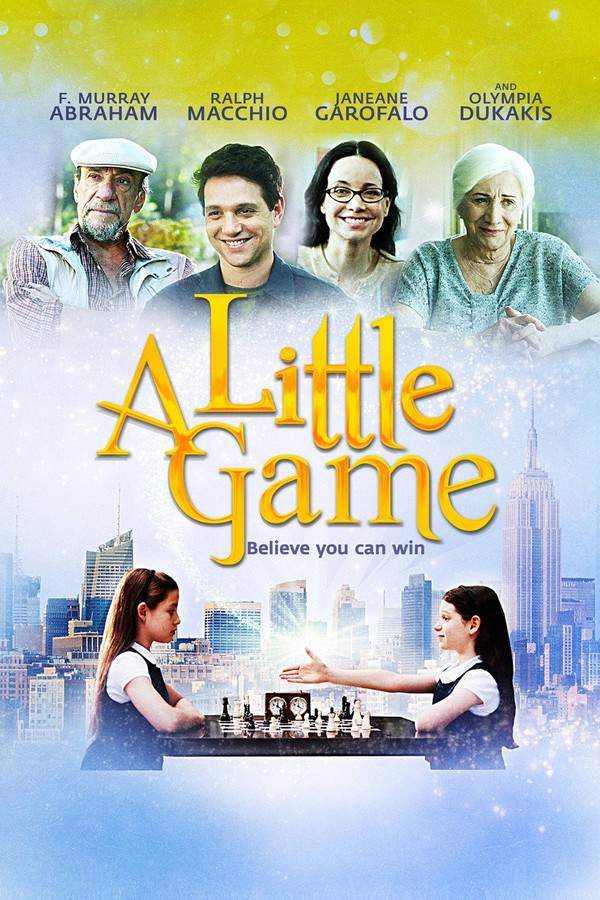
A Little Game 2014

Directed by

Evan Oppenheimer
Made by

Main Street Films
Where to Watch A Little Game
See current US streaming, rental, and purchase options for A Little Game (2014) via JustWatch.



Streaming availability powered by 
A Little Game Plot Summary
Read the complete plot summary and ending explained for A Little Game (2014). From turning points to emotional moments, uncover what really happened and why it matters.
Max, a bright 10-year-old girl living in Manhattan, finds herself navigating two very different worlds. Her move from a local public school to a rigorous private school on the Upper West Side pushes her into a new daily routine, with her mother Sarah working longer hours to manage the change. To get there, Max hops the subway each day, balancing the pull of home in lower Manhattan with the promise of a more challenging academic path.
One afternoon, after joining the chess team at school, Max blasts through a detour through Washington Square Park and witnesses groups of people playing the game with focus and ease. The next day, she tracks down Norman, a retired fellow New Yorker she had noticed with a chessboard, and asks him to teach her. Norman is cautious at first, unsure if Max’s enthusiasm can translate into real skill, but her unwavering determination slowly wins him over.
Over many days, Norman hands her small, seemingly simple tasks that might seem meaningless at first glance. He teaches through careful comparisons between the pieces and people in the city, showing Max that chess mirrors life in surprising ways. He explains that a pawn, like a small, cautious child, needs friends by its side to move forward and eventually can become a queen with patience and support. He emphasizes that a chess player must adapt to every turn, just as life constantly reshapes plans with each move.
As the lessons unfold, Norman describes the rook as moving in straight lines—much like a procession through a church aisle—while the knight’s leaps embody different possibilities. With each piece understood, Norman begins guiding Max through focused practice: first a handful of moves, then a larger sequence, building her confidence and strategic thinking. She quietly tests herself against her school rival, a challenge that makes Norman uneasy, yet Max insists it’s time for her to decide her own path.
The story reaches its quiet, powerful hinge on timing. Norman’s final lesson ties a chess match to the rhythms of life, reminding Max that change is inevitable and to “enjoy it while it’s here.” She studies the park’s energy, letting the surrounding people and sheer street life inform her choices as she positions herself to win. In a moment that feels both decisive and reflective, she sees a three-move finish but chooses to forfeit the game, opting to return to her former life and school with a transformed sense of purpose.
The tale closes with a simple, resonant metaphor about growth: sometimes an old pizza place closes so that a new one can open. It’s a quiet reminder that endings can clear the way for fresh beginnings, a philosophy that Max carries with her as she steps back into her daily life, now tempered by the chess wisdom she has earned and the deeper understanding that life, like the game, is about improvisation, resilience, and the courage to choose one’s own path.
A Little Game Timeline
Follow the complete movie timeline of A Little Game (2014) with every major event in chronological order. Great for understanding complex plots and story progression.
Max enrolls in private school and begins the commute
Max begins at a public school, but her parents seek a greater challenge for her. They enroll her in a private school on the Upper West Side with a scholarship, which means her mother works longer hours. Max then faces a daily subway commute from Lower Manhattan.
Max joins the private school chess team
Max joins the private school's chess team despite not knowing how to play. The idea of balancing a new school and chess feels daunting, yet she remains determined. Her parents hope this new challenge will spark her interest and growth.
Max spots a chess scene in Washington Square Park
On a detour home from school, Max passes Washington Square Park and spots several people playing chess. The park scene plants the seed that chess is a city-wide game. She feels a pull to learn more.
Norman agrees to coach Max
The next day, Max asks Norman, a retired New Yorker she has seen with a chessboard, to teach her. He initially discourages her, doubting the ability of a young girl to grasp the game. Her determination finally wins him over, and he agrees to coach.
Introduction to chess via city analogies
Norman begins with seemingly meaningless tasks designed to teach patience and creative thinking. He explains each piece using city analogies and shows how a pawn needs friends and careful moves to grow into a queen. The lessons connect chess strategy to navigating life in the city.
Piece movements explained as city routes
He describes the rook as moving in straight lines like church aisles, and the knight as jumping between city blocks. Max starts to grasp how each piece moves and why strategic planning matters. The park becomes her evolving classroom.
First moves practice
Max begins practicing defined move counts, first five moves, then twenty. She learns to anticipate responses and adjust plans on the fly. Her confidence grows as the pieces begin to fit into a larger life lesson.
Rival challenge tests her progress
Max challenges her school rival, testing how far she has come. Norman resents the move, worried she is rushing ahead too soon. The challenge marks a turning point as she weighs independence against training boundaries.
Autonomy and decisions
Max asserts her own decisions, choosing to trust her instincts about timing and risk. She refuses to let Norman dictate every move and commits to her own game plan. The shift signals a new sense of autonomy.
Timing and change as life lessons
Norman teaches that timing in chess mirrors life's timing and change. He tells her to enjoy the moment because change is inevitable. Max watches the park’s people and lets the world inform her next move.
Final match and a pivotal choice
In the climactic match, she is told she could win in three moves but chooses to forfeit, deciding to return to her old life and school. Her choice embodies the lesson that personal growth can mean stepping away from a victory to preserve balance. The scene underlines the theme of freedom over winning.
A new understanding of change
The story ends with the idea that a traditional change opens space for new opportunities, like an old pizza place closing so that a new one can open. Max carries a new understanding of life’s cycles and applies this lesson as she returns to her familiar world. Chess knowledge shapes her outlook.
A Little Game Characters
Explore all characters from A Little Game (2014). Get detailed profiles with their roles, arcs, and key relationships explained.
Max
A curious, imaginative 10-year-old girl navigating a move from public to private school while commuting by subway. She is determined to learn chess and uses the game as a lens to understand people and life, embracing both patience and creativity. Max grows as she makes her own choices and learns to balance family pressures with her own ambitions.
Norman
A retired fellow New Yorker who becomes Max’s chess mentor. He speaks in stories and metaphors, turning each lesson into a reflection on city life and personal growth. His initial discouragement gives way to patient guidance as he pushes Max to think beyond quick wins and to read the chessboard like a map of her world.
Sarah
Max’s mother, who works long hours to support her daughter’s education. She represents the parental sacrifice behind Max’s opportunities and the tension between career demands and family life. Her support remains steady even as the family’s routine shifts with Max’s new school and chess lessons.
A Little Game Settings
Learn where and when A Little Game (2014) takes place. Explore the film’s settings, era, and how they shape the narrative.
Location
Manhattan, New York City, Washington Square Park, Upper West Side, Lower Manhattan
The film unfolds across Manhattan, New York City, with pivotal scenes in Washington Square Park and contrasts between the Lower Manhattan home and the Upper West Side private school. The city remains a living chessboard, shaping Max’s interactions with neighbors, classmates, and mentors. Its neighborhoods provide both challenge and opportunity as Max learns to navigate adolescence in a bustling urban backdrop.
A Little Game Themes
Discover the main themes in A Little Game (2014). Analyze the deeper meanings, emotional layers, and social commentary behind the film.
♟️
Chess Life
The narrative uses chess as a metaphor for life, teaching that every move requires foresight, patience, and adaptation. Max learns to see beyond immediate wins and considers how each piece interacts within the larger plan. Norman's tasks tie in with city observations, turning the board into a way to understand people and possibilities. The game becomes a framework for resilience and creative problem-solving in daily life.
🌆
Growing Up
Max's transition from public to private school, along with commuting by subway, marks her entry into independence. She learns to balance parental expectations, school demands, and her own curiosity. The private school environment challenges her, while the city provides countless real-life lessons beyond the classroom. Her decision to forge her own path shows maturity and agency.
🕰️
Change
The story highlights impermanence, from the changing cityscape to personal choices. An old pizza place closing to make way for a new one mirrors the need to let go of the familiar. Max's choice to forfeit the final move rather than force a win signals acceptance that life moves forward despite attachments. The message is to appreciate the moment while it lasts.

Coming soon on iOS and Android
The Plot Explained Mobile App
From blockbusters to hidden gems — dive into movie stories anytime, anywhere. Save your favorites, discover plots faster, and never miss a twist again.
Sign up to be the first to know when we launch. Your email stays private — always.
Explore the mobile appA Little Game Spoiler-Free Summary
Discover the spoiler-free summary of A Little Game (2014). Get a concise overview without any spoilers.
In the bustling heart of Manhattan, a quiet shift takes place when a ten‑year‑old transfers from her neighborhood public school to the demanding halls of Blackstone Academy, an elite institution perched on the Upper West Side. The city’s rhythm—subway rides, crowded streets, and the ceaseless hum of ambition—frames a world where expectations are as high as the skyscrapers that loom overhead. The film settles into a thoughtful, slightly lyrical tone, inviting the audience to feel the dissonance between familiar comforts and the polished, unfamiliar corridors of a new academic life.
At the center of this transition is Maxine Kuftinec, a bright and observant girl whose curiosity about the world around her is matched only by her yearning to belong. Maxine’s perspective is both intimate and wide‑eyed; she notices the subtle gestures of her classmates, the quiet cadence of teachers, and the way the city seems to whisper lessons of its own. Her journey is less about overt drama and more about the delicate process of finding a place where she can be herself amid the pressure to conform.
Enter Norman, a seasoned chess player whose presence offers an unexpected anchor for Maxine. He moves through the school’s corridors with the same measured patience he applies to the chessboard, and his willingness to share the game’s nuanced strategies provides a fresh lens through which Maxine can interpret her surroundings. Their budding friendship hints at the quiet mentorship that can arise in the most unlikely of settings, where a simple game becomes a mirror for larger life choices.
Together, they navigate a world where every move carries weight, and the streets of New York pulse with possibilities. The film balances the earnestness of a young girl’s search for identity with the understated elegance of a teacher’s guidance, creating an atmosphere that feels both intimate and expansive. It is a story about growth, adaptation, and the subtle art of learning to play one’s own game in a city that never stops moving.
Movies with Similar Twists and Themes
Uncover films that echo the narrative beats, emotional arcs, or dramatic twists of the one you're exploring. These recommendations are handpicked based on story depth, thematic resonance, and spoiler-worthy moments — perfect for fans who crave more of the same intrigue.




Featured on this page

What's After the Movie?
Not sure whether to stay after the credits? Find out!
Check out our other apps:

SAT Sphere
Build confidence for the Digital SAT.

Mori Atlas
Discover wild places worth protecting.

Luntero
Search smarter for a home in Amsterdam.

Plot Explained
Unravel movie endings and hidden clues.

Pokechamp
Dive into Pokémon data and battle logic.

Driving Theory
Get ready for your European theory test.

Movie Dust
Plan your next cinema trip with ease.

Musemap
Find art and culture as you travel.

Selkobase
Compare credentials before committing.

Local Manual
Turn an unfamiliar country into practical next steps.

Lernavi
Compare school systems before your next move.

GymRoam
Find a workout stop wherever your plans take you.
Explore Our Movie Platform
New Movie Releases (2026)
Famous Movie Actors
Top Film Production Studios
Movie Plot Summaries & Endings
Major Movie Awards & Winners
Best Concert Films & Music Documentaries
Movie Collections and Curated Lists
© 2026 What's After the Movie. All rights reserved.
Privacy Policy