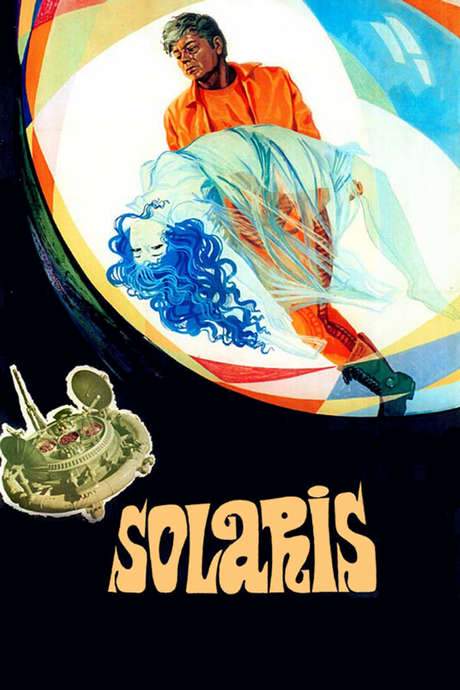
What Is Solaris About?
The premise of Solaris in 300 words, with nothing given away. The full story follows below.
In the cold silence of deep space, a solitary research station circles Solaris, a planet whose entire surface is a roiling, alien ocean. The ocean is more than a body of water; it is hinted to be a vast, thinking entity that reflects the inner lives of those who study it. The station’s crew lives under a perpetual hum of instrumentation and a lingering unease, as subtle phenomena begin to blur the line between reality and imagination.
Kris Kelvin arrives as a psychologist tasked with deciding the station’s fate. He carries the weight of a final conversation with his aging father and the lingering echo of a past love, both of which color his perception of the mission. The crew he meets—Dr. Snaut, a pragmatic thinker; Dr. Sartorius, whose curiosity pushes the limits of scientific inquiry; and the late Dr. Gibarian, whose absence still haunts the corridors—are each grappling with the planet’s enigmatic influence in their own way.
The film’s tone is contemplative and almost meditative, bathing the sterile corridors and the endless star‑filled void in a soft, dream‑like quality. Light and shadow play across the characters’ faces as they confront questions of memory, guilt, and what it means to be human when confronted by something that can manifest thought itself. The atmosphere is thick with intellectual tension, inviting the viewer to ponder whether the true mystery lies in the alien ocean or within the minds of those who stare at it.
As Kris Kelvin settles into his role, the station becomes a crucible for introspection. The subtle disturbances that ripple through daily routines hint at deeper undercurrents, suggesting that Solaris may be a mirror for the crew’s hidden obsessions. The story beckons with a quiet promise that the answers—if they exist—are as elusive and profound as the planet itself.
What Happens in Solaris?
The complete story of Solaris, from the first scene to the last, in 604 words (about 3 minutes). Spoilers throughout. Names in the text link to 5 cast member pages.
Spoilers ahead
Kris Kelvin, Donatas Banionis, a psychologist, is poised for an interstellar mission to Solaris to decide whether the decades‑old research station circling a vast ocean world should continue. He spends his last day on Earth with his elderly father and a retired pilot named Burton. Years earlier, Burton had joined an exploratory team at Solaris but was recalled after reporting unsettling sightings, including a four‑meter‑tall child on the planet’s surface of the water. A panel of scientists and military personnel dismissed these visions as hallucinations, yet the remaining crew members now report similarly strange phenomena. Before departure, Burton confides that he recognizes the child’s face as someone who was orphaned when a Solaris explorer vanished.
Upon arrival at the Solaris station, Kelvin finds the outpost in disarray. Dr. Gibarian, Sos Sargsyan, has killed himself, and the two surviving crew members—Dr. Snaut Jüri Järvet and Dr. Sartorius Anatoliy Solonitsyn—are increasingly unstable. Kelvin also glimpses figures who were not part of the original crew. Gibarian has left a cryptic farewell video urging Kelvin to trust what he is experiencing, showing two appearances of a little girl and insisting he is not insane; if strange things occur, it will not be Kelvin’s fault.
That night, Hari Natalya Bondarchuk, Kelvin’s wife who died ten years earlier, materializes in his sleeping quarters. He is terrified, and in a moment of desperation he launches a replica of his wife into space. Snaut explains that the visitors, or “guests,” began appearing after the scientists conducted radiation experiments aimed at the swirling surface of Solaris, in a desperate bid to understand its nature.
Later, Hari returns again, this time with a steadier presence. Kelvin accepts her and they fall asleep together, but when he briefly leaves, she panics and injures herself trying to escape. Before long, Snaut and Sartorius tell Kelvin that Hari is not the real person but a being crafted from his memories of his wife. She thinks and feels as if she were human, yet she is not, and Sartorius suggests that the visitors might be fragile but dangerous beings that could be destroyed with a device called “the annihilator.” In a later discussion, Snaut even proposes beaming Kelvin’s brainwave patterns at Solaris to help it understand him and halt the disturbances.
As Hari grows more autonomous, she learns the truth about the original Hari’s suicide ten years earlier. The scientists gather to confront the mystery in a birthday‑party setting that devolves into a philosophical debate, with Sartorius reminding Hari that she is a memory, not a person who truly exists. Overwhelmed, Hari drinks liquid oxygen and dies again, only to experience a painful, immediate resurrection. On the planet’s surface, the ocean swirls faster, forming a funnel that hints at a looming encounter with Solaris itself.
Kelvin falls ill and dreams of his mother, a young woman who tends to his arm. When he wakes, Hari is gone; Snaut reads Hari’s farewell note, in which she explains she asked for destruction. Snaut adds that broadcasting Kelvin’s brainwaves into Solaris has caused the visitors to stop appearing, and islands begin to form on the planet’s surface. Kelvin contemplates whether to return to Earth or stay with the crew.
In the film’s surreal final act, Kelvin appears to be at a family home from the past, where he embraces his father. The image slowly shifts, revealing that the setting is in fact one of Solaris’s islands, leaving the truth open to interpretation and inviting contemplation about memory, guilt, and the nature of humanity. The island‑bound ending lingers, suggesting that consciousness and longing can shape reality just as surely as science does.
Solaris Timeline: Every Key Event in Order
14 key events in the order they happen, from “Kelvin's last day on Earth” to “Ending reveal: Solaris island”. 14 events name a place, across 7 locations.
- 1
Kelvin's last day on Earth
Psychologist Kris Kelvin spends his last day with his elderly father and his friend Burton, preparing for the mission to Solaris. The scene establishes the emotional stakes and hints at Burton's troubled memory of the planet. The conversation frames the isolation and moral weight of the evaluation ahead.
When:Day before departure Where:Earth
- 2
Burton's revelation about the child
Burton explains that the haunting child on Solaris resembles one who was orphaned when an explorer vanished. He warns that what Kelvin might encounter could be a trick of memory or something more. The memory of loss colors Kelvin's expectations of the mission.
When:Before departure Where:Earth
- 3
Kelvin arrives at Solaris
Kelvin lands at the disordered Solaris station and quickly learns that Gibarian has killed himself. The remaining crew members Snaut and Sartorius are unstable, and strange visitors seem to appear. The station's atmosphere is already saturated with tension and mystery.
When:Upon arrival Where:Solaris station
- 4
Gibarian's farewell video
Kelvin finds Gibarian's cryptic video message, which shows a little girl aboard the station and asks if Kelvin has seen her. The message hints that the visitors are real to some extent and warns that Kelvin may not be sane if more strange events occur. The video deepens the sense of ominous uncertainty.
When:Early after arrival Where:Solaris station
- 5
First Hari appearance and replica experiment
Kelvin wakes to find Hari, his deceased wife, in his quarters. He destroys a replica of Hari by launching it into space, shocked by the uncanny resemblance. Snaut explains that the visitors arose after radiation experiments on Solaris.
When:First night on station Where:Kelvin's quarters on Solaris
- 6
Hari's second arrival and acceptance
Hari reappears and Kelvin gradually accepts her, inviting an intimate sleep together. When Kelvin briefly leaves, Hari injures herself, but the wounds heal before his eyes, revealing she is a memory-made guest. The line between memory and personhood becomes increasingly blurred.
When:That night Where:Kelvin's quarters
- 7
Guests' nature and annihilator
Snaut and Sartorius explain that the guests are not physical beings but manifestations born from human memories. They speculate about destroying them with a device called the annihilator, raising questions about reality and responsibility.
When:Subsequent days Where:Solaris station
- 8
Kelvin's brainwave attempt
Snaut proposes beaming Kelvin's brainwave patterns at Solaris to communicate and perhaps calm the visitors. The plan reflects the scientists' hope that Solaris will understand their human mind and stop the hauntings.
When:Early after Hari's appearances Where:Solaris station
- 9
Hari's humanity grows; original Hari's history revealed
Hari becomes more human and capable of existing away from Kelvin. Sartorius reveals the original Hari killed herself ten years earlier, deepening the mystery of the guests and their link to Kelvin's memories.
When:Between nights Where:Solaris station
- 10
Birthday party and existential crisis
Kelvin, Hari, Snaut, and Sartorius gather for a birthday party that devolves into a philosophical argument. Sartorius reminds Hari she isn't real, triggering despair as she drinks liquid oxygen and resurrects minutes later.
When:Birthday scene Where:Solaris station
Show the other 4 events of Solaris Hide the last 4 events
- 11
Ocean swirls on Solaris
On the planet's surface, the ocean begins to swirl into a funnel, signaling a looming, tangible change in Solaris itself. The crew watches as the environment mirrors the turmoil inside the station.
When:Following the party Where:Solaris surface
- 12
Kelvin's illness and revelation
Kelvin falls ill and dreams of his mother, who washes away dirt from his arm. He awakens to Hari's absence, and Snaut reveals that Kelvin's brainwaves have been broadcast into Solaris, which has halted the visits and allowed islands to form on the planet.
When:Shortly after dream Where:Solaris station / Solaris surface
- 13
Decision: stay or return
Kelvin debates whether to return to Earth or remain with the haunting in a strange, expanding world. The film leaves his choice open as he contemplates the possibility of continuing the mission or choosing personal memory over exposure to the unknown.
When:End of film Where:Solaris station
- 14
Ending reveal: Solaris island
Kelvin appears to be at his family home, only to reveal that they are on a Solaris island. The final image renders the reality as a loop between memory and material, underscoring the film's themes of grief and the unknowable.
When:Ending scene Where:Earth family home / Solaris island
Who Are the Main Characters in Solaris?
6 characters, among them Kris Kelvin (Donatas Banionis), Hari (Natalya Bondarchuk) and Dr. Gibarian: who each one is and the part they play in the story. Every profile links to the actor’s page.
-

Kris Kelvin (Donatas Banionis)
Played by Donatas Banionis
A psychologist sent to Solaris to assess the station and its research. He is measured and rational, yet haunted by memories of his wife Hari. Throughout the mission, he confronts the limits of science when memory-made beings challenge his sense of reality.
- 🧠 Scientist
- 💔 Grief
- 🔬 Investigator
-

Hari (Natalya Bondarchuk)
Played by Natalya Bondarchuk
The recreated wife, a being born from Kelvin's memories. She is not fully human yet grows more autonomous and appears to seek connection. Her presence forces Kelvin to confront love, guilt, and what it means for something to be real.
- 💖 Love
- 🧠 Complex
- DG
Dr. Gibarian
Played by Sos Sargsyan
The station's former scientist who kills himself, leaving a cryptic farewell video. His messages hint at the unsettling phenomena and warn Kelvin that not everything is as it seems.
- 🧭 Mentor
- 💭 Cryptic
-

Dr. Snaut
Played by Jüri Järvet
One of the surviving crew members, he is enigmatic and offers explanations about the guests. He represents a rational, scientific voice amid the station's strange events.
- 🧠 Scientist
- 🗝️ Enigmatic
- DS
Dr. Sartorius
Played by Anatoliy Solonitsyn
A fellow scientist whose interactions with Hari and the group contribute to the philosophical discussions about reality versus illusion and the nature of consciousness.
- 🧠 Scientist
- 🤔 Philosophical
- KF
Kelvin's Father
Played by Nikolay Grinko
A memory-dream figure seen at the family home, representing Kelvin's past and the pull of home and memory. His presence underscores the film's themes of memory and belonging.
- 👨👦 Family
- 🧭 Memory
Where and When Is Solaris Set?
Solaris is set in Solaris space station and Solaris planet. Here is why the place matters to the story.
Where
Solaris space station, Solaris planet
The setting centers on a remote research station orbiting the oceanic planet Solaris. The station becomes a site of unexplained phenomena as the crew experiences visits from beings created by Solaris' mind. The planet and its guests shape the crew's investigations and the choices they face.
- 🌌 Space Station
- 🌊 Ocean Planet
- 🔬 Scientific Outpost
What Are the Themes of Solaris?
3 ideas the story keeps returning to, among them Memory, Grief and Reality.
-
01
Memory
Memory drives much of what happens on Solaris. Hari is born from Kris Kelvin's memories of his dead wife, challenging the boundary between person and reconstruction. The crew debates whether the visitors are real or projections, forcing a test of scientific objectivity against intimate recollection. The film uses memory to probe identity, guilt, and longing.
-
02
Grief
Kelvin's grief over Hari's death compels him to engage with the replica, shaping his emotional responses and choices. Hari's presence intensifies questions about longing, responsibility, and the costs of reconnecting with what is lost. The scientists' cool rationality contrasts with the chaotic force of unresolved sorrow. Grief becomes a driving force that reshapes relationships aboard the station.
-
03
Reality
The line between reality and illusion blurs as the guests mimic human behavior and memories. Scientific attempts to understand Solaris—like the annihilator or broadcasting brainwaves—struggle against the planet's mind-made phenomena. The narrative uses this tension to examine what is truly real when memory and desire conjure convincing counterparts. The ending leaves the nature of existence open to interpretation within this isolated world.
What Kind of Film Is Solaris?
Melancholic in tone, with slow pacing and a complex story, going by the plot summary.
- Tone
- Melancholic
- Pacing
- Slow
- Story
- Complex
- Intensity
- High
- Ending
- Ambiguous
A slow, deeply melancholic and intellectually challenging sci-fi drama that explores profound themes of love, grief, and memory within a solitary, disorienting space station setting.
- dreamlike
- claustrophobic
- introspective
- lonely
- melancholic
- philosophical
- alien contact
- grief and loss
- memory and guilt
- human consciousness
Content notes: suicide, psychological distress, self-harm.
Quiz
How well do you remember Solaris? Test yourself on the story.
Where to Watch Solaris
Stream it on HBO Max and Plex, or rent or buy it from Amazon Video and Apple TV Store. US availability and prices from JustWatch.
Stream 7
 HBO Max
  HBO Max Amazon Channel
  Plex
Plex  Plex Channel
  Shout! Factory TV
  Tubi TV
  YouTube Free




Streaming availability in the US, powered by