
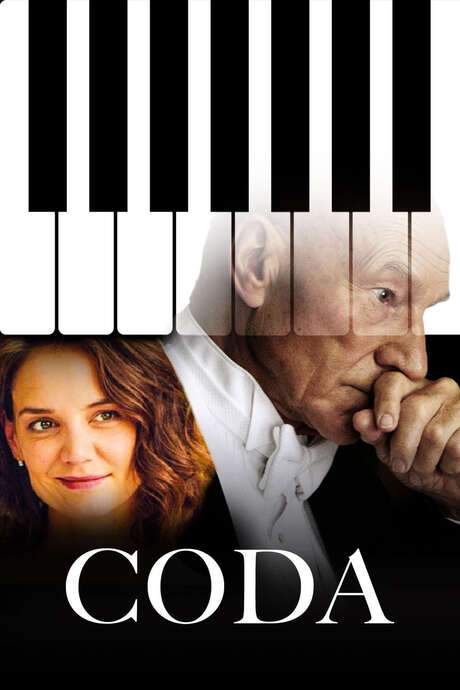
What Is Coda About?
The premise of Coda in 337 words, with nothing given away. The full story and the ending follow below.
In the hushed world of concert halls, Henry Cole has spent a lifetime building a reputation as one of the most exacting classical pianists of his generation. Now, at the twilight of his career and still reeling from the loss of his wife, he returns to the stage after a long silence only to discover that the very act of performing has become a fragile, anxiety‑laden ritual. The once‑steady confidence that carried him through countless recitals is now shadowed by an unsettling stage fright that threatens to unravel his carefully curated public image.
Amid the media swirl surrounding his comeback, Helen Morrison, a free‑spirited critic for The New Yorker, appears with a determined curiosity about the man behind the legend. She seeks a story that delves deeper than reviews, and despite an initially guarded Henry, their encounters spark a tentative bond—part professional intrigue, part personal rescue. Their chemistry is charged by contrasting temperaments: his meticulous, tormented artistry meets her buoyant, probing insight, setting the tone for a relationship that feels as delicate as a nocturne.
Behind the scenes, Henry’s agent Paul strives to keep the tour on track as the pianist’s mental state shows troubling signs. The pressure of an anticipated final concert in London looms, amplifying the sense that every performance could be a decisive moment. Sensing the growing unrest, Helen suggests a pilgrimage to Sils Maria in the Swiss Alps, a place famed for the healing resonance of Beethoven’s late sonatas. The idea of wandering among snow‑capped peaks, engaging strangers in quiet games of chess, and listening to music that seems to breathe with the landscape hints at a possible refuge from his inner turbulence.
The film unfolds with a lyrical, introspective tone, weaving together the rigor of classical performance, the rawness of personal grief, and the subtle promise that art and nature may offer moments of quiet redemption. It invites the audience to contemplate how the same melodies that once propelled a career can also become a compass through the most uncharted emotional terrain.
What Happens in Coda?
The complete story of Coda, from the first scene to the last, in 340 words (about 1 minute). Spoilers throughout. Names in the text link to 3 cast member pages.
Spoilers ahead
Henry Cole, Patrick Stewart, is an acclaimed classical pianist standing at the twilight of his career. He returns to the stage after a long silence triggered by the death of his wife, only to discover that his comeback is haunted by stage fright and a fraying mental state. On opening night, anxiety grips him mid-performance; he barely escapes disaster, fleeing the hall after a solitary number and stepping outside to smoke as the crowd’s applause wanes into a tense hush.
At a post-recital press conference, he meets Helen Morrison, Katie Holmes, a music critic for The New Yorker who is determined to tell his story and proposes an interview. Their second encounter unfolds at Steinway Hall, where Henry suffers another breakdown during a performance. Helen stays by his side in a moment of crisis, and her steady presence helps him regain his footing, earning his reluctant trust for the interview that will follow.
Meanwhile, despite his agent Paul—Giancarlo Esposito—doing his best to safeguard the comeback, Henry’s mental condition continues to decline. His recital schedule becomes increasingly perilous, jeopardizing not only the comeback tour but the much-anticipated final concert in London. The people around him wrestle with caution and plan, yet Henry clings to fragile sparks of hope, finding small anchors amid the mounting instability.
Helen then urges Henry to travel to Sils Maria in the Swiss Alps, hoping the change of scenery might offer the therapeutic balm he needs. There, he seeks out a pianist famed for a deeply restorative interpretation of Beethoven’s late piano sonatas. At first, the symptoms worsen, but gradually the journey yields solace: a series of restorative walks in nature, chance but empathetic conversations with strangers, vivacious chess matches with Felix the hotel porter, and the enduring resonance of Beethoven’s music guiding him toward a quieter, steadier interior.
The film unfolds at a careful pace, balancing moments of fragility with signs of resilience, painting a portrait of an artist negotiating memory, loss, and the possibility of renewal through music, companionship, and the serene power of nature.
Coda Timeline: Every Key Event in Order
12 key events in the order they happen, from “Henry returns to the stage” to “Emerging hope and renewed purpose”. 12 events name a place, across 8 locations.
- 1
Henry returns to the stage
Henry Cole, a celebrated classical pianist, returns to the stage after a long absence following his wife’s death. His comeback recital is marred by severe stage fright and mounting mental instability. He barely completes a number and rushes outside, smoking a cigarette as the crowd watches in uneasy silence.
When:Opening night after his return Where:Concert hall
- 2
Post-recital meeting with Helen Morrison
At a post-recital press conference, Henry meets Helen Morrison, a New Yorker music critic. She expresses an interest in writing about him and tries to secure an interview, but his initial refusal blocks the conversation. Despite the setback, their brief exchange plants the seed of curiosity that will influence the story to come.
When:After the opening recital Where:Press conference room
- 3
Crisis at Steinway Hall
Days later at Steinway Hall, Henry attempts another performance and suffers a fresh anxiety episode on stage. Helen intervenes in extremis, rescuing him and earning his trust. This act marks a turning point, as Henry lets himself be more open to her involvement.
When:During a performance, a few days after the press conference Where:Steinway Hall
- 4
Consent to the interview
Following the rescue, Henry agrees to grant Helen an interview, signaling a shift toward openness. Helen's intervention has earned his trust and changed the dynamic of their relationship. Together, they begin planning how his story will be told, even as other uncertainties loom.
When:Shortly after the rescue Where:Steinway Hall
- 5
Agency pressure and decline
Meanwhile, Henry’s agent Paul works to salvage the comeback, but the pianist's mental condition continues to deteriorate. Recitals grow more perilous, threatening the promised comeback tour and the high-profile final London concert. Pressure builds as the public narrative around his return becomes riskier.
When:In the ensuing weeks Where:Paul's office
- 6
Decision to seek help in Sils Maria
Helen urges a drastic step: travel to Sils Maria in the Swiss Alps to hear a pianist famed for Beethoven interpretations and their therapeutic effect. Henry agrees to consider the trip as a last resort to regain balance. This decision shifts the focus from a high-stakes comeback to a healing journey.
When:Following the rise of pressures to salvage the tour Where:London
- 7
Arrival in Sils Maria
Henry and Helen travel to Sils Maria in the Swiss Alps to seek relief in the alpine setting. Upon arrival, his symptoms initially intensify, signaling that the path to healing may be challenging. The tranquil environment offers a distance from the public eye, allowing space for reflection.
When:Upon arrival Where:Sils Maria, Swiss Alps
- 8
First days in Sils Maria and renewed strain
Early days in Sils Maria see Henry's symptoms surface again, testing his resolve. Yet the quiet pace and alpine air begin to blunt the edge of his anxiety. Helen remains supportive as they explore music and nature as a shared language.
When:Early days in Sils Maria Where:Sils Maria
- 9
Nature and gradual solace
Henry starts to find solace through walks in nature, slow conversations, and moments of solitude. The surrounding mountains and fresh air help calm his mind and restore a measure of balance. Small signs of steady progress emerge as he engages more openly with his surroundings.
When:During stay Where:Sils Maria
- 10
Connections and chess with Felix
He forms empathetic connections with strangers and even plays spirited chess matches with Felix, the hotel porter. These exchanges provide warmth and a sense of normalcy that counteracts his earlier isolation. They become little rituals that reinforce his slow return to equilibrium.
When:During stay Where:Sils Maria hotel
- 11
Beethoven as therapy
The music of Beethoven, especially the late sonatas, serves as a therapeutic anchor for Henry. He listens with renewed attention, allowing the interpretations to influence his own approach to playing. This musical focus helps him tolerate inner uncertainties and fosters a newfound steadiness.
When:During stay Where:Sils Maria
- 12
Emerging hope and renewed purpose
Gradually Henry’s symptoms subside and a sense of hope returns. The time in Sils Maria leaves him with a renewed sense of purpose and a cautious openness to the idea of performing again. The journey marks a turning point from crisis to recovery, culminating in a more peaceful, grounded outlook.
When:End of stay Where:Sils Maria
Who Are the Main Characters in Coda?
3 characters, among them Henry Cole (Patrick Stewart), Helen Morrison (Katie Holmes) and Paul (Agent) (Giancarlo Esposito): who each one is and the part they play in the story. Every profile links to the actor’s page.
-

Henry Cole (Patrick Stewart)
Played by Patrick Stewart
An acclaimed classical pianist at the twilight of his career, Henry battles stage fright and mounting mental instability after his wife's death. His return to the stage is marked by vulnerability, as public attention intensifies the pressure on his comeback. Over the course of the film, he seeks steadiness through therapy-like experiences and the healing power of Beethoven.
- 🧠 Complex
- 🎹 Musician
-

Helen Morrison (Katie Holmes)
Played by Katie Holmes
A discerning music critic for The New Yorker who becomes a catalyst for Henry's comeback. She pursues a story but earns his trust after rescuing him during a panic on stage. Her empathy and steadfast belief in his talent drive him toward a difficult but hopeful interview and journey.
- 🧠 Insightful
- 🎼 Critic
- 🎭 Determined
-

Paul (Agent) (Giancarlo Esposito)
Played by Giancarlo Esposito
Henry's agent who fights to salvage the comeback tour amid his client's deteriorating mental state. He negotiates with venues and media while balancing professional duty with compassion for Henry's fragility.
- 💼 Agent
- 🧭 Strategist
- 🎭 Power broker
Where and When Is Coda Set?
Coda is set in London, Steinway Hall (New York City), Sils Maria and Swiss Alps (Early 2020s). Here is why the time and place matter to the story.
When
Early 2020s
Set in contemporary times, the narrative mirrors a modern era of celebrity culture and mental health awareness. Public anticipation for a final London recital heightens the pressure, just as a therapeutic sojourn to the Swiss Alps underscores a shift toward restorative approaches for performers. Beethoven's late sonatas frame the healing journey as music and nature intertwine with personal resilience.
Where
London, Steinway Hall (New York City), Sils Maria, Swiss Alps
The story unfolds across major cultural hubs. London serves as the bustling backdrop for Henry's high-stakes comeback performances, while Steinway Hall in New York City anchors his public-facing struggle. The Swiss village of Sils Maria in the Alps becomes a tranquil retreat where he seeks therapy through Beethoven and the quiet resonance of nature.
- 🎭 Drama
- 🎼 Classical Music
- 🗺️ Travel
What Are the Themes of Coda?
3 ideas the story keeps returning to, among them Mental Health, Healing through Music and Nature and Encounters.
-
01
Mental Health
The film centers on a celebrated pianist grappling with stage fright, anxiety, and the threat of decline. It explores how mental fragility can threaten a lifelong vocation and fame, while also revealing the strength that can emerge from acknowledging vulnerability. By approaching Henry's turmoil with empathy rather than sensationalism, the story emphasizes resilience and the possibility of growth through struggle.
-
02
Healing through Music
Music functions as a therapeutic force, guiding Henry toward balance. Beethoven's late piano sonatas become a catalyst for emotional steadiness, offering a path to rebuild confidence and reconnect with audiences and self. Its motifs echo through his practice and performances, underscoring music's capacity to anchor memory, calm nerves, and renew purpose.
-
03
Nature and Encounters
Solace comes through walks in nature and empathetic encounters with strangers. The Alps setting and small, meaningful conversations with people like a hotel porter help reframe performance as a humane, human-centered pursuit rather than a solitary ordeal. These moments emphasize connection over trophies, showing that support networks can sustain a performer through crisis.
How Does Coda End?
The last act of Coda and what it means, in 270 words. The ending lands as happy. Big spoilers: read the plot summary first if you have not seen it.
The final act, in full
Ruby finally tells her family that she wants to audition for music school, and the news erupts into a heated argument. The next day she skips the fishing outing, and while her father and brother are on the boat a coast‑guard patrol shows up after a sea‑monitor spots them. The licensing board revokes their permit and, as a condition for letting them fish again, demands that a hearing person be on board at all times.
Realising that they can’t afford to hire anyone else, Ruby puts her own ambition on hold and returns to help her family. At the school’s fall concert she sings with her usual power, but the scene cuts to her parents’ point of view: they watch in complete silence, unable to hear her voice. The moment is broken when her father places his hand on her neck, feeling the vibrations of the music and finally understanding how much singing means to her.
The following morning the Rossi family drives Ruby to Boston for her audition. She delivers a breathtaking performance that moves everyone, and—while she sings—her family quietly interprets the lyrics for one another, sharing the experience in their own language. The judges accept her, granting her a place at Berklee.
With Ruby’s acceptance, the family’s outlook shifts. They begin reaching out to the hearing world, no longer relying solely on Ruby as their bridge, and they give her permission to leave for college. Though she departs for a new life with her boyfriend Miles, the love and support of her parents and brother remain rooted in Gloucester, echoing the song that first connected them all.
What Kind of Film Is Coda?
Melancholic in tone, with slow pacing and a straightforward story, going by the plot summary.
- Tone
- Melancholic
- Pacing
- Slow
- Story
- Straightforward
- Intensity
- Medium
- Ending
- Happy
A quiet, melancholic character study that follows a troubled pianist's slow journey from debilitating anxiety toward a fragile but hopeful state of healing.
- melancholic
- reflective
- anxious
- healing
- solitary
- hopeful
- mental health
- artistic crisis
- grief and loss
- classical music
Content notes: anxiety attacks, mental health crisis.
Quiz
How well do you remember Coda? Test yourself on the story.
