Coda 2019

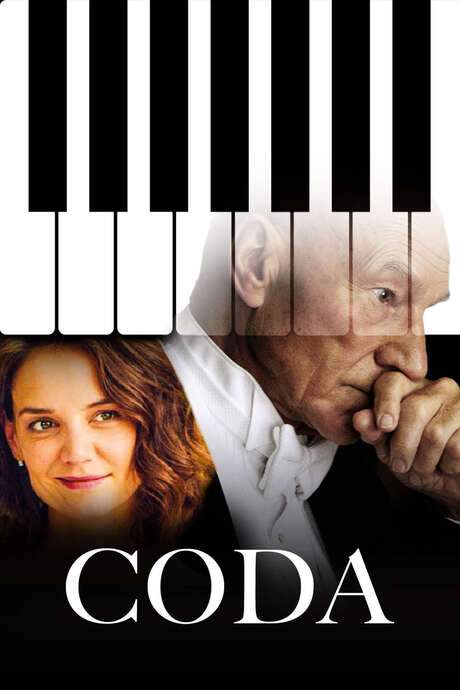
Success often conceals a wound A famous pianist at the twilight of his career meets a free-spirited music critic who soon becomes his rock as his mental state deteriorates.


Does Coda have end credit scenes?
No!
Coda does not have end credit scenes. You can leave when the credits roll.
Meet the Full Cast and Actors of Coda
Explore the complete cast of Coda, including both lead and supporting actors. Learn who plays each character, discover their past roles and achievements, and find out what makes this ensemble cast stand out in the world of film and television.




External Links and Streaming Options
Discover where to watch Coda online, including streaming platforms, rental options, and official sources. Compare reviews, ratings, and in-depth movie information across sites like IMDb, TMDb, Wikipedia or Rotten Tomatoes.








Ratings and Reviews for Coda
See how Coda is rated across major platforms like IMDb, Metacritic, and TMDb. Compare audience scores and critic reviews to understand where Coda stands among top-rated movies in its genre.

The Movie Echo Score
Coda presents a mixed viewing experience, with particular strengths in its sensory design but notable weaknesses in narrative propulsion and character depth. Critics praise its visual lyricism and classical score, yet both reviewers and audiences note a sluggish pace and limited emotional engagement. The film’s artistic craftsmanship is solid, but the story’s predictability and meandering structure diminish its overall impact, resulting in an average reception that hovers around the middle of the rating scale.
The Movie Echo Score Breakdown for Coda

Art & Craft
In terms of art and craft, the film showcases a refined visual palette and careful composition. Critics highlight its great-looking cinematography and lyrical visuals, while users commend the beautiful scenery and atmospheric framing. Some reviewers, however, describe the pace as leisurely, suggesting occasional dullness. Overall, the production design and direction are competent and aesthetically pleasing, earning a modestly positive assessment.

Character & Emotion
When evaluating character and emotion, performances are recognized as strong, especially Patrick Stewart's presence. Critics note two solid performances, and users appreciate professional acting. Conversely, many point to shallow character development and a lack of insight into motivations. The emotional resonance is therefore uneven, with competent acting offset by limited depth, resulting in a middle‑range appraisal.

Story & Flow
Regarding story and flow, the narrative is described as simple and predictable, lacking compelling twists. Critics and users alike criticize the slow, uneventful pacing and an absence of dramatic stakes. While some find the premise thoughtful, the execution fails to sustain engagement. Consequently, the plot coherence and originality receive a below‑average rating.

Sensory Experience
In the sensory domain, the film excels with a lush, classical soundtrack and striking visual style. Critics and users repeatedly commend the lyrical score featuring Bach, Beethoven, and Chopin, as well as the evocative scenery. Though a few note that music sometimes overshadows dialogue, the overall acoustic and visual experience is praised, leading to a high sensory score.

Rewatch Factor
Rewatch factor is limited, as many reviewers find the film's pacing and narrative underwhelming. Critics label it dull and lacking in momentum, while users express boredom and a desire for more emotional peaks. Despite strong performances and sensory appeal, the slow, contemplative structure reduces its appeal for repeat viewings, resulting in a low rewatch rating.
Full Plot Summary and Ending Explained for Coda
Read the complete plot summary of Coda, including all major events, twists, and the full ending explained in detail. Explore key characters, themes, hidden meanings, and everything you need to understand the story from beginning to end.
Henry Cole, Patrick Stewart, is an acclaimed classical pianist standing at the twilight of his career. He returns to the stage after a long silence triggered by the death of his wife, only to discover that his comeback is haunted by stage fright and a fraying mental state. On opening night, anxiety grips him mid-performance; he barely escapes disaster, fleeing the hall after a solitary number and stepping outside to smoke as the crowd’s applause wanes into a tense hush.
At a post-recital press conference, he meets Helen Morrison, Katie Holmes, a music critic for The New Yorker who is determined to tell his story and proposes an interview. Their second encounter unfolds at Steinway Hall, where Henry suffers another breakdown during a performance. Helen stays by his side in a moment of crisis, and her steady presence helps him regain his footing, earning his reluctant trust for the interview that will follow.
Meanwhile, despite his agent Paul—Giancarlo Esposito—doing his best to safeguard the comeback, Henry’s mental condition continues to decline. His recital schedule becomes increasingly perilous, jeopardizing not only the comeback tour but the much-anticipated final concert in London. The people around him wrestle with caution and plan, yet Henry clings to fragile sparks of hope, finding small anchors amid the mounting instability.
Helen then urges Henry to travel to Sils Maria in the Swiss Alps, hoping the change of scenery might offer the therapeutic balm he needs. There, he seeks out a pianist famed for a deeply restorative interpretation of Beethoven’s late piano sonatas. At first, the symptoms worsen, but gradually the journey yields solace: a series of restorative walks in nature, chance but empathetic conversations with strangers, vivacious chess matches with Felix the hotel porter, and the enduring resonance of Beethoven’s music guiding him toward a quieter, steadier interior.
The film unfolds at a careful pace, balancing moments of fragility with signs of resilience, painting a portrait of an artist negotiating memory, loss, and the possibility of renewal through music, companionship, and the serene power of nature.

Coming soon on iOS and Android
The Plot Explained Mobile App
From blockbusters to hidden gems — dive into movie stories anytime, anywhere. Save your favorites, discover plots faster, and never miss a twist again.
Sign up to be the first to know when we launch. Your email stays private — always.
Explore the mobile appWatch Trailers, Clips & Behind-the-Scenes for Coda
Watch official trailers, exclusive clips, cast interviews, and behind-the-scenes footage from Coda. Dive deeper into the making of the film, its standout moments, and key production insights.
Cars Featured in Coda
Explore all cars featured in Coda, including their makes, models, scenes they appear in, and their significance to the plot. A must-read for car enthusiasts and movie buffs alike.
Coda Other Names and Titles
Explore the various alternative titles, translations, and other names used for Coda across different regions and languages. Understand how the film is marketed and recognized worldwide.
Quick Links: Summary, Cast, Ratings, More

What's After the Movie?
Not sure whether to stay after the credits? Find out!
Check out our other apps:

SAT Sphere
Build confidence for the Digital SAT.

Mori Atlas
Discover wild places worth protecting.

Luntero
Search smarter for a home in Amsterdam.

Plot Explained
Unravel movie endings and hidden clues.

Pokechamp
Dive into Pokémon data and battle logic.

Driving Theory
Get ready for your European theory test.

Movie Dust
Plan your next cinema trip with ease.

Musemap
Find art and culture as you travel.

Selkobase
Compare credentials before committing.

Local Manual
Turn an unfamiliar country into practical next steps.

Lernavi
Compare school systems before your next move.

GymRoam
Find a workout stop wherever your plans take you.
Explore Our Movie Platform
New Movie Releases (2026)
Famous Movie Actors
Top Film Production Studios
Movie Plot Summaries & Endings
Major Movie Awards & Winners
Best Concert Films & Music Documentaries
Movie Collections and Curated Lists
© 2026 What's After the Movie. All rights reserved.
Privacy Policy