

- Born
- November 16, 1926
- Birthplace
- Bhopal, India
- Full name
- Mohammad Nasir Hussain Khan
- Citizenship
- India
- Occupations
- Filmmaker, screenwriter, producer, director
- Years active
- 1948-1996
- Spouses
- Ayesha Khan
- Children
- 2
Nasir Hussain's Career in Numbers
Nasir Hussain's films in numbers — as a director, not counting appearances as themselves: when they were made, the genres Nasir Hussain works in most and the milestones along the way. The filmography runs from Tumsa Nahin Dekha (1957) to Hum Kisise Kum Naheen (1977), and the 1970s were the busiest decade.
Nasir Hussain Movies by Decade
- 1950s 1
- 1960s 2
- 1970s 3
The 1970s were Nasir Hussain's busiest decade, with 3 films.
Nasir Hussain Movies by Genre
- Drama 3
- Music 2
- Romance 1
Drama is the genre Nasir Hussain has worked in most, with 3 films, ahead of music (2).
Nasir Hussain Career Milestones
- First film
- Tumsa Nahin Dekha 1957
- Newest film
- Hum Kisise Kum Naheen 1977
Nasir Hussain Filmography: Every Movie
Every film Nasir Hussain is credited on, newest first, with the role, the box office and the Movie Echo Score. Re-order the list to see the best-rated films or the biggest hits first.




Who Is Nasir Hussain?
Nasir Hussain was born in Bhopal, India in 1926. Credited on films since 1957, as a director. The background, training and the roles that shaped the career.
Mohammad Nasir Hussain Khan, popularly known as Nasir Hussain, was born on 16 November 1926 in Bhopal, India, into a family with diverse cultural roots. His father, Jaffar Hussain Khan, was a schoolteacher belonging to a zamindar family of Pashtun descent, while his mother Aamna traced her ancestry to Jeddah in modern-day Saudi Arabia and was the niece of the renowned freedom fighter and scholar Maulana Azad. As the fourth of five children—including his youngest brother Tahir Hussain, who later became the father of superstar Aamir Khan—Nasir grew up in an environment steeped in cultural and intellectual traditions. He began his career in the film industry in 1948 when he joined Filmistan as a writer, collaborating with the celebrated lyricist Qamar Jalalabadi. During his early years at the studio, he penned screenplays for notable productions such as Anarkali (1953), Munimji (1955), and Paying Guest (1957), establishing himself as a skilled screenwriter. The breakaway studio from Bombay Talkies operated on mid-budget formula productions, relying heavily on star power and memorable music. It was under the guidance of Sashadhar Mukherjee, a key member of the Filmistan team, that Hussain was given the opportunity to direct his first film, Tumsa Nahin Dekha, which catapulted Shammi Kapoor to stardom.
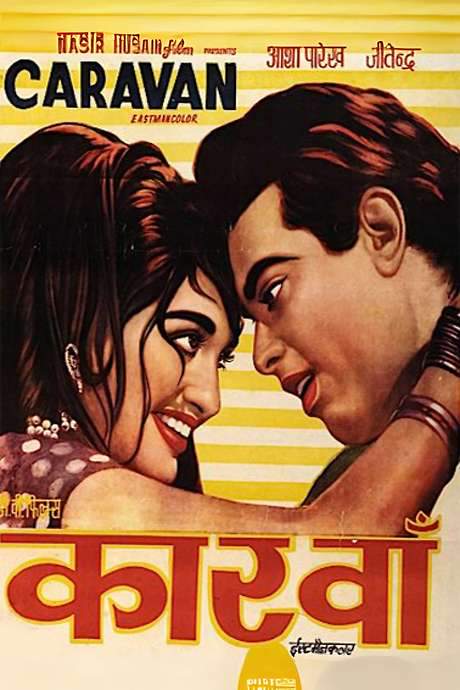
Hussain's partnership with Shammi Kapoor flourished further with the hit film Dil Deke Dekho (1959), produced by Filmalaya, which introduced Asha Parekh—the actress who would become the leading lady in all of his subsequent films until Caravan (1971). Hussain and Parekh shared a long romantic relationship that ultimately ended because he was already a married man with two children. His wife, Margaret Francina Lewis, whom he met at Filmistan where she worked as an assistant choreographer, converted and took the name Ayesha Khan after their marriage, and she also contributed to several of his productions as an assistant choreographer. Hussain later founded Nasir Hussain Films and created a string of musical blockbusters, including Jab Pyar Kisi Se Hota Hai (1961), Phir Wohi Dil Laya Hoon (1963), Teesri Manzil (1966), Baharon Ke Sapne (1967), Pyar Ka Mausam (1969), Caravan (1971), Yaadon Ki Baraat (1973), and Hum Kisise Kum Naheen (1977). His collaborations with lyricist Majrooh Sultanpuri and composer R.D. Burman produced some of Hindi cinema's most memorable soundtracks. Yaadon Ki Baraat has been widely credited as the first masala film, defining Hindi cinema in the 1970s and 1980s, while Qayamat Se Qayamat Tak (1988)—which introduced his nephew Aamir Khan as a romantic hero—set the template for Hindi musical romances of the 1990s. His son Mansoor Khan eventually took over Nasir Hussain Films, directing landmark films like Jo Jeeta Wohi Sikandar (1992), which also won Filmfare honors. Nasir Hussain passed away on 13 March 2002 in Mumbai due to a heart attack, leaving behind an extraordinary legacy that earned him a special Filmfare Award in 1996 for his invaluable contribution to Hindi cinema. Akshay Manwani's book Music, Masti, Modernity: The Cinema of Nasir Hussain stands as a lasting testament to his enduring influence on the industry, while Javed Akhtar has rated him as the most underrated producer-director of his generation.
Nasir Hussain: Questions & Answers
How many movies Nasir Hussain has made, the biggest hit, the best-rated film, the award record and more, answered from the filmography above.
How many movies has Nasir Hussain been in?
Nasir Hussain is credited on 6 films, from 1957 to 1977. All of them as a director. The filmography on this page lists every one of them, newest first, with the role and the Movie Echo Score.
What is Nasir Hussain's newest movie?
The most recent film on Nasir Hussain's filmography is Hum Kisise Kum Naheen (1977), which Nasir Hussain directed.
The Best Nasir Hussain Movies, Ranked
Top rated, most awarded and biggest box office hits from 6 directing credits.
Coming soon to your phone
The Plot Explained Movie Summary App
From blockbusters to hidden gems: plot summaries, endings explained and timelines on your phone. Save your favorites and never miss a twist again.
Be the first to know when it launches. Your email stays private, always. Learn more about the app
