Unbowed 2011

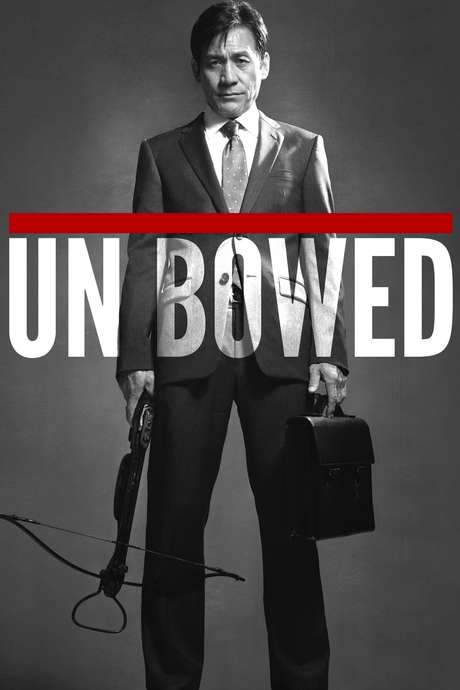
A conscientious professor finds himself pitted against a corrupt judicial system when he is charged with assault after firing a crossbow at the judge presiding over his appeal of an unjust dismissal. Inspired by the true story of Kim Kyung‑ho, the film examines the clash between law‑abiding citizens and judges who abuse their authority.


Does Unbowed have end credit scenes?
No!
Unbowed does not have end credit scenes. You can leave when the credits roll.
Where to Watch Unbowed
See current US streaming, rental, and purchase options for Unbowed (2011) via JustWatch.


Streaming availability powered by 
Meet the Full Cast and Actors of Unbowed
Explore the complete cast of Unbowed, including both lead and supporting actors. Learn who plays each character, discover their past roles and achievements, and find out what makes this ensemble cast stand out in the world of film and television.

Kim Eung-soo
Park Bong-ju
Ahn Sung-ki
Kim Kyung-ho
Park Won-sang
Park Jun
Jin Kyung
Park Jun's Wife
Park Gil-su
Chairman Choi
Na Young-hee
Kyung-ho's Wife
Lee Kyung-young
Lee Tae-woo
Moon Sung-keun
Shin Jae-yeol
Kim Ji-ho
Jang Eun-seo
Jung Won-joong
Park Jae-gi
Cho Dong-in
Sang-jun
Oh Dae-hwan
Kim In-sik
Han Sa-myeong
Inmate
Shin An-jin
Jailer
Jeon So-hyun
Saloonkeeper
Lee Seung-hun
Lawyer Lee
External Links and Streaming Options
Discover where to watch Unbowed online, including streaming platforms, rental options, and official sources. Compare reviews, ratings, and in-depth movie information across sites like IMDb, TMDb, Wikipedia or Rotten Tomatoes.







Take the Ultimate Unbowed Movie Quiz
Challenge your knowledge of Unbowed with this fun and interactive movie quiz. Test yourself on key plot points, iconic characters, hidden details, and memorable moments to see how well you really know the film.
Unbowed (2011) Quiz: Test your knowledge of the South Korean film Unbowed, covering its plot, characters, and themes.
What subject did the main character Kim teach before losing his tenure?
Full Plot Summary and Ending Explained for Unbowed
Read the complete plot summary of Unbowed, including all major events, twists, and the full ending explained in detail. Explore key characters, themes, hidden meanings, and everything you need to understand the story from beginning to end.
In 1995, an untenured professor of mathematics named Kim Ahn Sung-ki exposes a flaw in the College Scholastic Ability Test, triggering the public humiliation of the professors who drafted it. This bold move sets off a chain of consequences: despite the strength of his research, Kim is denied tenure and forced to resign. He moves to the United States for a time, chasing opportunities abroad, but returns to South Korea when laws are amended to allow rejected professors to file wrongful dismissal lawsuits. The clash between merit and institutional protection becomes the central tension of his career and life.
By 2007, with his case exhausted and his appeal dismissed, Kim decides to confront the appeals judge outside the judge’s residence, bringing along a sporting cross-bow that mirrors a personal hobby. A physical struggle follows and Kim is arrested. The judge, initially appearing uninjured, disappears briefly and reemerges with a minor abdominal puncture, prompting a hospital visit. An assault on a judge is treated as a grave crime, drawing widespread media and public attention and turning Kim into a focal point of a broader debate about justice and accountability.
Park Park Won-sang, a debt-ridden lawyer, is approached by Kim’s wife to take on the case. He hesitates due to his own struggles, including alcohol problems, and the scenario becomes more complicated when Kim’s wife changes her mind about his involvement. Kim’s trial proceeds with a different legal advocate, but Kim ultimately pleads No Contest in response to what he sees as prejudice and dishonesty from the trial judge. While in prison, Kim files for an appeal and, at the suggestion of a journalist named Jang, he hires Park to rebuild his challenge to the prosecution’s narrative. What unfolds is a relentless legal wrestling match in which Kim, though incarcerated, repeatedly cites constitutional rights and relevant laws to challenge the integrity of the proceedings. He also scrutinizes the prosecutor’s evidence and the victim’s testimony, highlighting inconsistencies and procedural gaps that raise serious questions about the case.
As the hearings progress, the appeals judge resigns rather than render a ruling that would favor Kim. A new appeals judge steps in, but this replacement appears determined to obstruct the process and shield the prosecutor, even though it becomes evident that Kim never fired the weapon that caused harm. The victim’s account is contradicted by the timeline—reports indicate the victim stabbed himself soon after Kim’s arrest, and blood-stained clothes were procured by his relatives much later—raising questions about the investigations and the reliability of the testimony. Public sentiment oscillates between protests demanding Kim’s innocence and institutional calls for a verdict aligned with the prosecution’s narrative. In a moment of protest, Park contemplates pouring water on the appeals judge, a move that could lead to his imprisonment, but journalist Jang intervenes and confiscates the water bottles, attempting to maintain order amidst growing tension.
Kim’s ordeal takes a brutal turn when he is raped in prison by another inmate, a harrowing experience that underscores the systemic vulnerabilities faced by prisoners arguing against powerful institutions. Despite these setbacks, the appeal is denied, but Kim receives a comparatively lenient sentence of four years instead of ten. While serving time, he continues to argue his case with guards and guards’ behavior, staying true to his analytical approach to law. Upon release, he emerges as a lifelong advocate for judicial transparency, dedicating his efforts to ensuring that the legal system remains open, accountable, and fair for future generations.

Coming soon on iOS and Android
The Plot Explained Mobile App
From blockbusters to hidden gems — dive into movie stories anytime, anywhere. Save your favorites, discover plots faster, and never miss a twist again.
Sign up to be the first to know when we launch. Your email stays private — always.
Explore the mobile appWatch Trailers, Clips & Behind-the-Scenes for Unbowed
Watch official trailers, exclusive clips, cast interviews, and behind-the-scenes footage from Unbowed. Dive deeper into the making of the film, its standout moments, and key production insights.
Unbowed Other Names and Titles
Explore the various alternative titles, translations, and other names used for Unbowed across different regions and languages. Understand how the film is marketed and recognized worldwide.
Quick Links: Summary, Cast, Ratings, More

What's After the Movie?
Not sure whether to stay after the credits? Find out!
Check out our other apps:

SAT Sphere
Build confidence for the Digital SAT.

Mori Atlas
Discover wild places worth protecting.

Luntero
Search smarter for a home in Amsterdam.

Plot Explained
Unravel movie endings and hidden clues.

Pokechamp
Dive into Pokémon data and battle logic.

Driving Theory
Get ready for your European theory test.

Movie Dust
Plan your next cinema trip with ease.

Musemap
Find art and culture as you travel.

Selkobase
Compare credentials before committing.

Local Manual
Turn an unfamiliar country into practical next steps.

Lernavi
Compare school systems before your next move.

GymRoam
Find a workout stop wherever your plans take you.
Explore Our Movie Platform
New Movie Releases (2026)
Famous Movie Actors
Top Film Production Studios
Movie Plot Summaries & Endings
Major Movie Awards & Winners
Best Concert Films & Music Documentaries
Movie Collections and Curated Lists
© 2026 What's After the Movie. All rights reserved.
Privacy Policy