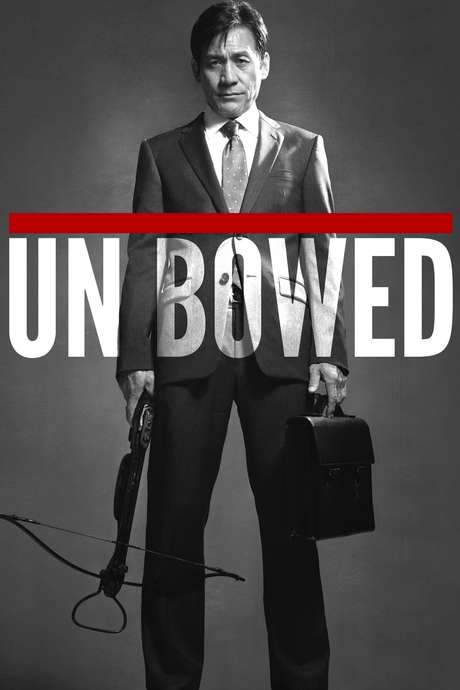
Unbowed 2011

Directed by

Chung Ji-young
Made by

Next Entertainment World
Where to Watch Unbowed
See current US streaming, rental, and purchase options for Unbowed (2011) via JustWatch.


Streaming availability powered by 
Unbowed Plot Summary
Read the complete plot summary and ending explained for Unbowed (2011). From turning points to emotional moments, uncover what really happened and why it matters.
In 1995, an untenured professor of mathematics named Kim Ahn Sung-ki exposes a flaw in the College Scholastic Ability Test, triggering the public humiliation of the professors who drafted it. This bold move sets off a chain of consequences: despite the strength of his research, Kim is denied tenure and forced to resign. He moves to the United States for a time, chasing opportunities abroad, but returns to South Korea when laws are amended to allow rejected professors to file wrongful dismissal lawsuits. The clash between merit and institutional protection becomes the central tension of his career and life.
By 2007, with his case exhausted and his appeal dismissed, Kim decides to confront the appeals judge outside the judge’s residence, bringing along a sporting cross-bow that mirrors a personal hobby. A physical struggle follows and Kim is arrested. The judge, initially appearing uninjured, disappears briefly and reemerges with a minor abdominal puncture, prompting a hospital visit. An assault on a judge is treated as a grave crime, drawing widespread media and public attention and turning Kim into a focal point of a broader debate about justice and accountability.
Park Park Won-sang, a debt-ridden lawyer, is approached by Kim’s wife to take on the case. He hesitates due to his own struggles, including alcohol problems, and the scenario becomes more complicated when Kim’s wife changes her mind about his involvement. Kim’s trial proceeds with a different legal advocate, but Kim ultimately pleads No Contest in response to what he sees as prejudice and dishonesty from the trial judge. While in prison, Kim files for an appeal and, at the suggestion of a journalist named Jang, he hires Park to rebuild his challenge to the prosecution’s narrative. What unfolds is a relentless legal wrestling match in which Kim, though incarcerated, repeatedly cites constitutional rights and relevant laws to challenge the integrity of the proceedings. He also scrutinizes the prosecutor’s evidence and the victim’s testimony, highlighting inconsistencies and procedural gaps that raise serious questions about the case.
As the hearings progress, the appeals judge resigns rather than render a ruling that would favor Kim. A new appeals judge steps in, but this replacement appears determined to obstruct the process and shield the prosecutor, even though it becomes evident that Kim never fired the weapon that caused harm. The victim’s account is contradicted by the timeline—reports indicate the victim stabbed himself soon after Kim’s arrest, and blood-stained clothes were procured by his relatives much later—raising questions about the investigations and the reliability of the testimony. Public sentiment oscillates between protests demanding Kim’s innocence and institutional calls for a verdict aligned with the prosecution’s narrative. In a moment of protest, Park contemplates pouring water on the appeals judge, a move that could lead to his imprisonment, but journalist Jang intervenes and confiscates the water bottles, attempting to maintain order amidst growing tension.
Kim’s ordeal takes a brutal turn when he is raped in prison by another inmate, a harrowing experience that underscores the systemic vulnerabilities faced by prisoners arguing against powerful institutions. Despite these setbacks, the appeal is denied, but Kim receives a comparatively lenient sentence of four years instead of ten. While serving time, he continues to argue his case with guards and guards’ behavior, staying true to his analytical approach to law. Upon release, he emerges as a lifelong advocate for judicial transparency, dedicating his efforts to ensuring that the legal system remains open, accountable, and fair for future generations.
Unbowed Timeline
Follow the complete movie timeline of Unbowed (2011) with every major event in chronological order. Great for understanding complex plots and story progression.
Kim exposes a flaw in the College Scholastic Ability Test
In 1995, Kim publicly reveals a flaw in the exam, igniting a national debate about the fairness of the test and the professors who drafted it. The controversy overshadows his research achievements and he is denied tenure and forced to resign. Facing limited prospects at home, he moves to the United States to seek opportunities abroad.
Return home as laws change
After amendments allow rejected professors to file wrongful dismissal lawsuits, Kim returns to South Korea to renew his challenge. The return marks a shift from exile to active legal pursuit, though the path remains fraught with institutional resistance. He reenters the Korean legal arena in hopes of vindication.
Confrontation outside the judge's residence
By 2007, exhausted of typical appeals, Kim confronts the appeals judge outside the judge’s residence, bringing along a sporting cross-bow that reflects a personal hobby. A physical struggle ensues and Kim is arrested. The judge reappears with a minor abdominal puncture, sparking intense media attention and a public debate about accountability.
Media frenzy and public debate
Assault on a judge is treated as a grave crime, drawing widespread media and public attention. Kim becomes a focal point in a broader conversation about justice, merit, and institutional protection, polarizing opinion across society.
Park Won-sang approached
Park Won-sang, a debt-ridden lawyer, is approached by Kim’s wife to take the case. He hesitates due to his own struggles with alcohol, and the situation becomes more complex when Kim’s wife wavers on his involvement. The case then enters a new phase with Park as a potential ally.
A new advocate and a contested trial
Kim’s trial proceeds with a different legal advocate, but he ultimately pleads No Contest, citing prejudice and dishonesty from the trial judge. The decision reflects his distrust of the process rather than an admission of guilt. The plea sets the stage for a prolonged appellate battle.
In prison, Kim appeals; Jang's plan
While incarcerated, Kim files for an appeal and, at journalist Jang’s suggestion, hires Park to rebuild his challenge to the prosecution’s narrative. He continues to argue his case from confinement, repeatedly invoking constitutional rights and court rules to scrutinize the prosecution’s evidence.
Judicial delays and obstructions
As hearings progress, the appeals judge resigns rather than render a ruling favorable to Kim. A new appeals judge appears determined to shield the prosecutor, making it clear that Kim never fired the weapon, yet the pursuit of truth continues against institutional inertia.
Contradictory timelines and questions about the investigation
The victim’s account clashes with the timeline, with reports suggesting the victim stabbed himself after Kim's arrest and blood-stained clothes allegedly obtained later. These discrepancies raise serious questions about the case’s investigations and the reliability of key testimony.
Public protests and Park’s precarious move
Public sentiment swings between protests for Kim’s innocence and demands for a verdict aligned with the prosecution. In a moment of protest, Park contemplates pouring water on the appeals judge, but journalist Jang intervenes to prevent disorder and preserve order.
Prison rape and its aftermath
Kim’s ordeal intensifies when he is raped in prison by another inmate, highlighting systemic vulnerabilities for prisoners who challenge powerful institutions. This traumatic event strengthens his resolve to seek transparency and accountability, even at personal cost.
Verdict, release, and lifelong advocacy
The appeal is denied, and Kim receives a four-year sentence instead of ten. While in prison, he continues to argue his case and, upon release, dedicates himself to judicial transparency and accountability for future generations.
Unbowed Characters
Explore all characters from Unbowed (2011). Get detailed profiles with their roles, arcs, and key relationships explained.
Kim Kyung-ho (Ahn Sung-ki)
Ahn Sung-ki portrays Kim Kyung-ho, a brilliant but unyielding mathematics professor who openly exposes a flaw in the CSAT. Denied tenure despite strong research, he fights through years abroad and back home, leveraging constitutional rights to challenge the system. Principled and analytical, he remains relentlessly persistent, even when institutional forces push back. His journey evolves into a lifelong crusade for judicial transparency.
Park Jun (Park Won-sang)
Park Jun is a debt-ridden lawyer who hesitates to take Kim's case due to personal struggles, including alcohol issues. He is drawn in by the promise of truth and becomes a determined advocate, especially after guidance from a journalist. He navigates a contentious trial, striving to rebuild the prosecution’s narrative and pursue a fair outcome.
Park Jun's Wife (Jin Kyung)
Park Jun's Wife, played by Jin Kyung, plays a pivotal supportive role, interacting with the case as it unfolds and influencing the involvement of Park Jun. Her stance and decisions add emotional weight to the legal struggle and its personal consequences.
Shin Jae-yeol (Moon Sung-keun)
Shin Jae-yeol is a journalist who becomes a catalyst for Park’s renewed challenge, pushing for exposure of inconsistencies and encouraging public discourse around the case. He helps navigate the media landscape as the trial progresses, shaping how the story is perceived. His involvement underscores the role of press in judicial accountability.
Inmate (Han Sa-myeong)
An inmate character placed within the brutal prison environment, the film uses his presence to illustrate the systemic vulnerabilities faced by prisoners who challenge powerful institutions. His interactions with Kim reveal the danger and leverage of institutional power within the justice system.
Jailer (Shin An-jin)
A jailer who embodies the authority and constraints of the prison system, representing the institutional forces that influence the course of legal proceedings. The character highlights the friction between liberty, security, and the treatment of detainees within the system.
Lawyer Lee (Lee Seung-hun)
Lawyer Lee is a colleague who contributes to Kim's appellate efforts, offering legal insight and strategy to challenge the prosecution's narrative. His involvement emphasizes collaborative legal defense and the complexity of building a compelling appeal.
Unbowed Settings
Learn where and when Unbowed (2011) takes place. Explore the film’s settings, era, and how they shape the narrative.
Time period
Mid-1990s to late-2000s
The narrative begins in 1995 with the tenure controversy that follows Kim's critique of the CSAT. It spans several years as legal reforms allow wrongful-dismissal suits and reshape his strategy. The timeline culminates around 2007, marked by a dramatic confrontation outside the judge's residence and a prolonged appeals process.
Location
South Korea, United States
The story unfolds primarily in South Korea, grounding the drama in universities, courts, and urban centers. It also tracks Kim's temporary relocation to the United States, reflecting cross-border legal dynamics of the era. Key scenes occur at the judge's residence, in courtrooms, and inside a prison, highlighting the interplay between academia, law, and media attention.
Unbowed Themes
Discover the main themes in Unbowed (2011). Analyze the deeper meanings, emotional layers, and social commentary behind the film.
⚖️
Justice
The film centers on the tension between merit and institutional protection, challenging how systems shield themselves from scrutiny. Kim's relentless pursuit of due process exposes gaps in evidence and procedure. It questions whether legal outcomes reflect truth or power, while highlighting the endurance required to seek fairness.
🔍
Transparency
Across trials and media coverage, the narrative scrutinizes how facts are presented and contested. Kim and his allies push for openness in how evidence is evaluated and how decisions are explained to the public. The story demonstrates the impact of investigative tenacity on public perception and accountability.
📜
Rights
Constitutional rights and legal principles drive Kim's strategy, from citing due process to challenging prosecutorial narratives. The film portrays the vulnerability of individuals who confront powerful institutions, especially within the prison system. It ultimately frames reform and advocacy as ongoing commitments to uphold civil liberties.

Coming soon on iOS and Android
The Plot Explained Mobile App
From blockbusters to hidden gems — dive into movie stories anytime, anywhere. Save your favorites, discover plots faster, and never miss a twist again.
Sign up to be the first to know when we launch. Your email stays private — always.
Explore the mobile appUnbowed Spoiler-Free Summary
Discover the spoiler-free summary of Unbowed (2011). Get a concise overview without any spoilers.
In a world where academic achievement is a national obsession and the law is both shield and sword, a quiet storm is brewing beneath polished institutions. The film opens on the austere corridors of South Korean universities and the solemn chambers of the courts, capturing a society that reveres merit yet clings to entrenched power. The atmosphere is tense and contemplative, a blend of procedural rigor and simmering disquiet that hints at deeper fractures within the judicial system.
Kim, an untenured mathematics professor whose devotion to truth has already cost him his career, finds himself thrust into a clash that transcends the classroom. When his challenge to a standardized test sparks institutional backlash, his fight for fairness escalates into a startling confrontation with the very judge overseeing his appeal. The incident—marked by the unexpected presence of a cross‑bow—serves as a catalyst, pulling the professor from scholarly exile into a public arena where every argument is measured against the weight of law and conscience.
Enter Park, a beleaguered lawyer whose personal debts and haunted past make him an unlikely ally. His tentative involvement, spurred by a desperate plea from Kim’s wife, creates a fragile partnership built on shared frustration and a yearning for redemption. Alongside them, a tenacious journalist named Jang circles the story, offering a glimpse of how media scrutiny can amplify the stakes of a single case. Their interactions flicker between wary cooperation and quiet determination, underscoring how ordinary lives become entangled in the machinery of justice.
Through restrained cinematography and sharp dialogue, the film paints a stark portrait of a system that both protects and threatens those who dare to question it. The tone remains sober yet charged, inviting viewers to contemplate the fine line between lawful order and moral authority, while the characters’ quiet resolve hints at a larger, unresolved struggle that lingers long after the courtroom doors close.
Featured on this page

What's After the Movie?
Not sure whether to stay after the credits? Find out!
Check out our other apps:

SAT Sphere
Build confidence for the Digital SAT.

Mori Atlas
Discover wild places worth protecting.

Luntero
Search smarter for a home in Amsterdam.

Plot Explained
Unravel movie endings and hidden clues.

Pokechamp
Dive into Pokémon data and battle logic.

Driving Theory
Get ready for your European theory test.

Movie Dust
Plan your next cinema trip with ease.

Musemap
Find art and culture as you travel.

Selkobase
Compare credentials before committing.

Local Manual
Turn an unfamiliar country into practical next steps.

Lernavi
Compare school systems before your next move.

GymRoam
Find a workout stop wherever your plans take you.
Explore Our Movie Platform
New Movie Releases (2026)
Famous Movie Actors
Top Film Production Studios
Movie Plot Summaries & Endings
Major Movie Awards & Winners
Best Concert Films & Music Documentaries
Movie Collections and Curated Lists
© 2026 What's After the Movie. All rights reserved.
Privacy Policy