Tribhanga 2021


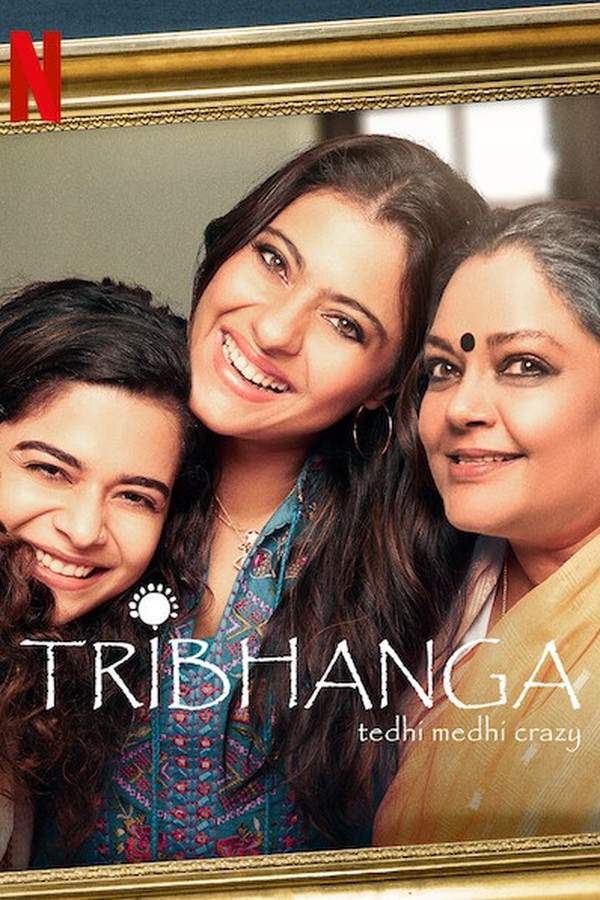
This poignant drama explores the lives of three generations of women – Nayan, Anu, and Masha – whose interconnected stories reflect the complexity of the Tribhanga dance pose. As their individual journeys unfold, long-held secrets emerge, challenging their relationships and prompting a deeper understanding of themselves and their family history. The film examines themes of love, identity, and the enduring bonds of motherhood and daughterhood.


Does Tribhanga have end credit scenes?
No!
Tribhanga does not have end credit scenes. You can leave when the credits roll.
Where to Watch Tribhanga
See current US streaming, rental, and purchase options for Tribhanga (2021) via JustWatch.


Streaming availability powered by 
Meet the Full Cast and Actors of Tribhanga
Explore the complete cast of Tribhanga, including both lead and supporting actors. Learn who plays each character, discover their past roles and achievements, and find out what makes this ensemble cast stand out in the world of film and television.






External Links and Streaming Options
Discover where to watch Tribhanga online, including streaming platforms, rental options, and official sources. Compare reviews, ratings, and in-depth movie information across sites like IMDb, TMDb, Wikipedia or Rotten Tomatoes.







Ratings and Reviews for Tribhanga
See how Tribhanga is rated across major platforms like IMDb, Metacritic, and TMDb. Compare audience scores and critic reviews to understand where Tribhanga stands among top-rated movies in its genre.

The Movie Echo Score
Tribhanga delivers a blend of thoughtful performances and uneven narrative cohesion. The film’s strongest asset lies in its layered character portrayals by Kajol, Tanvi Azmi and Mithila Palkar, which many reviewers find emotionally resonant. However, the episodic structure and occasional pacing jolts limit the unfolding of its thematic potential. Visually and sonically restrained, the debut direction shows promise but feels incomplete in places. Overall, Tribhanga offers engaging moments yet stops short of a fully realized experience.
The Movie Echo Score Breakdown for Tribhanga

Art & Craft
In terms of art and craft, Tribhanga offers standout individual scenes but struggles with narrative cohesion. Critics note moments of vivid framing and editing that linger, yet find the episodic structure uneven. The cinematography delivers authentic visuals without overt stylization, and production design remains functionally solid but unspectacular. Despite occasional jolts in flow, the film’s craft demonstrates competent execution even if it does not cohere at all times.

Character & Emotion
When it comes to character and emotion, the central trio commands attention through nuanced performances. Kajol’s brash yet vulnerable portrayal anchors the generational dynamics, while Tanvi Azmi’s measured depth complements the emotional core. Mithila Palkar adds spark in limited screen time, although some supporting roles feel underwritten. The interactions convey a clear-eyed view of complex familial bonds, resulting in an overall engaging emotional tapestry.

Story & Flow
In terms of story and flow, Tribhanga employs an unconventional, episodic structure that introduces three generations through conversational interplay. Reviewers appreciate its thoughtful moments on feminism and family ties, but pacing lapses and hurried thematic shifts hamper full immersion. Melodramatic turns are tempered by restrained delivery, yet some plot threads feel underdeveloped. The result is an engaging concept that occasionally stumbles before delivering a reflective portrait of intergenerational conflict.

Sensory Experience
Regarding sensory experience, Tribhanga maintains a low-key audiovisual palette, foregoing traditional musical interludes in favor of dialogue-driven scenes. The soundtrack remains unobtrusive, and sound design supports intimate conversations without drawing attention. Visually, the film adopts a restrained style with naturalistic lighting and modest set dressing. While this approach underscores realism, it limits moments of heightened atmosphere or sonic richness that might elevate the viewing experience.

Rewatch Factor
On rewatch factor, Tribhanga offers rewarding character moments that may hold appeal on repeat viewings. The central performances and thematic insights into maternal relationships linger in memory. However, episodic pacing irregularities and inconsistent narrative cohesion reduce overall replay value. Viewers attuned to nuanced acting may revisit key scenes, but the film’s uneven structure makes it less likely to sustain multiple full-length viewings.


83%
TOMATOMETER

50%
User Score

6.2 /10
IMDb Rating

71
%
User Score

3.0
From 1 fan rating
Full Plot Summary and Ending Explained for Tribhanga
Read the complete plot summary of Tribhanga, including all major events, twists, and the full ending explained in detail. Explore key characters, themes, hidden meanings, and everything you need to understand the story from beginning to end.
Nayantara Apte Tanvi Azmi is a celebrated author who can’t write anymore because of arthritis, and the task of shaping her life story falls to her devoted disciple, Milan Upadhyay Kunaal Roy Kapur, who helps turn her memories into an autobiography. As the two work, Nayantara’s routine includes a night of drinking that ends badly: she suffers a stroke, is rushed to the hospital, and slips into a coma. Her famous daughter, Anuradha Apte Kajol — a Bollywood star and a celebrated Odissi dancer — arrives with her own daughter, Masha Mithila Palkar, while the media swarms the scene and the hospital corridor becomes a press glare that Anu tries to ignore. The tension around Milan’s presence at the hospital unsettles Anu, and she voices her irritation, assisted by her brother, Robindro. From the wings, Milan overhears them mutter that Nayantara has ruined their lives, especially Anu.
The film then shifts to look at Nayantara’s past: in her youth, Nayantara’s mother-in-law grew frustrated with Nayantara’s relentless writing and her refusal to settle into traditional domestic chores. This rift prompts Nayantara to leave the household with Anu and Robindro. Later, Milan and Masha travel to Anu’s childhood home and speak with Nayantara’s ex-husband and his sister, both of whom mourn the distance that has grown between Nayantara and her children. Milan probes for more of the story, and Masha opens up about her own life: she is married into a conservative family, yet her husband Deepak remains supportive.
As the storytelling unfolds, Anuradha begins to warm to Milan, who keeps pressing for a collaborative account because Nayantara hoped her children would confront her for the hurts of their lives. Anu’s grandmother’s history and Nayantara’s choices begin to echo across generations, and Anu’s perception begins to shift.
Anu’s own chapter starts to come into focus as we learn about her childhood. Nayantara opted to give her children their own surname rather than their father’s—a bold move that earned Anu ridicule at school. Nayantara later remarried a photographer named Vikram [Nishank Verma], whose actions would scar Anu: abuse that she discovers only after it becomes public knowledge in a magazine interview from Anu’s early career. By then, Nayantara had already divorced Vikram.
As Nayantara’s career shines, Anu enters a live-in relationship with a Russian cinematographer, Dmitri. A complicated bond forms between Anu and Dmitri, but when he becomes abusive during Anu’s pregnancy, she drives him out. Nayantara visits, but Anu feels neglected, as if her mother cares more about Dmitri’s career than about her. This rift deepens, and Anu and Robindro sharply distance themselves from Nayantara, with the family’s estrangement widening.
Then a turning point arrives when Nayantara’s former partner Bhaskar Raina [Kanwaljeet Singh] re-enters their lives, acting as a bridge between Nayantara and Anu and becoming a surrogate grandfather to Masha. He helps both Anu and Robindro discover their passions—Anu with Odissi dance and Robindro with Krishna’s teachings—yet the bonds ultimately fray after Nayantara and Raina break up, even as Raina remains a quiet, guiding presence.
In the present, Milan seeks to reassure Anu that Nayantara might not have realized the full scope of her daughter’s struggle, but Anu remains conflicted, especially after seeing footage of Nayantara expressing remorse for failing her child. Anu’s empathy grows further when she overhears Masha confiding to her mother-in-law that she’s pregnant with a boy, and that her in-laws would not have accepted a girl. Masha explains that she stays with the family to give her child a stable father and a sense of normalcy, even as she confesses that she was shamed at school because her mother had multiple partners. Anu confronts the uncomfortable truth: she has lived in the same unseeing space as Nayantara once did, and she must reckon with her own blind spots.
This realization leads Anu to apologize to Masha, accepting that parents are imperfect and capable of missteps, and yearning to reconcile with Nayantara. Yet Nayantara dies soon after, leaving Anu and Robindro to seek closure with Milan as they perform Nayantara’s last rites and finally honor her memory.
Six months later, Milan arrives at Anu’s home on her birthday with the first copy of Nayantara’s autobiography, Tribhanga, a title that nods to a standing Odissi pose and to a family history that bends, but endures. The book stands as a testament to a mother’s complexities and a daughter’s evolving understanding, a multigenerational portrait that blends love, guilt, forgiveness, and resilience, and that invites readers to see how three generations of women navigate past hurts to shape a future that respects, if not fully reconciles with, their imperfect legacies.

Coming soon on iOS and Android
The Plot Explained Mobile App
From blockbusters to hidden gems — dive into movie stories anytime, anywhere. Save your favorites, discover plots faster, and never miss a twist again.
Sign up to be the first to know when we launch. Your email stays private — always.
Explore the mobile appDiscover Film Music Concerts Near You – Live Orchestras Performing Iconic Movie Soundtracks
Immerse yourself in the magic of cinema with live orchestral performances of your favorite film scores. From sweeping Hollywood blockbusters and animated classics to epic fantasy soundtracks, our curated listings connect you to upcoming film music events worldwide.
Explore concert film screenings paired with full orchestra concerts, read detailed event information, and secure your tickets for unforgettable evenings celebrating legendary composers like John Williams, Hans Zimmer, and more.


Tribhanga Themes and Keywords
Discover the central themes, ideas, and keywords that define the movie’s story, tone, and message. Analyze the film’s deeper meanings, genre influences, and recurring concepts.
Tribhanga Other Names and Titles
Explore the various alternative titles, translations, and other names used for Tribhanga across different regions and languages. Understand how the film is marketed and recognized worldwide.
Similar Movies To Tribhanga You Should Know About
Browse a curated list of movies similar in genre, tone, characters, or story structure. Discover new titles like the one you're watching, perfect for fans of related plots, vibes, or cinematic styles.













Quick Links: Summary, Cast, Ratings, More

What's After the Movie?
Not sure whether to stay after the credits? Find out!
Check out our other apps:

SAT Sphere
Build confidence for the Digital SAT.

Mori Atlas
Discover wild places worth protecting.

Luntero
Search smarter for a home in Amsterdam.

Plot Explained
Unravel movie endings and hidden clues.

Pokechamp
Dive into Pokémon data and battle logic.

Driving Theory
Get ready for your European theory test.

Movie Dust
Plan your next cinema trip with ease.

Musemap
Find art and culture as you travel.

Selkobase
Compare credentials before committing.

Local Manual
Turn an unfamiliar country into practical next steps.

Lernavi
Compare school systems before your next move.

GymRoam
Find a workout stop wherever your plans take you.
Explore Our Movie Platform
New Movie Releases (2026)
Famous Movie Actors
Top Film Production Studios
Movie Plot Summaries & Endings
Major Movie Awards & Winners
Best Concert Films & Music Documentaries
Movie Collections and Curated Lists
© 2026 What's After the Movie. All rights reserved.
Privacy Policy