The Mastermind 2025


In a quiet Massachusetts town around 1970, an unemployed carpenter decides to try his hand at art theft, operating under the belief that it’s not a crime if you avoid detection. He meticulously plans his first major heist, but when unforeseen complications arise, his carefully constructed world begins to fall apart, leading him down a dangerous path.


Does The Mastermind have end credit scenes?
No!
The Mastermind does not have end credit scenes. You can leave when the credits roll.
Meet the Full Cast and Actors of The Mastermind
Explore the complete cast of The Mastermind, including both lead and supporting actors. Learn who plays each character, discover their past roles and achievements, and find out what makes this ensemble cast stand out in the world of film and television.
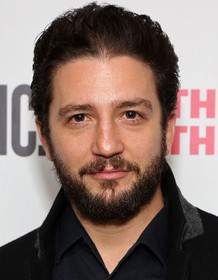
John Magaro
Fred

Bill Camp
Bill Mooney

Amanda Plummer

Josh O'Connor
JB Mooney

Hope Davis
Sarah Mooney

Gaby Hoffmann
Maude

Alana Haim
Terri Mooney

Matthew Maher
Jerry

Rhenzy Feliz

Ming Wang
Museum Patron
William Cross
Museum Patron
Jean Zarzour
Mrs. Zazour
Jenny McManus
Cafe Patron
Cole Doman
Larry Duffy
Ryan Homchick
Sam Kuchar
Greg Violand
Man at Bank #2
John E. Brownlee
Man Catching the Bus
Wilson Conkwright
Javion Allen
Ronnie Gibson
Juan Carlos Hernández
Agent Carroll
Angel Kerns
Pedestrian
Barry Mulholland
Charles
Katie Hubbard
Robin
Robert Gerding
Museum Patron
Kevin Michael Walsh
Neighbor
Rick Dutrow
Thug
David Pittinger
Man in Sports Jacket
Marc Ross
Mr. Ross
Eli Gelb
Guy Hickey
D.J. Stroud
Edward Farber
Sterling Thompson
Carl Mooney
Jasper Thompson
Tommy Mooney
Margot Anderson-Song
Helen
Maria Wedding
College Age Museum Patrons
Alexis Nicole Neuenschwander
Pam
Reighan Bean
Julie Friedlander
Steven Terry Walker
Diner Patron
Max Schroeder
Boy Playing on Sidewalk
Greg Siewny
Newspaper Thief
Melissa McDermott Currin
Vietnam Protestor
Malika Dinan
Vietnam Protestor
Christian Gazaway
Protester
Todd Wallrauch
Vietnam Protestor
Kevin W. Shiveley
Riot Cop
Farrah Rawlings
Student
Michael Wedding
Smoking Man/College Student
Kade Clarks
Curtis
Tom Cline
Tony
External Links and Streaming Options
Discover where to watch The Mastermind online, including streaming platforms, rental options, and official sources. Compare reviews, ratings, and in-depth movie information across sites like IMDb, TMDb, Wikipedia or Rotten Tomatoes.





Ratings and Reviews for The Mastermind
See how The Mastermind is rated across major platforms like IMDb, Metacritic, and TMDb. Compare audience scores and critic reviews to understand where The Mastermind stands among top-rated movies in its genre.

The Movie Echo Score
The Mastermind delivers a consistently refined experience, excelling in visual craftsmanship, nuanced performances, and an atypical heist narrative that rewards patience. Critics highlight the film's meticulous period setting, restrained yet resonant character work, and a sensory palette that evokes the 1970s without relying on conventional action. While its deliberate pacing may challenge some viewers, the overall impression is that the work offers lasting appeal and repeated viewing value.
The Movie Echo Score Breakdown for The Mastermind

Art & Craft
In terms of visual craftsmanship, the film is lauded for its understated yet precise cinematography and production design that evoke a vivid 1970s atmosphere. Reviewers note the careful framing of quiet moments and the grounded texture of each frame, suggesting a high level of directorial control. The overall art and craft are therefore judged as exemplary.

Character & Emotion
When it comes to character depth, critics emphasize Josh O'Connor's hapless yet charming portrayal, describing his performance as both ingenuous and emotionally resonant. The sparse dialogue foregrounds inner turmoil and chemistry, allowing the protagonist's wandering soul to anchor the story. Consequently, the character work is viewed as a strong, nuanced component of the film.

Story & Flow
Regarding plot structure, reviewers appreciate the unconventional heist premise that forgoes chases in favor of introspection and minimal dialogue. The measured tempo creates a droll, occasionally humorous rhythm, though its restraint may feel slow to some. Overall, the narrative is considered engaging and original, albeit paced deliberately.

Sensory Experience
In the sensory realm, the film is praised for its quiet poeticism, precise visual texture, and period-appropriate soundscape that together reinforce its 1970s spirit. While specific soundtrack details are limited, the overall auditory and visual cohesion contribute to an immersive atmosphere. The sensory experience is therefore assessed as highly effective.

Rewatch Factor
Evaluating replay value, critics point to the film's watchability, memorable scenes, and subtle humor that reward repeat viewings. Its classic‑like treatment of a genre subversion and lingering emotional threads suggest lasting appeal. Accordingly, the rewatch factor is considered strong, encouraging audiences to return for deeper appreciation.


%
TOMATOMETER

0%
User Score

6.2 /10
IMDb Rating

57
%
User Score
Full Plot Summary and Ending Explained for The Mastermind
Read the complete plot summary of The Mastermind, including all major events, twists, and the full ending explained in detail. Explore key characters, themes, hidden meanings, and everything you need to understand the story from beginning to end.
In 1970, in the town of Framingham, a down-on-his-luck carpenter named JB Mooney hatches a risky plan to steal four Arthur Dove paintings from the local art museum. Motivated by financial strain and a stubborn taste for something bigger than ordinary life, he borrows money from his parents and then borrows more from his wife’s family under the pretense of funding work. With that seed money, he enlists two partners, Guy Hickey and Ronnie Gibson, to pull off the heist. The trio makes it to the museum, where the theft unfolds with tense precision: Gibson unloads a gun on a student not far from a homework assignment and a security guard is overpowered, while the others act in concert to take the paintings.
Back home, the audacious act is immediately front-page enough to provoke a chilling reaction from J.B.’s family. He proudly displays one stolen canvas in his living room, only to pull it down again after his father, a respected judge, openly questions the thieves’ ambition and the whole enterprise seems to spiral into a larger moral drama. A makeshift plan forms as J.B. constructs a shipping container for the paintings and stashes them in the loft of a barn, yet the household atmosphere grows heavy with suspicion as local police and the FBI question every member of the Mooney clan. The investigation tightens when Gibson names J.B. as the mastermind during a bank-robbing arrest, a claim J.B. vehemently denies while struggling to protect his family.
Facing exposure, J.B. asks his furious wife to take their boys, Carl Mooney and Tommy Mooney, to his parents’ house. Yet the close bond of the family is tested when Tommy balks at leaving, complicating the expulsion from their fragile domestic circle. A crucial turning point comes when Guy Hickey calls to press for more money, and a later meeting with J.B. and Tommy turns out to be a trap: an organized crime outfit abducts J.B. and forces him to reveal the paintings’ precise location. The revelation thrusts J.B. into a precarious limbo, where he must choose between loyalty to old friends and the escalating danger surrounding the stolen art.
As the net tightens, J.B. escapes into hiding with two old friends from art school, Maude and Fred. While Fred seems exhilarated by the escapade, Maude intuits a deeper calculation: J.B.’s scheme might have been designed to use a familiar professor—an admirer of Dove—as a fence to move the paintings. Maude’s confrontation with J.B. is candid and practical; she urges him to leave, while he hesitates, torn between old loyalties and a safer path. He rejects a suggestion from Fred to lay low at his brother’s Toronto commune, choosing instead to press on toward Cleveland to stay with other friends. The plan falters when he learns those friends have already left town, forcing him to hitchhike his way toward Cincinnati.
The paintings themselves have a terse arc of their own, eventually turning up back at the museum, which leaves J.B. to reckon with the consequences of his actions. He reaches out to Terri, trying to rationalize everything and request money, but her dismissal is swift—she hangs up. With finances strained and the road ahead unclear, J.B. faces a final, stark choice: he cannot afford the bus fare to Toronto, and in a last-ditch scramble, he pockets an elderly woman’s purse and blends into a crowd of antiwar protesters. The rally erupts in chaos, the police crack down, and J.B. finds himself jailed in the back of a police van along with other protesters, a stark end to a plan built on ambition, frailty, and the unraveling of a family.

Coming soon on iOS and Android
The Plot Explained Mobile App
From blockbusters to hidden gems — dive into movie stories anytime, anywhere. Save your favorites, discover plots faster, and never miss a twist again.
Sign up to be the first to know when we launch. Your email stays private — always.
Explore the mobile appWatch Trailers, Clips & Behind-the-Scenes for The Mastermind
Watch official trailers, exclusive clips, cast interviews, and behind-the-scenes footage from The Mastermind. Dive deeper into the making of the film, its standout moments, and key production insights.
The Mastermind Other Names and Titles
Explore the various alternative titles, translations, and other names used for The Mastermind across different regions and languages. Understand how the film is marketed and recognized worldwide.
Quick Links: Summary, Cast, Ratings, More

What's After the Movie?
Not sure whether to stay after the credits? Find out!
Check out our other apps:

SAT Sphere
Build confidence for the Digital SAT.

Mori Atlas
Discover wild places worth protecting.

Luntero
Search smarter for a home in Amsterdam.

Plot Explained
Unravel movie endings and hidden clues.

Pokechamp
Dive into Pokémon data and battle logic.

Driving Theory
Get ready for your European theory test.

Movie Dust
Plan your next cinema trip with ease.

Musemap
Find art and culture as you travel.

Selkobase
Compare credentials before committing.

Local Manual
Turn an unfamiliar country into practical next steps.

Lernavi
Compare school systems before your next move.

GymRoam
Find a workout stop wherever your plans take you.
Explore Our Movie Platform
New Movie Releases (2026)
Famous Movie Actors
Top Film Production Studios
Movie Plot Summaries & Endings
Major Movie Awards & Winners
Best Concert Films & Music Documentaries
Movie Collections and Curated Lists
© 2026 What's After the Movie. All rights reserved.
Privacy Policy