The Perils of Pauline 1947



The film follows Pearl White, a fun‑loving garment worker who lands a break opening a delayed Shakespeare show with a comic vaudeville act. Her brief stage stint pushes her into early silent “horrible” pictures, where she revels in the chaotic world of serials and becomes its queen. Yet the demands of fame may overwhelm even her devoted leading man.


Does The Perils of Pauline have end credit scenes?
No!
The Perils of Pauline does not have end credit scenes. You can leave when the credits roll.
Where to Watch The Perils of Pauline
See current US streaming, rental, and purchase options for The Perils of Pauline (1947) via JustWatch.

Amazon Prime Video
HD
Amazon Prime Video with Ads
HD
Artiflix
4K
Fandor Amazon Channel
SD
fuboTV
HD
Great American Pure Flix Amazon Channel
SD
MGM Plus
HD
MGM Plus Roku Premium Channel
HD
MGM+ Amazon Channel
SD
Philo
HD
Troma NOW
4K
Fawesome
HD
Hoopla
SD
JustWatch TV
HD
Public Domain Movies
SD
Amazon Prime Video Free with Ads
HD
Cineverse
HD
Mometu
HD
Tubi TV
SD
Amazon Video
SD Streaming availability powered by 
Meet the Full Cast and Actors of The Perils of Pauline
Explore the complete cast of The Perils of Pauline, including both lead and supporting actors. Learn who plays each character, discover their past roles and achievements, and find out what makes this ensemble cast stand out in the world of film and television.
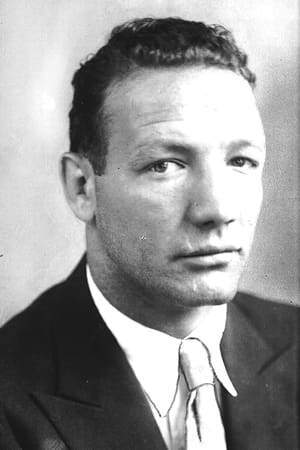
Maxie Rosenbloom
Maxie (uncredited)

Tom Dugan
Balloonist (uncredited)

Frank Ferguson
Movie Theatre Owner (uncredited)
William Demarest
George 'Mac' McGuire
Constance Collier
Julia Gibbs
John Lund
Michael Farrington
Betty Hutton
Pearl White
Frank Faylen
Mr. Joe Gurt
Francis McDonald
Western Saloon Set Heavy
Chester Conklin
Comic Chef
Hank Mann
Comic Chef
Paul Panzer
Drawing Room Gent
Arthur Tovey
Troupe Actor (uncredited)
William Farnum
Western Saloon Set Hero
Creighton Hale
Marcelled Leading Man
Harry 'Snub' Pollard
Western Saloon Set Propman
Julia Faye
Nurse (uncredited)
Heinie Conklin
Studio Cop
Bert Roach
Western Saloon Set Bartender
James Finlayson
Comic Chef
Frank Mayo
Reporter at Reception (uncredited)
Noreen Nash
(uncredited)
Billy De Wolfe
Mr. Timmy Timmons
Bert Moorhouse
Kitchen Set Cameraman (uncredited)
Bess Flowers
Reporter at Reception (uncredited)
Chuck Hamilton
Policeman at Switchboard (uncredited)
Chester Clute
Willie Millick (uncredited)
Margaret Field
Juliet in Show (uncredited)
Florence Allen
Switchboard Operator (uncredited)
External Links and Streaming Options
Discover where to watch The Perils of Pauline online, including streaming platforms, rental options, and official sources. Compare reviews, ratings, and in-depth movie information across sites like IMDb, TMDb, Wikipedia or JustWatch.






Full Plot Summary and Ending Explained for The Perils of Pauline
Read the complete plot summary of The Perils of Pauline, including all major events, twists, and the full ending explained in detail. Explore key characters, themes, hidden meanings, and everything you need to understand the story from beginning to end.
Pearl White, Betty Hutton, is a frustrated garment worker who longs to be a dramatic actress, though her real gifts shine in song and sharp-witted banter with an audience. On stage, she’s pushed into relentless performances, and when hecklers bait her, she doesn’t hold back—throwing tomatoes back at the crowd with a fearless, comic spark. Her instinctive energy makes her stand out, even as she struggles to fit into the rigid world of theatrical vaudeville.
She joins a touring troupe owned and managed by the dashing yet pompous Mike Farrington, a performer who sees potential, but not restraint, in her. Mike Farrington, John Lund quickly discovers Pearl’s talents and begins shaping her path, while Miss Julia Gibbs, a veteran actress who has weathered many stages, Constance Collier takes Pearl under her wing. Another seasoned presence, Timmy Timmons, a fellow troupe member who will become an essential ally and, later, a lead partner, Billy De Wolfe rounds out the small circle guiding Pearl’s early career. Pearl’s ascent is steady but never simple: she’s placed in charge of costumes and given walk-on roles, and her rebellious nature makes it impossible to suppress her on-stage verve. To keep her from overstepping, she even ties her hands beneath an apron, a cheeky symbol of her desire for control and independence.
A shy or unspoken romance blossoms between Pearl and Mike, yet neither breaks the tension with a confession. Their clandestine bond runs parallel to the explosive truth of Pearl’s rising fame. In a South Sea melodrama, she’s drenched by cold water, shivering and unable to speak, a stunt that reveals both her vulnerability and her professional resolve. Mike’s stern, sometimes cruel critique pushes her toward a breaking point: he berates her, and Pearl ultimately answers with a fierce ultimatum, walking out on the troupe. Julia, ever the steadying force, follows her, helping to steer Pearl toward new opportunities.
Pearl’s boldness catches the attention of Julia’s agents, and she auditions with a song that becomes a turning point: “I Wish I Didn’t Love You So.” The set pieces of Hollywood’s early film industry unfold around her, with multiple pictures being filmed in tandem at the studio. A torrent of pies flung by a crew member for comic effect disrupts the day, and Pearl storms onto the set to retaliate, guiding a chaotic walk-through of several works in progress and even shooing a lion out of the way with a mix of wit and nerve. The director of this bustling studio, George “Mac” McGuire, William Demarest, instantly sees her star power and offers a contract worth $100 a week. His proclamation captures the moment: “She’s gonna be the biggest thing in pictures!” The line sticks as Pearl’s career explodes into the broad, serialized popular culture known as The Perils of Pauline, the cliffhanging serial that makes her a household name across the silent screen.
Meanwhile, Farrington’s own fortunes falter as theaters show other pictures and fail to keep pace with Pearl’s meteoric rise. The dynamic duo of Pearl and Mike evolves: a train-yard chase sequence through which Pearl and Mike push themselves into a new form of on-screen partnership, with a seemingly innocent hobo turned rival—Timmy—revealing that their chemistry is not merely a stage act but a filmic heartbeat that audiences will flock to. The two discover that melodrama and spectacle—gestures that once drew laughs in the theater—are exactly what silent cinema requires to captivate crowds, and their collaborations become a blueprint for early serial filmmaking.
Publicity becomes a weapon in Pearl’s ascent. A runaway balloon stunt is arranged to propel her star even further, but the balloonist who should be in the basket is missing, leaving Pearl and Mike to ride the improvised craft through a thunderstorm, clinging to one another as they navigate the forces of weather and fame. In a moment of sincerity amid the spectacle, Mike confesses his love and promises marriage, a vow that briefly redefines their relationship even as the larger world of show business continues to test them.
World events intrude on their story when War erupts. Mike and Timmy enlist, while Pearl uses her platform to participate in war-time charity and film-making efforts that rally public support and keep her career buoyant. When the war ends, Mike returns to a thriving theater, and Pearl, with Timmy by her side, heads to Paris to perform in a nightclub. The life of a global star takes them both away from America, and Pearl’s absence becomes part of a broader, evolving cinematic language that audiences increasingly crave.
In Paris, Pearl’s star shines brightly over hundreds of performances at the iconic Casino de Paris. After 251 shows, she learns that Mike plans to come see her, and a dramatic fall during a stunt puts her at risk, with doctors warning that she may need surgery and that walking again could take years. Yet she chooses to pursue the moment with Mike’s arrival in mind, heading to meet him with Timmy in tow. When she tells him she no longer loves him, Julia quietly trails them, and the moment crystallizes in a theater showing one of their old films. Mike’s voice interrupts the screen: “You always were a rotten actress.” The revelation is painful yet human, and in the final, quiet reversal, Mike appears to carry Pearl from the theater, an ending that blends tenderness with the cost of fame and the loss of a once-bright dream.
This story, anchored by Pearl’s vibrant talent and the complex, often unruly energy she brings to every stage, remains a portrait of a performer who thrives on risk, rhythm, and resilience. It celebrates the power of performance to transform a life, even as it acknowledges the personal sacrifices that come with chasing the lights.

Coming soon on iOS and Android
The Plot Explained Mobile App
From blockbusters to hidden gems — dive into movie stories anytime, anywhere. Save your favorites, discover plots faster, and never miss a twist again.
Sign up to be the first to know when we launch. Your email stays private — always.
Explore the mobile appWatch Trailers, Clips & Behind-the-Scenes for The Perils of Pauline
Watch official trailers, exclusive clips, cast interviews, and behind-the-scenes footage from The Perils of Pauline. Dive deeper into the making of the film, its standout moments, and key production insights.
Cars Featured in The Perils of Pauline
Explore all cars featured in The Perils of Pauline, including their makes, models, scenes they appear in, and their significance to the plot. A must-read for car enthusiasts and movie buffs alike.
The Perils of Pauline Themes and Keywords
Discover the central themes, ideas, and keywords that define the movie’s story, tone, and message. Analyze the film’s deeper meanings, genre influences, and recurring concepts.
The Perils of Pauline Other Names and Titles
Explore the various alternative titles, translations, and other names used for The Perils of Pauline across different regions and languages. Understand how the film is marketed and recognized worldwide.
Similar Movies To The Perils of Pauline You Should Know About
Browse a curated list of movies similar in genre, tone, characters, or story structure. Discover new titles like the one you're watching, perfect for fans of related plots, vibes, or cinematic styles.





Quick Links: Summary, Cast, Ratings, More

What's After the Movie?
Not sure whether to stay after the credits? Find out!
Check out our other apps:

SAT Sphere
Build confidence for the Digital SAT.

Mori Atlas
Discover wild places worth protecting.

Luntero
Search smarter for a home in Amsterdam.

Plot Explained
Unravel movie endings and hidden clues.

Pokechamp
Dive into Pokémon data and battle logic.

Driving Theory
Get ready for your European theory test.

Movie Dust
Plan your next cinema trip with ease.

Musemap
Find art and culture as you travel.

Selkobase
Compare credentials before committing.

Local Manual
Turn an unfamiliar country into practical next steps.

Lernavi
Compare school systems before your next move.

GymRoam
Find a workout stop wherever your plans take you.
Explore Our Movie Platform
New Movie Releases (2026)
Famous Movie Actors
Top Film Production Studios
Movie Plot Summaries & Endings
Major Movie Awards & Winners
Best Concert Films & Music Documentaries
Movie Collections and Curated Lists
© 2026 What's After the Movie. All rights reserved.
Privacy Policy