The Life and Death of Peter Sellers 2004


Never judge a man by his cover. The film traces Sellers’ turbulent personal and professional journey, from his comic debut on BBC Radio to becoming one of cinema’s greatest comedians. It shows how his obsessive devotion led him to neglect loved ones and sacrifice parts of his own personality to convincingly portray his memorable characters.


Does The Life and Death of Peter Sellers have end credit scenes?
No!
The Life and Death of Peter Sellers does not have end credit scenes. You can leave when the credits roll.
Meet the Full Cast and Actors of The Life and Death of Peter Sellers
Explore the complete cast of The Life and Death of Peter Sellers, including both lead and supporting actors. Learn who plays each character, discover their past roles and achievements, and find out what makes this ensemble cast stand out in the world of film and television.

Charlize Theron
Britt Ekland

Stanley Tucci
Stanley Kubrick

John Lithgow
Blake Edwards

Emily Watson
Anne Sellers
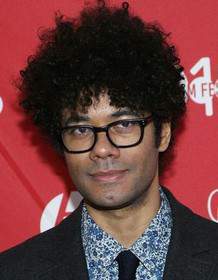
Richard Ayoade
Photographer at Wedding

Robert Wilfort
Motorcycle Delivery Man

Alison Steadman
Casting Agent

Stephen Fry
Maurice Woodruff

Miriam Margolyes
Peg Sellers

Geoffrey Rush
Peter Sellers

Henry Goodman
Dennis Selinger
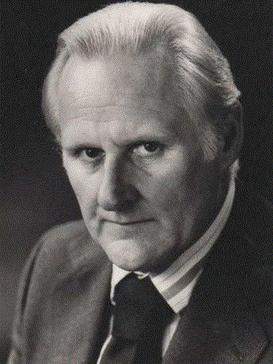
Peter Vaughan
Bill Sellers

Nigel Havers
David Niven
Kenneth Hadley
Limo Driver

Lucy Punch
Lead Stewardess
Rosie Fellner
Emma - Selinger's Secretary
Alan Williams
'Casino Royale' Director
Heidi Klum
Ursula Andress
Simon Markey
Sophia Loren Arrival Reporter
James Bentley
Michael Sellers (7-10 Yrs)
Mackenzie Crook
Car Salesman
Tom Wu
Cato
Bruce Mackinnon
Britt at Hospital Reporter #1
Joseph Long
Carlo Ponti
Molly Hallam
Hilary - 'Dr. Strangelove' Assistant
Stephanie Jacob
Nurse with Wheelchair
Steve Pemberton
Harry Secombe
Ty Glaser
'Millionairess' Girl with Phone
Josh Cole
Britt at Hospital Reporter #2
Jane Milligan
'The Pink Panther' Premiere Reporter
David Robb
Dr. Lyle Wexler
Richard Syms
Newscaster #1
Edward Tudor-Pole
Spike Milligan
Gerrard McArthur
Wayne - Studio Engineer
Julian Littman
Businessman in Plane
Mona Hammond
Louise the Maid
Sonia Aquino
Sophia Loren
Peter Gevisser
Ted Levy
Bob Sherman
Movie Executive
George Cicco
Michael Sellers (3 Yrs)
Eliza Darby
Sarah Sellers
Lance Ellington
Singer Ray Ellington
Nick Maloney
Switzerland Interviewer
Sam Dastor
Hal Ashby
Grant Russell
Plastic Surgeon
Tope Oluwole
Beautiful Black Woman
Kate Burrell
Sophia's Stand-in
In-sook Chappell
So Mi - Girl at Screening
Osmund Bullock
Newscaster #2
Markus Napier
Switzerland Maitre d'
Kennie Andrews
Maintenance Man
Vera Zaal
Car Showroom 60's Sci-Fi Girl
Tiara Tian
Car Showroom Asian Beauty
Charlotte Connoley
Car Showroom Blonde Bombshell
External Links and Streaming Options
Discover where to watch The Life and Death of Peter Sellers online, including streaming platforms, rental options, and official sources. Compare reviews, ratings, and in-depth movie information across sites like IMDb, TMDb, Wikipedia or Rotten Tomatoes.







Take the Ultimate The Life and Death of Peter Sellers Movie Quiz
Challenge your knowledge of The Life and Death of Peter Sellers with this fun and interactive movie quiz. Test yourself on key plot points, iconic characters, hidden details, and memorable moments to see how well you really know the film.
The Life and Death of Peter Sellers Quiz: Test your knowledge of the 2004 biographical film about the legendary actor Peter Sellers.
Who directed the 2004 film "The Life and Death of Peter Sellers"?
Full Plot Summary and Ending Explained for The Life and Death of Peter Sellers
Read the complete plot summary of The Life and Death of Peter Sellers, including all major events, twists, and the full ending explained in detail. Explore key characters, themes, hidden meanings, and everything you need to understand the story from beginning to end.
Geoffrey Rush portrays Peter Sellers, opening the film with the comedian stepping toward a director’s chair as an unseen audience erupts into applause and the camera lingers on his gaze toward the movie of his life.
Set in 1950s London, the story traces Sellers’s ascent from a radio comic on The Goon Show to a figure who can inhabit a widening array of personalities on screen. After a setback at an audition, he returns home to a controlling mother, Peg; Miriam Margolyes plays this fierce, pushy matriarch who spurs him to “bite the hand that feeds you.” With renewed purpose, Sellers discovers his talent for impersonation, crafting a late breakthrough as the aging World War I veteran he had once auditioned to become. The moment arrives when a casting agent who previously rejected him recognizes his fit for the part and finally grants him the chance he’s fought for, signaling the film’s first big transformation from son to showman to surrogate father.
The emotional core deepens as the film moves through a brisk succession of roles. After the triumph of winning a British Academy Award for I’m All Right Jack, Peg and Bill Sellers watch the moment from the wings, only to have Peg’s skepticism and Bill’s quiet pride pull the father-and-son dynamic into focus. The narrative then pivots: Sellers slips into the persona of his own father, speaking in a heavy Yorkshire accent and breaking the fourth wall to reveal how childhood shaped the man before us.
Back on set, the film’s mood shifts toward ambition and desire. While filming The Millionairess, Sellers becomes enamored with his on-screen partner Sophia Loren, a fixation that unsettles the stability of his home life. As the romance grows more complicated, he purchases a house in central London to place himself closer to the whirlwind of celebrity and longing. To ease the guilt of his infidelity, he enlists a decorator, Peter Gevisser as Ted Levy, and invites his wife and the decorator to share a drink together, then abandons the scene to pursue his passion in a reckless weekend with Loren.
A chance encounter with Italy’s Carlo Ponti on set intensifies the fissure in Sellers’s personal life. The film catches a charged moment as he distracts himself with Sophia’s stand-in, and the affair that follows becomes a flashpoint for the unraveling of his marriage. When Anne confronts him about the distance between them, the tension erupts into a pivotal scene on the balcony where he threatens to jump if she leaves. The second major transformation follows: Sellers enters a period of disguise and self-doubt, this time in the guise of Anne, dubbing over the breakup to maintain appearances.
The story then threads Sellers through a sequence of actors’ worlds. He spends time in Peg’s care, where a clairvoyant named Maurice Woodruff—Stephen Fry—offers guidance that leads him toward a new phase of his career, this time as the Pink Panther series becomes a runaway success. Yet the triumph feels hollow to him as he re-enters England to face the death of his father, Bill, who dies after a moment of quiet pride in his son. Peg’s influence is called into question, and the bond between mother and son is strained beyond repair, setting the stage for even more dramatic changes.
At the Dorchester Hotel, Sellers is wooed by a new kind of dream: a collaboration with Stanley Kubrick. Stanley Tucci embodies Kubrick in a sequence that places the director’s signature stare at the center of Sellers’s world, underscoring the film’s meditation on how a performer becomes a vessel for others’ visions. Peg visits the onslaught of a career crossroads, but Sellers finds himself drawn away from the expectations of both wife and mother toward a new romance with his next collaborator and potential life partner, Britt Ekland. Charlize Theron embodies Britt as Sellers courts a new kind of happiness and begins weaving a life that could stand apart from the chaos of the old one.
The marriage to Britt continues amid Hollywood lights and heartbreaks. A hospital scare—eight heart attacks sparked by amyl nitrite while on honeymoon—shatters the illusion of invincibility and triggers a surreal dreamscape in which his many characters crowd the consciousness of his dying self. When he wakes, a renewed sense of risk returns: his next project, Casino Royale, is treated with suspicion by all involved, and he tries to approach it with greater seriousness, only to face resistance from every corner of his entourage.
Pregnancy changes the family again: Britt bears a child, but Sellers’s stubborn unwillingness to grow his family further tests their relationship. The baby’s presence disrupts ongoing shoots and deepens the emotional rift he feels toward the life he’s built. The fourth narrative twist arrives as a surrogate “Peg” emerges within him, defending his own behavior even as the real Peg’s memory weighs heavily on his judgment. The power of memory, regret, and the past presses in as he navigates a chorus of voices from the corners of his career.
A late-life reckoning arrives with Maurice Woodruff’s influence and a stubborn devotion to Being There, a book that embodies the ideal life Sellers longs to build on screen. He chases a film version of the book, but Woodruff steers him toward The Pink Panther Strikes Again, nudging him toward a different destiny. A messy, boozy screening ends with a drunken, uninhibited speech, and a quiet, lonely walk through his own home movies as the adult son he barely recognizes calls to offer encouragement from afar. The film keeps moving, and the final transformation—into Blake Edwards, the man who would train him and push him through the last, iconic moments of his screen life—hums along with a measured, rueful grace.
Scenes from Being There become a throughline in Sellers’s mind as he constructs the look of Chance while simultaneously destroying what remains of his memorabilia. The story loops back to the stark winter of the Swiss Alps, where he lingers at a snow-lit doorway, watching Blake Edwards emerge with the script for The Romance of the Pink Panther. The moment crystallizes the film’s central question: a man who wore so many faces—yet remained essentially solitary—can ever fully become the person he’s pretending to be.
In the end, the film returns to its opening image: the same Peter Sellers who started this journey sits in the director’s chair, shrugging as the crew and set pieces swirl around him. He walks through the labyrinth of film sets toward a quiet, sunlit trailer, a final, knowing smile lifting the corners of his lips as he faces the camera and declares, You can’t come in here.
You can’t come in here.

Coming soon on iOS and Android
The Plot Explained Mobile App
From blockbusters to hidden gems — dive into movie stories anytime, anywhere. Save your favorites, discover plots faster, and never miss a twist again.
Sign up to be the first to know when we launch. Your email stays private — always.
Explore the mobile appWatch Trailers, Clips & Behind-the-Scenes for The Life and Death of Peter Sellers
Watch official trailers, exclusive clips, cast interviews, and behind-the-scenes footage from The Life and Death of Peter Sellers. Dive deeper into the making of the film, its standout moments, and key production insights.
Cars Featured in The Life and Death of Peter Sellers
Explore all cars featured in The Life and Death of Peter Sellers, including their makes, models, scenes they appear in, and their significance to the plot. A must-read for car enthusiasts and movie buffs alike.
The Life and Death of Peter Sellers Themes and Keywords
Discover the central themes, ideas, and keywords that define the movie’s story, tone, and message. Analyze the film’s deeper meanings, genre influences, and recurring concepts.
The Life and Death of Peter Sellers Other Names and Titles
Explore the various alternative titles, translations, and other names used for The Life and Death of Peter Sellers across different regions and languages. Understand how the film is marketed and recognized worldwide.
Similar Movies To The Life and Death of Peter Sellers You Should Know About
Browse a curated list of movies similar in genre, tone, characters, or story structure. Discover new titles like the one you're watching, perfect for fans of related plots, vibes, or cinematic styles.



Quick Links: Summary, Cast, Ratings, More

What's After the Movie?
Not sure whether to stay after the credits? Find out!
Check out our other apps:

SAT Sphere
Build confidence for the Digital SAT.

Mori Atlas
Discover wild places worth protecting.

Luntero
Search smarter for a home in Amsterdam.

Plot Explained
Unravel movie endings and hidden clues.

Pokechamp
Dive into Pokémon data and battle logic.

Driving Theory
Get ready for your European theory test.

Movie Dust
Plan your next cinema trip with ease.

Musemap
Find art and culture as you travel.

Selkobase
Compare credentials before committing.

Local Manual
Turn an unfamiliar country into practical next steps.

Lernavi
Compare school systems before your next move.

GymRoam
Find a workout stop wherever your plans take you.
Explore Our Movie Platform
New Movie Releases (2026)
Famous Movie Actors
Top Film Production Studios
Movie Plot Summaries & Endings
Major Movie Awards & Winners
Best Concert Films & Music Documentaries
Movie Collections and Curated Lists
© 2026 What's After the Movie. All rights reserved.
Privacy Policy