The Last Vermeer 2019


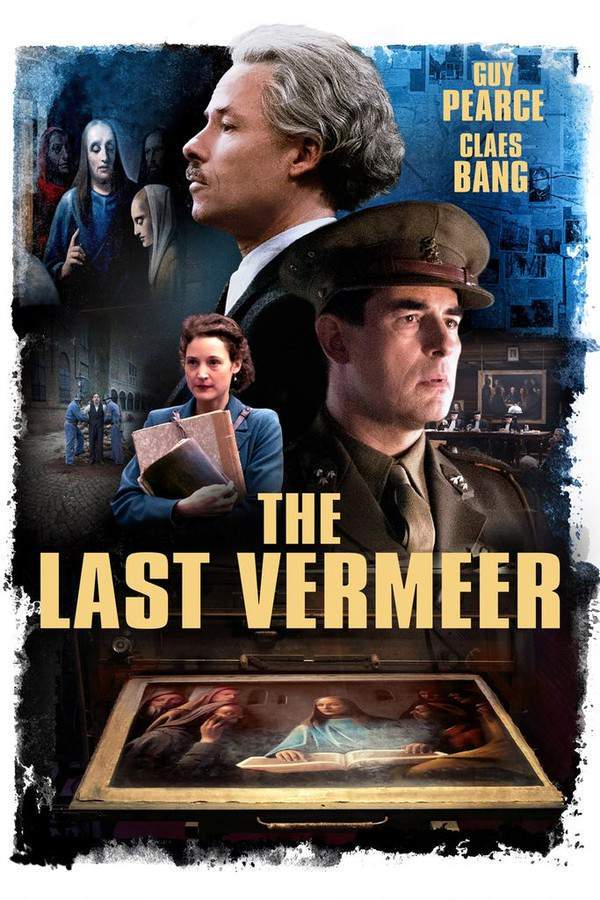
In the aftermath of World War II, a Dutch resistance fighter and former soldier delves into the world of stolen art. He investigates the disappearance of a valuable Vermeer painting, which was sold to the Nazis by a charismatic and skilled forger. The investigation leads him through a web of deception and danger as he attempts to recover the lost masterpiece.


Does The Last Vermeer have end credit scenes?
No!
The Last Vermeer does not have end credit scenes. You can leave when the credits roll.
Where to Watch The Last Vermeer
See current US streaming, rental, and purchase options for The Last Vermeer (2019) via JustWatch.






Meet the Full Cast and Actors of The Last Vermeer
Explore the complete cast of The Last Vermeer, including both lead and supporting actors. Learn who plays each character, discover their past roles and achievements, and find out what makes this ensemble cast stand out in the world of film and television.

Guy Pearce
Han van Meegeren

Adrian Scarborough
Dirk Hannema

Karl Johnson
Bernard Bakker

Vicky Krieps
Minna Holmberg

August Diehl
Alex De Klerks

Roland Møller
Esper Dekker

Richard Dillane
Colonel Jenkins

Andrew Havill
Maarten Wooning

Cameron Jack
De Klerk's Henchman

Claes Bang
Joseph Piller
Oliver Ryan
Jerome Heidjen
Olivia Grant
Cootje Henning
Paul Bentall
Chief Judge
Simon Paisley Day
Rienstra Van Stuyvesant
Marie Bach Hansen
Leez
Jamie Newall
Prison Clerk
Susannah Doyle
Johana
Tom Mulheron
Finn
Pitou Gomes
Girl on Rubble
Richard Newgass
Lecherous Nazi
External Links and Streaming Options
Discover where to watch The Last Vermeer online, including streaming platforms, rental options, and official sources. Compare reviews, ratings, and in-depth movie information across sites like IMDb, TMDb, Wikipedia or Rotten Tomatoes.






Ratings and Reviews for The Last Vermeer
See how The Last Vermeer is rated across major platforms like IMDb, Metacritic, and TMDb. Compare audience scores and critic reviews to understand where The Last Vermeer stands among top-rated movies in its genre.

The Movie Echo Score
The film delivers strong performances, especially from Guy Pearce, and showcases high production values that appeal to art‑history enthusiasts. Direction and cinematography receive commendation, yet the narrative structure suffers from uneven pacing and moments of generic storytelling. Sound design and lighting are occasionally conspicuous, detracting from immersion. Despite these flaws, the movie’s thematic depth and engaging climax grant it solid rewatch value for viewers interested in historical intrigue.
The Movie Echo Score Breakdown for The Last Vermeer

Art & Craft
In terms of art and craft, the direction and production design are frequently praised for their ambitious recreation of the wartime art world, and the cinematography captures vivid color palettes. Critics note occasional lighting inconsistencies and moments where visual originality feels muted. Overall, the technical execution remains above average, reflecting a well‑resourced period piece despite some visual lapses.

Character & Emotion
When it comes to character and emotion, Guy Pearce’s portrayal of the master forger is highlighted as a standout, with reviewers describing his performance as nuanced and compelling. Supporting actors receive similar commendation for chemistry and depth. Few criticisms surface, and the ensemble’s emotional resonance consistently reinforces the film’s appeal, resulting in a strong character rating.

Story & Flow
Story and flow receive mixed feedback: the true‑event foundation and courtroom climax are praised for intrigue, while the opening hour is often deemed sluggish and the overall narrative described as twisty or generic. Some critics appreciate the deliberate pacing, yet others feel the plot leans on familiar tropes. This balance of strengths and flaws yields a moderate story score.

Sensory Experience
Sensory experience is uneven; reviewers acknowledge a colorful visual premise but criticize inconsistent lighting and an over‑obvious soundtrack that signals emotions too directly. While period‑accurate set pieces contribute positively, the sound design does not consistently enhance immersion. Consequently, sensory elements are viewed as adequate but not exemplary.

Rewatch Factor
Rewatch factor is relatively high, with audiences noting that strong acting, moral complexity, and an engaging finale encourage repeat viewings. Several users report returning to specific scenes for deeper appreciation, and the film’s thought‑provoking themes sustain interest beyond the initial watch. Minor pacing issues do not significantly diminish its lasting appeal.
Take the Ultimate The Last Vermeer Movie Quiz
Challenge your knowledge of The Last Vermeer with this fun and interactive movie quiz. Test yourself on key plot points, iconic characters, hidden details, and memorable moments to see how well you really know the film.
The Last Vermeer Quiz: A 10‑question quiz testing knowledge of the 2019 film *The Last Vermeer*.
What nationality is Captain Joseph Piller?
Full Plot Summary and Ending Explained for The Last Vermeer
Read the complete plot summary of The Last Vermeer, including all major events, twists, and the full ending explained in detail. Explore key characters, themes, hidden meanings, and everything you need to understand the story from beginning to end.
Captain Joseph Piller, Claes Bang leading the postwar Dutch operation, is a Dutch Jew who works under the Canadian military administration of the Netherlands after having served in the resistance. After a tip surfaces about a Vermeer painting recovered in Austria from Hermann Goering’s private collection, Piller and his ally Esper Dekker arrest Han van Meegeren — the easygoing artist and dealer implicated in the crime — on charges of collaboration with the enemy and using the proceeds to finance an Abwehr espionage network. The arrest triggers a widening clash with a faction of Dutch authorities, notably the group led by Adrian Scarborough as Dirk Hannema, who want full custody of Han, threatening a dangerous postwar witch-hunt if he remains protected.
As Piller digs into the case, he interrogates the enigmatic painter, who, while in custody, requests the materials to create a canvas as corroborating evidence and unfolds the tale of his life. Han paints a complex picture: before the war his work had not been warmly received by critics, yet he became a surprising source of numerous paintings attributed to Vermeer that appeared throughout the 1930s. He explains that the wealth drawn from these discoveries financed a lavish lifestyle and deepened his uneasy cooperation with the Nazis, a collaboration he claims to despise in private even as he publicly played along. He argues that the recovered Vermeer in question could be a forgery, and he supplies names of people who might substantiate his claims, casting real doubt on Piller’s certainties. The tension escalates as the Allied forces retreat, leaving Piller in a precarious position and unable to stop Dirk Hannema and his faction from seizing control of Han, who now faces the death penalty for looting Dutch cultural treasures.
Piller’s world shifts when his secretary Minna Holmberg, Vicky Krieps, visits him with unsettling news: a Vermeer portrait supposedly discovered by Han bears a striking resemblance to Piller’s own lover, Cootje. Driven by this personal thread, Piller returns to the abandoned safehouse and discovers Han’s unfinished canvas—what turns out to be the very Vermeer painting recovered from the Nazis. Convinced that Han’s story is true, Piller changes course and agrees to defend Han in court. In the ensuing defense, Han reveals his skill at forgery, explaining how he used bakelite to craft convincing imitations and even manipulated the aging of canvases by heating and crumpling them to mimic the passage of time. The courtroom atmosphere becomes charged with competing interpretations as supporting art critics, who had initially authenticated the works, align with the prosecution.
At the trial, the prosecution presses a narrative that hinges on the forged aura of the works and the dubious provenance, despite Han’s insistence that the purported Vermeers are fake. He even claims to have painted a portrait of Piller within the canvas, a plug to undermine the state’s case. The judges, swayed by the art world’s consensus, convict Han, and the public absorbs the striking turn of events as news breaks across the country. In a swift, dramatic maneuver, Piller orchestrates a disturbance in the courtroom through Esper Dekker, distracting attention and triggering an act of vandalism that reveals Han’s signature on one of the paintings. The cunning ploy leads to Han’s conviction being overturned, and he receives a triumphant reception from the public, heralded as a genius rather than a traitor.
In the days that follow, Dirk Hannema returns with a discovery: a book retrieved from the safehouse contains a dedication from Han written to Adolf Hitler. This revelation forces Piller to reassess his understanding of Han’s motives, realizing that the artist’s Nazi-fueled bravado may have been a calculated performance. He confronts Han at his home, only to be dismissed by the painter, who insists there is nothing left to justify. Disgusted, Piller leaves and burns the book, severing the final thread that might have vindicated or damned Han.
Throughout the narrative, the film threads together a tense meditation on truth, art, and memory: the fragile line between forgery and authenticity, the weight of political calculations in the aftermath of war, and the personal costs borne by those who navigate a landscape where loyalties shift as quickly as the fortunes of a painting. The cast—brought to life by Karl Johnson as Bernard Bakker, August Diehl as Alex De Klerks, Roland Møller as Esper Dekker, Andrew Havill as Maarten Wooning, Olivia Grant as Cootje Henning, Richard Dillane as Colonel Jenkins, Cameron Jack as De Klerk’s Henchman, Oliver Ryan as Jerome Heidjen, Marie Bach Hansen as Leez, Susannah Doyle as Johana, Tom Mulheron as Finn, Jamie Newall as Prison Clerk, and Richard Newgass as Lecherous Nazi—paints a portrait of a world where certainty is scarce and memory is the most volatile commodity of all. The film leaves audiences pondering whether Han was a masterful forger who outwitted history, or a man who weaponized deception as a shield against an unforgiving postwar reckoning.

Coming soon on iOS and Android
The Plot Explained Mobile App
From blockbusters to hidden gems — dive into movie stories anytime, anywhere. Save your favorites, discover plots faster, and never miss a twist again.
Sign up to be the first to know when we launch. Your email stays private — always.
Explore the mobile appWatch Trailers, Clips & Behind-the-Scenes for The Last Vermeer
Watch official trailers, exclusive clips, cast interviews, and behind-the-scenes footage from The Last Vermeer. Dive deeper into the making of the film, its standout moments, and key production insights.
The Last Vermeer Themes and Keywords
Discover the central themes, ideas, and keywords that define the movie’s story, tone, and message. Analyze the film’s deeper meanings, genre influences, and recurring concepts.
The Last Vermeer Other Names and Titles
Explore the various alternative titles, translations, and other names used for The Last Vermeer across different regions and languages. Understand how the film is marketed and recognized worldwide.
Similar Movies To The Last Vermeer You Should Know About
Browse a curated list of movies similar in genre, tone, characters, or story structure. Discover new titles like the one you're watching, perfect for fans of related plots, vibes, or cinematic styles.




Quick Links: Summary, Cast, Ratings, More

What's After the Movie?
Not sure whether to stay after the credits? Find out!
Check out our other apps:

SAT Sphere
Build confidence for the Digital SAT.

Mori Atlas
Discover wild places worth protecting.

Luntero
Search smarter for a home in Amsterdam.

Plot Explained
Unravel movie endings and hidden clues.

Pokechamp
Dive into Pokémon data and battle logic.

Driving Theory
Get ready for your European theory test.

Movie Dust
Plan your next cinema trip with ease.

Musemap
Find art and culture as you travel.

Selkobase
Compare credentials before committing.

Local Manual
Turn an unfamiliar country into practical next steps.

Lernavi
Compare school systems before your next move.

GymRoam
Find a workout stop wherever your plans take you.
Explore Our Movie Platform
New Movie Releases (2026)
Famous Movie Actors
Top Film Production Studios
Movie Plot Summaries & Endings
Major Movie Awards & Winners
Best Concert Films & Music Documentaries
Movie Collections and Curated Lists
© 2026 What's After the Movie. All rights reserved.
Privacy Policy