
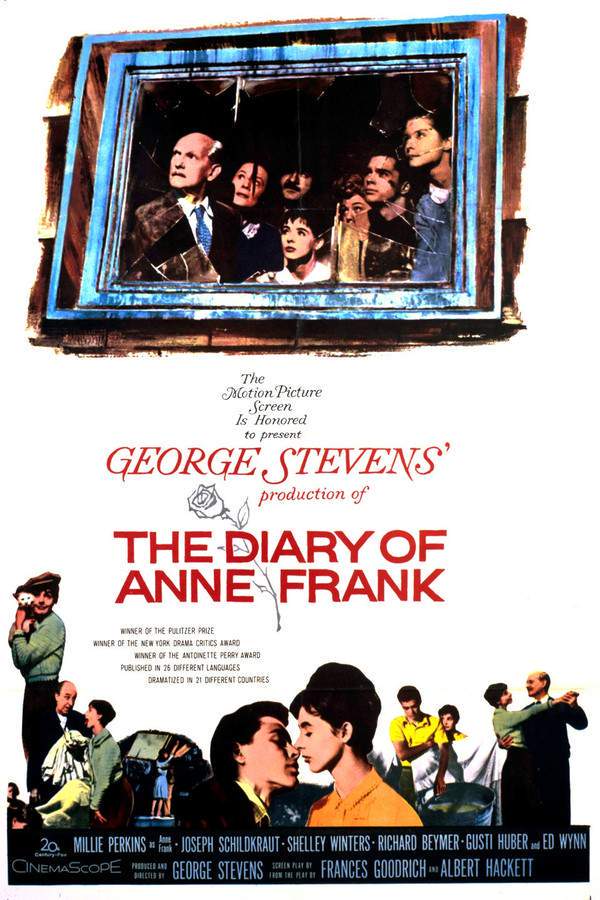
During World War II in occupied Holland, a shopkeeper and his wife risk their lives to hide the Frank and Van Daan families in a concealed annex behind their business. For over two years, they live in fear and confinement, facing constant danger from the Nazis. Anne Frank’s poignant diary entries offer a deeply personal account of their experiences, exploring themes of hope, despair, and the complexities of human connection within the confines of their hidden existence, while also documenting her evolving relationship with Peter Van Daan.

Does The Diary of Anne Frank have end credit scenes?
Yes!
The Diary of Anne Frank does have end credit scenes. Stay until the very end!
Where to Watch The Diary of Anne Frank
See current US streaming, rental, and purchase options for The Diary of Anne Frank (1959) via JustWatch.







Meet the Full Cast and Actors of The Diary of Anne Frank
Explore the complete cast of The Diary of Anne Frank, including both lead and supporting actors. Learn who plays each character, discover their past roles and achievements, and find out what makes this ensemble cast stand out in the world of film and television.




External Links and Streaming Options
Discover where to watch The Diary of Anne Frank online, including streaming platforms, rental options, and official sources. Compare reviews, ratings, and in-depth movie information across sites like IMDb, TMDb, Wikipedia or Rotten Tomatoes.










Ratings and Reviews for The Diary of Anne Frank
See how The Diary of Anne Frank is rated across major platforms like IMDb, Metacritic, and TMDb. Compare audience scores and critic reviews to understand where The Diary of Anne Frank stands among top-rated movies in its genre.

59
Metascore
6.1
User Score


%
TOMATOMETER

0%
User Score

7.4 /10
IMDb Rating

72
%
User Score
Take the Ultimate The Diary of Anne Frank Movie Quiz
Challenge your knowledge of The Diary of Anne Frank with this fun and interactive movie quiz. Test yourself on key plot points, iconic characters, hidden details, and memorable moments to see how well you really know the film.
The Diary of Anne Frank Quiz: Test your knowledge on the poignant story of Anne Frank and her family's harrowing experiences during World War II.
Who first discovers Anne's diary after the war?
Awards & Nominations for The Diary of Anne Frank
Discover all the awards and nominations received by The Diary of Anne Frank, from Oscars to film festival honors. Learn how The Diary of Anne Frank and its cast and crew have been recognized by critics and the industry alike.


Art Direction (Black-and-White)
Cinematography (Black-and-White)
Costume Design (Black-and-White)

Music (Music Score of a Dramatic or Comedy Picture)
Best Motion Picture
Best Film - Drama
Full Plot Summary and Ending Explained for The Diary of Anne Frank
Read the complete plot summary of The Diary of Anne Frank, including all major events, twists, and the full ending explained in detail. Explore key characters, themes, hidden meanings, and everything you need to understand the story from beginning to end.
In 1945, Otto Frank returns to Amsterdam after the conclusion of World War II. Ascending the stairs to an empty attic, he is greeted by the comforting presence of Miep Gies and Mr. Kraler, dedicated office workers who had risked their lives to protect him and his family from the Nazis. As he embarks on a quest for his youngest daughter, Anne’s diary, Miep promptly retrieves it, providing Otto with solace as he reads Anne’s touching words penned three years earlier.
The scene shifts back to July 1942, where Anne begins documenting the oppressive restrictions imposed on Jews that force the Franks into hiding above a spice factory. In their concealed refuge are the Van Daans and their teenage son, Peter. Kugler, who works in the office below, along with Miep, his resourceful assistant, has orchestrated this clandestine haven, warning everyone that silence must be upheld during daylight hours while the workers are present. Kraler dutifully brings food and a box for Anne, gifted by Otto, containing her cherished photos of movie stars and a blank diary.
As the months fly by, Anne’s vibrant spirit shines through as she playfully teases Peter, whose only companion is his beloved cat, Mouschi. Otto takes on the role of teacher for Anne and her sister, Margot, while Mrs. Van Daan fondly reminisces about her youthful days and clings to the cherished fur coat gifted by her father. The tension of their confinement breeds disputes among the Van Daans, especially between Anne and her mother, Edith. One day, Kraler introduces a radio into the attic, granting the families a lifeline to the outside world. Soon after, he requests that they shelter another person: a Jewish dentist named Albert Dussell, who reveals the grim reality outside — friends vanishing, taken away to concentration camps.
A haunting moment occurs when Anne dreams of one of her friends in a concentration camp, waking up in terror. By October 1942, news of the Allied landing in Africa arrives, but the bombings of Amsterdam escalate. During Hanukkah, a sudden argument erupts when Van Daan insists on getting rid of Mouschi due to food shortages. Their quarrel is interrupted by a noise at the front door, sending the room into tense silence, only to break as Peter inadvertently tumbles over something while trying to catch Mouschi. The frightened intruder snatches a typewriter and escapes. A watchman, alerted by the commotion, summons two police officers who investigate the premises. Thankfully, Mouschi knocks a plate from the sink, leading them to believe the noise was merely caused by a cat, and they depart. Otto takes it upon himself to lift spirits by leading the group in a Hanukkah song of hope.
In January 1944, Anne captivates Peter’s attention as Miep brings a cake for everyone to share. Meanwhile, Van Daan requests Miep to sell Petronella’s fur coat to purchase cigarettes. Kraler raises concerns regarding an employee’s odd behavior, hinting that their hiding place might be discovered. Dussell somberly notes that it is only a matter of time before they are caught. Anne expresses her frustrations towards the adults, blaming them for the war that has stripped away their dreams and ideals, leading her to flee the room, followed by Peter who comforts her. In a private moment, Anne shares her aspirations of becoming a writer while Peter laments his lack of ability to make a difference in the war.
Tensions flare when Van Daan attempts to swipe bread, only to be caught by Edith, who confronts him and demands he and his family leave the group. As conflicts over food erupt between Dussell and Mrs. Van Daan, news from the radio announces the Allied invasion of France, causing Mr. Van Daan to break down in shame. However, the good news reinvigorates hope among the group, prompting apologies for harsh words exchanged, while Anne dreams of returning to school by fall.
By July 1944, the invasion has stalled, and Kraler has been hospitalized due to ulcers. With the police having discovered the stolen typewriter, Anne begins to realize that her diary is her only means of preserving life beyond her death. As the Van Daans’ quarrels resume, Peter expresses his desperation and Anne reassures him of the goodness exhibited by those who have aided them. Their exchange is interrupted by the ominous sirens of an approaching police vehicle. Prepared for the worst, they share a passionate kiss amidst rising tension. As the German police brutally break down the door, Otto declares that they need no longer live in fear, but can embrace hope moving forward.
Returning to 1945, Otto recounts his harrowing journey back home after being liberated from Auschwitz to Miep and Kraler. The weight of grief settles in as he reveals the heartbreaking fates of Edith, Margot, the Van Daans, and Dussell, all lost to the horrors of the war. He holds onto a glimmer of hope that Anne may have survived, but he ultimately shares the devastating news of meeting a woman from Bergen-Belsen who confirms Anne’s death. As he gazes at her diary, he reads aloud, >“In spite of everything, I still believe that people are really good at heart,” reflecting on Anne’s unwavering optimism amidst overwhelming despair.

Coming soon on iOS and Android
The Plot Explained Mobile App
From blockbusters to hidden gems — dive into movie stories anytime, anywhere. Save your favorites, discover plots faster, and never miss a twist again.
Sign up to be the first to know when we launch. Your email stays private — always.
Explore the mobile appWatch Trailers, Clips & Behind-the-Scenes for The Diary of Anne Frank
Watch official trailers, exclusive clips, cast interviews, and behind-the-scenes footage from The Diary of Anne Frank. Dive deeper into the making of the film, its standout moments, and key production insights.
Cars Featured in The Diary of Anne Frank
Explore all cars featured in The Diary of Anne Frank, including their makes, models, scenes they appear in, and their significance to the plot. A must-read for car enthusiasts and movie buffs alike.
The Diary of Anne Frank Themes and Keywords
Discover the central themes, ideas, and keywords that define the movie’s story, tone, and message. Analyze the film’s deeper meanings, genre influences, and recurring concepts.
The Diary of Anne Frank Other Names and Titles
Explore the various alternative titles, translations, and other names used for The Diary of Anne Frank across different regions and languages. Understand how the film is marketed and recognized worldwide.
Articles, Reviews & Explainers About The Diary of Anne Frank
Stay updated on The Diary of Anne Frank with in-depth articles, critical reviews, and ending explainers. Explore hidden meanings, major themes, and expert insights into the film’s story and impact.

Similar Movies To The Diary of Anne Frank You Should Know About
Browse a curated list of movies similar in genre, tone, characters, or story structure. Discover new titles like the one you're watching, perfect for fans of related plots, vibes, or cinematic styles.




Quick Links: Summary, Cast, Ratings, More

What's After the Movie?
Not sure whether to stay after the credits? Find out!
Check out our other apps:

SAT Sphere
Build confidence for the Digital SAT.

Mori Atlas
Discover wild places worth protecting.

Luntero
Search smarter for a home in Amsterdam.

Plot Explained
Unravel movie endings and hidden clues.

Pokechamp
Dive into Pokémon data and battle logic.

Driving Theory
Get ready for your European theory test.

Movie Dust
Plan your next cinema trip with ease.

Musemap
Find art and culture as you travel.

Selkobase
Compare credentials before committing.

Local Manual
Turn an unfamiliar country into practical next steps.

Lernavi
Compare school systems before your next move.

GymRoam
Find a workout stop wherever your plans take you.
Explore Our Movie Platform
New Movie Releases (2026)
Famous Movie Actors
Top Film Production Studios
Movie Plot Summaries & Endings
Major Movie Awards & Winners
Best Concert Films & Music Documentaries
Movie Collections and Curated Lists
© 2026 What's After the Movie. All rights reserved.
Privacy Policy