The Art of Self Defense 1941


Goofy takes a lighthearted look at self defense through the ages: cavemen, knights, the age of chivalry, and finally boxing.

Does The Art of Self Defense have end credit scenes?
No!
The Art of Self Defense does not have end credit scenes. You can leave when the credits roll.
Meet the Full Cast and Actors of The Art of Self Defense
Explore the complete cast of The Art of Self Defense, including both lead and supporting actors. Learn who plays each character, discover their past roles and achievements, and find out what makes this ensemble cast stand out in the world of film and television.

External Links and Streaming Options
Discover where to watch The Art of Self Defense online, including streaming platforms, rental options, and official sources. Compare reviews, ratings, and in-depth movie information across sites like IMDb, TMDb, Wikipedia or Letterboxd.




Take the Ultimate The Art of Self Defense Movie Quiz
Challenge your knowledge of The Art of Self Defense with this fun and interactive movie quiz. Test yourself on key plot points, iconic characters, hidden details, and memorable moments to see how well you really know the film.
The Art of Self Defense - Movie Quiz: Test your knowledge on the plot, characters, and key moments of the 1941 film The Art of Self Defense.
Where does Casey Davies spend his time at the beginning of the movie?
Full Plot Summary and Ending Explained for The Art of Self Defense
Read the complete plot summary of The Art of Self Defense, including all major events, twists, and the full ending explained in detail. Explore key characters, themes, hidden meanings, and everything you need to understand the story from beginning to end.
In the opening scenes, the film introduces us to Casey Davies (/actor/jesse-eisenberg), a timid and somewhat socially awkward accountant who often finds himself feeling out of place. He’s shown dining alone at a local diner, where a French couple sitting nearby engage in a curious game—they imagine what kind of person he might be, speaking in their native language, which subtly hints at the film’s themes of perception and identity. Afterward, Casey attempts to learn French on a cassette tape, learning a phrase that pleads in French not to be hurt because he’s just a tourist, foreshadowing his vulnerability throughout the story.
Casey’s mundane life revolves around work, where he struggles to connect with his coworkers. When he tries to engage them in conversation, they dismiss him, especially after learning he audits their expenses. Living in solitude with only his loyal dachshund, he notices his pet is out of food and heads to the pet store. On his way, he’s approached by two men on motorcycles; one asks him if he has a gun, which adds an unsettling tension. Later, as Casey walks home with the groceries, he is ambushed by the same men and a group of assailants. The attack leaves him beaten and unconscious, setting the tone for his sense of growing insecurity and fear.
After waking up in the hospital, his boss, Grant (/actor/hauke-bahr), encourages him to take time off, but Casey’s fears intensify. He becomes haunted by the mugging and begins to feel desperate to defend himself. Watching a gangster movie sparks an urge to acquire a firearm; however, he learns about the waiting period and background checks at a local gun store, which frustrates him but fails to quell his anxiety.
Seeking discipline and a sense of control, Casey visits a karate dojo where Sensei (/actor/alessandro-nivola) teaches martial arts with a strict, disciplined approach. The Sensei appears to incorporate karate into every aspect of life, emphasizing strength and mental toughness. He welcomes Casey to join a trial class and introduces him to Anna (/actor/imogen-poots), the only female student who is dedicated and skilled, also giving lessons to children. Anna, wearing a brown belt and demonstrating techniques like sleeper holds, quicklyAssertS her confidence and discipline.
Throughout his training, Casey progresses from a white belt to a yellow belt, his efforts recognized by Sensei, who speaks of their late grandmaster—a martial arts legend killed in a shooting—highlighting that reliance on guns is a sign of weakness. The sensei shares stories about powerful moves known only to the grandmaster, planting seeds of reverence for martial strength. Meanwhile, Casey’s social interactions at work remain strained; a confrontation with his coworker leads to him being dismissed, yet Sensei offers him a position as an accountant for the dojo, which Casey accepts eagerly, eager to find purpose.
As Casey immerses himself in karate, he gains respect within the dojo community, helping others earn their belts. His friend Henry (/actor/david-zellner), also training, believes Casey is close to earning a black belt. During the dojo’s promotion ceremony, Casey is awarded a yellow belt, with Sensei hinting that another member, Thomas (/actor/steve-terada), will be promoted to black belt instead. As time passes, however, Casey’s anxiety and fear of violence deepen. After a session where Sensei brutally injures Henry in a demonstration, and Anna responds fiercely to her own mistreatment by a jealous rival, Casey begins to question the true nature of the dojo and its violent undercurrents.
Following a series of disturbing revelations—including Sensei’s violent discipline, Anna’s hardened attitude, and the death of Casey’s beloved dog—he starts digging into the dojo’s darker secrets. He uncovers a crematorium and finds Henry’s body hanged by his own belt, along with tapes exposing Sensei, Anna, and Thomas in vicious attacks, including the mugging. The recordings reveal that the violent acts were orchestrated as a twisted form of reform, convincing Casey that Sensei’s teachings are fundamentally corrupt and deadly.
Fueled by a desire for justice, Casey confronts Sensei, who is revealed to have a hidden identity and dark motives. Provoking him by calling him by his real name and confronting his dishonesty, Casey challenges Sensei to a deadly duel. The confrontation escalates as Casey pulls a gun from his gi, shooting and killing Sensei (/actor/alessandro-nivola). Before dying, Sensei’s confidence is shattered by Casey’s defiance, as he publicly exposes his crimes and the true nature of his brutality.
In the aftermath, Casey takes control of the dojo, leaving Sensei’s body as a grim warning. He declares that his martial technique, supposedly taught by the grandmaster, was used to kill Sensei—highlighting its deadly precision. With Anna and Thomas present, evidence confirms Thomas’s involvement in the dog’s murder, which Casey punishes, training his German shepherd to execute justice in a brutal display. He appoints Anna as the new head of the dojo, promising she will lead with compassion, while Casey dedicates himself to teaching martial arts to children and ensuring the dojo becomes a place of real strength, not violence.
Throughout the film, themes of power, fear, and retribution are explored through Casey’s transformation from a timid individual to someone capable of violence and justice. The story delves into the corrupting influence of violence, the allure of strength, and the dark secrets hidden beneath the surface of seemingly disciplined communities.

Coming soon on iOS and Android
The Plot Explained Mobile App
From blockbusters to hidden gems — dive into movie stories anytime, anywhere. Save your favorites, discover plots faster, and never miss a twist again.
Sign up to be the first to know when we launch. Your email stays private — always.
Explore the mobile appDiscover Film Music Concerts Near You – Live Orchestras Performing Iconic Movie Soundtracks
Immerse yourself in the magic of cinema with live orchestral performances of your favorite film scores. From sweeping Hollywood blockbusters and animated classics to epic fantasy soundtracks, our curated listings connect you to upcoming film music events worldwide.
Explore concert film screenings paired with full orchestra concerts, read detailed event information, and secure your tickets for unforgettable evenings celebrating legendary composers like John Williams, Hans Zimmer, and more.


The Art of Self Defense Themes and Keywords
Discover the central themes, ideas, and keywords that define the movie’s story, tone, and message. Analyze the film’s deeper meanings, genre influences, and recurring concepts.
The Art of Self Defense Other Names and Titles
Explore the various alternative titles, translations, and other names used for The Art of Self Defense across different regions and languages. Understand how the film is marketed and recognized worldwide.
Similar Movies To The Art of Self Defense You Should Know About
Browse a curated list of movies similar in genre, tone, characters, or story structure. Discover new titles like the one you're watching, perfect for fans of related plots, vibes, or cinematic styles.
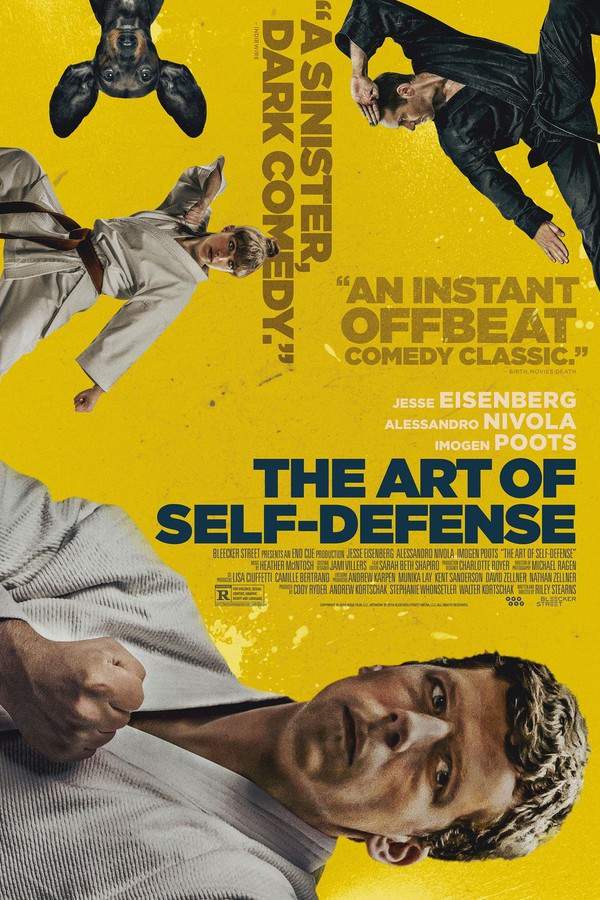


Quick Links: Summary, Cast, Ratings, More

What's After the Movie?
Not sure whether to stay after the credits? Find out!
Check out our other apps:

SAT Sphere
Build confidence for the Digital SAT.

Mori Atlas
Discover wild places worth protecting.

Luntero
Search smarter for a home in Amsterdam.

Plot Explained
Unravel movie endings and hidden clues.

Pokechamp
Dive into Pokémon data and battle logic.

Driving Theory
Get ready for your European theory test.

Movie Dust
Plan your next cinema trip with ease.

Musemap
Find art and culture as you travel.

Selkobase
Compare credentials before committing.

Local Manual
Turn an unfamiliar country into practical next steps.

Lernavi
Compare school systems before your next move.

GymRoam
Find a workout stop wherever your plans take you.
Explore Our Movie Platform
New Movie Releases (2026)
Famous Movie Actors
Top Film Production Studios
Movie Plot Summaries & Endings
Major Movie Awards & Winners
Best Concert Films & Music Documentaries
Movie Collections and Curated Lists
© 2026 What's After the Movie. All rights reserved.
Privacy Policy