
The Abandon 2024

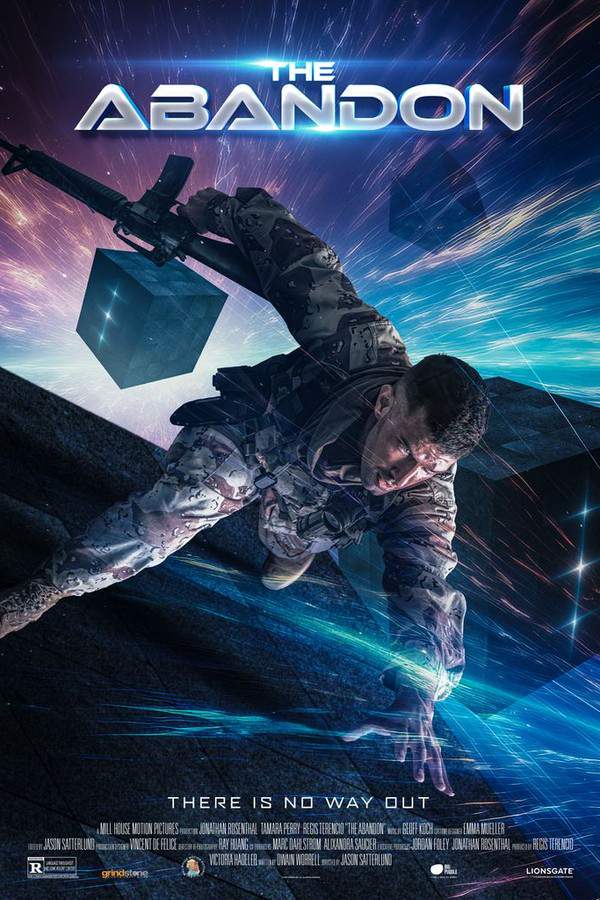
A soldier finds himself trapped within a complex, cube-like structure and must fight for survival. As time dwindles, he is pushed to his physical and mental limits, facing a harrowing test of human endurance and uncovering disturbing truths about himself and his surroundings.


Does The Abandon have end credit scenes?
No!
The Abandon does not have end credit scenes. You can leave when the credits roll.
Meet the Full Cast and Actors of The Abandon
Explore the complete cast of The Abandon, including both lead and supporting actors. Learn who plays each character, discover their past roles and achievements, and find out what makes this ensemble cast stand out in the world of film and television.

External Links and Streaming Options
Discover where to watch The Abandon online, including streaming platforms, rental options, and official sources. Compare reviews, ratings, and in-depth movie information across sites like IMDb, TMDb, Wikipedia or Rotten Tomatoes.








Ratings and Reviews for The Abandon
See how The Abandon is rated across major platforms like IMDb, Metacritic, and TMDb. Compare audience scores and critic reviews to understand where The Abandon stands among top-rated movies in its genre.

The Movie Echo Score
The Abandon elicits a sharply divided response. Critics highlight its inventive use of a confined set, commend the lead's performance, and note a fresh take on a familiar premise, suggesting a film that succeeds despite budget limits. User feedback, however, focuses on sluggish pacing, an unsatisfying conclusion, and execution that falls short of the concept's promise. The blend of praise for ingenuity and criticism of narrative and technical execution results in a moderately low aggregate rating, reflecting overall ambivalence toward the film.
The Movie Echo Score Breakdown for The Abandon

Art & Craft
In terms of art and craft, the film demonstrates creative use of a single location, with critics noting its cinematic visual style and effective imagination within budget constraints. User commentary, however, points to a lack of polish, describing the execution as plodding and unimaginative. The mixed observations suggest competence in design but uneven realization, leading to a lukewarm assessment of the film’s artistic execution.

Character & Emotion
When evaluating character and emotion, reviewers consistently praise Jonathan Rosenthal’s performance, describing it as compelling and central to audience engagement. While some users remark on a disconnect among supporting actors, the prevailing sentiment underscores strong lead work and effective emotional resonance. This predominance of positive feedback translates to a moderately high score for character portrayal and depth.

Story & Flow
Story and flow receive mixed reactions; critics commend the film’s inventive premise and unique narrative twists, yet many users criticize sluggish pacing and an unsatisfying, ambiguous ending. The plot’s originality is acknowledged, but frequent remarks about tediousness and unresolved questions lower its overall impression. Consequently, the story aspect settles in the lower middle range of the scoring spectrum.

Sensory Experience
Sensory experience is noted for its atmospheric sound design and effective use of a confined visual palette, with some reviewers highlighting the soundtrack’s role in building tension. Conversely, a few users find the film lacking in sustained action after the opening minutes. The balance of positive sensory cues against limited vigor yields a modestly favorable score.

Rewatch Factor
Rewatch factor appears weak; while critics suggest the film maintains attention through its claustrophobic setting, most user comments advise skipping the movie, citing an unsatisfying conclusion and limited appeal beyond a single viewing. The scarcity of replay motivation and prevalent negative recommendations place this aspect at the lower end of the scale.


92%
TOMATOMETER

81%
User Score

/10
IMDb Rating

45
%
User Score

4.00/5
From 4 fan ratings
Take the Ultimate The Abandon Movie Quiz
Challenge your knowledge of The Abandon with this fun and interactive movie quiz. Test yourself on key plot points, iconic characters, hidden details, and memorable moments to see how well you really know the film.
The Abandon - Deep Dive Quiz: Test your knowledge on the complex and thought-provoking elements of The Abandon (2024).
Who is the main protagonist in The Abandon?
Full Plot Summary and Ending Explained for The Abandon
Read the complete plot summary of The Abandon, including all major events, twists, and the full ending explained in detail. Explore key characters, themes, hidden meanings, and everything you need to understand the story from beginning to end.
In a harrowing battlefield encounter, our protagonist, Jonathan Rosenthal, who plays Miles Willis, faces a devastating loss as he watches his fellow soldiers fall around him. Confronted with the brutal reality that he cannot defeat the enemy alone, Miles makes the difficult decision to withdraw from the chaos and seek safety. During his retreat, he is critically wounded by a gunshot, hitting his abdomen and rendering him weak and vulnerable. Lying injured in the midst of the blood-stained battleground, Miles is convinced that death is imminent. As he struggles to stay conscious amidst the excruciating pain, he witnesses an air strike—the bright explosion looming toward him feels like the end.
But instead of dying, Miles unexpectedly awakens inside a strange, box-shaped room—an environment that appears confined and yet oddly surreal. At first, he believes he is being held here temporarily, calling out for help, but no response comes. Realizing he is completely alone, Miles begins to treat his bullet wound, trying to slow the relentless bleeding. As time drags on, it becomes painfully clear that this room is designed to torment him, turning from cold to blazing hot and back again, with its behavior growing increasingly bizarre. The room itself seems alive, responding to unseen forces, even rotating wildly and causing Miles and his scattered belongings to be thrown about. When the spinning finally ceases, Miles finds himself on a different floor with some of his belongings, including a satellite phone and a strange telecom device.
Desperation pushes him to attempt communication, but the room’s walls block all signals. He watches helplessly as the satellite phone, beyond his reach, remains out of grasp. When the room again spins and shifts, Miles manages to seize the satellite device, and unexpectedly, he receives a call from a woman named Damsey, who Tamara Perry plays. She explains that her phone number was written on her wall, a clue that led her to contact him. Damsey reveals that she is a teacher stuck in this same bizarre space, and she confides that she frequently endures physical abuse from her husband. As their conversation deepens, Miles opens up about his traumatic childhood—his father, also in the army, used to lock him up, and he could hear his mother suffering from relentless brutality. Miles admits that his past, combined with the horrors of war, sometimes causes him to lash out at loved ones, a truth Damsey tries to comfort him over.
As their dialogue continues, the environment grows more unsettling. The room spins and sinks unpredictably, and Miles begins to measure the intervals of these disturbing motions. Through their conversations, they piece together that time behaves strangely here, and neither of them knows why they were brought to this place. Miles soon realizes that Damsey is from the year 2020, whereas he is from 1991—clues that this space was created by an advanced, possibly extraterrestrial, race attempting to observe human behavior under extreme conditions. This suggests that these walls are a form of experimentation, meant to explore how humans react to trauma and isolation.
Amidst their growing understanding, they receive another call—this time from a man with a distinct accent. He warns Miles against solving a mysterious math problem that appears on the wall. Both Miles and Damsey, who are adept with numbers, try to write down solutions, but the walls seem to be reacting, erasing their work as if an invisible third party is trying to prevent them from finding answers. The unknown caller hints that these beings may want to see if humans are capable of solving the equation, possibly to gauge their worthiness or to determine if they can be manipulated through knowledge of higher dimensions, notably the fourth dimension.
As they get closer to solving the puzzle, the environment’s hostility intensifies. The walls start to sink faster and faster, and visions of violence against loved ones—Damsey’s husband abusing her and Miles witnessing himself doing the same—manifest as psychological torment. Damsey falls into a dark place, feeling her abuser has gained control of the space, while Miles tries to remind her that their tormentors are only using illusions to manipulate their minds. Despite their fear and despair, they understand that their primary goal must be escape, regardless of what the cost may be.
With the environment collapsing around them, Miles calculates the necessary constant to solve the equation, urging Damsey to let go of her trauma and focus on the task at hand. Soon, they reach a breakthrough—the solution is 1, symbolizing that unity among humans is essential; it demonstrates that humanity’s strength lies in working together as one despite differences and conflicts. As Damsey finally writes down the answer, Miles places his hand on the wall, and suddenly, everything dissolves. He finds himself inside a fourth-dimensional space, capable of perceiving other beings and exploring the deeper layers of reality, highlighting the profound power of collective human consciousness.
The climax reveals Miles awakening back at the original battlefield site, just before the event where he initially lost consciousness. He observes the military preparing for an airstrike, and as he moves to a higher vantage point, he sees the U.S. Army scrutinizing the sky—an enormous, unseen entity looms above. The figure remains shrouded in mystery, but the implication is clear: by solving the puzzle, the beings from the fourth dimension have now become aware of Earth. Their interest hints at a potentially catastrophic invasion—destined to threaten the entire human civilization—unless humanity can unite and confront the unknown force. This ending underscores the idea that human unity and resilience are the keys to overcoming even the most incomprehensible threats from beyond our understanding.

Watch Trailers, Clips & Behind-the-Scenes for The Abandon
Watch official trailers, exclusive clips, cast interviews, and behind-the-scenes footage from The Abandon. Dive deeper into the making of the film, its standout moments, and key production insights.
The Abandon Themes and Keywords
Discover the central themes, ideas, and keywords that define the movie’s story, tone, and message. Analyze the film’s deeper meanings, genre influences, and recurring concepts.

Unlock the World of Movies with Our Comprehensive Wiki
Dive into our Movie Wiki for in-depth film encyclopedia entries, including cast biographies, production trivia, plot synopses, behind-the-scenes facts, and thematic analyses. Whether you’re researching iconic directors, exploring genre histories, or discovering hidden easter eggs, our expertly curated movie database has everything you need to fuel your cinematic passion.

Similar Movies To The Abandon You Should Know About
Browse a curated list of movies similar in genre, tone, characters, or story structure. Discover new titles like the one you're watching, perfect for fans of related plots, vibes, or cinematic styles.






Quick Links: Summary, Cast, Ratings, More

What's After the Movie?
Not sure whether to stay after the credits? Find out!




Explore Our Movie Platform
New Movie Releases (2026)
Famous Movie Actors
Top Film Production Studios
Movie Plot Summaries & Endings
Major Movie Awards & Winners
Best Concert Films & Music Documentaries
Movie Collections and Curated Lists
© 2026 What's After the Movie. All rights reserved.