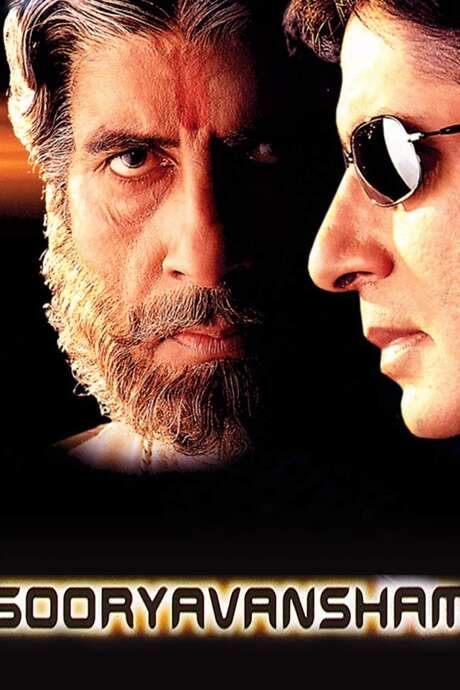
Suryavamsam 1997

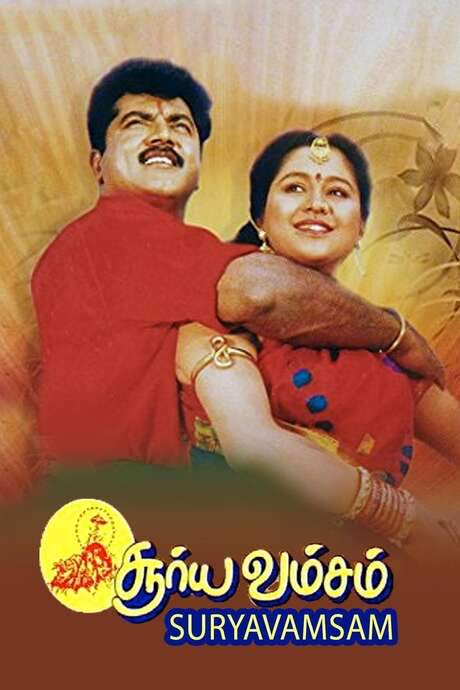
It depicts a realistic portrait of an ordinary Indian household where family honor is paramount. The story follows a responsible father, a dutiful son and a virtuous wife, exploring their duties, sacrifices and the deep psychological bonds that sustain unity. Everyday struggles and generational expectations test them, yet love and respect keep the family harmonious.


Does Suryavamsam have end credit scenes?
No!
Suryavamsam does not have end credit scenes. You can leave when the credits roll.
Where to Watch Suryavamsam
See current US streaming, rental, and purchase options for Suryavamsam (1997) via JustWatch.

Streaming availability powered by 
Meet the Full Cast and Actors of Suryavamsam
Explore the complete cast of Suryavamsam, including both lead and supporting actors. Learn who plays each character, discover their past roles and achievements, and find out what makes this ensemble cast stand out in the world of film and television.

Anandaraj
Dharamalingam Gounder
R. Sarathkumar
Chinnarasu/Sakthivel Gounder
Sundarrajan
Nandhini's Uncle
Manivannan
Chinnarasu's Friend
Devayani
Nandini
Radikaa Sarathkumar
Sakthivel Gounder's Wife
Anju Aravind
R. Neelakantan
Ajay Rathnam
Rajakumaran
Bus passenger
Jai Ganesh
Nandini's Father
Priya Raman
Gowri
S. N. Vasanth
Gowri's Husband
Vijay Kanishka
Master Sakthivel
External Links and Streaming Options
Discover where to watch Suryavamsam online, including streaming platforms, rental options, and official sources. Compare reviews, ratings, and in-depth movie information across sites like IMDb, TMDb, Wikipedia or Rotten Tomatoes.





Take the Ultimate Suryavamsam Movie Quiz
Challenge your knowledge of Suryavamsam with this fun and interactive movie quiz. Test yourself on key plot points, iconic characters, hidden details, and memorable moments to see how well you really know the film.
Suryavamsam (1997) Quiz: Test your knowledge of the 1997 Telugu film Suryavamsam, covering its characters, plot twists, and key themes.
Who is the respected village arbitrator at the beginning of the film?
Full Plot Summary and Ending Explained for Suryavamsam
Read the complete plot summary of Suryavamsam, including all major events, twists, and the full ending explained in detail. Explore key characters, themes, hidden meanings, and everything you need to understand the story from beginning to end.
Harischandra Prasad, the village’s respected arbitrator, dedicates himself to keeping life peaceful for everyone. He lives with the weight of a long-standing feud against Singaraju Lingaraju, [Anandaraj], a rivalry that colors every major decision in the community. The elder’s home is a bustling tapestry—a devoted wife, several sons, a daughter, two daughters-in-law, and two granddaughters—each person adding their own hopes, loyalties, and tensions to the family’s daily rhythm. The atmosphere is equal parts warmth and pressure, as traditions, pride, and personal histories collide under one roof.
Bhanu Prasad stands out within this clan as the third son who carries an invisible burden. Harischandra Prasad’s stern disapproval springs from Bhanu’s education but it masks a genuine, benevolent heart. As a child, Bhanu faced academic struggles that left him illiterate, a flaw the father cannot easily overlook. Yet Bhanu’s tenderness toward his family remains undeniable, a quiet strength that contrasts with his father’s formidable prestige. Into this tense dynamic arrives Swapna, the sister of Bhanu’s future wife, whose arrival unsettles assumptions from the start. Initially, she misreads Bhanu, treating him like a servant, only to learn the true weight of his past from Bhanu’s friend Nukaraju, who reveals the boyhood hardships that shaped him. The revelation reshapes Swapna’s view; she discovers a man capable of earnest effort and quiet resilience, and she finds herself drawn to him.
Meanwhile, love’s currents push in another direction as Bhanu’s heart turns toward Madhavi, a woman who becomes a pivotal, if heartbreaking, element in the early chapters of this saga. Madhavi’s fear of an illiterate match drives her to a desperate act—an attempted suicide to escape a marriage she cannot bear. Bhanu, steadfast and principled, declares his disinterest in Madhavi as a means to protect her, and this stance further inflames Harischandra’s anger. Yet the same arc that creates friction also sows the seeds of later transformation, as Swapna’s affection unfolds and Bhanu learns to claim his own path away from the expectations imposed on him by birth.
When Swapna’s own wedding to Bhanu is nearly fixed, the elder family’s world tilts again. Singaraju Lingaraju schemes to wed Swapna to his own son, a ploy that would tie the clan to his control. Swapna, however, makes her own choice: she confesses her love for Bhanu and insists on marrying him, even as the social pressures mount. Bhanu, defying the arranged course, interrupts the ceremony and takes Swapna as his wife, a bold act that funnels the story into a new trajectory. They return home, and Harischandra Prasad’s anger erupts into banishment—Bhanu is exiled from the house, and the couple begins life on the village’s edge, facing stigma and hardship together. This sharp division within the family becomes the crucible in which Bhanu’s character is tempered and Swapna’s resolve is tested.
What follows is a remarkable arc of growth and mutual uplift. Bhanu commits to transforming his life through learning, while Swapna stays by his side, teaching him reading, writing, and arithmetic as she pursues her own IAS studies. Their efforts bear fruit: Bhanu rises to become one of the town’s most successful businessmen, and Swapna ascends to the rank of District Collector. The couple thrives with their young son, Junior Harischandra Prasad, symbolizing a new era for the family. Even Madhavi appears again in a moment of humility and grace, as Bhanu agrees to help her husband find work in his factory, a gesture that cements the sense of shared humanity that run through the narrative. Swapna’s steady guidance helps Bhanu discover not only financial success but true humility and responsibility.
A thread of affection winds through the family as Harischandra unexpectedly reconnects with his grandson, forging a quiet, secret friendship that fills him with paternal warmth. This bond underscores the transformation at the heart of the tale: a father’s grudging respect grows into a genuine, loving acceptance. Yet, the story tests this fragile harmony. Bhanu prepares a simple Payasam for his father’s birthday, a gesture meant to honor their bond. When Harischandra’s attention is diverted, Singaraju Lingaraju orchestrates a poisoned mix, attempting to implicate Bhanu in a crime. Harischandra’s wife Vasundhara learns of the secret encounter with the grandson, urging reconciliation and urging Harischandra to embrace Bhanu once more. The drama intensifies as Harischandra is hospitalized after consuming the suspect Payasam.
In the hospital, Singaraju attempts to gaslight the situation, presenting “evidence” against Bhanu and using force to press his case. Harischandra, however, sees through the deceit and unveils Singaraju’s guilt, sensing the truth from the scent of perfume in Singaraju’s car—the telltale clue that exposes the villain. A confrontation ensues, culminating in Singaraju’s confession and Bhanu’s restraint of the man he once opposed. The long road of suspicion and betrayal gives way to a cathartic reconciliation: Harischandra finalmente accepts Bhanu as his son, and the family is joyfully reunited, with the village itself witnessing a testament to perseverance, forgiveness, and the enduring power of family.
- Nandini, Devayani Devayani, appears within the extended family web, while Nandini’s Uncle, Sundarrajan Sundarrajan, is present to offer supportive moments that deepen the sense of kinship and communal ties. The story’s core message remains clear: with effort, humility, and mutual trust, even generations bound by pride and misunderstanding can discover a shared future.
This tale blends tradition with ambition, drama with tenderness, and conflict with reconciliation, delivering a sweeping portrait of a family whose fortunes rise and harmonize when love, courage, and integrity finally prevail.

Coming soon on iOS and Android
The Plot Explained Mobile App
From blockbusters to hidden gems — dive into movie stories anytime, anywhere. Save your favorites, discover plots faster, and never miss a twist again.
Sign up to be the first to know when we launch. Your email stays private — always.
Explore the mobile appDiscover Film Music Concerts Near You – Live Orchestras Performing Iconic Movie Soundtracks
Immerse yourself in the magic of cinema with live orchestral performances of your favorite film scores. From sweeping Hollywood blockbusters and animated classics to epic fantasy soundtracks, our curated listings connect you to upcoming film music events worldwide.
Explore concert film screenings paired with full orchestra concerts, read detailed event information, and secure your tickets for unforgettable evenings celebrating legendary composers like John Williams, Hans Zimmer, and more.


Suryavamsam Themes and Keywords
Discover the central themes, ideas, and keywords that define the movie’s story, tone, and message. Analyze the film’s deeper meanings, genre influences, and recurring concepts.
Suryavamsam Other Names and Titles
Explore the various alternative titles, translations, and other names used for Suryavamsam across different regions and languages. Understand how the film is marketed and recognized worldwide.
Similar Movies To Suryavamsam You Should Know About
Browse a curated list of movies similar in genre, tone, characters, or story structure. Discover new titles like the one you're watching, perfect for fans of related plots, vibes, or cinematic styles.










Quick Links: Summary, Cast, Ratings, More

What's After the Movie?
Not sure whether to stay after the credits? Find out!
Check out our other apps:

SAT Sphere
Build confidence for the Digital SAT.

Mori Atlas
Discover wild places worth protecting.

Luntero
Search smarter for a home in Amsterdam.

Plot Explained
Unravel movie endings and hidden clues.

Pokechamp
Dive into Pokémon data and battle logic.

Driving Theory
Get ready for your European theory test.

Movie Dust
Plan your next cinema trip with ease.

Musemap
Find art and culture as you travel.

Selkobase
Compare credentials before committing.

Local Manual
Turn an unfamiliar country into practical next steps.

Lernavi
Compare school systems before your next move.

GymRoam
Find a workout stop wherever your plans take you.
Explore Our Movie Platform
New Movie Releases (2026)
Famous Movie Actors
Top Film Production Studios
Movie Plot Summaries & Endings
Major Movie Awards & Winners
Best Concert Films & Music Documentaries
Movie Collections and Curated Lists
© 2026 What's After the Movie. All rights reserved.
Privacy Policy