Slanted 2026



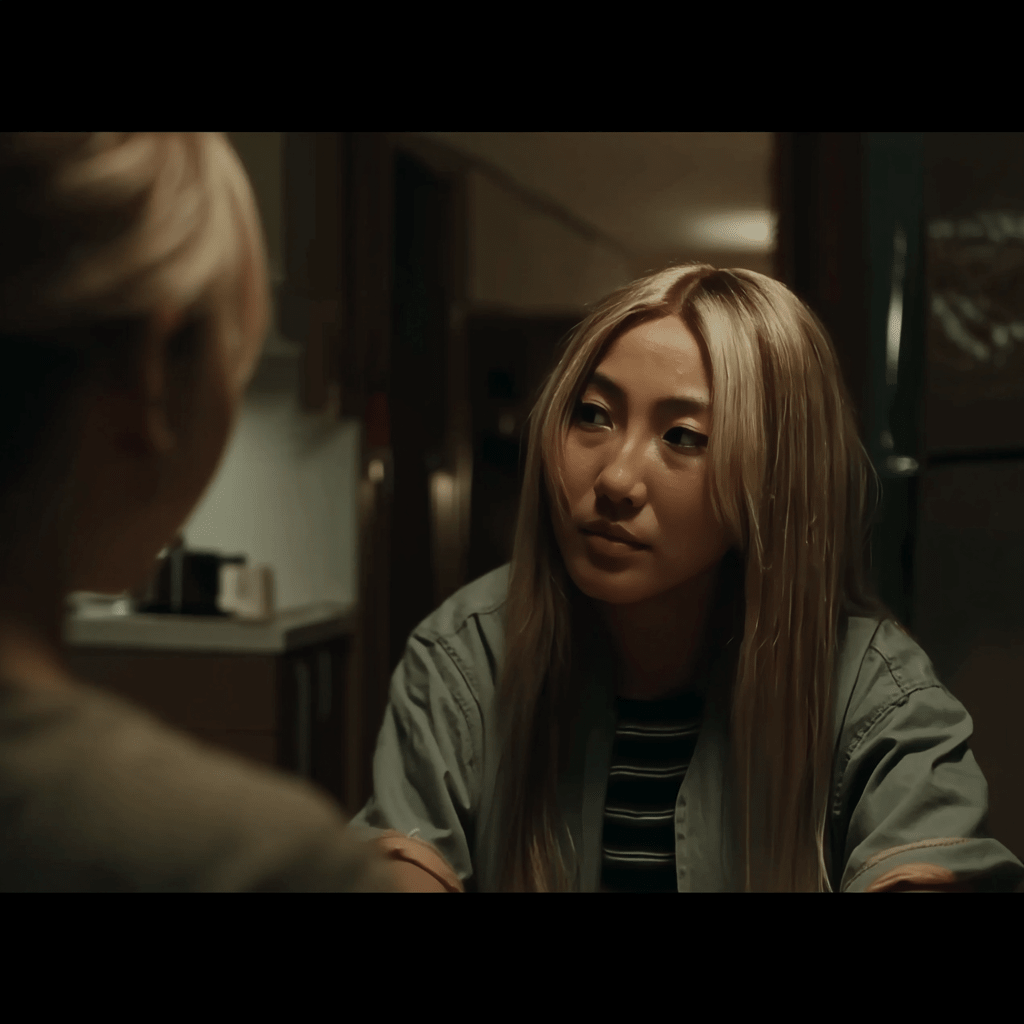
Joan Huang idolizes the popular girls and dreams of becoming prom queen, believing she must look like the past queens whose portraits line the hallways. She undergoes a risky procedure at Ethnos, a shady clinic that makes people of color appear white, waking as a blonde and confronting the steep price of conforming to impossible beauty ideals.


Does Slanted have end credit scenes?
No!
Slanted does not have end credit scenes. You can leave when the credits roll.
Where to Watch Slanted
See current US streaming, rental, and purchase options for Slanted (2026) via JustWatch.








Meet the Full Cast and Actors of Slanted
Explore the complete cast of Slanted, including both lead and supporting actors. Learn who plays each character, discover their past roles and achievements, and find out what makes this ensemble cast stand out in the world of film and television.

Mckenna Grace
Jo Hunt

Maitreyi Ramakrishnan
Brindha

Elizabeth Pan
Penny

Vivian Wu

Megan Hayes
Mrs. Pine
Whitney Goin
Britton Webb
Man With Beard
Kristen Cui
Young Joan
Elaine Hendrix
Harmony
Shirley Chen
Joan Huang
Sarah Kopkin
Greta
R. Keith Harris
Willie
Callie McClincy
Cat
Malone Thomas
White Woman In Her 20s
Scott Deal
Pedestrian #2
Cecelia Specht
Miss Carroll, Dream Prom Teacher
Charlotte Ann Tucker
Young Girl
Katy Wilson
Nancy
Amelie Zilber
Olivia Hammond
Jonathan D. Williams
External Links and Streaming Options
Discover where to watch Slanted online, including streaming platforms, rental options, and official sources. Compare reviews, ratings, and in-depth movie information across sites like IMDb, TMDb, Wikipedia or Rotten Tomatoes.






Ratings and Reviews for Slanted
See how Slanted is rated across major platforms like IMDb, Metacritic, and TMDb. Compare audience scores and critic reviews to understand where Slanted stands among top-rated movies in its genre.

The Movie Echo Score
Slanted elicits a mixed response, with its direction and visual style receiving moderate commendation while its narrative is frequently judged uneven. Critics highlight Wang's direction and the film's absurdist humor as strengths, yet they also point to a problematic plot that fails to sustain its thematic ambitions. Users echo this split, noting occasional humor and effective cinematography but criticizing shallow character development and a flat storyline. The net impression is one of a film that offers occasional flashes of originality amid inconsistent storytelling.
The Movie Echo Score Breakdown for Slanted

Art & Craft
In terms of art and craft, the film benefits from competent direction and a distinctive visual approach. Critics praise Wang's direction and the deft handling of absurdist humor, while users commend the cinematography and inventive makeup effects. Some reviewers, however, note occasional missteps in the execution of thematic elements. Overall, the technical aspects are viewed as solid, providing a respectable foundation for the film.

Character & Emotion
When it comes to character and emotion, performances receive both praise and criticism. Critics acknowledge moving performances and an engaging cast, yet they also remark on shallow treatment of deeper issues. Users echo this divide, with some describing the acting as well‑done and others finding characters flat or overly dramatic. The mixed feedback places the character work in a middle range.

Story & Flow
The story and flow are generally seen as the film's weaker element. Critics describe the plot as simple, uneven, and occasionally misguided, while users note a lack of compelling stakes and a flat narrative arc. Positive notes about occasional humor do not outweigh concerns about coherence and originality. Consequently, the narrative receives a below‑average assessment.

Sensory Experience
Sensory experience garners relatively favorable remarks. Reviewers highlight the film's striking cinematography, effective use of symbolism, and memorable visual style, with users noting enjoyable sound moments such as a humorous karaoke scene. While not universally lauded, the sensory components are consistently viewed as a strength, lifting the overall perception of the film's aesthetic quality.

Rewatch Factor
Rewatch factor reflects a moderate level of enduring appeal. Critics call the film entertaining and provocative, suggesting repeat viewings might be worthwhile. Users provide mixed signals, with some labeling the movie enjoyable and others finding it forgettable. This balanced feedback translates into a middling rewatch score, indicating limited but not negligible replay value.

55
Metascore
5.4
User Score


%
TOMATOMETER

0%
User Score
Full Plot Summary and Ending Explained for Slanted
Read the complete plot summary of Slanted, including all major events, twists, and the full ending explained in detail. Explore key characters, themes, hidden meanings, and everything you need to understand the story from beginning to end.
Joan Huang, Shirley Chen, is a Chinese-American high school student who feels out of place among her white peers and carries a quiet shame about her appearance. Since childhood she has dreamed of being prom queen, a goal that feels within reach only when Olivia Hammond, the school’s most popular girl, hints she might endorse her. In a bid to bridge two worlds, Joan dyes her hair blonde and secures a discounted mani-pedi at a Chinese nail salon, hoping to catch Olivia’s eye, but Olivia mocks the effort and leaves her craving acceptance even more. This sting sets Joan on a precarious path that blends longing with risky choices.
A glossy invitation arrives from Ethnos, a social-media–tinged clinic that promises an ethnicity-changing procedure. The clinic’s enigmatic founder, Dr. Willie Singer, has crafted a groundbreaking surgery meant to turn clients white—an offer that resonates with Joan’s insecurities and desire for belonging. Desperate for camaraderie and fueled by the sense that this could finally grant her the acceptance she’s missed, Joan hides the truth from her mother, who cannot read English, and signs a consent form. The procedure is more than skin deep; it redefines how she’s seen, how she’s treated, and how she understands her own family history. When the transformation takes hold, Joan becomes Jo Hunt, Mckenna Grace, and the world around her shifts in ways that are startlingly swift and euphoric.
Back at school, Jo Hunt basks in a newfound ease. She quickly befriends Olivia, and the two seem to illuminate mutually beneficial possibilities: popularity, approval, and a path to the coveted prom crown. During this period, Brindha, [Maitreyi Ramakrishnan], Joan’s former best friend, senses the widening rift and tries to reach out, offering quiet support as Jo dives deeper into her new identity. The moment of social ascendancy arrives when Jo hosts a party at the home of one of her father’s cleaning clients while the grown-ups are away. Olivia tests Jo’s loyalty by proposing a challenge: prove you can be trusted, and you’ll secure Olivia’s endorsement for prom queen. Brindha and her friends—colorful, lively, and aware—attend, unaware of how their presence will become a flashpoint in Jo’s life. Brindha fears the distance growing between them, and she lends Jo a hopeful shoulder, but the pressure to fit in becomes a crushing force when Olivia openly pressures Jo to eject Brindha and other friends of color from the party.
Jo reluctantly complies, ordering Brindha and the others to leave in a bid to preserve her standing. The choice sharpens the rift between Jo and Brindha, casting Brindha’s warmth as a source of pain and confusion. Jo’s apparent success on the social stage comes at the cost of an emotional withdrawal from her parents, who are baffled and hurt by the drastic change in their daughter. The more Jo leans into her white appearance, the more she discovers a fissure between the identity she wears and the family she loves. The clash between affection and ambition becomes a core tension that colors every subsequent moment.
As the weeks pass, Jo begins to notice the first telltale signs of trouble: subtle deformations forming in her newly pale face. At first she peels the outer layer away, hoping to reveal the familiar skin beneath, only to find the original color hidden just beneath the surface. The Ethnos clinic offers a clinical explanation—this is normal and fixable with tape and a rejuvenation cream—but the reality is more troubling. The changes resist simple concealment, and the fear grows that the transformation could be irreversible. The prom approaches, and Jo’s confidence wavers as the deformation returns, culminating in a desperate run to the bathroom as her appearance begins to fail in front of her peers. Olivia, ever composed, approaches with a shocking candor: the old face will fight back at first, and she improvises a fix, temporarily stabilizing Jo’s appearance long enough to get through the night.
On prom night, Jo is crowned prom queen, a moment that should confirm her social victory but instead becomes a public horror. Onstage her face deteriorates and she collapses, the crowd’s cheers turning to gasps. She awakens later in Olivia’s home to a startling revelation: she and her father are Cuban-American, and they have not spoken with Jo’s mother in years because she would not undergo the same surgery. The discovery shatters the sense of belonging Jo sought and forces a reckoning with the deeper histories of her family and the cost of erasing one’s roots.
Realizing the vapid lives that reflect the Hammonds’ world—and the cultural history and family bonds she’s lost in pursuing a false sameness—Jo returns home to reconcile with her parents. They understand the pain of feeling ostracized for looking different, but her father reminds her that the goal should be shaping her own American identity, not mirroring everyone else. With that new framework, Jo and her mother return to the Ethnos clinic to attempt reversing the procedure, only to encounter a clinic overflowed with others who have embraced their own versions of altered identities. Dr. Singer maintains the transformation’s permanence, insisting that the original identity must be relinquished. The claustrophobic crowd and the weight of the moment push Jo to confront what she’s become and what she’s lost.
In a visceral, decisive moment at home, Jo fights to reclaim herself, clawing at the deformities with her hands and tearing away chunks of the artificial skin. When she looks beneath the mask, she discovers her original Asian eyes and features—an unambiguous reminder of who she was and where she comes from. The film closes on a note of sorrow and resilience, as Jo embraces her true heritage with a tenderness that marks the turning point of a journey from longing to self-acceptance, and from fractured identity toward a more honest sense of self.

Coming soon on iOS and Android
The Plot Explained Mobile App
From blockbusters to hidden gems — dive into movie stories anytime, anywhere. Save your favorites, discover plots faster, and never miss a twist again.
Sign up to be the first to know when we launch. Your email stays private — always.
Explore the mobile appWatch Trailers, Clips & Behind-the-Scenes for Slanted
Watch official trailers, exclusive clips, cast interviews, and behind-the-scenes footage from Slanted. Dive deeper into the making of the film, its standout moments, and key production insights.

Unlock the World of Movies with Our Comprehensive Wiki
Dive into our Movie Wiki for in-depth film encyclopedia entries, including cast biographies, production trivia, plot synopses, behind-the-scenes facts, and thematic analyses. Whether you’re researching iconic directors, exploring genre histories, or discovering hidden easter eggs, our expertly curated movie database has everything you need to fuel your cinematic passion.

Articles, Reviews & Explainers About Slanted
Stay updated on Slanted with in-depth articles, critical reviews, and ending explainers. Explore hidden meanings, major themes, and expert insights into the film’s story and impact.
Quick Links: Summary, Cast, Ratings, More

What's After the Movie?
Not sure whether to stay after the credits? Find out!
Check out our other apps:

SAT Sphere
Build confidence for the Digital SAT.

Mori Atlas
Discover wild places worth protecting.

Luntero
Search smarter for a home in Amsterdam.

Plot Explained
Unravel movie endings and hidden clues.

Pokechamp
Dive into Pokémon data and battle logic.

Driving Theory
Get ready for your European theory test.

Movie Dust
Plan your next cinema trip with ease.

Musemap
Find art and culture as you travel.

Selkobase
Compare credentials before committing.

Local Manual
Turn an unfamiliar country into practical next steps.

Lernavi
Compare school systems before your next move.

GymRoam
Find a workout stop wherever your plans take you.
Explore Our Movie Platform
New Movie Releases (2026)
Famous Movie Actors
Top Film Production Studios
Movie Plot Summaries & Endings
Major Movie Awards & Winners
Best Concert Films & Music Documentaries
Movie Collections and Curated Lists
© 2026 What's After the Movie. All rights reserved.
Privacy Policy