Serial (Bad) Weddings 2014

 Weddings-wUgJ8s7K_G2Obg.jpg)
4 marriages, 2 long-faces A catholic French couple sees their life upside down when their four daughters get married to men of different religion and origins.


Does Serial (Bad) Weddings have end credit scenes?
No!
Serial (Bad) Weddings does not have end credit scenes. You can leave when the credits roll.
Meet the Full Cast and Actors of Serial (Bad) Weddings
Explore the complete cast of Serial (Bad) Weddings, including both lead and supporting actors. Learn who plays each character, discover their past roles and achievements, and find out what makes this ensemble cast stand out in the world of film and television.
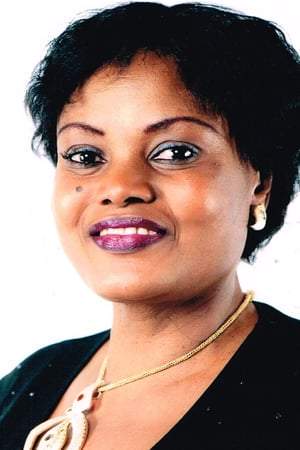
Salimata Kamate
Madeleine Koffi
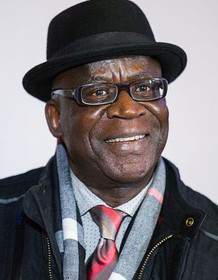
Pascal N'Zonzi
André Koffi

Julia Piaton
Odile Verneuil, wife of Benichou
Frédéric Saurel
Pastry Chef of Chinon
Christian Clavier
Claude Verneuil
Ary Abittan
David Benichou
Tatiana Rojo
Viviane Koffi
Catherine Giron
Josiane, maid of Verneuil
Nicolas Wanczycki
Banker
David Salles
Gendarme of Chinon
Noom Diawara
Charles Koffi
Jennifer Kerner
Redhead actress
Élie Semoun
Psychologist
Medi Sadoun
Rachid Benassem
Axel Boute
Scum in Police Custody
Frédéric Chau
Chao Ling
Loïc Legendre
Priest of Chinon
Roland Menou
Gérald, wedding-planner
Isaac Sharry
Rabbi
Audrey Quoturi
Tourist at Abidjan airport (uncredited)
Émilie Caen
Ségolène Verneuil, wife of Ling
Chantal Lauby
Marie Verneuil
Frédérique Bel
Isabelle Verneuil, wife of Benassem
Thierry Angelvy
Photographer at the Town Hall of Chinon
Nicolas Beaucaire
Doctor of Chinon
Élodie Fontan
Laure Verneuil
Jassem Mougari
Rascal at the Courthouse
Nicolas Buchoux
Xavier Dupuy-Jambard
Philippe Bertin
Jean-Jérôme, aka "Jean-Jé"
Lassâad Salaani
Muslim Butcher
Michel Emsalem
Kosher Butcher
Xiaoxing Cheng
Owner of the Chinese restaurant
Hugues Martel
Mayor of Chinon
Nicolas Mouen
Zumba teacher
Benoît Berthon
SNCF controller
Lyron Darmon
Benjamin Benichou
Selim Draoui
Lucas Benassem
Eugénie You
Ling twin
Lucie You
Ling twin
Isabel McCann
Stewardess
External Links and Streaming Options
Discover where to watch Serial (Bad) Weddings online, including streaming platforms, rental options, and official sources. Compare reviews, ratings, and in-depth movie information across sites like IMDb, TMDb, Wikipedia or Letterboxd.




Take the Ultimate Serial (Bad) Weddings Movie Quiz
Challenge your knowledge of Serial (Bad) Weddings with this fun and interactive movie quiz. Test yourself on key plot points, iconic characters, hidden details, and memorable moments to see how well you really know the film.
Serial (Bad) Weddings: A darkly comic thriller following Beverly Sutphin, an apparently ordinary housewife who turns out to be a serial killer driven by petty slights.
What is the name of Beverly Sutphin's husband?
Full Plot Summary and Ending Explained for Serial (Bad) Weddings
Read the complete plot summary of Serial (Bad) Weddings, including all major events, twists, and the full ending explained in detail. Explore key characters, themes, hidden meanings, and everything you need to understand the story from beginning to end.
Beverly Sutphin appears to be an unassuming upper-middle-class housewife living with her dentist husband Eugene and their teenage children, Misty and Chip, in Towson, Maryland. In truth, she is a serial killer who murders people over trivial slights or offenses, a grim pattern that slowly unfurls as the film peels back the layers of her ordinary life. What starts as petty hostility toward a neighbor spirals into a series of bold, calculated acts that shock the town and pull her family into a dangerous spotlight.
One morning, detectives Pike and Gracey question the Sutphins about a vulgar telephone harassment campaign aimed at their neighbor, Dottie Hinkle. It is later revealed that Beverly is the perpetrator, and her harassment begins after Dottie took a parking space Beverly coveted. The sequence that follows shows Beverly’s chilling complacency as she moves from boorish annoyance to unflinching violence. Later that day, after a PTA meeting where a teacher condemns Chip’s interest in horror films, Beverly’s cold pragmatism erupts into outright violence when she runs over Chip’s math teacher, Mr. Stubbins, with her car. This act marks a turning point in the film, exposing the danger hidden beneath Beverly’s calm exterior.
Misty’s world is further unsettled when her crush, Carl, stands her up for a date. Beverly, observing Carl with another girl at a swap meet, fatally stabs him with a fire poker, a moment that underscores how fear and anger drive Beverly to act on impulse as well as plan. The intensity of the family’s fear grows as Eugene uncovers serial killer memorabilia beneath their mattress, including recordings from Ted Bundy in the week of his execution. This discovery deepens the sense that Beverly’s violent tendencies are not isolated incidents but part of a dangerous, deeply ingrained pattern.
During a tense dinner, Chip mentions his suspicions about Beverly, and the family collectively understands that Beverly could be targeting anyone who might threaten her secrets. Beverly leaves in the wake of this confession, and the family races to Scotty’s house after suspecting he might be next. Beverly’s plan is chillingly methodical: she intends to kill Ralph and Betty Sterner, a couple who had called Eugene for a toothache on a day when the family had planned to spend time birdwatching. Betty is stabbed with scissors, and Ralph is killed when an air conditioner is pushed from a window onto him. The family and police arrive at Scotty’s house to find him in a compromising moment, a scene that further complicates how the case is being perceived by the public.
The chase continues as the police track Beverly to a church where she is identified as the prime suspect in the Sterners’ murders. The service ends in chaos when Beverly sneezes, causing a scramble that allows her to slip away. She hides at the video store where Chip works, and a confrontation with a regular customer, Mrs. Jenson, escalates tensions. Beverly follows Mrs. Jenson to her home, and in a brutal moment, strikes her with a leg of lamb while she’s watching a film. Scotty witnesses the attack from afar, but Beverly spots him and pursues him to a heavy metal bar, where she ultimately immolates Scotty during a live rock concert. The Sutphins arrive just as Beverly is arrested, a moment that seems to promise an end to the nightmare but only signals the next phase of Beverly’s notoriety.
Beverly’s trial becomes a national sensation, and her defense strategy hinges on insanity. She initially contemplates insanity as a defense but ultimately chooses to represent herself, turning the courtroom into a stage for her cunning and manipulation. She painstakingly dismantles each witness’s credibility by exploiting personal vices or undermining testimony, a display that keeps jurors off balance. Luann Hodges, the only witness who actually saw her commit a crime, is intoxicated and thus unreliable, a factor Beverly weaponizes to her advantage. The atmosphere in the courtroom is further disrupted by the unexpected arrival of Suzanne Somers, cast to portray Beverly in a television film, a meta moment that Beverly uses to fuel her performance.
In a startling turn, Beverly is acquitted of all charges. As she walks free, she taunts juror #8 for wearing white shoes after Labor Day, a small act of scorn that reveals how she enjoys bending social norms to her will. The acquittal leads to a chilling postscript: Beverly follows juror #8 to a payphone alcove and fatally strikes her with the receiver, a finale that underscores the film’s bleak satire of justice and celebrity. The appearance of Somers during the aftermath intensifies Beverly’s contempt and culminates in a tense, cinematic confrontation. The juror’s body is discovered, and Beverly exchanges a knowing look with Somers, a final, eerie wink at the audience.
The film closes with a postscript noting that Beverly Sutphin refused to cooperate with the making of this film, a meta-commentary that dovetails with the movie’s themes about complicity, media sensationalism, and the blurred line between crime and entertainment. The result is a darkly comic, unnerving portrayal of a seemingly ordinary woman who transforms fear, anger, and vanity into a cascade of violence that cannot be neatly contained by law, family, or public opinion. The story lingers in the tension between Beverly’s outward civility and her relentless, merciless impulses, leaving the viewer with a stark reminder of the darker undercurrents that can run beneath everyday life.

Coming soon on iOS and Android
The Plot Explained Mobile App
From blockbusters to hidden gems — dive into movie stories anytime, anywhere. Save your favorites, discover plots faster, and never miss a twist again.
Sign up to be the first to know when we launch. Your email stays private — always.
Explore the mobile appDiscover Film Music Concerts Near You – Live Orchestras Performing Iconic Movie Soundtracks
Immerse yourself in the magic of cinema with live orchestral performances of your favorite film scores. From sweeping Hollywood blockbusters and animated classics to epic fantasy soundtracks, our curated listings connect you to upcoming film music events worldwide.
Explore concert film screenings paired with full orchestra concerts, read detailed event information, and secure your tickets for unforgettable evenings celebrating legendary composers like John Williams, Hans Zimmer, and more.


Serial (Bad) Weddings Other Names and Titles
Explore the various alternative titles, translations, and other names used for Serial (Bad) Weddings across different regions and languages. Understand how the film is marketed and recognized worldwide.
Quick Links: Summary, Cast, Ratings, More

What's After the Movie?
Not sure whether to stay after the credits? Find out!
Check out our other apps:

SAT Sphere
Build confidence for the Digital SAT.

Mori Atlas
Discover wild places worth protecting.

Luntero
Search smarter for a home in Amsterdam.

Plot Explained
Unravel movie endings and hidden clues.

Pokechamp
Dive into Pokémon data and battle logic.

Driving Theory
Get ready for your European theory test.

Movie Dust
Plan your next cinema trip with ease.

Musemap
Find art and culture as you travel.

Selkobase
Compare credentials before committing.

Local Manual
Turn an unfamiliar country into practical next steps.

Lernavi
Compare school systems before your next move.

GymRoam
Find a workout stop wherever your plans take you.
Explore Our Movie Platform
New Movie Releases (2026)
Famous Movie Actors
Top Film Production Studios
Movie Plot Summaries & Endings
Major Movie Awards & Winners
Best Concert Films & Music Documentaries
Movie Collections and Curated Lists
© 2026 What's After the Movie. All rights reserved.
Privacy Policy