
Senso 1954

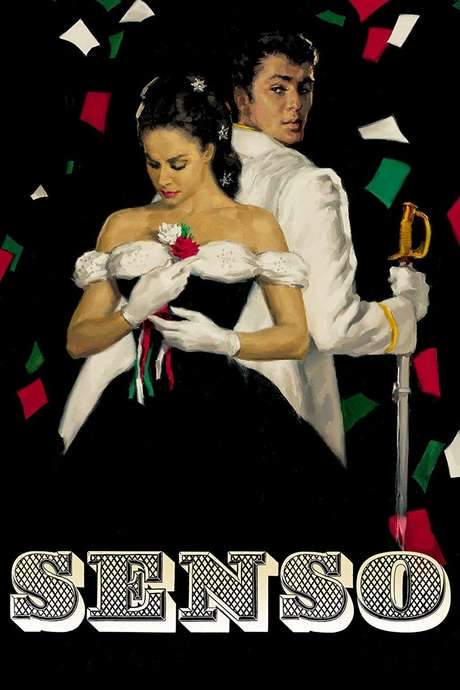
Set amid a decadent, corrupt aristocracy, the story follows a troubled, neurotic Italian countess who, driven by obsessive passion, betrays her country by entering a self‑destructive love affair with an Austrian lieutenant, leading to a tragic and inevitable downfall for both, and the fragile balance of loyalty and desire.



Does Senso have end credit scenes?
No!
Senso does not have end credit scenes. You can leave when the credits roll.
Meet the Full Cast and Actors of Senso
Explore the complete cast of Senso, including both lead and supporting actors. Learn who plays each character, discover their past roles and achievements, and find out what makes this ensemble cast stand out in the world of film and television.

Massimo Girotti
Il Marchese Roberto Ussoni

Rina Morelli
Laura, la Governante

Alida Valli
La Contessa Livia Serpieri

Farley Granger
Il Tenente Franz Mahler
Christian Marquand
Un Ufficiale Boemo
Jean-Pierre Mocky
Un Soldato (uncredited)
Mimmo Palmara
Un Soldato (uncredited)
Tino Bianchi
Il Capitano Meucci
Carlo Sabatini
Un Soldato (uncredited)
Goliarda Sapienza
Una Patriota al Teatro (uncredited)
Sergio Fantoni
Luca
Heinz Moog
Il Conte Serpieri
Ugo Mari
Officer in Verona's Austrian Headquartes (uncredited)
Tony Di Mitri
Un Soldato (uncredited)
Tonio Selwart
Il Colonello Kleist
Ivy Nicholson
Una Patriota (uncredited)
Winni Riva
La Cameriera (uncredited)
Spartaco Nale
Un Soldato (uncredited)
Marcella Mariani
Clara, la Prostituta
Ottone Candiani
Un Soldato (uncredited)
Marianne Leibl
La Moglie del Generale Hauptmann (uncredited)
Ernst Nadherny
Il Comandante della Piazza di Verona
Mário Valente
Un Soldato (uncredited)
Franco Arcalli
Un Soldato (uncredited)
Aldo Bajocchi
Un Soldato (uncredited)
Cristoforo De Hartungen
Il Generale Hauptmann (uncredited)
Claudio Coppetti
Un Soldato (uncredited)
Eugenio Incisivo
Un Soldato (uncredited)
Gustl Untersulzner
Un Soldato (uncredited)
External Links and Streaming Options
Discover where to watch Senso online, including streaming platforms, rental options, and official sources. Compare reviews, ratings, and in-depth movie information across sites like IMDb, TMDb, Wikipedia or Rotten Tomatoes.







Take the Ultimate Senso Movie Quiz
Challenge your knowledge of Senso with this fun and interactive movie quiz. Test yourself on key plot points, iconic characters, hidden details, and memorable moments to see how well you really know the film.
Senso (1954) Quiz: Test your knowledge of the key characters, events, and themes in the 1954 film Senso.
Which Austrian officer does Livia begin a secret romance with?
Full Plot Summary and Ending Explained for Senso
Read the complete plot summary of Senso, including all major events, twists, and the full ending explained in detail. Explore key characters, themes, hidden meanings, and everything you need to understand the story from beginning to end.
Set in Italy during the volatile years around 1866, the film unfolds against the broader backdrop of the Italian unification and the war that would reshape borders in the Veneto and Friuli-Venezia Giulia. The story centers on a passionate, dangerous liaison that blossoms in the shadow of siege and shifting loyalties, and it follows how personal desire collides with national upheaval.
In Venice’s grand La Fenice opera house, a performance of Il Trovatore culminates in a dramatic interruption as Italian Nationalists voice their anger toward the occupying Austrians. The moment is witnessed by Livia Serpieri, a countess who is tragically trapped by a loveless marriage to a stiff aristocrat. She is drawn into a secret romance with a dashing Austrian lieutenant, Franz Mahler, whose charm masks a calculating use of Livia for money and status. The encounter is electric and dangerous: she flings herself into a reckless affair, not caring about propriety or consequences, while Franz drifts between affection and exploitation. As their relationship deepens, Livia’s social world grows smaller in comparison to the thrill and secrecy of their meetings.
The arrangement between them is clear in its imbalance. Franz leverages Livia’s wealth and influence to stay away from the front, asking for more money to bribe army doctors so he can avoid the battlefield. Livia, intoxicated by the illusion of power and romance, supplies the funds with a liberated abandon that shocks even her. The affair evolves into a consuming fixation, where Livia’s longing begins to blur judgment and morality. Yet Franz’s absence on the front lines becomes a wound that festers, and Livia’s certainty about his fidelity begins to crack as jealousy and paranoia creep in.
War inevitably presses closer. The Austrians advance, and the Italians are forced to confront a brutal reality on the field. The couple’s private world fractures as Livia’s husband moves her away to a secluded villa, hoping to shield her from the carnage unfolding around them. The peace she seeks is fragile, and the war’s harsh tempo intrudes into every moment. Late one night, Franz returns to the estate with a hunger that blends bitterness and need. He pleads for more money to buy his way out of danger, and Livia, caught between scorched love and practical betrayal, hands over all she has—money she had intended for Roberto Ussoni, the Marchese who had already become entangled in their shared circle of political resistance. This act seals a line of treachery that reverberates through both their lives and the broader resistance.
The Battle of Custoza looms large in the narrative as the war swells to a head, and the Italians find themselves outmatched by better-equipped Austrian forces. The clash becomes a physical manifestation of the emotional chaos between Livia and Franz, who have now become more a symbol of glamour and ruin than lovers in a private world. In the fallout, Livia’s emotional horizon collapses, and she clings to Franz’s letter as a fragile tether to a man who has long since chosen a path away from her. The letter suggests caution—Franz warns her not to travel to Verona because the route is too dangerous—yet she cannot resist the pull of the man and the fantasy they once shared.
Driven by a combination of longing and desperation, Livia abandons her settled life and makes her way toward the Austrian heartland, following the traces of a relationship that she believes still holds meaning. She discovers Franz not in a quiet escape but in the company of a young prostitute, Clara. The revelation is devastating: Franz, now inebriated and self-loathing, flouts her with a cruel irony, mocking her devotion and the money she has given him. The encounter is a turning point, forcing Livia to confront the fragility of the world she thought she controlled. In a moment of stark clarity and pain, she is thrust out into the streets, where the atmosphere is thick with soldiers and danger, and her mental state begins to fray under the strain of memory and humiliation.
Compelled by a grim sense of evidence, Livia heads to the Austrian Army’s headquarters, carrying the very letter that once symbolized her power and affection. She presents the letter as proof of Franz’s treason, and the general who reads it sees the truth of what has transpired beneath the surface of their relationship. Franz is executed by firing squad, a public and brutal consequence that underscores the era’s harsh realities. The drama closes on a note of ruin and obsession: Livia, now overwhelmed by madness, calls out her lover’s name into the night as the world around her continues to churn with the echoes of war and betrayal.
Across its threads of passion, power, and political conflict, the film paints a portrait of how love can become an instrument of vulnerability. It explores the seductive pull of a romance that thrives on secrecy and wealth, while also showing how a landscape ripped by war can amplify the consequences of personal choices. The characters’ fates are shaped not only by their desires but by an era’s demands—an era marked by national upheaval, strategic deception, and the fearsome costs of loyalty misplaced. In the end, the tale reads as a meditation on the fragility of affection when confronted with history’s inexorable march and the brutal verdicts of a world at war.
Notes on cast: Roberto Ussoni is the politically minded Marchese whose actions help spark the central conflict, and Clara enters as a provocative counterpoint to the relationship, highlighting the social and moral tensions that frame Livia’s fall. The performances by the principal players—Livia Serpieri and Franz Mahler—are anchored by the dramatic weight of the period, offering a nuanced look at desire, power, and the desolate lines drawn by war.

Watch Trailers, Clips & Behind-the-Scenes for Senso
Watch official trailers, exclusive clips, cast interviews, and behind-the-scenes footage from Senso. Dive deeper into the making of the film, its standout moments, and key production insights.
Senso Themes and Keywords
Discover the central themes, ideas, and keywords that define the movie’s story, tone, and message. Analyze the film’s deeper meanings, genre influences, and recurring concepts.

Unlock the World of Movies with Our Comprehensive Wiki
Dive into our Movie Wiki for in-depth film encyclopedia entries, including cast biographies, production trivia, plot synopses, behind-the-scenes facts, and thematic analyses. Whether you’re researching iconic directors, exploring genre histories, or discovering hidden easter eggs, our expertly curated movie database has everything you need to fuel your cinematic passion.

Similar Movies To Senso You Should Know About
Browse a curated list of movies similar in genre, tone, characters, or story structure. Discover new titles like the one you're watching, perfect for fans of related plots, vibes, or cinematic styles.







Quick Links: Summary, Cast, Ratings, More

What's After the Movie?
Not sure whether to stay after the credits? Find out!




Explore Our Movie Platform
New Movie Releases (2026)
Famous Movie Actors
Top Film Production Studios
Movie Plot Summaries & Endings
Major Movie Awards & Winners
Best Concert Films & Music Documentaries
Movie Collections and Curated Lists
© 2026 What's After the Movie. All rights reserved.