Roohi 2021

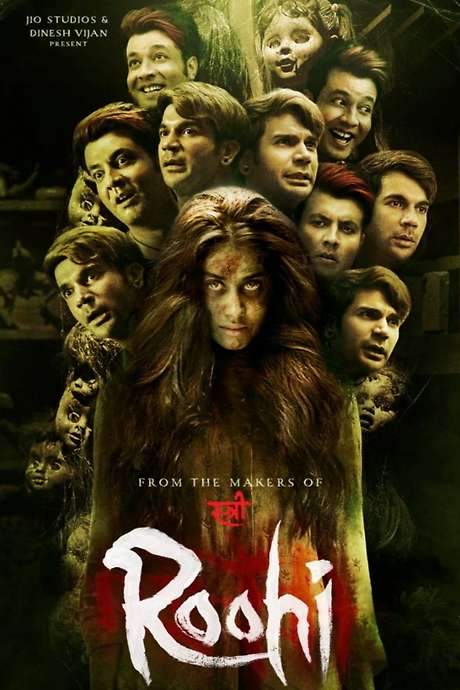
In a fictional North Indian town, two boys Bhaura and Kattanni are stuck in a forest with Roohi. But there’s an insidious spirit following them with feet turned backwards.


Does Roohi have end credit scenes?
No!
Roohi does not have end credit scenes. You can leave when the credits roll.
Where to Watch Roohi
See current US streaming, rental, and purchase options for Roohi (2021) via JustWatch.

Streaming availability powered by 
Meet the Full Cast and Actors of Roohi
Explore the complete cast of Roohi, including both lead and supporting actors. Learn who plays each character, discover their past roles and achievements, and find out what makes this ensemble cast stand out in the world of film and television.

External Links and Streaming Options
Discover where to watch Roohi online, including streaming platforms, rental options, and official sources. Compare reviews, ratings, and in-depth movie information across sites like IMDb, TMDb, Wikipedia or Rotten Tomatoes.







Ratings and Reviews for Roohi
See how Roohi is rated across major platforms like IMDb, Metacritic, and TMDb. Compare audience scores and critic reviews to understand where Roohi stands among top-rated movies in its genre.

The Movie Echo Score
Roohi falls short of delivering a satisfying horror‑comedy experience, as the majority of critics and viewers highlight fundamental flaws across its components. The film is criticized for an incoherent narrative, uneven tone, and underdeveloped characters, while occasional moments of camaraderie between the male leads receive modest praise. Limited visual and auditory appeal further reduce its replay value. Consequently, the movie registers a low overall Echo Score, reflecting widespread disappointment.
The Movie Echo Score Breakdown for Roohi

Art & Craft
In terms of direction and production design, Roohi exhibits several shortcomings. Critics and users repeatedly note a lackluster visual style, uneven editing, and a dimly lit setting that hampers clarity. A solitary positive remark mentions the nighttime jungle ambience, but it does not offset the overall weak craftsmanship. The artistic execution thus scores low.

Character & Emotion
When evaluating performances and character depth, the film presents a mixed picture. Several reviewers criticize Janhvi Kapoor’s limited range and generic dialogue, while praising Rajkumar Rao’s occasional humor and Varun Sharma’s chemistry with him. The supporting cast receives minimal commentary, indicating an overall underdeveloped ensemble. Consequently, character work attains a modest middle‑range rating.

Story & Flow
Regarding plot coherence and pacing, Roohi is widely deemed ineffective. Critics and users alike point to a fragmented story, illogical twists, and an inability to sustain tension or humor, resulting in a disjointed viewing experience. Brief mentions of occasional funny moments do not compensate for the overarching narrative weakness. The story therefore receives a low score.

Sensory Experience
In terms of auditory and visual elements, Roohi offers limited appeal. Reviewers mention a sparse soundtrack, noisy sound design, and a generally dark visual palette that obscures detail. One user acknowledges a single song as a highlight, yet overall sensory integration feels under‑realized. The sensory dimension consequently earns a below‑average rating.

Rewatch Factor
Assessing rewatch potential, the consensus is largely unfavorable. Most critics and users describe the film as tedious, with repetitive jokes and a lack of memorable moments, suggesting little incentive for repeat viewings. A few comments note occasional comic relief, but these are insufficient to restore lasting appeal. Hence, the rewatch factor is low.
Full Plot Summary and Ending Explained for Roohi
Read the complete plot summary of Roohi, including all major events, twists, and the full ending explained in detail. Explore key characters, themes, hidden meanings, and everything you need to understand the story from beginning to end.
Bhawra Pandey [Rajkummar Rao] and Kattanni Qureshi [Varun Sharma] hail from the small Bagadpur village, where a harsh local custom once dictated that the man who wishes to marry a woman must abduct her. The two men are pulled into that grim tradition by their boss, the ruthless Guniya Bhai [Manav Vij], who hires them to kidnap Roohi [Janhvi Kapoor], a young woman whose future is tied to a marriage contract. When a death in the groom’s family forces a pause on the plan, Bhawra and Kattanni decide to hide Roohi in an abandoned woodworking shop so the marriage can proceed after the funeral.
Inside the dim space, tension quickly shifts from a kidnapping plot to something far more supernatural. Bhawra begins to sense that Roohi is not merely scared or resistant but actually possessed by a demonic spirit. This is confirmed by Roohi’s father, a man deeply worried about what the family has walked into. The demon, who identifies herself as Afza, reveals herself as a Mudiyapairi—a legendary, exceptionally strong witch with backward-turned feet who will not leave until she marries, taking the girl she possesses with her.
Guniya Bhai, worried about police scrutiny and the danger to his reputation, orders his men to retrieve Roohi, but Bhawra and Kattanni refuse to abandon her. Their stubborn loyalty puts them in direct conflict with the gang leader, and the henchmen who are sent to reclaim the girl pay a dangerous toll for underestimating Afza’s strength. The brutal confrontation makes it clear that the demon’s hold on Roohi runs deeper than a simple kidnapping.
Seeking a way out, Bhawra consults an old woman who shares a chilling, practical truth: the Mudiyapairi can be trapped by tricking Afza into marrying a man who is already married, effectively turning the spirit into a nuisance rather than a permanent inhabitant. The old woman’s tale carries a heavy history—she herself has been possessed by the same witch in the past and survived only after an exorcism that came with a steep price.
With time running short, the trio heads toward a village called Chimmattipur and improvises a plan that blends superstition with a desperate sense of humor: Bhawra even goes so far as to marry a dog to fool the witch and force Afza to confront the possibility of a “fake” union. The villagers react with anger and skepticism, viewing the scheme as a desecration of their sacred space, but the sense of danger remains if Afza is not appeased.
Guniya Bhai arrives again, intent on revenge and on salvaging his own standing, but he quickly recognizes that Afza’s marriage must occur within a day if she is to be driven out of Roohi. He pivots toward a cynical payoff, proposing that Afza marry the chosen groom associated with the original contract in order to restore his own reputation.
At the wedding site, Kattanni, dressed in Bhawra’s wedding attire, tries to coax Afza into an arranged union. The old woman interrupts once more, presenting Afza with a startling ruse: a video of the dog wedding meant to demonstrate the fragility of the plan. Afza becomes confused, misidentifying Bhawra as Kattanni, and her anger surges. In a climactic turn, Afza commands Bhawra to marry her, but Roohi intervenes with a radical choice.
Roohi, embracing Afza’s strength rather than fighting it, decides to marry Afza herself, choosing a union that acknowledges the spirit’s power rather than denying it. The two women—Roohi and Afza—find an unexpected harmony, leaving Bhawra and Kattanni behind as the situation shifts from a rescue plot to an uneasy coexistence.
In the aftermath, police arrive with Roohi’s father, but the old woman disappears, leaving the impression that she may have aided Afza all along. The film closes on the note that the transfer of power and choice has shifted, leaving Roohi empowered to decide her own fate alongside Afza, rather than being controlled by the men who kidnapped her.

Coming soon on iOS and Android
The Plot Explained Mobile App
From blockbusters to hidden gems — dive into movie stories anytime, anywhere. Save your favorites, discover plots faster, and never miss a twist again.
Sign up to be the first to know when we launch. Your email stays private — always.
Explore the mobile appDiscover Film Music Concerts Near You – Live Orchestras Performing Iconic Movie Soundtracks
Immerse yourself in the magic of cinema with live orchestral performances of your favorite film scores. From sweeping Hollywood blockbusters and animated classics to epic fantasy soundtracks, our curated listings connect you to upcoming film music events worldwide.
Explore concert film screenings paired with full orchestra concerts, read detailed event information, and secure your tickets for unforgettable evenings celebrating legendary composers like John Williams, Hans Zimmer, and more.


Roohi Themes and Keywords
Discover the central themes, ideas, and keywords that define the movie’s story, tone, and message. Analyze the film’s deeper meanings, genre influences, and recurring concepts.
Roohi Other Names and Titles
Explore the various alternative titles, translations, and other names used for Roohi across different regions and languages. Understand how the film is marketed and recognized worldwide.
Similar Movies To Roohi You Should Know About
Browse a curated list of movies similar in genre, tone, characters, or story structure. Discover new titles like the one you're watching, perfect for fans of related plots, vibes, or cinematic styles.











Quick Links: Summary, Cast, Ratings, More

What's After the Movie?
Not sure whether to stay after the credits? Find out!
Check out our other apps:

SAT Sphere
Build confidence for the Digital SAT.

Mori Atlas
Discover wild places worth protecting.

Luntero
Search smarter for a home in Amsterdam.

Plot Explained
Unravel movie endings and hidden clues.

Pokechamp
Dive into Pokémon data and battle logic.

Driving Theory
Get ready for your European theory test.

Movie Dust
Plan your next cinema trip with ease.

Musemap
Find art and culture as you travel.

Selkobase
Compare credentials before committing.

Local Manual
Turn an unfamiliar country into practical next steps.

Lernavi
Compare school systems before your next move.

GymRoam
Find a workout stop wherever your plans take you.
Explore Our Movie Platform
New Movie Releases (2026)
Famous Movie Actors
Top Film Production Studios
Movie Plot Summaries & Endings
Major Movie Awards & Winners
Best Concert Films & Music Documentaries
Movie Collections and Curated Lists
© 2026 What's After the Movie. All rights reserved.
Privacy Policy