Return to Seoul 2022

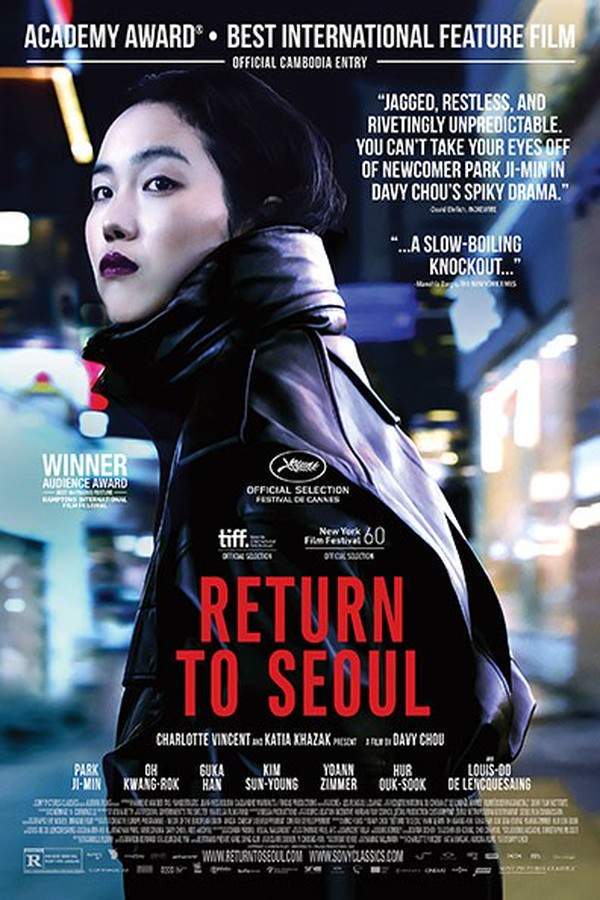
Freddie, a 25-year-old man living in the United States, unexpectedly returns to South Korea, his country of birth, hoping to discover more about his origins. During his journey, he explores the culture and confronts questions about his identity and place in the world. He navigates unfamiliar surroundings and seeks a deeper understanding of his heritage and family history.

Does Return to Seoul have end credit scenes?
No!
Return to Seoul does not have end credit scenes. You can leave when the credits roll.
Where to Watch Return to Seoul
See current US streaming, rental, and purchase options for Return to Seoul (2022) via JustWatch.







Meet the Full Cast and Actors of Return to Seoul
Explore the complete cast of Return to Seoul, including both lead and supporting actors. Learn who plays each character, discover their past roles and achievements, and find out what makes this ensemble cast stand out in the world of film and television.







External Links and Streaming Options
Discover where to watch Return to Seoul online, including streaming platforms, rental options, and official sources. Compare reviews, ratings, and in-depth movie information across sites like IMDb, TMDb, Wikipedia or Rotten Tomatoes.











Ratings and Reviews for Return to Seoul
See how Return to Seoul is rated across major platforms like IMDb, Metacritic, and TMDb. Compare audience scores and critic reviews to understand where Return to Seoul stands among top-rated movies in its genre.

The Movie Echo Score
Return to Seoul delivers a confident directorial vision anchored by striking cinematography and purposeful editing, while its central performance from Ji‑Min Park offers depth and nuance. Critics highlight the film's atmospheric soundtrack and daring structure, yet several viewers note uneven pacing and a narrative that sometimes feels derivative. The mixed reception balances strong artistic elements with a story that does not consistently sustain engagement, resulting in a solid but not universally compelling experience.
The Movie Echo Score Breakdown for Return to Seoul

Art & Craft
In terms of direction and visual craft, the film is praised for its assured cinematography and inventive editing, with reviewers noting cool cuts that convey the passage of time. The production design and photography are described as compelling and visceral, supporting the narrative's emotional stakes. This consistent technical proficiency yields a high artistic rating.

Character & Emotion
When assessing acting and character depth, critics emphasize Ji‑Min Park's transformative and nuanced performance, calling it a standout debut. Viewers acknowledge the actress’s power but also mention a barrier that limits emotional connection for some audience members. Overall, the character work is strong, though not uniformly resonant, leading to a solid but slightly moderated score.

Story & Flow
The story’s structure receives mixed feedback; critics admire its non‑conventional, sweeping narrative, while some describe it as ambivalent or maddening. Users point to uneven pacing, confusing time jumps, and a lack of fresh insight into adoption themes. Consequently, the plot’s coherence and originality are viewed as moderately effective but not consistently engaging.

Sensory Experience
Sensory elements—including the soundtrack, sound design, and visual style—are generally well‑received. Critics highlight compelling musical cues that enhance emotional moments, and viewers commend the soundtrack and photography for adding depth. While not universally lauded, the sensory experience contributes positively to the film’s overall atmosphere.

Rewatch Factor
Rewatch value is perceived as moderate to high; critics label the film a captivating gem and rare visceral work, suggesting repeat viewings could reveal additional layers. Some audience members, however, find the narrative insufficiently distinctive to warrant frequent returns. This blend of admiration and reservation results in a respectable rewatch factor.

87
Metascore
7.6
User Score


97%
TOMATOMETER

91%
User Score

6.9 /10
IMDb Rating

63
%
User Score

3.6
From 240 fan ratings

2.33/5
From 3 fan ratings
Take the Ultimate Return to Seoul Movie Quiz
Challenge your knowledge of Return to Seoul with this fun and interactive movie quiz. Test yourself on key plot points, iconic characters, hidden details, and memorable moments to see how well you really know the film.
Return to Seoul Quiz: Test your knowledge about Freddie's journey of self-discovery in 'Return to Seoul'.
Where does Freddie's flight get cancelled, leading her to Seoul?
Awards & Nominations for Return to Seoul
Discover all the awards and nominations received by Return to Seoul, from Oscars to film festival honors. Learn how Return to Seoul and its cast and crew have been recognized by critics and the industry alike.
Full Plot Summary and Ending Explained for Return to Seoul
Read the complete plot summary of Return to Seoul, including all major events, twists, and the full ending explained in detail. Explore key characters, themes, hidden meanings, and everything you need to understand the story from beginning to end.
Freddie, a charming 25-year-old woman, finds herself on an unexpected journey of self-discovery. Born in South Korea and adopted by French parents, she arrives in Seoul for a two-week vacation after her flight to Tokyo gets cancelled. During her stay, she quickly forms a bond with Tena, the hotel desk clerk, and has a brief encounter with a man she meets at a restaurant. As she settles into the vibrant city, Tena, along with another friend, introduces Freddie to the Hammond Adoption Center. Although Freddie initially shows no desire to reconnect with her biological parents, her curiosity leads her to visit the agency.
At the center, she learns that while they cannot disclose her parents’ identities, they can notify them of her interest up to three times a year through telegrams. Freddie’s journey continues as she travels to Gunsan for a tense reunion with her father, with Tena translating their conversations. When she discovers that her mother has not responded to the telegrams, she decides to stay with her father’s family for a few nights. Her father’s persistent phone calls and messages filled with regret weigh heavily on her, leading her to feel trapped by his attempts at reconciliation.
During a night out, Freddie confides to Tena about her father’s incessant contact, calling it oppressive. Their evening takes a sour turn when Freddie mocks the declarations of affection from her first-night companion, and in a moment of vulnerability, she attempts to kiss Tena, who, unfortunately, rejects her, labeling her as “a very sad person.” That night, Freddie returns to her hotel accompanied by a DJ, only to face her drunken father, who confronts her about ignoring him. Tena intervenes, but chaos erupts when Freddie screams at her father to let her go.
Fast forward two years, and Freddie has made a new life in Seoul. She goes out with André, a weapons dealer who believes she has a future in the business. As she reflects on her birthday, she expresses her longing for her mother, pondering if she ever thinks of her. At a surprise birthday celebration, Freddie shares with a co-worker, who is also an adoptee, that her mother has finally replied to their telegrams, revealing she does not wish to meet. Though her father continues to email her, Freddie generally ignores him, focusing instead on understanding her roots.
Five years later, Freddie’s life takes another turn as she learns some Korean and begins working with André selling missiles. On a business excursion to South Korea, she attends a meeting with her father, where he plays a heartfelt piano piece he composed. His music stirs something within her, but frustration builds when her boyfriend, Maxime, suggests that her role in life is to protect South Korea. After dinner, she makes the difficult decision to break up with him, and the following morning finds herself alone in an alley.
The story comes full circle when Freddie receives an unexpected positive response to a telegram from her biological mother. They meet at a Hammond facility, where an emotional reunion occurs as they embrace, and her mother shares her email address for future correspondence.
A year later, on her birthday, while trying to check into a hotel, Freddie attempts to email her mother, expressing her apologies for the lack of contact and her belief that she is finally happy. However, her joy quickly turns to disappointment when she realizes her mother’s email address is no longer valid. Seeking solace, she enters the hotel lobby and is drawn to a piano. Hesitantly, she sits down and begins to play a beautiful melody, attempting to connect with herself once more through music.

Coming soon on iOS and Android
The Plot Explained Mobile App
From blockbusters to hidden gems — dive into movie stories anytime, anywhere. Save your favorites, discover plots faster, and never miss a twist again.
Sign up to be the first to know when we launch. Your email stays private — always.
Explore the mobile appWatch Trailers, Clips & Behind-the-Scenes for Return to Seoul
Watch official trailers, exclusive clips, cast interviews, and behind-the-scenes footage from Return to Seoul. Dive deeper into the making of the film, its standout moments, and key production insights.
Return to Seoul Themes and Keywords
Discover the central themes, ideas, and keywords that define the movie’s story, tone, and message. Analyze the film’s deeper meanings, genre influences, and recurring concepts.
Return to Seoul Other Names and Titles
Explore the various alternative titles, translations, and other names used for Return to Seoul across different regions and languages. Understand how the film is marketed and recognized worldwide.
Similar Movies To Return to Seoul You Should Know About
Browse a curated list of movies similar in genre, tone, characters, or story structure. Discover new titles like the one you're watching, perfect for fans of related plots, vibes, or cinematic styles.







Quick Links: Summary, Cast, Ratings, More

What's After the Movie?
Not sure whether to stay after the credits? Find out!
Check out our other apps:

SAT Sphere
Build confidence for the Digital SAT.

Mori Atlas
Discover wild places worth protecting.

Luntero
Search smarter for a home in Amsterdam.

Plot Explained
Unravel movie endings and hidden clues.

Pokechamp
Dive into Pokémon data and battle logic.

Driving Theory
Get ready for your European theory test.

Movie Dust
Plan your next cinema trip with ease.

Musemap
Find art and culture as you travel.

Selkobase
Compare credentials before committing.

Local Manual
Turn an unfamiliar country into practical next steps.

Lernavi
Compare school systems before your next move.

GymRoam
Find a workout stop wherever your plans take you.
Explore Our Movie Platform
New Movie Releases (2026)
Famous Movie Actors
Top Film Production Studios
Movie Plot Summaries & Endings
Major Movie Awards & Winners
Best Concert Films & Music Documentaries
Movie Collections and Curated Lists
© 2026 What's After the Movie. All rights reserved.
Privacy Policy