Ordet 1955


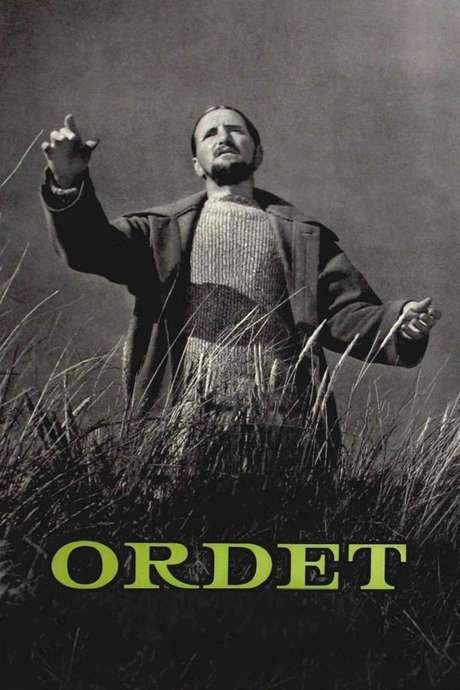
The three sons of devout Danish farmer Morten hold starkly different views of faith. Anders, the youngest, follows his father’s piety; Mikkel, the eldest, has abandoned belief; and Johannes, the middle child, is convinced he is Jesus Christ. When Mikkel’s wife Inger faces a dangerous childbirth, each family member’s convictions are challenged.


Does Ordet have end credit scenes?
No!
Ordet does not have end credit scenes. You can leave when the credits roll.
Where to Watch Ordet
See current US streaming, rental, and purchase options for Ordet (1955) via JustWatch.


Streaming availability powered by 
Meet the Full Cast and Actors of Ordet
Explore the complete cast of Ordet, including both lead and supporting actors. Learn who plays each character, discover their past roles and achievements, and find out what makes this ensemble cast stand out in the world of film and television.

Birgitte Federspiel
Inger Borgen (uncredited)

Cay Kristiansen
Anders Borgen (uncredited)
Preben Lerdorff Rye
Johannes Borgen (uncredited)
Ejner Federspiel
Peter Petersen (uncredited)
Ove Rud
Pastor (uncredited)
Henry Skjær
The Doctor (uncredited)
Kirsten Andreasen
(uncredited)
Emil Hass Christensen
Mikkel Borgen (uncredited)
Henrik Malberg
Morten Borgen (uncredited)
Gerda Nielsen
Anne Petersen (uncredited)
Sylvia Eckhausen
Kirstin Petersen (uncredited)
Ann Elisabeth Groth
Maren Borgen (uncredited)
Susanne Rud
Lilleinger Borgen (uncredited)
Edith Trane
Mette Maren (uncredited)
Hanne Agesen
Karen (uncredited)
External Links and Streaming Options
Discover where to watch Ordet online, including streaming platforms, rental options, and official sources. Compare reviews, ratings, and in-depth movie information across sites like IMDb, TMDb, Wikipedia or Letterboxd.




Take the Ultimate Ordet Movie Quiz
Challenge your knowledge of Ordet with this fun and interactive movie quiz. Test yourself on key plot points, iconic characters, hidden details, and memorable moments to see how well you really know the film.
Ordet (1955) Quiz: Test your knowledge of the characters, plot points, and themes of Carl Theodor Dreyer's 1955 film *Ordet*.
What is the name of the patriarch who leads the Borgen family?
Full Plot Summary and Ending Explained for Ordet
Read the complete plot summary of Ordet, including all major events, twists, and the full ending explained in detail. Explore key characters, themes, hidden meanings, and everything you need to understand the story from beginning to end.
In the autumn of 1925, a tight-knit farming family known as the Borgens anchors life in a quiet corner of rural Denmark. The family revolves around the devout patriarch, Morten Henrik Malberg Borgen, a widower who remains deeply dedicated to faith, his church, and the community that leans on him. He shares the household with his three sons: Mikkel Emil Hass Christensen Borgen, the eldest who carries a quiet disbelief in dogma; Johannes Preben Lerdorff Rye Borgen, who wanders the farm after a surge of spiritual conviction inspired by Søren Kierkegaard and who claims to be Jesus Christ; and Anders Cay Kristiansen Borgen, the youngest, who is consumed by love for a young woman from the village. The farmer’s domestic world is completed by Inger Birgitte Federspiel Borgen, Morten’s wife who embodies piety and carries a growing expectancy as she nears the birth of their third child.
Anders’ heart leans toward Anne Petersen, the daughter of Peter Petersen, the village tailor. The romance curtains are half-drawn as Anders asks his father’s blessing for the union, and the family sets about persuading Peter Ejner Federspiel to approve the match. Anne is a figure of hope, but her future hinges on the acceptance of the boy she loves by her own father, who insists on conditions that test the entire clan. The path to approval grows rocky as Peter demands that Morten and Anders convert to his orthodox church before he will consent to the engagement.
In the tense negotiation that follows, the family’s old certainties clash with a churchly divide. Peter’s hard line becomes a wedge that strains old loyalties, and the insistence on theological conformity accents the rift between faiths that runs through this household. Amid the mounting tension, Inger steps forward to advocate for the match, urging her husband to soften his stance for the sake of love and harmony. Morten, torn between family, faith, and communal duty, refuses at first, but a pivotal moment arrives when he learns that Peter himself has refused the betrothal. This discovery nudges Morten toward compromise; he and Anders set out to meet Peter to negotiate the terms of the betrothal.
A crucial turn of events occurs when the village doctor arrives as Inger goes into labor. The scene unfolds with sharp, human anxieties: the doctor does what he can to save the mother, while Peter, with a stern moral posture, expresses cynical hopes that Inger’s death might trigger Morten’s conversion. The disagreement erupts into a heated clash, and Morten lashes out in anger, storming away with Anders as they race back toward home. The baby’s life hangs in the balance as the doctor’s efforts to save both mother and child unfold, though the infant does not survive, and Inger’s life is saved only by the swing of a medical intervention.
The moment of tragedy gives way to a fragile reconciliation. As the family gathers for Inger’s wake, a painful but poignant moment of reconciliation unfolds: Peter recognizes his misjudgment and seeks to repair the rift, agreeing to permit Anne and Anders to marry. Then, as if summoned by a child’s faith, Johannes interrupts the wake, approaching Inger’s coffin and declaring that miracle is possible if the family simply prays with faith. The young girl of Inger’s daughter gently pulls Johannes into a moment of childlike belief, and she asks for her mother to be raised. Johannes exhales a note of faith and prays, and the room holds its breath as Inger’s body begins to move—breathing, twitching, and showing signs of life. The sight of what seems to be a resurrection fills Morten and Peter with renewed joy, their old arguments dissolving in a shared sense of wonder. In the quiet reconciliation that follows, Mikkel finally feels the weight of faith settle within him, and Inger is rejoined with the living world.
This tale centers on a family and a village wrestling with faith, doubt, and the power of belief to knit together broken bonds. It follows a man’s struggle to balance a stern orthodoxy with a love for his family, a son’s prophetic yet destabilizing sense of vocation, and a daughter’s future that depends on her father’s openness to change. Through sorrow, confrontation, and a fragile, hopeful miracle, the Borgen family discovers that faith can both divide and heal, and that sometimes the deepest miracles lie not in a supernatural reversal alone, but in the slow, stubborn work of choosing to believe in one another again.

Coming soon on iOS and Android
The Plot Explained Mobile App
From blockbusters to hidden gems — dive into movie stories anytime, anywhere. Save your favorites, discover plots faster, and never miss a twist again.
Sign up to be the first to know when we launch. Your email stays private — always.
Explore the mobile appWatch Trailers, Clips & Behind-the-Scenes for Ordet
Watch official trailers, exclusive clips, cast interviews, and behind-the-scenes footage from Ordet. Dive deeper into the making of the film, its standout moments, and key production insights.
Ordet Themes and Keywords
Discover the central themes, ideas, and keywords that define the movie’s story, tone, and message. Analyze the film’s deeper meanings, genre influences, and recurring concepts.
Ordet Other Names and Titles
Explore the various alternative titles, translations, and other names used for Ordet across different regions and languages. Understand how the film is marketed and recognized worldwide.
Similar Movies To Ordet You Should Know About
Browse a curated list of movies similar in genre, tone, characters, or story structure. Discover new titles like the one you're watching, perfect for fans of related plots, vibes, or cinematic styles.








Quick Links: Summary, Cast, Ratings, More

What's After the Movie?
Not sure whether to stay after the credits? Find out!
Check out our other apps:

SAT Sphere
Build confidence for the Digital SAT.

Mori Atlas
Discover wild places worth protecting.

Luntero
Search smarter for a home in Amsterdam.

Plot Explained
Unravel movie endings and hidden clues.

Pokechamp
Dive into Pokémon data and battle logic.

Driving Theory
Get ready for your European theory test.

Movie Dust
Plan your next cinema trip with ease.

Musemap
Find art and culture as you travel.

Selkobase
Compare credentials before committing.

Local Manual
Turn an unfamiliar country into practical next steps.

Lernavi
Compare school systems before your next move.

GymRoam
Find a workout stop wherever your plans take you.
Explore Our Movie Platform
New Movie Releases (2026)
Famous Movie Actors
Top Film Production Studios
Movie Plot Summaries & Endings
Major Movie Awards & Winners
Best Concert Films & Music Documentaries
Movie Collections and Curated Lists
© 2026 What's After the Movie. All rights reserved.
Privacy Policy