
Moving On (2023): Cast, Ratings, Box Office & Plot
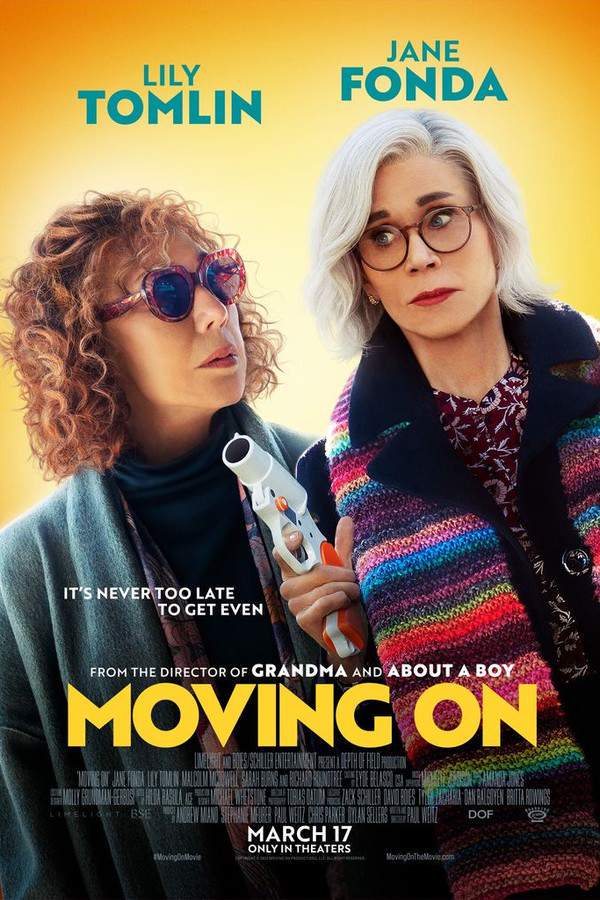
Moving On is a 2023 comedy directed by Paul Weitz, starring Jane Fonda as Claire, Lily Tomlin and Malcolm McDowell. It runs 1 hour 25 minutes and earned $2.1 million worldwide. Critics gave it 73% on Rotten Tomatoes and 60 on Metacritic, and IMDb users rate it 6.0/10.
- Released
- Runtime
- 1h 25m (85 min)
- Director
- Paul Weitz
- Genre
- Comedy
- Original language
-
 English
 - Studio
- Roadside Attractions
- After the credits
- No No extra scene
What Is Moving On About?
The premise of Moving On without spoilers. The whole story is in the plot summary further down.
Two lifelong friends, Jane Fonda and Lily Tomlin, find themselves embarking on a shared quest for revenge against a bothersome widower. As they pursue their mission, old tensions resurface, and unexpected connections are forged. Amidst the chaos, Fonda’s character unexpectedly reconnects with a former lover, while both women confront unresolved issues and attempt to heal old wounds while strengthening their friendship.
Moving On Themes & Keywords
· 35 tags- friend
- friendship
- widower
- revenge
- funeral
- hit by a car
- hospital
- reference to william shakespeare
- reference to scarface
- reference to dorothea lange
- reference to richard iii
- pembroke welsh corgi
+23 more Show fewer
- hospital visit
- eulogy
- cemetery
- california
- ohio
- gun store
- earrings
- old photograph
- ex husband ex wife relationship
- family dinner
- bacon
- flare gun
- threatening to kill someone
- carousel
- attempted murder
- heart attack
- car hitting pedestrian
- father daughter relationship
- parking garage
- written by director
- writer director producer
- killed by a car
- j. fonda and tomlin
Moving On Cast & Characters
Jane Fonda leads the cast as Claire, with Lily Tomlin as Evelyn and Malcolm McDowell as Howard. Directed by Paul Weitz; 11 actors are credited in all.
-
 Director Paul Weitz
-
 Jane Fonda as Claire
 -
 Lily Tomlin as Evelyn
 -
 Malcolm McDowell as Howard
 -
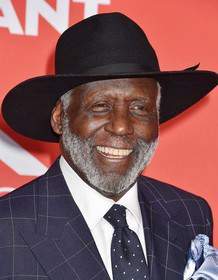 Richard Roundtree as Ralph
Also Starring in Moving On
· 7 more- Eddie Martinez James' Dad
- Nancy De Mayo Head Caterer
- Catherine Dent
- Carol Herman Mourner in Heels
- Jeremiah King Ralph's Older Grandkid
- Marcel Nahapetian James
- Sawyer Holt
Moving On Reviews & Ratings
Critics gave Moving On 73% on Rotten Tomatoes and 60 on Metacritic, and IMDb users rate it 6.0/10. Our Echo Score gives it 69/100, strongest in character & emotion (80) and weakest in sensory experience (60).
Moving On Echo Score Breakdown
Moving On delivers a modestly engaging experience that balances dark humor with moments of genuine pathos. Critics note competent direction by Paul Weitz, though tonal shifts sometimes falter, while the chemistry of Jane Fonda and Lily Tomlin consistently anchors the narrative. Audience reactions range from appreciation of the witty banter to disappointment in uneven pacing, resulting in a film that entertains without fully capitalizing on its premise. Overall, the movie offers pleasant, if uneven, viewing that may merit a second watch for fans of the leads.
Our own 0–100 rating, built from five aspects: art, character, story, the sensory experience and how well a film rewatches.
- Art & Craft 72
In terms of direction and visual execution, the film presents a competent but uneven craft. Reviewers acknowledge Paul Weitz's steady hand yet point to occasional tonal missteps that blunt the impact of scenes. Cinematography receives modest praise for its understated palette, though the darkness of night sequences can hinder clarity on smaller screens. Editing maintains a measured rhythm, but the overall aesthetic lacks a distinctive flair, leaving the art side solid but not striking.
- Character & Emotion 80
When it comes to character work, the duo of Fonda and Tomlin shines as the central strength. Critics and viewers alike commend their nuanced performances and the magnetic chemistry that sustains the film. Some voices note a dip in tenderness and occasional lack of depth, yet the majority find the portrayals authentic and emotionally resonant. Supporting roles, including Malcolm McDowell, add intrigue, reinforcing a character-driven core that largely succeeds despite minor gaps.
- Story & Flow 64
The story balances comedy and revenge, offering an original premise that sometimes struggles with pacing. Critics cite uneven tonal shifts and a plot that can feel meandering, while users echo concerns about slow momentum. Nonetheless, the narrative’s exploration of aging, trauma, and friendship provides moments of genuine engagement. The mix of dark humor with drama creates a mixed reception, positioning the storyline as moderately effective but hampered by inconsistent execution.
- Sensory Experience 60
Sensory elements receive a middling appraisal. The soundtrack complements the film’s mood without standing out, and sound design is serviceable. Visual styling is described as pleasant and occasionally “lovely,” yet the frequent low‑light scenes can diminish detail on modest displays. Overall, the auditory and visual experience supports the narrative adequately but does not elevate it, resulting in a competent but unremarkable sensory impression.
- Rewatch Factor 68
Rewatch potential appears modestly appealing, especially for fans of the lead actors. Reviewers highlight the film’s witty banter and occasional surprising poignancy as reasons to return. However, the uneven humor and pacing may limit repeat viewings for broader audiences. While some viewers label it a “guilty pleasure” worth revisiting, others note a lack of sustained laughs, placing the rewatch factor in a moderate, slightly positive range.
-
 IMDb
IMDb 6.0 /10
See on IMDb -
 Rotten Tomatoes
 73% Tomatometer
Popcornmeter 70%
See on Rotten Tomatoes -
 Metacritic
 60 Metascore
User score 4.7
See on Metacritic -
 TMDB
TMDB 85% User score
See on TMDB -
 Letterboxd
 3.1 /5
4 ratings
See on Letterboxd -
 Movie Insider
 3.3 /5
See on Movie Insider
Moving On Plot Summary
What happens in Moving On from start to finish, spoilers included, with a timeline of 11 key events. The opening is below; the full summary is a 4-minute read.
Spoilers ahead
Claire, Jane Fonda travels across the country to attend the funeral of her old college friend Joyce. Before the service, she bluntly informs Malcolm McDowell that she intends to kill him this weekend. The admission sets a tense, uneasy mood for the days to come, threading through loyalties, old wounds, and the unsettled business of decades past.
Full summary
The whole story of Moving On, scene by scene
Moving On Box Office
Moving On grossed $2.1 million worldwide.
Worldwide gross
$2.1M
- US & Canada
- $2.1M
Moving On Trailers & Videos
5 videos: 3 trailers, 1 teaser and 1 behind-the-scenes video.
- Trailer Official US Trailer [Subtitled]
- Trailer Official Trailer (English Dubbed)
- Teaser Teaser Trailer [ENG SUB]
- Behind the Scenes Making Of Featurette [ENG SUB]
How Well Do You Know Moving On?
10 questions about the story, each with a hint if you get stuck. Pick an answer to see whether you were right.
Question 1 of 10
- Question 1: not answered
- Question 2: not answered
- Question 3: not answered
- Question 4: not answered
- Question 5: not answered
- Question 6: not answered
- Question 7: not answered
- Question 8: not answered
- Question 9: not answered
- Question 10: not answered
What is the name of the character who attends Joyce's funeral and intends to kill her widower?
Moving On Also Known As
17 alternative titles, including “Passe à autre chose !” and “Volver a empezar”.
- Also known as
-
- Passe à autre chose !
- Volver a empezar
- להמשיך הלאה
- משיכות הלאה
- 무빙 온
- Seguindo em Frente
- 向前看
- 報仇永遠不嫌晚
- ממשיכות הלאה
- Двигаясь дальше
- Geçmişe Sünger
- المضي قدمًا
+5 more Show fewer
- Voltare pagina
- Gyvenimas tęsiasi
- แค้นฝังใจวัย(ไม่)รุ่น
- Haláli bosszú
- ムービング・オン 2人の殺人計画!?
Seen Moving On?
Movies Like Moving On
Films with a similar story, tone or audience, including Moving, Moving and Hello I Must Be Going.






Moving On FAQ: Cast, Box Office & Runtime
Runtime, release date, director, cast, box office, ratings and post-credit scenes of Moving On, each answered in a sentence.
How long is Moving On?
Moving On runs 1 hour 25 minutes (85 minutes).
When was Moving On released?
Moving On was released on March 17, 2023.
Who directed Moving On?
Moving On was directed by Paul Weitz.
More films by Paul Weitz Who is in the cast of Moving On?
Moving On stars Jane Fonda as Claire, Lily Tomlin as Evelyn and Malcolm McDowell as Howard, among 11 credited actors.
How much did Moving On make at the box office?
Moving On grossed $2.1 million worldwide.
How is Moving On rated?
Moving On has 6.0/10 on IMDb, 73% on Rotten Tomatoes, 60 on Metacritic and 85% on TMDB.
Does Moving On have a post-credit scene?
No. Moving On has no extra scene during or after the credits.
Coming soon to your phone
The Plot Explained Movie Summary App
From blockbusters to hidden gems: plot summaries, endings explained and timelines on your phone. Save your favorites and never miss a twist again.
Be the first to know when it launches. Your email stays private, always. Learn more about the app
