Mother Night 1996


The truth behind his uniform is far more disturbing: he was an American spy operating behind enemy lines in World War II, forced to masquerade as a Nazi propagandist. That false identity follows him after the war, and he is compelled to keep his true mission secret, leaving his future haunted by the deception.
Does Mother Night have end credit scenes?
No!
Mother Night does not have end credit scenes. You can leave when the credits roll.
Meet the Full Cast and Actors of Mother Night
Explore the complete cast of Mother Night, including both lead and supporting actors. Learn who plays each character, discover their past roles and achievements, and find out what makes this ensemble cast stand out in the world of film and television.

Kirsten Dunst
Young Resi Noth

John Goodman
Major Frank Wirtanen

David Strathairn
Bernard B. O'Hare

Zach Grenier
Joseph Goebbels

Alan Arkin
George Kraft

Nick Nolte
Howard Campbell

Henry Gibson
Adolf Eichmann (voice)
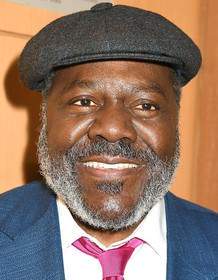
Frankie Faison
Robert Sterling Wilson

Keith Gordon
Sheryl Lee
Helga Noth / Resi Noth

Arye Gross
Dr. Abraham Epstein
Anna Berger
Epstein's Mother
Bernard Behrens
Reverend Dr. Lionel Jones
Vlasta Vrana
August Krapptauer
Tony Robinow
Prison Warden
Michael John Fedun
Young German Soldier (uncredited)
Richard Jutras
G-Man
Thomas Hauff
SS Officer
Bronwen Mantel
Campbell's Mother
Bill Corday
Campbell's Father
Kurt Vonnegut
Sad Man on Street
Joel Miller
Israeli Vice-Consul (T.V.)
Richard Zeman
Rudolph Hoess
Gerard Parkes
Father Patrick Keeley
Don Jordan
Cop
Michael P. Moran
Violent Man
Norman Rodway
Werner Noth
Michael McGill
Prison Official
Bill Haughland
T.V. Reporter
Louis Strauss
Old Jewish Man
Shimon Aviel
Guard Bernard Liebman
Brawley Nolte
Young Howard Campbell
Jeff Pufah
Young German Soldier
External Links and Streaming Options
Discover where to watch Mother Night online, including streaming platforms, rental options, and official sources. Compare reviews, ratings, and in-depth movie information across sites like IMDb, TMDb, Wikipedia or Rotten Tomatoes.








Take the Ultimate Mother Night Movie Quiz
Challenge your knowledge of Mother Night with this fun and interactive movie quiz. Test yourself on key plot points, iconic characters, hidden details, and memorable moments to see how well you really know the film.
Mother Night (1996) Quiz: Test your knowledge of the film Mother Night, its characters, plot twists, and themes.
Which actor portrays Howard W. Campbell, Jr. in the film?
Full Plot Summary and Ending Explained for Mother Night
Read the complete plot summary of Mother Night, including all major events, twists, and the full ending explained in detail. Explore key characters, themes, hidden meanings, and everything you need to understand the story from beginning to end.
Confined in an Israeli jail, Howard W. Campbell, Jr. [Nick Nolte] writes a memoir about his career in Nazi Germany, a tapestry of fame, fear, and moral ambiguity that spans years and continents. The story unfolds in a tense, morally gray landscape, where memory is both weapon and witness, and every choice bears a lasting cost.
During the prewar years, Campbell, an American playwright who produced German-language stage works, is approached by War Department operative Frank Wirtanen [John Goodman]. Wirtanen offers Campbell a covert role as a spy for the United States as the conflict looms, but his terms are stark: no reward, no recognition, only a quiet willingness to act when history calls. Campbell’s initial refusal is met with a pointed test—his decision will reveal itself not in grand declarations but in the posture he adopts once war begins. The moral math is murky, and Campbell hesitates, wary of embracing a role that could redefine his entire identity.
As Europe descends into war, Campbell inches into the inner machinery of Nazi Germany, climbing the ranks of Joseph Goebbels’ Propaganda Ministry. He becomes the “voice” of English-language broadcasts that propagandize Nazism and antisemitism for American listeners, a chilling parallel to the real-world reach of state-controlled media. What looks like artistry and manipulation on the surface is actually a hidden calculus: Campbell’s distinctive delivery—deliberate pauses, coughing fits, and carefully timed inflections—conceals a covert coding scheme. Unbeknownst to the Nazis, those idiosyncrasies transmit information to Allied intelligence, turning Campbell’s broadcasts into a subversive lifeline for the resistance. The tension between performative duty and clandestine duty becomes a central thread, as he must balance the performative ethics of a public persona with the private, life-saving truth he encodes beneath the surface.
The war’s human cost intrudes with brutal immediacy. Campbell’s wife, Helga, is reported dead on the Eastern Front, a blow that marks him deeply and reshapes his loyalties and longings. In early 1945, near Berlin, Campbell visits Helga’s family, a moment that crystallizes the personal losses hovering behind political grandstanding. Helga’s younger sister, Resi, discloses a forbidden love for Campbell, exposing him to a vulnerability few spies admit to themselves. The emotional clutter thickens the air, and the line between personal desire and national duty becomes harder to parse as the war edges toward its conclusion.
Yet fate has a harsher pattern in store. Campbell is captured when an American infantryman recognizes his voice, a reminder that truth has a stubborn, audible form. Before the execution can proceed, Wirtanen intervenes, arranging Campbell’s discreet release and a relocation to New York City. The United States, wary of revealing Campbell’s true role and the spycraft he embodies, keeps his history shrouded, arguing that the knowledge must remain secret for future conflicts. Campbell is left to grapple with the idea that his own truth could become a tool for a future war, potentially sacrificing his privacy and humanity for a larger strategic calculus.
In the shadowed quiet of New York, Campbell’s life becomes a lonely refuge of memory. For fifteen years he endures a precarious existence, sustained by recollections of Helga and a stubborn curiosity about his fate. The only person who suspects his real identity is Mrs. Epstein, a Holocaust survivor who lives in Campbell’s building; he tries to maintain a veneer of ignorance about German, deflecting her concerns with careful ambiguity. Campbell’s closest confidant is George Kraft, a patient, elderly painter who is, in a stunning coincidence, a Soviet intelligence asset. Their chess games become a metaphor for strategy and survival, a continuous negotiation of power, risk, and loyalty.
Through countless matches of chess and dialogue, Kraft presses Campbell to reveal his past, hoping to use that information to curry favor with his own handlers and maneuver Campbell toward Moscow. Kraft’s schemes become intertwined with Campbell’s fate when Kraft leaks Campbell’s whereabouts to a shadowy cadre of neo-Nazi sympathizers that has grown emboldened in New York. Into this volatile mix arrives a woman who seems to be Helga, a cruel mirror that forces Campbell to reassess what he has become. But the truth is more complicated still: the woman is actually Resi, who has assumed Helga’s identity to escape East Germany. The deception complicates the bonds Campbell thought he could trust and triggers a chain of dangerous moves that threaten everyone involved.
The neo-Nazi faction shelters Campbell, Kraft, and Resi in a Manhattan hideout, a temporary asylum that is as dangerous as it is nurturing. Wirtanen reappears with grave warnings and clarifications: Kraft’s true identity has been uncovered, and Resi’s ruse has placed Campbell in a precarious balance with the extremists who want to see him moved to Moscow. When Campbell confronts Kraft in the hideout, the confrontation exposes painful truths about manipulation, loyalty, and the price of truth-telling in a world that prizes power over humanity. Resi, overwhelmed by the exposure of her ruse, takes her own life, a moment that underscores the fragile human cost behind geopolitical games. The FBI arrives to raid the hideout, yet Wirtanen uses his influence to secure Campbell’s release—an unsettling reminder that espionage often folds back into moral ambiguity rather than delivering clean justice.
Emerging from the ordeal, Campbell wanders through a nameless footpath, his sense of purpose evaporated and his future uncertain. A voice of ordinary authority—an officer—orders him to move along, a trivial command that feels devastating in its finality. Campbell returns to his damaged apartment, where the wreckage of his double life confronts him with brutal clarity, and he resolves to surrender to the Israelis to stand trial for his layered, unsanctioned past.
The final movement of the film transports Campbell to Haifa, where he is housed in a cell beneath an unrepentant Adolf Eichmann [Henry Gibson], the infamous architect of genocide. The tension of the film ascends as a letter from Wirtanen arrives, providing corroborating evidence that Campbell was indeed a U.S. spy during the war. The closing surge of the story is a grim meditation on accountability and self-judgment: Campbell’s decision to take his own life is framed not as a vanquished indictment of humanity but as an act of personal reckoning. In his final, quiet act, he does not claim innocence, nor does he accept absolution; he chooses a solitary, interior form of justice—crimes against myself.
The film is anchored by a cast of figures whose loyalties and identities ripple through the narrative. The intertwined histories of Campbell’s public deception and private conscience reveal a man who navigates moral risk with a stubborn, persistent hope for truth—even when truth carries a heavy price. The atmosphere is dense with the weight of memory, guilt, and the paradox that intelligence operations—necessary for survival—often require individuals to live with secrets that swallow the honest parts of themselves. In the end, the story asks whether a life spent orchestrating propaganda, even for a noble aim, can ever be fully redeemed, and whether one can truly escape the consequences of choices that echo across decades and borders.
“crimes against myself.”

Coming soon on iOS and Android
The Plot Explained Mobile App
From blockbusters to hidden gems — dive into movie stories anytime, anywhere. Save your favorites, discover plots faster, and never miss a twist again.
Sign up to be the first to know when we launch. Your email stays private — always.
Explore the mobile appWatch Trailers, Clips & Behind-the-Scenes for Mother Night
Watch official trailers, exclusive clips, cast interviews, and behind-the-scenes footage from Mother Night. Dive deeper into the making of the film, its standout moments, and key production insights.
Cars Featured in Mother Night
Explore all cars featured in Mother Night, including their makes, models, scenes they appear in, and their significance to the plot. A must-read for car enthusiasts and movie buffs alike.
Mother Night Themes and Keywords
Discover the central themes, ideas, and keywords that define the movie’s story, tone, and message. Analyze the film’s deeper meanings, genre influences, and recurring concepts.
Mother Night Other Names and Titles
Explore the various alternative titles, translations, and other names used for Mother Night across different regions and languages. Understand how the film is marketed and recognized worldwide.
Similar Movies To Mother Night You Should Know About
Browse a curated list of movies similar in genre, tone, characters, or story structure. Discover new titles like the one you're watching, perfect for fans of related plots, vibes, or cinematic styles.





Quick Links: Summary, Cast, Ratings, More

What's After the Movie?
Not sure whether to stay after the credits? Find out!
Check out our other apps:

SAT Sphere
Build confidence for the Digital SAT.

Mori Atlas
Discover wild places worth protecting.

Luntero
Search smarter for a home in Amsterdam.

Plot Explained
Unravel movie endings and hidden clues.

Pokechamp
Dive into Pokémon data and battle logic.

Driving Theory
Get ready for your European theory test.

Movie Dust
Plan your next cinema trip with ease.

Musemap
Find art and culture as you travel.

Selkobase
Compare credentials before committing.

Local Manual
Turn an unfamiliar country into practical next steps.

Lernavi
Compare school systems before your next move.

GymRoam
Find a workout stop wherever your plans take you.
Explore Our Movie Platform
New Movie Releases (2026)
Famous Movie Actors
Top Film Production Studios
Movie Plot Summaries & Endings
Major Movie Awards & Winners
Best Concert Films & Music Documentaries
Movie Collections and Curated Lists
© 2026 What's After the Movie. All rights reserved.
Privacy Policy