
Mother Küsters Goes to Heaven (1975): Cast, Box Office & Plot

Mother Küsters Goes to Heaven is a 1975 drama directed by Rainer Werner Fassbinder, starring Brigitte Mira as Emma Küsters, Irm Hermann and Armin Meier. It runs 1 hour 48 minutes and earned $8,408 worldwide.
- Released
- Runtime
- 1h 48m (108 min)
- Director
- Rainer Werner Fassbinder
- Genre
- Drama
- Original language
-
 German
 - Studio
- Tango Film
- After the credits
- No No extra scene
What Is Mother Küsters Goes to Heaven About?
The premise of Mother Küsters Goes to Heaven without spoilers. The whole story is in the plot summary further down.
After a worker kills a superior and commits suicide, each of his family members attempts to forge a path forward in life.
Mother Küsters Goes to Heaven Cast & Characters
Brigitte Mira leads the cast as Emma Küsters, with Irm Hermann as Helene and Armin Meier as Ernst. Directed by Rainer Werner Fassbinder; 20 actors are credited in all.
-
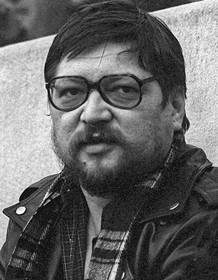 Director Rainer Werner Fassbinder
- Brigitte Mira as Emma Küsters
-
 Irm Hermann as Helene
 - Armin Meier as Ernst
- Karlheinz Böhm as Karl Tillmann
Also Starring in Mother Küsters Goes to Heaven
· 16 more- Margit Carstensen Frau Thälmann
- Ingrid Caven Corinna
- Gottfried John Jörg Niemeyer
- Eva Mattes Sekretärin (uncredited)
- Kurt Raab Barkeeper Gustav
- Peter Kern Nachtklubbesitzer
- Adrian Hoven Redacteur - in - chief Linke (uncredited)
- Lilo Pempeit Sekretärin
- Peter Chatel Photograph
- Volker Spengler Photograph
- Matthias Fuchs Horst Knab
- Vitus Zeplichal Reporter
- Y Sa Lo Terroristin
- Hannes Kaetner Security Man (uncredited)
- Gustav Holzapfel Herr Holzapfel
- Peter Bollag Photograph
Mother Küsters Goes to Heaven Plot Summary
What happens in Mother Küsters Goes to Heaven from start to finish, spoilers included, with a timeline of 12 key events. The opening is below; the full summary is a 3-minute read.
Spoilers ahead
Emma Küsters, a working-class woman in Frankfurt, leads a modest life at home with her son and daughter-in-law while she quietly pounds away at cottage-industry work assembling electric plugs. The stability of her day-to-day existence is shattered when she learns that her husband Hermann, a tire-factory worker, has killed his supervisor (or the supervisor’s son) and then taken his own life—an act that appears to be driven by the tremors of layoff announcements and the creeping threat of economic insecurity.
Full summary
The whole story of Mother Küsters Goes to Heaven, scene by scene
Mother Küsters Goes to Heaven Box Office
Mother Küsters Goes to Heaven grossed $8,408 worldwide. $8,144 came from the US and Canada and $251 (3%) from the rest of the world.
Worldwide gross
$8.4K
- US & Canada
- $8.1K
- International
- $251
How Well Do You Know Mother Küsters Goes to Heaven?
10 questions about the story, each with a hint if you get stuck. Pick an answer to see whether you were right.
Question 1 of 10
- Question 1: not answered
- Question 2: not answered
- Question 3: not answered
- Question 4: not answered
- Question 5: not answered
- Question 6: not answered
- Question 7: not answered
- Question 8: not answered
- Question 9: not answered
- Question 10: not answered
Who is the main female protagonist of the film?
Mother Küsters Goes to Heaven Also Known As
12 alternative titles, including “Mother Küsters’ Trip to Heaven” and “Maman Küsters s’en va au ciel”.
- Also known as
-
- Mother Küsters’ Trip to Heaven
- Maman Küsters s’en va au ciel
- Il viaggio in cielo di mamma Kusters
- Вознесение Матушки Кюстерс
- Подорож мати Кюстерс на небеса
- Мати Кюстерс потрапляє на небеса
- Maman Küsters s'en va au ciel
- El viaje a la felicidad de mamá Küster
- 卡斯特婆婆升天记
- Mamã Küster vai para o Céu
- 퀴스터스 부인의 천국 여행
- Matka Küsters idzie do nieba
Seen Mother Küsters Goes to Heaven?
Mother Küsters Goes to Heaven FAQ: Cast & Box Office
Runtime, release date, director, cast, box office, post-credit scenes and language of Mother Küsters Goes to Heaven, each answered in a sentence.
How long is Mother Küsters Goes to Heaven?
Mother Küsters Goes to Heaven runs 1 hour 48 minutes (108 minutes).
When was Mother Küsters Goes to Heaven released?
Mother Küsters Goes to Heaven was released on July 7, 1975.
Who directed Mother Küsters Goes to Heaven?
Mother Küsters Goes to Heaven was directed by Rainer Werner Fassbinder.
More films by Rainer Werner Fassbinder Who is in the cast of Mother Küsters Goes to Heaven?
Mother Küsters Goes to Heaven stars Brigitte Mira as Emma Küsters, Irm Hermann as Helene and Armin Meier as Ernst, among 20 credited actors.
How much did Mother Küsters Goes to Heaven make at the box office?
Mother Küsters Goes to Heaven grossed $8,408 worldwide ($8,144 domestic, $251 international).
Does Mother Küsters Goes to Heaven have a post-credit scene?
No. Mother Küsters Goes to Heaven has no extra scene during or after the credits.
What language is Mother Küsters Goes to Heaven in?
The original language of Mother Küsters Goes to Heaven is German.
Coming soon to your phone
The Plot Explained Movie Summary App
From blockbusters to hidden gems: plot summaries, endings explained and timelines on your phone. Save your favorites and never miss a twist again.
Be the first to know when it launches. Your email stays private, always. Learn more about the app
