Montana 1990

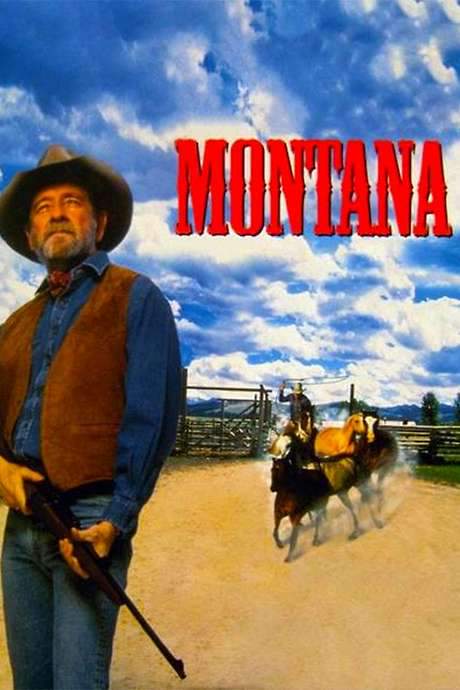
Long‑time Montana ranchers Hoyce and Bess Guthrie confront a life‑changing decision when an oil company offers to buy their land. Hoyce views the offer as a chance for a fresh start, while Bess is determined to keep the family ranch intact for future generations, creating a tense struggle between progress and heritage.


Does Montana have end credit scenes?
No!
Montana does not have end credit scenes. You can leave when the credits roll.
Meet the Full Cast and Actors of Montana
Explore the complete cast of Montana, including both lead and supporting actors. Learn who plays each character, discover their past roles and achievements, and find out what makes this ensemble cast stand out in the world of film and television.

Gena Rowlands
Bess Guthrie

Lea Thompson
Peg Guthrie

Michael Madsen
Pierce

Justin Deas
Clyde

Dean Norris
Foreman

Richard Crenna
Hoyce Guthrie

Elizabeth Berridge
Lavetta
Darren Dalton
Jimbo
Dana Andersen
Fran
Michael Rider
John Donley
Jim Bishop
Chesler
Kurt Bushnell
Attendant
Dean Folkvord
Auctioneer
A.J. Kallan
Policeman
Timothy James Sampson
Sarge
Frank Salsedo
Joe Hold His Gun
Tammy Lewis
Young Whore
External Links and Streaming Options
Discover where to watch Montana online, including streaming platforms, rental options, and official sources. Compare reviews, ratings, and in-depth movie information across sites like IMDb, TMDb, Wikipedia or Letterboxd.




Full Plot Summary and Ending Explained for Montana
Read the complete plot summary of Montana, including all major events, twists, and the full ending explained in detail. Explore key characters, themes, hidden meanings, and everything you need to understand the story from beginning to end.
Bess Guthrie, Gena Rowlands, and her family of cattle ranchers hold the line on a Montana ranch as the 1980s economic landscape shifts around them. The day-to-day work—branding, tending stock, long drives across open range—meets a sudden, high-stakes decision when a large coal company arrives with an offer to buy their land to open a strip mine. The prospect promises relief from mounting debts and a pathway to securing the future, but accepting it would reshape the landscape, threaten the family’s way of life, and redefine what it means to be a landholder in this region.
Peg Guthrie, Lea Thompson, stands at a crossroads as the younger generation wrestles with loyalty to kin and tradition while feeling the pull of change. The film follows not only the adults but also the younger voices in the community, including Lavetta, Elizabeth Berridge, as they navigate a new economic reality and what it could mean for their futures. The tension between staying true to the old ways and participating in a shifting economy sits at the heart of the story.
Pierce, Michael Madsen, arrives as a persuasive and divisive figure tied to the development push, and his interactions with the Guthries ignite a broader debate about progress, power, and the costs of modernization. The town’s mood is further shaped by Foreman, Dean Norris, whose authority mirrors a community torn between caution and opportunity, and by Hoyce Guthrie, Richard Crenna, whose stake in the land echoes the older generation’s rugged spirit and deep ties to the soil.
Willie, Scott Coffey, and Jimbo, Darren Dalton, bring their own perspectives to the conflict, illustrating a spectrum of views within a town that is both intimate and diverse. The landscape itself becomes a character—home to memories and a symbol of a way of life now confronted with economic gravity. The narrative fills in the texture with townsfolk, lawmen, and workers who populate the story with detail, even as the central question remains: what should happen to the land when development meets tradition?
The movie is, at its core, about opposition to mining in Montana. It frames a struggle over who gets to decide the fate of the landscape—the ranching families who have cared for it for generations, the investors who see opportunity in its mineral wealth, and the everyday people who stand in the middle, trying to hold onto a sense of place while facing rapid change. This is not a simple battle of pro- or anti-development; it is a nuanced examination of values, community, and the price of progress.
Behind the scenes, the project carries its own long arc. Larry McMurtry has noted that the screenplay took about eighteen years to reach the screen, and by the time it finally did, he was no longer involved. He described how the film’s realization happened in part because Ted Turner acquired a large Montana ranch for tax purposes, a reminder of how economics can intersect with art. The piece began as a virtuous project, a notion that lingered even as the journey to completion proved complex and imperfect, reflecting the practical realities of turning a bold vision into a finished film.
Scholars like Ryan Driskell Tate have observed that the screenplay experiments with themes central to McMurtry’s later work: the clash between romantic and realistic frontiers, and the tension between white men raised on cowboy myths and a newer class of tycoons who upend the old order. Through that lens, the story becomes more than a local dispute over mining; it becomes a meditation on how American legends of land, independence, and sovereignty intersect with modern economic forces, influencing not only the Guthrie family but the cultural memory of an entire region.
In the end, the drama presents a thoughtful portrait of a community at a critical juncture. The Guthries’ choices illuminate the delicate balance between preserving a cherished way of life and embracing a future that promises opportunity but risks erasing the landscape that sustains them. The film invites viewers to reflect on the costs and rewards of progress, the meaning of belonging, and the enduring pull of the land, all grounded in human stories of resilience, stubbornness, and the stubborn hope that the right path might still be found amid changing winds.

Coming soon on iOS and Android
The Plot Explained Mobile App
From blockbusters to hidden gems — dive into movie stories anytime, anywhere. Save your favorites, discover plots faster, and never miss a twist again.
Sign up to be the first to know when we launch. Your email stays private — always.
Explore the mobile appDiscover Film Music Concerts Near You – Live Orchestras Performing Iconic Movie Soundtracks
Immerse yourself in the magic of cinema with live orchestral performances of your favorite film scores. From sweeping Hollywood blockbusters and animated classics to epic fantasy soundtracks, our curated listings connect you to upcoming film music events worldwide.
Explore concert film screenings paired with full orchestra concerts, read detailed event information, and secure your tickets for unforgettable evenings celebrating legendary composers like John Williams, Hans Zimmer, and more.


Montana Other Names and Titles
Explore the various alternative titles, translations, and other names used for Montana across different regions and languages. Understand how the film is marketed and recognized worldwide.
Quick Links: Summary, Cast, Ratings, More

What's After the Movie?
Not sure whether to stay after the credits? Find out!
Check out our other apps:

SAT Sphere
Build confidence for the Digital SAT.

Mori Atlas
Discover wild places worth protecting.

Luntero
Search smarter for a home in Amsterdam.

Plot Explained
Unravel movie endings and hidden clues.

Pokechamp
Dive into Pokémon data and battle logic.

Driving Theory
Get ready for your European theory test.

Movie Dust
Plan your next cinema trip with ease.

Musemap
Find art and culture as you travel.

Selkobase
Compare credentials before committing.

Local Manual
Turn an unfamiliar country into practical next steps.

Lernavi
Compare school systems before your next move.

GymRoam
Find a workout stop wherever your plans take you.
Explore Our Movie Platform
New Movie Releases (2026)
Famous Movie Actors
Top Film Production Studios
Movie Plot Summaries & Endings
Major Movie Awards & Winners
Best Concert Films & Music Documentaries
Movie Collections and Curated Lists
© 2026 What's After the Movie. All rights reserved.
Privacy Policy