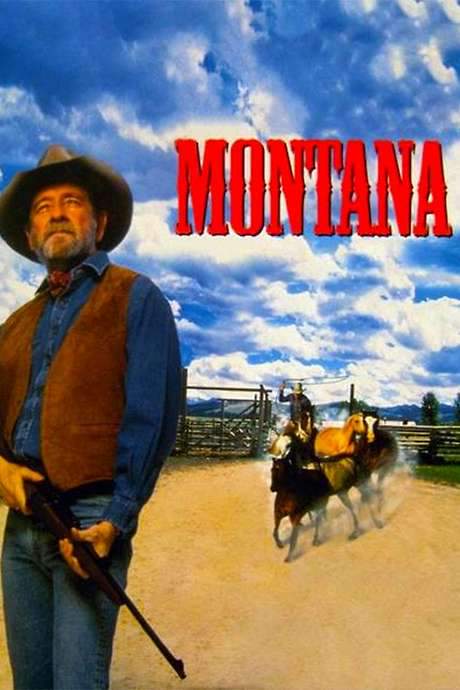



Montana Plot Summary
Read the complete plot summary and ending explained for Montana (1990). From turning points to emotional moments, uncover what really happened and why it matters.
Bess Guthrie, Gena Rowlands, and her family of cattle ranchers hold the line on a Montana ranch as the 1980s economic landscape shifts around them. The day-to-day work—branding, tending stock, long drives across open range—meets a sudden, high-stakes decision when a large coal company arrives with an offer to buy their land to open a strip mine. The prospect promises relief from mounting debts and a pathway to securing the future, but accepting it would reshape the landscape, threaten the family’s way of life, and redefine what it means to be a landholder in this region.
Peg Guthrie, Lea Thompson, stands at a crossroads as the younger generation wrestles with loyalty to kin and tradition while feeling the pull of change. The film follows not only the adults but also the younger voices in the community, including Lavetta, Elizabeth Berridge, as they navigate a new economic reality and what it could mean for their futures. The tension between staying true to the old ways and participating in a shifting economy sits at the heart of the story.
Pierce, Michael Madsen, arrives as a persuasive and divisive figure tied to the development push, and his interactions with the Guthries ignite a broader debate about progress, power, and the costs of modernization. The town’s mood is further shaped by Foreman, Dean Norris, whose authority mirrors a community torn between caution and opportunity, and by Hoyce Guthrie, Richard Crenna, whose stake in the land echoes the older generation’s rugged spirit and deep ties to the soil.
Willie, Scott Coffey, and Jimbo, Darren Dalton, bring their own perspectives to the conflict, illustrating a spectrum of views within a town that is both intimate and diverse. The landscape itself becomes a character—home to memories and a symbol of a way of life now confronted with economic gravity. The narrative fills in the texture with townsfolk, lawmen, and workers who populate the story with detail, even as the central question remains: what should happen to the land when development meets tradition?
The movie is, at its core, about opposition to mining in Montana. It frames a struggle over who gets to decide the fate of the landscape—the ranching families who have cared for it for generations, the investors who see opportunity in its mineral wealth, and the everyday people who stand in the middle, trying to hold onto a sense of place while facing rapid change. This is not a simple battle of pro- or anti-development; it is a nuanced examination of values, community, and the price of progress.
Behind the scenes, the project carries its own long arc. Larry McMurtry has noted that the screenplay took about eighteen years to reach the screen, and by the time it finally did, he was no longer involved. He described how the film’s realization happened in part because Ted Turner acquired a large Montana ranch for tax purposes, a reminder of how economics can intersect with art. The piece began as a virtuous project, a notion that lingered even as the journey to completion proved complex and imperfect, reflecting the practical realities of turning a bold vision into a finished film.
Scholars like Ryan Driskell Tate have observed that the screenplay experiments with themes central to McMurtry’s later work: the clash between romantic and realistic frontiers, and the tension between white men raised on cowboy myths and a newer class of tycoons who upend the old order. Through that lens, the story becomes more than a local dispute over mining; it becomes a meditation on how American legends of land, independence, and sovereignty intersect with modern economic forces, influencing not only the Guthrie family but the cultural memory of an entire region.
In the end, the drama presents a thoughtful portrait of a community at a critical juncture. The Guthries’ choices illuminate the delicate balance between preserving a cherished way of life and embracing a future that promises opportunity but risks erasing the landscape that sustains them. The film invites viewers to reflect on the costs and rewards of progress, the meaning of belonging, and the enduring pull of the land, all grounded in human stories of resilience, stubbornness, and the stubborn hope that the right path might still be found amid changing winds.
Montana Timeline
Follow the complete movie timeline of Montana (1990) with every major event in chronological order. Great for understanding complex plots and story progression.
Guthrie ranch struggles in the 1980s
The Guthrie family, cattle ranchers in Montana, struggle to keep their land afloat amid mounting debt and lean markets in the 1980s. Financial pressure tests loyalties and threatens the future of the ranch. Their identity is deeply tied to the land they work day after day.
Coal company offers to buy the land
A large coal corporation approaches the Guthries with a lucrative offer to purchase their land for a strip mine. The prospect promises immediate financial relief but raises fears about environmental damage and the loss of a traditional way of life. The offer becomes a practical test of the family's values.
First family council over the offer
The family gathers to weigh the proposal, balancing potential profits against long-term costs to land, water, and heritage. Generational divides surface as different members push for opposing futures. The ranch’s fate hinges on what they decide together.
Community concerns surface
Neighbors and local workers voice mixed opinions about mining, acknowledging possible jobs while warning about environmental disruption. Public support for development sits alongside a growing fear of irreversible landscape change. The town’s stance becomes a gauge for the region’s future.
Environmental concerns rise
Worries about strip mining’s impact on water, soil, and wildlife near the Guthrie land come to the fore. Local activists defend the valley’s ecological integrity against rapid industrialization. The film juxtaposes frontier romance with real environmental risk.
Company pressure and incentives
The coal company intensifies its campaign, offering incentives and pressuring for a quick decision. Some family members feel compelled to sell to secure cash, while others resist to protect long-term interests. Deadlines tighten the emotional and financial squeeze.
Intergenerational conflict within the Guthries
Older generations cling to a legacy built on ranching, while younger members push for modern solutions or alternate futures. The dispute uncovers questions about identity, progress, and what the land should become. The family becomes a microcosm of the broader frontier debate.
Public debate expands to policy arenas
The dispute spills into public forums and local media, highlighting how development policies could reshape the region. Citizens discuss jobs, taxes, and safeguards, while authorities consider regulatory responses. The outcome could influence mining rules and land-use decisions.
A pivotal decision nears
With pressure mounting, the Guthries face a decisive choice about selling the land or defending it. The decision carries consequences for family cohesion, community trust, and the environment. The moment tests character and resolve.
Outcome reshapes the community
The land dispute’s result reverberates through the town, altering social and economic dynamics. Some residents gain jobs and development, while others lose a sense of place and heritage. The region’s future remains contested, reflecting enduring frontier tensions.
Frontier myth vs. capital
The film foregrounds a clash between romantic frontier myths and the new class of tycoons who upend traditional life. The Guthrie narrative becomes a lens on power, money, and culture colliding with land and livelihood. The tension asks whether development can honor both dreams and duties.
Legacy and reflection
The aftermath contemplates what the dispute means for future generations and Montana’s identity as a place of both cattle country and resource development. The film suggests that tradition and progress are not easily reconciled. Characters carry forward the consequences of difficult choices.
Unresolved tensions and final note
The closing moments leave some tensions unresolved, underscoring the ongoing conflict between frontiers and profits. The Guthries’ choices illuminate complexities of morality in a changing landscape. Viewers are left to reflect on how communities navigate change without easy answers.
Montana Characters
Explore all characters from Montana (1990). Get detailed profiles with their roles, arcs, and key relationships explained.
Bess Guthrie (Gena Rowlands)
Matriarch of the Guthrie family, Bess embodies resilience and stubborn pride in the ranching way of life. She faces mounting financial strain as pressure to sell grows and questions how the land should be used for future generations. Her steady presence anchors the family as it grapples with change and external demands.
Hoyce Guthrie (Richard Crenna)
The patriarch who tries to balance tradition with practicality. Hoyce weighs the ranch’s survival against the lure of a lucrative deal, navigating the moral and logistical challenges the family faces amidst corporate pressure. He represents a pragmatic strand of frontier spirit in a changing economy.
Peg Guthrie (Lea Thompson)
A member of the Guthrie family who serves as a voice of caution and care. Peg worries about the community’s cohesion and the long-term impact on land and legacy, acting as a mediator between generations. She embodies the tension between preserving heritage and embracing possible new opportunities.
Willie Guthrie (Scott Coffey)
The younger Guthrie who illustrates the generation gap. Willie wrestles with loyalty to family and the desire for a future that may diverge from traditional ranch life. His perspective highlights how the conflict affects the next generation.
Foreman (Dean Norris)
A tough, practical figure representing the industrial side of the conflict. The Foreman oversees operations and interactions with the community, embodying the pressures of modernization and corporate priorities. His presence heightens the tension between work interests and local life.
Lavetta (Elizabeth Berridge)
A member of the town and family network who witnesses the upheaval firsthand. Lavetta reflects the emotional and social costs of the mining dispute on neighbors and kin, weighing loyalties and moral questions in a changing landscape.
Pierce (Michael Madsen)
A relative or close community member drawn into the mining conflict. Pierce represents the choices locals face when offered economic relief that clashes with long-standing commitments to land and family.
Jimbo (Darren Dalton)
A younger member of the community whose presence underscores the broader impact of the dispute on social life. Jimbo’s involvement highlights local drama and the ripple effects of the mining controversy on friendships and youth.
Montana Settings
Learn where and when Montana (1990) takes place. Explore the film’s settings, era, and how they shape the narrative.
Time period
1980s
Set in the 1980s, the film reflects a period of economic shifts in rural America, where energy development and corporate deals reshape communities. The promise of opportunity clashes with the risk of losing land, heritage, and self-reliance. The era's mix of optimism and anxiety colors every choice the family makes.
Location
Montana
Montana's wide-open landscapes form the backdrop for a family trying to hold onto a way of life tied to cattle and rain-soaked ranges. The Guthrie ranch sits at the center of a growing controversy as a coal company proposes a strip mine that could alter the region forever. The setting is rural and rugged, defined by independence, community ties, and the pressure of outside development.
Montana Themes
Discover the main themes in Montana (1990). Analyze the deeper meanings, emotional layers, and social commentary behind the film.
🏔️
Frontier vs Modernity
The film contrasts the myth of the rugged frontier with the encroachment of industrial capital. The Guthries' traditional cattle ranching is tested by plans for strip mining, forcing questions about what the land means beyond profit. It asks how the frontier story holds up when land is bought and landscapes are transformed.
💰
Wealth and Power
Money and power drive the conflict, as the coal company offers financial relief at the cost of the town's identity. The film shows how wealth can press a community toward drastic decisions, testing loyalties and long-standing bonds. It highlights the uneasy balance between opportunity and sacrifice in a region dependent on land and labor.
⚖️
Community and Justice
Neighbors and kin become divided as development proposals spark debates about property, jobs, and environmental impact. The story examines who gets to shape the future of a place and whose voices are heard. It suggests that true justice emerges not from profit alone, but from the community's ability to stand together.

Coming soon on iOS and Android
The Plot Explained Mobile App
From blockbusters to hidden gems — dive into movie stories anytime, anywhere. Save your favorites, discover plots faster, and never miss a twist again.
Sign up to be the first to know when we launch. Your email stays private — always.
Explore the mobile appMontana Spoiler-Free Summary
Discover the spoiler-free summary of Montana (1990). Get a concise overview without any spoilers.
In the wide‑open expanse of 1980s Montana, the landscape is as rugged as the livelihoods it supports. Generations of cattle ranchers have carved a quiet rhythm into the rolling plains, where the wind carries the low‑hum of distant machinery and the distant echo of market tables. The film paints this world in muted, sun‑baked tones, letting the vast sky and weathered fences speak louder than any dialogue, while the subtle creak of a barn door hints at the fragile balance between tradition and survival.
Hoyce Guthrie, a weathered yet hopeful patriarch, bears the weight of his family’s legacy with a quiet resolve. He moves through the ranch with the measured steps of someone who has learned to read the land as one reads a trusted book, yet his eyes occasionally wander toward horizons that promise something different. Beside him, Bess Guthrie embodies the stubborn love of place that has been handed down through countless seasons; her hands are as steady as the fence posts she tends, her voice carrying the reverberations of stories told under starlit skies, insisting that the earth beneath their boots is more than a commodity—it is a lineage.
When a large coal company extends an offer to purchase the property for a strip mine, the proposal becomes a palpable pressure point, pressing the values of progress against the deeply rooted sense of stewardship. The negotiation is less a transaction than a conversation between two eras, each framed by its own myths: the romantic frontier of cowboys and the emerging empire of corporate tycoons. The tone remains contemplative, allowing the audience to feel the rustle of grass and the distant rumble of machinery without revealing which path the characters will ultimately tread.
The surrounding community, a mosaic of neighbors, workers, and distant investors, drifts through this tension like clouds across the Montana sky—present yet elusive. Their quiet presence underscores the broader questions of identity, belonging, and the cost of change, leaving the viewer poised on the edge of an unseen decision while the landscape itself holds its breath.
Featured on this page

What's After the Movie?
Not sure whether to stay after the credits? Find out!
Check out our other apps:

SAT Sphere
Build confidence for the Digital SAT.

Mori Atlas
Discover wild places worth protecting.

Luntero
Search smarter for a home in Amsterdam.

Plot Explained
Unravel movie endings and hidden clues.

Pokechamp
Dive into Pokémon data and battle logic.

Driving Theory
Get ready for your European theory test.

Movie Dust
Plan your next cinema trip with ease.

Musemap
Find art and culture as you travel.

Selkobase
Compare credentials before committing.

Local Manual
Turn an unfamiliar country into practical next steps.

Lernavi
Compare school systems before your next move.

GymRoam
Find a workout stop wherever your plans take you.
Explore Our Movie Platform
New Movie Releases (2026)
Famous Movie Actors
Top Film Production Studios
Movie Plot Summaries & Endings
Major Movie Awards & Winners
Best Concert Films & Music Documentaries
Movie Collections and Curated Lists
© 2026 What's After the Movie. All rights reserved.
Privacy Policy