Loveless 2017

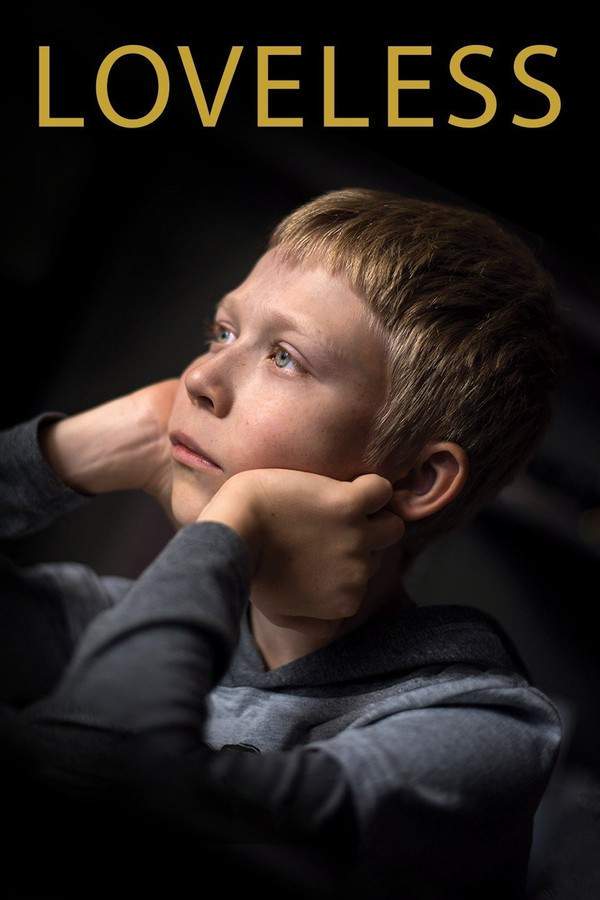
A couple's acrimonious divorce deeply affects their 12-year-old son, Alyosha, who finds himself caught in the crossfire of their escalating conflict. As Zhenya and Boris struggle to move on with new relationships, Alyosha grapples with feelings of abandonment and a longing for the family he once knew. The drama explores the devastating consequences of parental separation and the emotional toll it takes on a child.

Does Loveless have end credit scenes?
No!
Loveless does not have end credit scenes. You can leave when the credits roll.
Where to Watch Loveless
See current US streaming, rental, and purchase options for Loveless (2017) via JustWatch.






Meet the Full Cast and Actors of Loveless
Explore the complete cast of Loveless, including both lead and supporting actors. Learn who plays each character, discover their past roles and achievements, and find out what makes this ensemble cast stand out in the world of film and television.

Maxim Stoianov

Polina Aug
Aleksey Fateev
Koordinator
Aleksey Rozin
Boris
Anastasiya Stezhko
Andris Keiss
Anton
Anna Gulyarenko
Mat Mashi
Artyom Zhigulin
Kuznetsov
Daria Pisareva
Evgeniya Dmitrieva
Stilist
Marina Vasileva
Masha
Marina Vasilyeva
Maryana Spivak
Zhenya
Matvey Novikov
Alyosha
Natalya Potapova
Mat Zheni
Sergei Borisov
Varvara Shmykova
Lena
Vladimir Vdovichenkov
Yanina Hope
External Links and Streaming Options
Discover where to watch Loveless online, including streaming platforms, rental options, and official sources. Compare reviews, ratings, and in-depth movie information across sites like IMDb, TMDb, Wikipedia or Rotten Tomatoes.









Ratings and Reviews for Loveless
See how Loveless is rated across major platforms like IMDb, Metacritic, and TMDb. Compare audience scores and critic reviews to understand where Loveless stands among top-rated movies in its genre.

The Movie Echo Score
Loveless distinguishes itself through its purposeful visual and emotional depth but is tempered by its deliberate pacing. Critics widely commend the film’s tragic, hopeless mood and masterful cinematography, while viewers note the slow build-up and extended lingering shots may test patience. The narrative unfolds with measured intensity, inviting reflection on familial dysfunction and moral decay. Although its heavy tone and lengthy runtime limit universal appeal, it delivers a potent, haunting experience that rewards attentive viewing.
The Movie Echo Score Breakdown for Loveless

Art & Craft
In terms of art and craft, Loveless excels in its cinematography and visual composition. Reviewers consistently highlight Mikhail Krichman’s unerring camera work and Zvyagintsev’s exacting shot design, crafting a tragic, moody atmosphere. At times, the extended, lingering takes slow momentum and test audience patience. Overall, the film’s artful framing and controlled visual rhythm reinforce its emotional resonance and thematic depth.

Character & Emotion
When it comes to character and emotion, Loveless offers compelling, nuanced performances that capture familial strain. Critics affirm the three leads deliver subtly wrenching work reminiscent of psychological dramas, and viewers praise the depth of neglect and hostility depicted. Some feel secondary figures verge on caricature, but the central portrayals sustain emotional weight. Ultimately, the acting grounds the film’s bleak narrative with genuine human tension.

Story & Flow
In terms of story and flow, Loveless unfolds with measured deliberation that emphasizes thematic depth over urgency. Critics note the first hour advances slowly, building tone through lingering scenes, and some viewers report the pacing can test engagement. The mystery of the missing child and moral fable structure maintain interest despite occasional narrative lulls. Overall, the plot demonstrates coherent progression but demands patience from the audience.

Sensory Experience
When evaluating the sensory experience, Loveless presents a cohesive visual style and restrained sound design that enhance its bleak atmosphere. Critics praise the understated color palette and haunting soundscape, while viewers note the dim lighting and minimal score amplify emotional unease. Though not ostentatious, the film’s audio‐visual cohesion deepens immersion in its tragic world. In sum, the sensory elements work together to reinforce the narrative’s somber tone.

Rewatch Factor
In terms of rewatch factor, Loveless leaves a strong thematic imprint but offers limited comfort for repeat viewing. Viewers and critics acknowledge the film’s lingering questions and moral complexity invite reflection, yet its relentless bleakness and slow pace deter casual revisits. The emotional weight and heavy atmosphere may constrain accessibility on subsequent viewings. Overall, the film achieves lasting resonance but is best suited for deliberate, rather than frequent, rewatching.

86
Metascore
8.0
User Score


94%
TOMATOMETER

84%
User Score

7.6 /10
IMDb Rating

73
%
User Score

3.9
From 195 fan ratings

3.00/5
From 6 fan ratings
Take the Ultimate Loveless Movie Quiz
Challenge your knowledge of Loveless with this fun and interactive movie quiz. Test yourself on key plot points, iconic characters, hidden details, and memorable moments to see how well you really know the film.
Loveless Quiz: Test your knowledge on the poignant themes and events of the film 'Loveless.'
What is the main theme of 'Loveless'?
Awards & Nominations for Loveless
Discover all the awards and nominations received by Loveless, from Oscars to film festival honors. Learn how Loveless and its cast and crew have been recognized by critics and the industry alike.
Full Plot Summary and Ending Explained for Loveless
Read the complete plot summary of Loveless, including all major events, twists, and the full ending explained in detail. Explore key characters, themes, hidden meanings, and everything you need to understand the story from beginning to end.
Whether it serves as an allegory for contemporary Russia or not, Loveless, directed by Andrei Zvyagintsev (“Leviathan”), powerfully delves into the increasingly hollow nature of human connections. This poignant drama chronicles the turmoil of a couple on the verge of divorce, whose emotional neglect of their son leads to heartbreaking outcomes. While the film is often labeled as “bleak,” it resonates more with a sense of sorrow and regret, reflecting how many individuals have tragically lost their capacity for compassion and empathy. Accompanied by the evocative piano score of Evgeny Galperin, the film opens with cinematographer Mikhail Krichman capturing the serene yet cold beauty of a Russian winter.
The narrative begins in front of a stark stone edifice reminiscent of a Siberian prison—void of sound or movement. Suddenly, a door flings open, and children pour out of school. Despite some laughter, the atmosphere is far from joyful. 12-year-old Aloysha, portrayed by Matvey Novikov, retrieves his way home through a desolate forest, only to be met by an absence of warmth. His parents are in the final throes of a disintegrating marriage; his mother, beauty-salon owner Zhenya played by Maryana Spivak, and his father Boris, depicted by Aleksey Rozin, a management employee, are consumed by their pursuit for status, wealth, and freedom in new relationships. Boris finds solace in the arms of the pregnant Masha, performed by Marina Vasilyeva, while Zhenya becomes entwined with the affluent businessman Anton, played by Andris Keiss.
As the couple prepares for their divorce and the sale of their apartment, custody of Aloysha remains unresolved. It is painfully clear that he is an unwanted child—born of an unplanned pregnancy and a loveless marriage. Like two relentless machines, Boris and Zhenya continue their monotonous cycle of blame. Aloysha crouches behind the bathroom door, filling with fear and isolation, absorbing their bitterness. This heart-wrenching imagery echoes the despair that permeates the human experience.
Set against the backdrop of 2012, discussions on the radio revolve around the anticipated apocalypse due to the Mayan calendar, alongside harrowing reports from the war-torn Ukraine. Amid this atmosphere of barely-contained anxiety, Boris confides in a co-worker his fears of job loss tied to his fundamentalist Christian boss discovering his divorce. However, that worry fades to the background when Zhenya reveals that Aloysha has been missing from school for two days. Rather than recalibrating their priorities to support each other, the estranged couple’s animosity only escalates.
The police, offering little hope, reassure the parents that it’s common for missing children to be with friends or out on adventures. Unsatisfied with this complacency, they turn to a volunteer search group that posts fliers and speaks to neighbors. An interview with Aloysha’s lone friend guides them to an abandoned apartment deep within the woods. In a scene shrouded in darkness, where desperation hangs heavily, searchers clad in bright orange jackets comb through the dilapidated building, but Aloysha remains elusive.
When a boy resembling Aloysha is found at a local hospital, the joy is short-lived, as the realization sets in that it’s not him, leading to more anguish during a subsequent visit to the morgue. In a moment of risk, the estranged couple visits Zhenya’s mother; however, instead of reconciliation, the encounter ignites a passionate exchange of hatred. As the film unfolds, Zvyagintsev tantalizes the audience with glimpses of an enigmatic man wandering into the forest, approaching a call girl in a fancy restaurant, and a teacher erasing a blackboard after class.
Yet, these enigmatic scenes offer no resolution to Aloysha’s absence. Loveless champions an unsettling examination of the darker facets of human nature, challenging our most deeply-held convictions about parent-child relationships. Anton profoundly reminds Zhenya that “no one can survive a life without love.” In this haunting narrative, Loveless serves as a grim reminder of the consequences of bringing an unwanted child into the world, illustrating that the fabric of humanity cannot sustain itself without recognizing the sanctity of love. The film concludes on a disheartening note, with Aloysha still missing, leaving the audience in contemplation.

Coming soon on iOS and Android
The Plot Explained Mobile App
From blockbusters to hidden gems — dive into movie stories anytime, anywhere. Save your favorites, discover plots faster, and never miss a twist again.
Sign up to be the first to know when we launch. Your email stays private — always.
Explore the mobile appWatch Trailers, Clips & Behind-the-Scenes for Loveless
Watch official trailers, exclusive clips, cast interviews, and behind-the-scenes footage from Loveless. Dive deeper into the making of the film, its standout moments, and key production insights.
Loveless Themes and Keywords
Discover the central themes, ideas, and keywords that define the movie’s story, tone, and message. Analyze the film’s deeper meanings, genre influences, and recurring concepts.
Loveless Other Names and Titles
Explore the various alternative titles, translations, and other names used for Loveless across different regions and languages. Understand how the film is marketed and recognized worldwide.
Similar Movies To Loveless You Should Know About
Browse a curated list of movies similar in genre, tone, characters, or story structure. Discover new titles like the one you're watching, perfect for fans of related plots, vibes, or cinematic styles.










Quick Links: Summary, Cast, Ratings, More

What's After the Movie?
Not sure whether to stay after the credits? Find out!
Check out our other apps:

SAT Sphere
Build confidence for the Digital SAT.

Mori Atlas
Discover wild places worth protecting.

Luntero
Search smarter for a home in Amsterdam.

Plot Explained
Unravel movie endings and hidden clues.

Pokechamp
Dive into Pokémon data and battle logic.

Driving Theory
Get ready for your European theory test.

Movie Dust
Plan your next cinema trip with ease.

Musemap
Find art and culture as you travel.

Selkobase
Compare credentials before committing.

Local Manual
Turn an unfamiliar country into practical next steps.

Lernavi
Compare school systems before your next move.

GymRoam
Find a workout stop wherever your plans take you.
Explore Our Movie Platform
New Movie Releases (2026)
Famous Movie Actors
Top Film Production Studios
Movie Plot Summaries & Endings
Major Movie Awards & Winners
Best Concert Films & Music Documentaries
Movie Collections and Curated Lists
© 2026 What's After the Movie. All rights reserved.
Privacy Policy