Kaiyoppu 2007

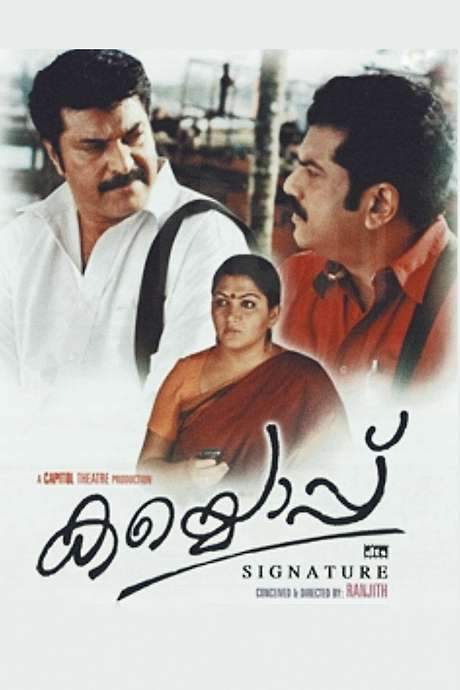
A amateur writer who seems to have nothing to live for, finds himself as the only hope of three people.

Does Kaiyoppu have end credit scenes?
No!
Kaiyoppu does not have end credit scenes. You can leave when the credits roll.
Meet the Full Cast and Actors of Kaiyoppu
Explore the complete cast of Kaiyoppu, including both lead and supporting actors. Learn who plays each character, discover their past roles and achievements, and find out what makes this ensemble cast stand out in the world of film and television.

Mammootty
Balachandran

Neena Kurup
Lalitha
Abu Salim
Circle Inspector
Mamukkoya
Alikkoya
Biju Pappan
SI Nadar
Mukesh
Sivadasan
Ranjith
Anoop Menon
Dr. S. Jayashankar
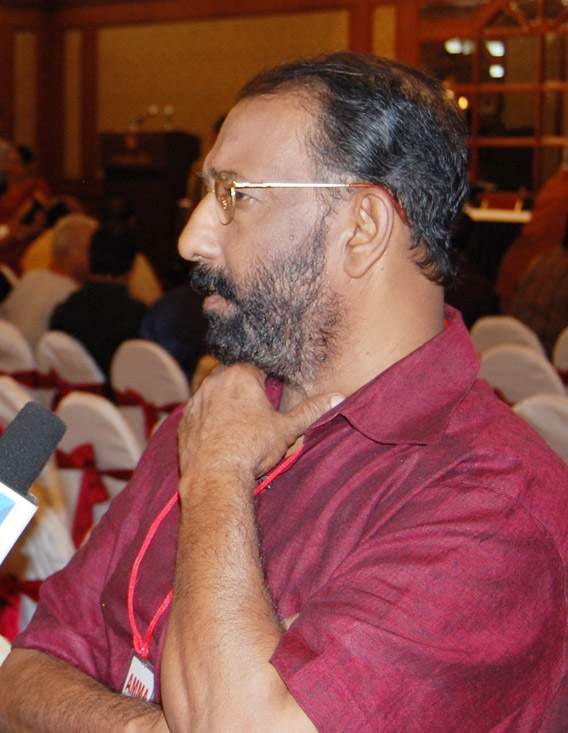
Nedumudi Venu
C.P. Vasudevan
Jaffer Idukki
Firoz Babu
Khushboo
Padma
Kozhikode Narayanan Nair
Kammaran
P. Sukumar
Sreekumar
Nilambur Ayisha
Beeyathu
Jeny Joseph
Lakshmi Varma
External Links and Streaming Options
Discover where to watch Kaiyoppu online, including streaming platforms, rental options, and official sources. Compare reviews, ratings, and in-depth movie information across sites like IMDb, TMDb, Wikipedia or Rotten Tomatoes.





Take the Ultimate Kaiyoppu Movie Quiz
Challenge your knowledge of Kaiyoppu with this fun and interactive movie quiz. Test yourself on key plot points, iconic characters, hidden details, and memorable moments to see how well you really know the film.
Kaiyoppu (2007) Quiz: Test your knowledge of the 2007 Malayalam film Kaiyoppu, covering its characters, plot points, and central themes.
Who is the quiet accountant who aspires to become a writer?
Full Plot Summary and Ending Explained for Kaiyoppu
Read the complete plot summary of Kaiyoppu, including all major events, twists, and the full ending explained in detail. Explore key characters, themes, hidden meanings, and everything you need to understand the story from beginning to end.
Balachandran, Mammootty, is the quiet center of this story: an accountant at a fertilizer company who nurtures a fervent love for books and literature. He lives a solitary, disciplined life in a small one-room setup at a Kochi lodge, where the days slip by in rhythm with numbers and the occasional page turn. Despite his bachelor status and wall of self-imposed exile from the world, he pours his heart into a novel, a project that begins with promise but lingers under an invisible writing block. The manuscript is not simply pages and ink; it becomes a window into Balachandran’s inner world, a testament to a mind that favors reflection over noise, and a bridge to a life he quietly yearns to claim.
The tale takes a decisive turn when Shivadasan, Mukesh, a publisher with a keen eye for potential, encounters the early chapters of Balachandran’s work. His enthusiasm is more than professional; it’s almost redemptive, a belief that this novel could find a wider audience if Balachandran pushes through his block. Shivadasan’s confidence doesn’t just promise publication; it injects momentum into Balachandran’s days. He becomes more than a writer in waiting—he inches toward becoming a published voice, a step that promises meaning beyond the pages and the solitude.
Into this already delicate balance enters Fathima, a young woman battling a heart ailment. Balachandran has been supporting her financially for some time, though they have never met in person. He asks Shivadasan to extend money to Fathima through a formal route, a gesture that reveals Balachandran’s capacity for care beyond his own walls. This act of quiet generosity sits beside his literary ambition, underscoring a theme that threads through the story: the intertwining of responsibility, tenderness, and resilience in the face of life’s pressures.
Then there is Padma, Balachandran’s former college girlfriend who reappears in a life stirred by old emotions and unresolved possibilities. Their conversations stretch long over the phone, reviving shared memories and the ache of what might have been. Padma’s world contrasts with Balachandran’s—she is connected to a different path, having married a Mumbai businessman and now living apart from him. Her re-entry adds a new light to Balachandran’s existence, reigniting questions about love, fortune, and the paths not taken. When Padma’s name surfaces, it’s a reminder that the heart’s map is often more intricate than the most carefully plotted plot lines.
As Balachandran finally completes his novel, the real world presses in with urgent demands. Shivadasan is poised to publish, and Balachandran makes a crucial decision: he plans to travel to Kozhikode, his hometown, both to arrange Fathima’s surgery and to reconnect with Padma. In a bid to secure the funds he needs, he sells off his land, a sacrifice that exposes his willingness to stake everything for a chance at healing and connection. The stakes feel personal and immediate, and the tension between duty, love, and art sharpens with every passing moment.
Yet fate—a force the film treats with a measured gravity—throws a sudden, jarring obstacle into Balachandran’s carefully laid plans. Feroz Babu, the lodge owner, is arrested on terrorism charges. The crime, as it turns out, rests on suspicion rather than proof, and the charged climate around him is heavily influenced by his Muslim identity. Balachandran’s attempt to seek answers at the police station ends up drawing the inspector’s scorn, who mocks him for favoring a Muslim man and suggests he is too soft on supposed terrorists. The encounter forces Balachandran to confront a harsher reality: a society quick to judge based on fear, and a system that can mistake compassion for complicity. His response is visceral and human—an outpouring of emotion that underscores the moral stakes of the moment. The tension between Balachandran’s empathy and the police’s suspicion becomes a crucible for the story’s themes: the price of generosity, the fragility of civil liberties, and the everyday costs of prejudice.
In a pivotal turn, a senior officer arrives and makes a decisive choice—to release Feroz Babu along with Balachandran. The two men, bound by a shared misjudgment and the weight of an unjust system, end up on a night bus bound for Kozhikode, balancing a bag of cash with Balachandran’s completed manuscript—a literal delivery of both money and art into a world that sorely needs both. What follows is a cruel sweep of tragedy: the morning after, a bomb explodes on the bus, and Balachandran is one of the lives claimed by violence and fear.
The film uses this sequence not merely to chart a tragedy, but to reflect on how art, compassion, and the quiet acts of love sustain people in the face of injustice. Balachandran’s devotion to books and his willingness to help others—whether through money, emotional support, or the promise of publication—form the emotional heart of the story. His life, though cut short, is presented with a gentle dignity: a man who chose to care, to write, and to dream, even in a world that often rewards cynicism over empathy.
In the end, the narrative leaves us with a somber meditation on the cost of fear and the courage of ordinary kindness. It asks not for sensational victories but for the quiet resilience of those who choose to remain humane when the landscape around them grows hostile. Balachandran’s legacy—captured in a completed manuscript and the memory of a life given to others—lingers as a testament to literature’s power to illuminate, challenge, and sustain even as tragedy unfolds.

Coming soon on iOS and Android
The Plot Explained Mobile App
From blockbusters to hidden gems — dive into movie stories anytime, anywhere. Save your favorites, discover plots faster, and never miss a twist again.
Sign up to be the first to know when we launch. Your email stays private — always.
Explore the mobile appWatch Trailers, Clips & Behind-the-Scenes for Kaiyoppu
Watch official trailers, exclusive clips, cast interviews, and behind-the-scenes footage from Kaiyoppu. Dive deeper into the making of the film, its standout moments, and key production insights.
Kaiyoppu Themes and Keywords
Discover the central themes, ideas, and keywords that define the movie’s story, tone, and message. Analyze the film’s deeper meanings, genre influences, and recurring concepts.
Kaiyoppu Other Names and Titles
Explore the various alternative titles, translations, and other names used for Kaiyoppu across different regions and languages. Understand how the film is marketed and recognized worldwide.
Similar Movies To Kaiyoppu You Should Know About
Browse a curated list of movies similar in genre, tone, characters, or story structure. Discover new titles like the one you're watching, perfect for fans of related plots, vibes, or cinematic styles.










Quick Links: Summary, Cast, Ratings, More

What's After the Movie?
Not sure whether to stay after the credits? Find out!
Check out our other apps:

SAT Sphere
Build confidence for the Digital SAT.

Mori Atlas
Discover wild places worth protecting.

Luntero
Search smarter for a home in Amsterdam.

Plot Explained
Unravel movie endings and hidden clues.

Pokechamp
Dive into Pokémon data and battle logic.

Driving Theory
Get ready for your European theory test.

Movie Dust
Plan your next cinema trip with ease.

Musemap
Find art and culture as you travel.

Selkobase
Compare credentials before committing.

Local Manual
Turn an unfamiliar country into practical next steps.

Lernavi
Compare school systems before your next move.

GymRoam
Find a workout stop wherever your plans take you.
Explore Our Movie Platform
New Movie Releases (2026)
Famous Movie Actors
Top Film Production Studios
Movie Plot Summaries & Endings
Major Movie Awards & Winners
Best Concert Films & Music Documentaries
Movie Collections and Curated Lists
© 2026 What's After the Movie. All rights reserved.
Privacy Policy