Jinnah 1998

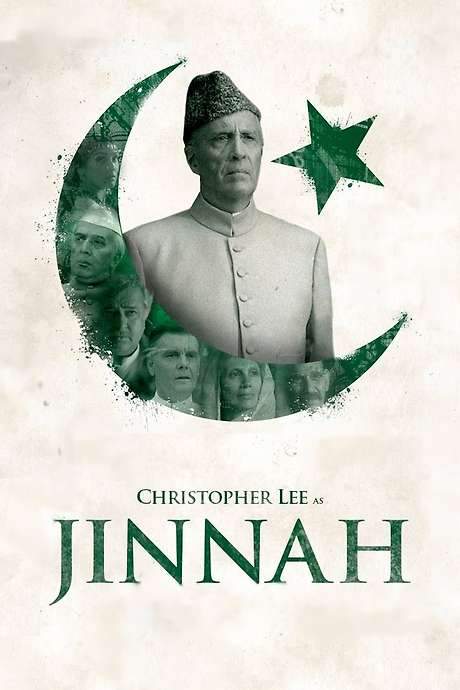
Through flashbacks, the film follows Muhammad Ali Jinnah’s fight for a separate Muslim state, leading to the 1947 partition. It shows his clashes with Lord Mountbatten, Gandhi and Nehru, his refusal to become prime minister, and earlier political moves from 1916, as his soul seeks rest.


Does Jinnah have end credit scenes?
No!
Jinnah does not have end credit scenes. You can leave when the credits roll.
Where to Watch Jinnah
See current US streaming, rental, and purchase options for Jinnah (1998) via JustWatch.

Streaming availability powered by 
Meet the Full Cast and Actors of Jinnah
Explore the complete cast of Jinnah, including both lead and supporting actors. Learn who plays each character, discover their past roles and achievements, and find out what makes this ensemble cast stand out in the world of film and television.

Christopher Lee
Muhammad Ali Jinnah

Indira Varma
Ruttie Jinnah

James Fox
Mountbatten

Shashi Kapoor
Narrator
Ian Gelder
English Police Officer
Vernon Dobtcheff
Lord Willingdon
David Sterne
Birwhistle
Rowena Cooper
Lady Willingdon
Richard Lintern
Jinnah (Younger)
Michael Elwyn
Sir Cyril Radcliffe
Robert Ashby
Nehru
Sam Dastor
Gandhi
Shireen Shah
Fatima Jinnah
John Nettleton
General Gracie
Maria Aitken
Edwina
Yousuf Kamal
Liaquat Ali Khan (as Shakeel)
External Links and Streaming Options
Discover where to watch Jinnah online, including streaming platforms, rental options, and official sources. Compare reviews, ratings, and in-depth movie information across sites like IMDb, TMDb, Wikipedia or Rotten Tomatoes.






Take the Ultimate Jinnah Movie Quiz
Challenge your knowledge of Jinnah with this fun and interactive movie quiz. Test yourself on key plot points, iconic characters, hidden details, and memorable moments to see how well you really know the film.
Jinnah (1998) Film Quiz: Test your knowledge about the film Jinnah, covering its plot, characters, and historical context.
Which actor portrays Muhammad Ali Jinnah in the film?
Full Plot Summary and Ending Explained for Jinnah
Read the complete plot summary of Jinnah, including all major events, twists, and the full ending explained in detail. Explore key characters, themes, hidden meanings, and everything you need to understand the story from beginning to end.
A guide takes Muhammad Ali Jinnah, Christopher Lee, to 1947, where, at the Cromwell Conference with James Fox, Jinnah demands a homeland for Indian Muslims. The film anchors this moment in the voice of Professor Stanley Wolpert, guiding the viewer through a life that blends political calculation with personal sacrifice. What follows unfolds in a series of vivid flashbacks, tracing Jinnah’s early years, his steadfast pursuit of moderation, and the personal costs that shaped his path to a new nation.
Flashbacks reveal Jinnah’s marriage to Rattanbai Petit, known as Ruttie Jinnah, a Parsi woman whose courtship defies her parents’ opposition and the age gap between them. The story sketches how love and principle collide with tradition, pulling him into a complex alliance between public duty and private longing. The couple’s union is a bold act, even as it sows tensions between Jinnah and his in-laws, and the strain of public life eventually pushes them apart. Ruttie’s departure and their separation leave a deep imprint on Jinnah, a wound that shadows his political evolution as he navigates a nation on the brink.
The film then follows Jinnah back to British India, where he embraces a political path focused on moderation amid growing Hindu–Muslim antagonism. The personal cost of this stance becomes clear as the strain with Ruttie deepens, and her passing from cancer strikes a heavy blow, shaping his resolve to lead a cohort of Muslims toward a distinct political destiny. This period also marks a turning point as Jinnah hones his message and builds a platform for a new two-nation dynamic, even as he confronts fierce opposition from those who fear concession and coexistence.
At the Muslim League annual conference in 1940, Jinnah speaks to thousands and delivers a firm, forward-looking vision for a divided subcontinent. He articulates the idea of Pakistan as a homeland for Muslims, underscoring the legitimacy of a separate political future while insisting that faith should not justify sectarian hatred. The scene crystallizes the movement’s momentum, laying the groundwork for pivotal changes to come, including the eventual acceptance of the two-nation theory within the party’s ranks. The film makes clear how this moment reframes the struggle, linking it to hard choices about unity, identity, and sovereignty.
During a reflective exchange at another gathering, the Guide asks who else Jinnah loves besides Ruttie. He names his daughter Dina, a moment that adds a human dimension to a figure often portrayed in stark political terms, and it reminds viewers of the personal stakes behind the public decisions that will soon reshape the Subcontinent. Dina’s later fate—and her decision to stay in Bombay with her husband and child—echoes the personal costs of political upheaval and exile.
As 1947 arrives, the film follows the sharpening tensions at a Muslim League conference where fanatics attack, questioning whether Pakistan can be a Muslim state that also guarantees rights for women and non-Muslims. Jinnah responds with a principled defense: Islam does not require fanaticism, but a nation needs visionaries who can build it. The partition is set in motion, and the subsequent migration stage becomes a grim tableau of sorrow and violence, witnessed by Jinnah and the Guide in a shared moment of reckoning. The tragedy of refugees underscores the moral stakes of the new order, even as the political leadership is forced to act.
In the aftermath of independence, Pakistan emerges as a modern nation under Jinnah’s leadership, who is revered as Quaid-e-Azam. He waits for the first train carrying Muslims who left India for their new homeland, but the journey ends in catastrophe: the train arrives and most passengers are killed, save for one infant. The somber moment crystallizes the human cost of partition and the fragility of nation-building in the face of chaos.
The film then shifts to the Kashmir crisis, with Fatima Jinnah, Shireen Shah, and Lady Edwina Mountbatten, Maria Aitken, visiting refugees and witnessing the humanitarian toll. Mountbatten’s role and the political maneuvering around Kashmir intensify, as the Hindu Maharaja Sir Hari Singh hesitates to join either nation. When Indian troops are airlifted into the region and Pakistani irregulars push the population toward upheaval, Jinnah objects to foreign intervention and orders Pakistani forces to move into Kashmir, setting the stage for ongoing conflict in the years that follow.
The story culminates in a surreal, symbolic finale where Jinnah and Lord Louis Mountbatten, the last Viceroy, appear in a Heavenly Court. The two debate betrayal and accountability, traveling back in time to confront the tragedy of the refugees and the upheaval that divided Punjab. As the scene resolves, the people at the center of the conflict cry out in unison, a fervent chorus that encapsulates the enduring mission of the new nation.
“Pakistan Zindabad”

Coming soon on iOS and Android
The Plot Explained Mobile App
From blockbusters to hidden gems — dive into movie stories anytime, anywhere. Save your favorites, discover plots faster, and never miss a twist again.
Sign up to be the first to know when we launch. Your email stays private — always.
Explore the mobile appWatch Trailers, Clips & Behind-the-Scenes for Jinnah
Watch official trailers, exclusive clips, cast interviews, and behind-the-scenes footage from Jinnah. Dive deeper into the making of the film, its standout moments, and key production insights.
Cars Featured in Jinnah
Explore all cars featured in Jinnah, including their makes, models, scenes they appear in, and their significance to the plot. A must-read for car enthusiasts and movie buffs alike.
Jinnah Other Names and Titles
Explore the various alternative titles, translations, and other names used for Jinnah across different regions and languages. Understand how the film is marketed and recognized worldwide.
Quick Links: Summary, Cast, Ratings, More

What's After the Movie?
Not sure whether to stay after the credits? Find out!
Check out our other apps:

SAT Sphere
Build confidence for the Digital SAT.

Mori Atlas
Discover wild places worth protecting.

Luntero
Search smarter for a home in Amsterdam.

Plot Explained
Unravel movie endings and hidden clues.

Pokechamp
Dive into Pokémon data and battle logic.

Driving Theory
Get ready for your European theory test.

Movie Dust
Plan your next cinema trip with ease.

Musemap
Find art and culture as you travel.

Selkobase
Compare credentials before committing.

Local Manual
Turn an unfamiliar country into practical next steps.

Lernavi
Compare school systems before your next move.

GymRoam
Find a workout stop wherever your plans take you.
Explore Our Movie Platform
New Movie Releases (2026)
Famous Movie Actors
Top Film Production Studios
Movie Plot Summaries & Endings
Major Movie Awards & Winners
Best Concert Films & Music Documentaries
Movie Collections and Curated Lists
© 2026 What's After the Movie. All rights reserved.
Privacy Policy