
Hostages 1992

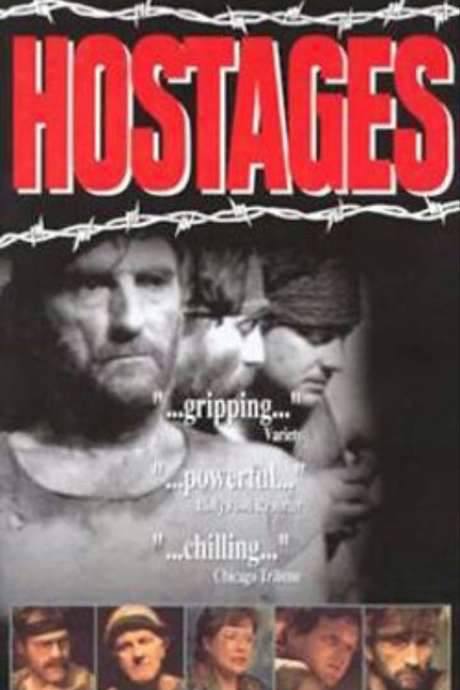
True account of the six men held hostage by religious extremists in Beirut during the Reagan-Bush era.


Does Hostages have end credit scenes?
No!
Hostages does not have end credit scenes. You can leave when the credits roll.
Meet the Full Cast and Actors of Hostages
Explore the complete cast of Hostages, including both lead and supporting actors. Learn who plays each character, discover their past roles and achievements, and find out what makes this ensemble cast stand out in the world of film and television.

Jay O. Sanders
Terry Anderson

Ciarán Hinds
Brian Keenan

Colin Firth
John McCarthy

Kathy Bates
Peggy Say

Harry Dean Stanton
Frank Reed

Stephen Dillane
Chris Pearson

Natasha Richardson
Jill Morrell

Josef Sommer
Tom Sutherland
Raad Rawi
Moussavlan
Colin Stinton
Mike Mulholland
Harry Ditson
David Say
Ruth McCabe
Elaine Spence
Tony Doyle
Badraig Murphy
Rolf Saxon
Plaskett
Sami Samir
Ahmad
Amir M. Korangy
Ghassemmi
Patrick Pearson
Lowther
Rosaleen Linehan
Brenda Gilham
Dan Turgeman
Mahmoud
Juliano Mer-Khamis
Ali
Michael Morgan
American Soldier Checkpoint Charlie(uncredited)
Colin Bruce
Robie Burke
Conrad Asquith
Terry Waite
Brian McGrath
Connor
Colum Convey
Art Agnew
Gooey Law
Newsman
John Pickles
Pat McCarthy
Rasan Abbas
Head Kidnapper
Gabrielle O'Brien
Belfast Woman
Paul Jaynes
Newsman
Mozaffar Shafeie
Translator
External Links and Streaming Options
Discover where to watch Hostages online, including streaming platforms, rental options, and official sources. Compare reviews, ratings, and in-depth movie information across sites like IMDb, TMDb, Wikipedia or Rotten Tomatoes.





Full Plot Summary and Ending Explained for Hostages
Read the complete plot summary of Hostages, including all major events, twists, and the full ending explained in detail. Explore key characters, themes, hidden meanings, and everything you need to understand the story from beginning to end.
Set against the Beirut hostage crisis, this drama blends real-world news footage with deeply human moments inside a brutal captivity. It begins with reporter John McCarthy, Colin Firth, finishing a story on Brian Keenan, Ciarán Hinds, and soon finds him swept into the same nightmare when his car is hijacked and he is stripped, blindfolded, and locked away. The film quickly shifts to the home front, where Jill Morrell, Natasha Richardson, a devoted girlfriend, seeks guidance from local officials who insist there will be no negotiations to secure his release. The same callous stance is felt by Keenan’s family in Belfast, who watch the crisis unfold with mounting fear and frustration as authorities refrain from intervention. The opening sequence deftly shows how ordinary lives are upended when politics and violence collide.
As days turn into weeks, the two men share a quiet bond in their cramped, dimly lit confines. McCarthy and Keenan endure brutal beatings, scant food, and the constant sense of darkness and isolation that comes with being kept in dirty, bug-infested cells. The emotional weight of their ordeal broadens the film’s scope, illustrating not only fear and pain but also the fragile glimmers of solidarity that develop between captives who have little else to cling to. The sense of time becomes a blur as each small moment—an extra bite of bread, a guarded conversation, a hope dashed in an instant—takes on outsized meaning.
The narrative widens further when Syria invades Beirut, and the captors relocate the men, bundling McCarthy and Keenan with other hostages. American prisoners Terry Anderson, Jay O. Sanders, Thomas Sutherland, Josef Sommer, and Frank Reed, Harry Dean Stanton, are moved and kept under tight control, their days marked by routine, fear, and the ever-present threat of violence. The captors’ insistence on keeping the hostages blindfolded whenever they enter the cells adds to the sense of powerlessness that hangs over every beat of the story. Peggy Say, Kathy Bates, Anderson’s sister, works with American officials to pry loose information and push for public visibility of the crisis, while Morrell and Keenan’s sisters press for any sign of hope from distant officials, illustrating how families rally to demand accountability and contact.
Amid the chaos surrounding a mistaken attack on an Iranian airliner, the hostages are moved again, and the two sets of prisoners occupy neighboring spaces within the same grim building. McCarthy, Keenan, and Reed share a cell, while Anderson and Sutherland are kept in another, each day a careful balance of restraint and small rebellion. The arrival of Terry Waite, a once-isolated veteran who begins regular visits, marks a turning point in the tensions of captivity; his presence brings a rare sense of dignity and humanity to a situation defined by fear and coercion. McCarthy’s captors reveal the possibility of release, and Keenan’s cautious optimism—tied to a string of almost-certain deadlines that repeatedly dissolve into delay—highlights the brittle gaps between hope and disappointment.
The film builds toward a powerful, restrained arc of release. McCarthy is moved and told that his release is imminent, a moment of fragile relief that is nonetheless tempered by mistrust in the captors’ promises. News of McCarthy’s impending return ripples through Belfast and beyond, as Jill Morrell learns of a possible end to the ordeal, and Keenan’s own release eventually materializes after a long, fraught waiting game. The core tension remains: can the personal stories survive the disconnect between official policy and human need? As the film closes, Anderson, Sutherland, Waite, and Reed are freed, their captors’ control finally loosened, while the narrative voice of Keenan overlays the final scenes, reflecting on gratitude, memory, and the enduring cost of survival.
In the end, the film offers a measured meditation on resilience and the limits of state power in moments of crisis. It recounts how families, journalists, and negotiators chase elusive answers while ordinary people endure extraordinary hardship, and it leaves viewers with a quiet but lasting impression of the human stakes at the heart of a long, painful hostage ordeal.

Discover Film Music Concerts Near You – Live Orchestras Performing Iconic Movie Soundtracks
Immerse yourself in the magic of cinema with live orchestral performances of your favorite film scores. From sweeping Hollywood blockbusters and animated classics to epic fantasy soundtracks, our curated listings connect you to upcoming film music events worldwide.
Explore concert film screenings paired with full orchestra concerts, read detailed event information, and secure your tickets for unforgettable evenings celebrating legendary composers like John Williams, Hans Zimmer, and more.


Hostages Themes and Keywords
Discover the central themes, ideas, and keywords that define the movie’s story, tone, and message. Analyze the film’s deeper meanings, genre influences, and recurring concepts.
Hostages Other Names and Titles
Explore the various alternative titles, translations, and other names used for Hostages across different regions and languages. Understand how the film is marketed and recognized worldwide.
Similar Movies To Hostages You Should Know About
Browse a curated list of movies similar in genre, tone, characters, or story structure. Discover new titles like the one you're watching, perfect for fans of related plots, vibes, or cinematic styles.





Quick Links: Summary, Cast, Ratings, More

What's After the Movie?
Not sure whether to stay after the credits? Find out!




Explore Our Movie Platform
New Movie Releases (2026)
Famous Movie Actors
Top Film Production Studios
Movie Plot Summaries & Endings
Major Movie Awards & Winners
Best Concert Films & Music Documentaries
Movie Collections and Curated Lists
© 2026 What's After the Movie. All rights reserved.