Glory 1989


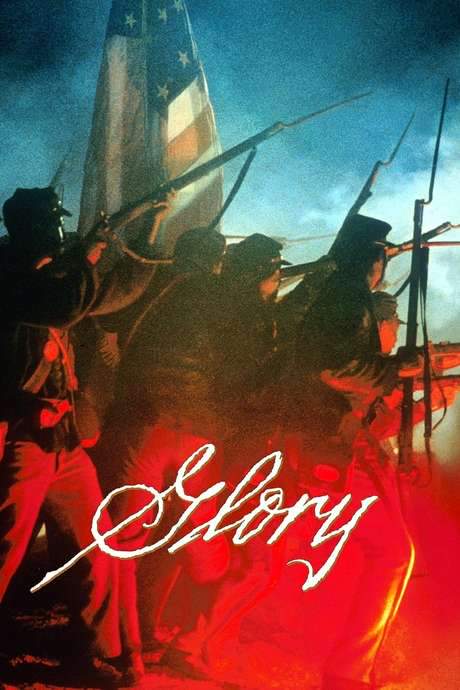
They are innocent, their heritage and lives at stake. Robert Gould Shaw commands the Union’s first all‑Black volunteer regiment, the 54th Massachusetts, confronting prejudice from both his own army and the Confederate forces. Their courage challenges entrenched racism and proves their worth on the battlefield.



Does Glory have end credit scenes?
No!
Glory does not have end credit scenes. You can leave when the credits roll.
Where to Watch Glory
See current US streaming, rental, and purchase options for Glory (1989) via JustWatch.

Sony Pictures Core Amazon Channel
4K
Tubi TV
SD
Amazon Video
4K
Apple TV Store
4K
Fandango At Home
4K
Google Play Movies
SD
Spectrum On Demand
HD
YouTube
SD Streaming availability powered by 
Meet the Full Cast and Actors of Glory
Explore the complete cast of Glory, including both lead and supporting actors. Learn who plays each character, discover their past roles and achievements, and find out what makes this ensemble cast stand out in the world of film and television.

Morgan Freeman
Sgt. Maj. John Rawlins

Jay O. Sanders
Gen. George Crockett Strong

Matthew Broderick
Col. Robert Gould Shaw

Jane Alexander
Sarah Blake Sturgis Shaw

Denzel Washington
Pvt. Trip

RonReaco Lee
Mute Drummer Boy

Cary Elwes
Maj. Cabot Forbes

Andre Braugher
Cpl. Thomas Searles
Bob Gunton
Gen. Charles Garrison Harker

John Finn
Sgt. Maj. Mulcahy

Mark Margolis
10th Connecticut Soldier
Afemo Omilami
Tall Contraband
Bill Nunn
Marc Gowan
Dr. William B. Rogers

Richard Riehle
Quartermaster
Peter Michael Goetz
Francis George Shaw
Bob Minor
Contraband Soldier
Ethan Phillips
Hospital Steward
Alan North
Gov. John Albion Andrew
Richard Wright
10th Connecticut Soldier
Raymond St. Jacques
Frederick Douglass
JD Cullum
Henry Sturgis Russell
Michael Wayne Thomas
Soldier
Cliff DeYoung
Col. James M. Montgomery
Larry Peterson
Union Officer
Benji Wilhoite
Young Soldier
Randell Haynes
Paymaster
Sheila Cochran
Home dweller
Saundra Dunson-Franks
Black Woman
Christian Baskous
Edward L. Pierce
Carla Brothers
Charlotte Forten
Daniel H. Jenkins
'A' Company Officer
Michael Fowler
10th Connecticut Soldier
Abdul Salaam El Razzac
'A' Company Soldier
Paul Desmond
10th Connecticut Soldier
Dan Biggers
Minister
Barry J. Miller
Union / Confederate Soldier
Joan Riordan
White Woman
Jihmi Kennedy
Pvt. Jupiter Sharts
Pete Munro
Surgeon
Roger Ragland
Cavalry Officer
Rodger Williamson
Union Cavalryman
Ted Rupel
Soldier
Alejandro de Quesada
Confederate / Union Soldier
Shane Pinson
Confederate Soldier
Matthew Murdzak
Captain
Rick Leisenring
Union Officer
William Mathis
Union Soldier
Jay Lance
Union Soldier
Gary O. Crane
Union Cavalry
Rachel Lea Grundfast
Ellen Shaw
Bill Chemerka
Confederate Officer
Frank Blair
Darian Farmer
Joseph Alex
Re-Enactor Core Group and Company A
Tom Barrington
10th Connecticut Soldier
Peter Grandfield
10th Connecticut Soldier
Mark A. Jones
54th Soldier
Raymond Godshall Jr.
Dr. Charles G. Thorpe
Keith Noble
Short Contraband
Mark A. Levy
Bigoted Soldier
Michael Guess
'A' Company Soldier
External Links and Streaming Options
Discover where to watch Glory online, including streaming platforms, rental options, and official sources. Compare reviews, ratings, and in-depth movie information across sites like IMDb, TMDb, Wikipedia or Rotten Tomatoes.






Take the Ultimate Glory Movie Quiz
Challenge your knowledge of Glory with this fun and interactive movie quiz. Test yourself on key plot points, iconic characters, hidden details, and memorable moments to see how well you really know the film.
Glory (1989) Quiz: Test your knowledge of the film Glory, its characters, historical context, and key events depicted.
Who directed the film Glory?
Full Plot Summary and Ending Explained for Glory
Read the complete plot summary of Glory, including all major events, twists, and the full ending explained in detail. Explore key characters, themes, hidden meanings, and everything you need to understand the story from beginning to end.
During the Civil War, Captain Robert Shaw is wounded at Antietam and returns home to Boston on medical leave. Shaw, elevated to Colonel to command the 54th Regiment Massachusetts Volunteer Infantry—one of the Union Army’s first Black regiments—asks his friend Maj. Cabot Forbes to serve as his second in command. Their first volunteer is a mutual friend, Thomas Searles, a bookish, free African-American. Other recruits quickly join the ranks, including John Rawlins as a trusted aide, Pvt. Jupiter Sharts, a mute drummer, and Pvt. Trip, a wary young man who will grow into his role in the regiment.
After the Emancipation Proclamation, the men of the 54th learn a brutal fact: the Confederacy plans to execute any Black soldiers captured in Union uniforms along with their white officers. Despite this deadly threat, the volunteers refuse an offer to be honorably discharged and endure demanding training under the stern discipline of Sgt. Maj. Mulcahy. Tensions rise when Trip is arrested for AWOL and flogged; Shaw discovers the root cause—Trip had left camp to replace worn-out shoes. Shaw confronts the base’s racist quartermaster, who has been withholding supplies. When the men find out that the Federal government pays Black soldiers about three-quarters the salary of white soldiers, Trip urges a collective refusal of pay, and Shaw tears up his own pay stub in solidarity. In recognition of his mentorship and his empathy for the troops’ morale, John Rawlins is promoted to Sergeant-Major.
Once the core is formed and the men are properly trained, the 54th comes under the command of Gen. Charles Garrison Harker and is ordered by Col. James Montgomery to sack and burn Darien, Georgia. Shaw initially refuses this directive, but agrees under the threat of being relieved of duty. He’s increasingly tired of seeing his men used for brutal labor and raids on civilians, and he makes clear to Harker and Montgomery that he will report profiteering to the War Department unless the 54th is given a true combat assignment.
The regiment then goes into action at James Island, South Carolina, repelling a Confederate assault. Thomas Searles is wounded in the action but saves Trip’s life in the process. Shaw offers Trip the honor of bearing the regimental flag in battle, but Trip declines, uncertain that the war will bring about a better life for enslaved people.
General George Strong later informs his regimental commanders of a major campaign aimed at securing a foothold at Charleston Harbor, describing the initial assault on Morris Island and the frontal assault required on Fort Wagner. Shaw volunteers the 54th for the mission. The night before the attack, the Black soldiers hold a religious service, give thanks, and seek divine assistance. The next morning, the 54th advances to the assault amid cheers from Union troops who had previously taunted them.
The assault on Fort Wagner is devastating; the 54th suffers heavy losses as they advance across the open beach and take cover in the dunes as darkness falls. Shaw is killed while trying to rally his men. Trip lifts the regimental flag and leads the survivors toward the fort, brandishing the banner until he is mortally wounded. Forbes leads a party into the fort’s outer defenses where Charlie Morse is killed, and Thomas is wounded. A small number of survivors, including Forbes, Rawlins, Thomas, and Jupiter, press forward to face a Confederate gun, and the screen fades to black, implying their deaths.
In the days that follow, Confederate soldiers remove the bodies of Union troops from the beach, raise the Confederate flag over the fort, and bury the fallen in a mass grave. Shaw’s body slides into the same trench where Trip lies, a stark image of the cost of battle. An epilogue notes that although Fort Wagner was never captured, the courage displayed by the 54th helped persuade the Union Army to recruit thousands of Black soldiers for combat—a turning point President Abraham Lincoln credited with helping to shift the war’s momentum.

Coming soon on iOS and Android
The Plot Explained Mobile App
From blockbusters to hidden gems — dive into movie stories anytime, anywhere. Save your favorites, discover plots faster, and never miss a twist again.
Sign up to be the first to know when we launch. Your email stays private — always.
Explore the mobile appWatch Trailers, Clips & Behind-the-Scenes for Glory
Watch official trailers, exclusive clips, cast interviews, and behind-the-scenes footage from Glory. Dive deeper into the making of the film, its standout moments, and key production insights.
Glory Themes and Keywords
Discover the central themes, ideas, and keywords that define the movie’s story, tone, and message. Analyze the film’s deeper meanings, genre influences, and recurring concepts.
Glory Other Names and Titles
Explore the various alternative titles, translations, and other names used for Glory across different regions and languages. Understand how the film is marketed and recognized worldwide.
Similar Movies To Glory You Should Know About
Browse a curated list of movies similar in genre, tone, characters, or story structure. Discover new titles like the one you're watching, perfect for fans of related plots, vibes, or cinematic styles.







Quick Links: Summary, Cast, Ratings, More

What's After the Movie?
Not sure whether to stay after the credits? Find out!
Check out our other apps:

SAT Sphere
Build confidence for the Digital SAT.

Mori Atlas
Discover wild places worth protecting.

Luntero
Search smarter for a home in Amsterdam.

Plot Explained
Unravel movie endings and hidden clues.

Pokechamp
Dive into Pokémon data and battle logic.

Driving Theory
Get ready for your European theory test.

Movie Dust
Plan your next cinema trip with ease.

Musemap
Find art and culture as you travel.

Selkobase
Compare credentials before committing.

Local Manual
Turn an unfamiliar country into practical next steps.

Lernavi
Compare school systems before your next move.

GymRoam
Find a workout stop wherever your plans take you.
Explore Our Movie Platform
New Movie Releases (2026)
Famous Movie Actors
Top Film Production Studios
Movie Plot Summaries & Endings
Major Movie Awards & Winners
Best Concert Films & Music Documentaries
Movie Collections and Curated Lists
© 2026 What's After the Movie. All rights reserved.
Privacy Policy