Gangster’s Paradise: Jerusalema 2008


In the promised land of South Africa, the film follows a low‑level hustler who climbs from petty hijackings to a powerful position in the criminal underworld, only to suffer a devastating blow when most of his crew are gunned down, forcing him to confront loss and ambition.


Does Gangster’s Paradise: Jerusalema have end credit scenes?
No!
Gangster’s Paradise: Jerusalema does not have end credit scenes. You can leave when the credits roll.
Where to Watch Gangster’s Paradise: Jerusalema
See current US streaming, rental, and purchase options for Gangster’s Paradise: Jerusalema (2008) via JustWatch.


Streaming availability powered by 
Meet the Full Cast and Actors of Gangster’s Paradise: Jerusalema
Explore the complete cast of Gangster’s Paradise: Jerusalema, including both lead and supporting actors. Learn who plays each character, discover their past roles and achievements, and find out what makes this ensemble cast stand out in the world of film and television.
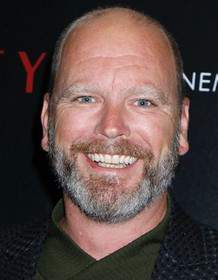
Robert Hobbs
Inspector Blakkie Swart

Kenneth Nkosi
Lucas Sithole
Rapulana Seiphemo
Lucky Kunene
Jafta Mamabolo
Young Kunene
Shelley Meskin
Leah Friedlander (as Shelly Meskin)
Mzwandile Ngubeni
Young Bull
Thandy Matlaila
Young Nomsa
Ronnie Nyakale
Zakes Mbolelo
Daniel Buckland
Josh Freidlander
Jeffrey Zekele
Nazareth
Malusi Skenjana
Tony Ngu
Motlatsi Mahloko
Young Zakes
Lerato Moloi
Loretta Dlamini
Gladys Mahlangu
Mama Kunene
External Links and Streaming Options
Discover where to watch Gangster’s Paradise: Jerusalema online, including streaming platforms, rental options, and official sources. Compare reviews, ratings, and in-depth movie information across sites like IMDb, TMDb, Wikipedia or JustWatch.






Take the Ultimate Gangster’s Paradise: Jerusalema Movie Quiz
Challenge your knowledge of Gangster’s Paradise: Jerusalema with this fun and interactive movie quiz. Test yourself on key plot points, iconic characters, hidden details, and memorable moments to see how well you really know the film.
Gangster’s Paradise: Jerusalema Quiz: Test your knowledge of the 2008 film Gangster’s Paradise: Jerusalema.
What nickname does Lucky Kunene earn for his actions in Hillbrow?
Full Plot Summary and Ending Explained for Gangster’s Paradise: Jerusalema
Read the complete plot summary of Gangster’s Paradise: Jerusalema, including all major events, twists, and the full ending explained in detail. Explore key characters, themes, hidden meanings, and everything you need to understand the story from beginning to end.
Lucky Kunene [Rapulana Seiphemo] lies on a bed, bloodied, as police burst into his room and arrest him for murder. The scene cuts to the interrogation room, where Kunene offers to share his full back-story and what led to that fateful moment. The film then unfolds the life that carved the path to that arrest, tracing choices, loyalties, and the cost of ambition.
The back-story begins in Soweto, where Lucky Kunene and his teenage friend Zakes [Ronnie Nyakale] grow up amid the rhythms and risks of city life. After Lucky discovers he hasn’t earned a scholarship to continue his education, the pair find themselves pulled toward money and danger. They cross paths with Nazareth [Jeffrey Zekele], a local crime lord who was once a Russian-trained guerrilla. Nazareth becomes their gateway to a string of small-time robberies that quickly escalate into more brazen car-jackings. Each score tightens Lucky’s grip on the idea that education can be traded for survival, and he begins to let go of his academic dreams.
As the crimes escalate, Nazareth’s world starts to fracture, and the consequences ripple outward. Lucky and Zakes escape the worst of it but the line between necessity and crime has already blurred beyond repair. They decide to lie low and relocate to Johannesburg, hoping to start anew away from the shadows of Nazareth’s empire.
A decade passes, and Lucky and his friend have reinvented themselves as a taxi business operators in Hillbrow, a heart of the city’s nightlife and danger. Their quiet enterprise is shattered when Lucky himself becomes the target of a brutal carjacking. The incident exposes the fragility of mobility and opportunity in a city where access to wealth feels almost surgically out of reach. Frustrated and ambitious, Lucky shifts gears again and conjures a plan to reshape the urban landscape: the Hillbrow People’s Housing Trust. This bold scheme promises residents rent at half price and gives Kunene a new kind of leverage—ownership of a growing network of apartment buildings in Hillbrow. He collects rent from tenants and, through tough negotiations with landlords, secures lower rates for the buildings he controls. In time, Lucky becomes known as a Robin Hood-like figure, a man who uses the trust to uplift residents while flexing the power of fear and influence over the city’s property market. His ascent earns him the nickname The Hoodlum of Hillbrow, a paradox that sits at the center of his legend and menace.
Meanwhile, Detective Blakkie Swart [Robert Hobbs] begins to assemble a case against Kunene, drawn by the increasing visibility and reach of the housing trust. The tension between Kunene’s generosity and his brutal efficiency creates a moral fog around his empire, even as some residents begin to see him as a protector who fights against a system that has long neglected them.
On the personal front, Kunene’s path crosses with Leah Friedlander [Shelley Meskin], a white South African woman whose life intersects with his in unexpected ways. He helps rescue her brother from drug dealers, and a relationship blossoms between them. Leah and Kunene buy a house in the suburbs and plan a life together, a quiet dream that sits alongside his expanding empire. Leah’s brother Josh Friedlander [Daniel Buckland] becomes another casualty of the city’s drug trade, a reminder of how the struggle touches every corner of their world. The bond between Kunene and Leah deepens as they navigate an uneasy peace between wealth, love, and danger.
Yet the undercurrent of danger remains strong, embodied by Tony Ngu [Malusi Skenjana], a drug dealer who resists Kunene’s growth with ruthless persistence. Kunene’s ambition to clear Ngu from his way is complicated by Nazareth’s entanglements with the drugs trade, and the lines between business and crime blur further. Nazareth’s drug bust becomes, in the eyes of the authorities, exactly the excuse Swart needed to press harder and target Kunene’s buildings, framing the conflict in stark legal terms.
Yet Ngu refuses to yield. He uses Leah’s brother, drawn into drugs, to pull Kunene deeper into a fight he thought he had already outgrown. A violent drive-by shooting follows, and Zakes is killed in the chaos—an injustice that shatters Kunene’s carefully built world. In a blazing confrontation at a strip club, Kunene and his crew storm the premises where Ngu is staying. A brutal gunfight erupts, Nazareth is killed, and Kunene is badly injured. In a desperate moment on the club’s roof, Ngu pleads for mercy, offering to do anything to spare his life. Kunene’s response cuts clear and cold: “can you bring Zakes back?” He shoots Ngu, pushing him off the roof as the weight of the past crashes into the present.
With the back-story catching up to the film’s opening, Kunene lies bloodied in his bed, and the arrest continues. In prison, he engineers a daring escape by feigning illness, slipping from the facility to a hospital where security is looser. With the help of his remaining friends, he flees and vanishes to Durban, a city he has always dreamed of calling home, where the memory of the life he built—the risks he took, the people he cared about, and the empire he carved out of Hillbrow—continues to haunt and define him.
- The film’s narrative voice remains measured and clear, threading together ambition, loyalty, and the ambiguous morality of a man who rose by reshaping a city’s landscape while paying a heavy personal price.
- The storytelling blends intimate character moments with sprawling socio-economic tensions, inviting the audience to reflect on what it means to fight for a better life in a town where opportunity is uneven and danger often travels in the same pockets of the city.
- The film never shies away from the consequences of Kunene’s choices, painting a portrait of a man who becomes both a protector and a predator in equal measure, and who learns that power taken from the street can never be perfectly earned or safely kept.

Coming soon on iOS and Android
The Plot Explained Mobile App
From blockbusters to hidden gems — dive into movie stories anytime, anywhere. Save your favorites, discover plots faster, and never miss a twist again.
Sign up to be the first to know when we launch. Your email stays private — always.
Explore the mobile appWatch Trailers, Clips & Behind-the-Scenes for Gangster’s Paradise: Jerusalema
Watch official trailers, exclusive clips, cast interviews, and behind-the-scenes footage from Gangster’s Paradise: Jerusalema. Dive deeper into the making of the film, its standout moments, and key production insights.
Gangster’s Paradise: Jerusalema Themes and Keywords
Discover the central themes, ideas, and keywords that define the movie’s story, tone, and message. Analyze the film’s deeper meanings, genre influences, and recurring concepts.

Unlock the World of Movies with Our Comprehensive Wiki
Dive into our Movie Wiki for in-depth film encyclopedia entries, including cast biographies, production trivia, plot synopses, behind-the-scenes facts, and thematic analyses. Whether you’re researching iconic directors, exploring genre histories, or discovering hidden easter eggs, our expertly curated movie database has everything you need to fuel your cinematic passion.

Similar Movies To Gangster’s Paradise: Jerusalema You Should Know About
Browse a curated list of movies similar in genre, tone, characters, or story structure. Discover new titles like the one you're watching, perfect for fans of related plots, vibes, or cinematic styles.






Quick Links: Summary, Cast, Ratings, More

What's After the Movie?
Not sure whether to stay after the credits? Find out!
Check out our other apps:

SAT Sphere
Build confidence for the Digital SAT.

Mori Atlas
Discover wild places worth protecting.

Luntero
Search smarter for a home in Amsterdam.

Plot Explained
Unravel movie endings and hidden clues.

Pokechamp
Dive into Pokémon data and battle logic.

Driving Theory
Get ready for your European theory test.

Movie Dust
Plan your next cinema trip with ease.

Musemap
Find art and culture as you travel.

Selkobase
Compare credentials before committing.

Local Manual
Turn an unfamiliar country into practical next steps.

Lernavi
Compare school systems before your next move.

GymRoam
Find a workout stop wherever your plans take you.
Explore Our Movie Platform
New Movie Releases (2026)
Famous Movie Actors
Top Film Production Studios
Movie Plot Summaries & Endings
Major Movie Awards & Winners
Best Concert Films & Music Documentaries
Movie Collections and Curated Lists
© 2026 What's After the Movie. All rights reserved.
Privacy Policy