Freud: The Secret Passion 1962


Alone, he struggled against his own dark passions while pioneering a new approach to mental illness. The film examines the early career of Austrian psychologist Sigmund Freud as he begins treating patients diagnosed with hysteria, employing the then‑radical technique of hypnosis and confronting the limits of contemporary science.

Does Freud: The Secret Passion have end credit scenes?
No!
Freud: The Secret Passion does not have end credit scenes. You can leave when the credits roll.
Where to Watch Freud: The Secret Passion
See current US streaming, rental, and purchase options for Freud: The Secret Passion (1962) via JustWatch.






Meet the Full Cast and Actors of Freud: The Secret Passion
Explore the complete cast of Freud: The Secret Passion, including both lead and supporting actors. Learn who plays each character, discover their past roles and achievements, and find out what makes this ensemble cast stand out in the world of film and television.
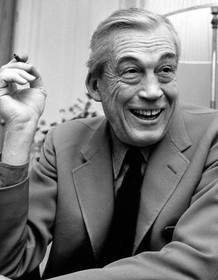
John Huston
Narrator (voice) (uncredited)
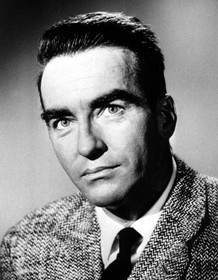
Montgomery Clift
Sigmund Freud
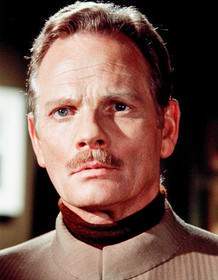
Allan Cuthbertson
Wilkie (uncredited)
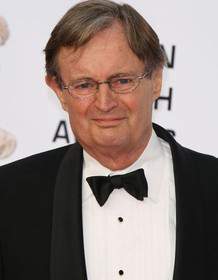
David McCallum
Carl von Schlossen

Susan Kohner
Martha Freud
Susannah York
Cecily Koertner
Moira Redmond
Nora Wimmer (uncredited)
Rosalie Crutchley
Frau Amalia Freud
Stefan Schnabel
Chairman of Medical Profession in Vienna (uncredited)
Ferdy Mayne
Questioner at Final Lecture (uncredited)
Leonard Sachs
Brouhardier
Charles Regnier
(uncredited)
Manfred Andrae
Student Doctor (uncredited)
Maria Perschy
Magda (uncredited)
Eduard Linkers
Dr. Torsch (uncredited)
Fernand Ledoux
Dr. Charcot
Elisabeth Neumann-Viertel
Frau Bernays (uncredited)
Joseph Fürst
Herr Jacob Koertner
Eric Portman
Dr. Theodore Meynert
Larry Parks
Dr. Joseph Breuer
David Kossoff
Jacob Freud
Victor Beaumont
Dr. Guber (uncredited)
Eileen Herlie
Frau Ida Koertner
Alexander Mango
Babinsky
Ol Abdou
(uncredited)
External Links and Streaming Options
Discover where to watch Freud: The Secret Passion online, including streaming platforms, rental options, and official sources. Compare reviews, ratings, and in-depth movie information across sites like IMDb, TMDb, Wikipedia or JustWatch.





Take the Ultimate Freud: The Secret Passion Movie Quiz
Challenge your knowledge of Freud: The Secret Passion with this fun and interactive movie quiz. Test yourself on key plot points, iconic characters, hidden details, and memorable moments to see how well you really know the film.
Freud: The Secret Passion - Movie Quiz: A diverse quiz exploring the themes, characters, and historical context of the 1962 film about Sigmund Freud.
In which city does Sigmund Freud complete his medical training in the film?
Full Plot Summary and Ending Explained for Freud: The Secret Passion
Read the complete plot summary of Freud: The Secret Passion, including all major events, twists, and the full ending explained in detail. Explore key characters, themes, hidden meanings, and everything you need to understand the story from beginning to end.
The film opens with a compelling voice-over by director John Huston, who describes Sigmund Freud’s journey into the depths of the human mind as a voyage into “a region almost as black as hell itself—man’s unconscious—and how he let in the light.” Throughout the movie, Huston’s narration recurs, especially at the conclusion, providing insight into Freud’s inner thoughts and the significance of his groundbreaking work.
Set in Vienna during 1885, the story centers around the young and ambitious Montgomery Clift as Sigmund Freud, a physician newly completed with his medical education but eager to challenge established ideas. Freud finds himself at odds with the head of the hospital, Ferdy Mayne as Questioner at Final Lecture, whose traditional views on mental health clash with Freud’s emerging theories. His disputes with hospital authority highlight his desire to explore new approaches to mental illness. Inspired by his mother’s encouragement and driven by his own curiosity, Freud journeys to Paris to study under the renowned Dr. Jean-Marin Charcot, played by Fernand Ledoux, who has made significant advances in understanding hysteria using hypnosis. Although Charcot’s techniques show promise, they do not fully cure his patients, leaving Freud eager to discover more effective treatments.
When Freud returns to Vienna, his life begins to take shape: he marries Martha Bernays—the character portrayed by Susan Kohner—and establishes his medical practice. His early work involves applying Charcot’s techniques, attempting to treat various neuroses. Among his patients is Carl von Schlossen, played by David McCallum, a soldier suffering from complex trauma. Freud’s internal struggles intensify when he experiences unsettling dreams related to one patient, who stabs a soldier’s uniform and manipulates a female mannequin—a disturbing symbol of suppressed desires. The narrative highlights Freud’s internal conflict and his initial hesitations about fully embracing his revolutionary ideas.
Freud’s collaboration with Josef Breuer, a character based on the real Dr. Joseph Breuer and played by Larry Parks, marks a pivotal moment in his career. Together, they treat Cecily Koertner—an amalgamation of Freud’s early patients like “Anna O”—with a focus on free association and speaking about her unconscious thoughts. As Cecily develops a deeper connection with Freud, her attachment transfers from Breuer, complicating their professional relationship. Breuer, portrayed as cautious and empathetic, eventually steps back from therapy, leaving Freud to delve deeper into the uncharted territory of the mind.
Throughout the film, Freud’s exploration extends beyond his clinical work to self-examination. His dreams and neuroses prompt him to develop revolutionary ideas about child sexuality and the Oedipus complex—concepts that challenge both his colleagues and societal norms. As he pushes forward with these theories, he faces dismissive reactions from some peers. During a major lecture, Freud’s ideas are met with skepticism and ridicule from certain doctors, yet a few, like Ferdy Mayne, defend his unconventional approach. His determination to uncover hidden truths about human psychology underscores his relentless quest for knowledge.
The movie concludes with Huston’s narration, reflecting on the profound implications of Freud’s discoveries. As he recites the words inscribed on the temple at Delphi—“Know thyself”—it underscores the enduring importance of self-awareness and understanding in human life. The film leaves viewers pondering: Will we use this newfound knowledge to better ourselves? The answer remains open, but Freud’s pioneering work undoubtedly opened a new front in understanding the depths of the human condition.

Coming soon on iOS and Android
The Plot Explained Mobile App
From blockbusters to hidden gems — dive into movie stories anytime, anywhere. Save your favorites, discover plots faster, and never miss a twist again.
Sign up to be the first to know when we launch. Your email stays private — always.
Explore the mobile appWatch Trailers, Clips & Behind-the-Scenes for Freud: The Secret Passion
Watch official trailers, exclusive clips, cast interviews, and behind-the-scenes footage from Freud: The Secret Passion. Dive deeper into the making of the film, its standout moments, and key production insights.
Freud: The Secret Passion Themes and Keywords
Discover the central themes, ideas, and keywords that define the movie’s story, tone, and message. Analyze the film’s deeper meanings, genre influences, and recurring concepts.
Freud: The Secret Passion Other Names and Titles
Explore the various alternative titles, translations, and other names used for Freud: The Secret Passion across different regions and languages. Understand how the film is marketed and recognized worldwide.
Similar Movies To Freud: The Secret Passion You Should Know About
Browse a curated list of movies similar in genre, tone, characters, or story structure. Discover new titles like the one you're watching, perfect for fans of related plots, vibes, or cinematic styles.



Quick Links: Summary, Cast, Ratings, More

What's After the Movie?
Not sure whether to stay after the credits? Find out!
Check out our other apps:

SAT Sphere
Build confidence for the Digital SAT.

Mori Atlas
Discover wild places worth protecting.

Luntero
Search smarter for a home in Amsterdam.

Plot Explained
Unravel movie endings and hidden clues.

Pokechamp
Dive into Pokémon data and battle logic.

Driving Theory
Get ready for your European theory test.

Movie Dust
Plan your next cinema trip with ease.

Musemap
Find art and culture as you travel.

Selkobase
Compare credentials before committing.

Local Manual
Turn an unfamiliar country into practical next steps.

Lernavi
Compare school systems before your next move.

GymRoam
Find a workout stop wherever your plans take you.
Explore Our Movie Platform
New Movie Releases (2026)
Famous Movie Actors
Top Film Production Studios
Movie Plot Summaries & Endings
Major Movie Awards & Winners
Best Concert Films & Music Documentaries
Movie Collections and Curated Lists
© 2026 What's After the Movie. All rights reserved.
Privacy Policy