Faces of Death 2023



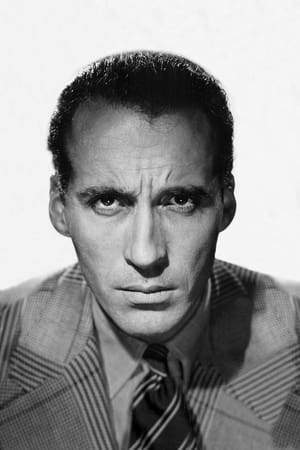
Jan Soldat’s nerd‑geek short film stitches together every on‑screen death of iconic actor Christopher Lee, from his roles in The Lord of the Rings and Star Wars to Gremlins 2 and Hammer’s The Mummy. The rapid‑fire montage strings one demise after another, while uncovering amusing trivia and connections that go beyond merely charting Lee’s career trajectory.


Does Faces of Death have end credit scenes?
No!
Faces of Death does not have end credit scenes. You can leave when the credits roll.
Where to Watch Faces of Death
See current US streaming, rental, and purchase options for Faces of Death (2023) via JustWatch.

AMC Plus Apple TV channel
HD
AMC+
HD
AMC+ Amazon Channel
HD
Shudder
HD
Fandango at Home Free
HD
Mometu
HD
Plex
HD
Plex Channel
HD
Tubi TV
SD
Xumo Play
HD
Apple TV Store
4K Fandango At Home
SD
Google Play Movies
SD
YouTube
SD Streaming availability powered by 
Meet the Full Cast and Actors of Faces of Death
Explore the complete cast of Faces of Death, including both lead and supporting actors. Learn who plays each character, discover their past roles and achievements, and find out what makes this ensemble cast stand out in the world of film and television.
External Links and Streaming Options
Discover where to watch Faces of Death online, including streaming platforms, rental options, and official sources. Compare reviews, ratings, and in-depth movie information across sites like TMDb, Wikipedia or Letterboxd.



Take the Ultimate Faces of Death Movie Quiz
Challenge your knowledge of Faces of Death with this fun and interactive movie quiz. Test yourself on key plot points, iconic characters, hidden details, and memorable moments to see how well you really know the film.
Faces of Death (2023) Quiz: Test your knowledge of the documentary-style film *Faces of Death* (2023), which explores various “faces of death” through narration, interviews, and archival footage.
Who serves as the film’s narrator and pathologist, discussing the transitional periods of life and death?
Full Plot Summary and Ending Explained for Faces of Death
Read the complete plot summary of Faces of Death, including all major events, twists, and the full ending explained in detail. Explore key characters, themes, hidden meanings, and everything you need to understand the story from beginning to end.
In a frame narrated by Christopher Lee (archive footage), pathologist Francis B. Gröss introduces his lifelong fascination with the transitional moments between life and death. His perspective comes from a surgeon’s past—one that has desensitized him to grisly scenes—yet his goal is to catalog and understand the many “faces of death” through a careful, almost clinical curation of footage.
The journey opens with stark images of animal deaths, which Gröss interprets as a violent reply from a creature that has endured human cruelty. He then moves to human violence, presenting recordings of assassinations and the blunt truth that some killers act from greed rather than ideology. An interview with assassin François Jordan reveals a disturbing view: he kills strictly for payment, and if a mission ever held real sentiment, he would refuse it with respect. The narrative then introduces a different killer—one who takes lives without any clear motive. A gunfight erupts as a SWAT team pursues an armed murderer; tear gas is used, and the house is stormed after the killer’s family has been fatally stabbed, leaving Gröss to wonder whether social forces shaped such violence.
Gröss then contrasts the actions of courtrooms with the cold precision of execution, watching Larry DeSilva die in the electric chair and asking whether “two wrongs make a right.” The journey continues in the Los Angeles County coroner’s office, where Dr. Thomas Noguchi embalms multiple corpses after autopsies. The images are stark: a bloated drowned woman and a decapitated man whose skin is peeled away for study. Gröss asks Noguchi about the meaning of embalming after death, receiving the stark reply that “life is purely a transitory state.”
One sequence navigates the controversial topic of cryopreservation. A man named Samuel Berkowitz is maintained in a cryogenic process, his bodily fluids replaced with a low-freezing-point liquid and stored for possible revival in the future. The film’s exploration of preservation shifts to a broader meditation on suicide, including footage of a woman leaping from a building. Gröss admits that this is “a face of death he wishes never to face again.”
The documentary then broadens to the scars of history: wartime atrocities and the Holocaust. Footage depicts German forces in a desperate last stand, followed by the destruction of Nazism and the symbols of tyranny obliterated in battle. Gröss muses on the mind of a leader who lost control, saying Hitler “lost control not only of his army but of his mind.”
Environmental and existential decay follow: scenes of animals harmed by litter and pollution, and images of sick children in impoverished regions. Nature is examined through a search party retrieving a body from a cave, a man found drowned on a beach, and a bear attack on irresponsible campers. The film also delves into disturbing subcultures, showing a venomous snake cult in Louisville that harms its handler and a cannibalistic cult that consumes a cadaver stolen from a morgue before engaging in an orgy.
A string of tragic accidents culminates in a parachute jump gone wrong. Gröss disputes the notion that the death comes quickly and painlessly, noting that the victim would have remained conscious for the fall. The sequence reaches a stark climax with PSA Flight 182, presenting photographs, air-traffic control audio, and the wreckage of homes, with the neighborhood described as smelling of “rotting bodies and jet fuel,” and a mutilated torso-and-hand corpse described as “the worst face of death.”
Turning toward the supernatural, Gröss examines whether forces beyond the physical realm influence death. He encounters architect Joseph Binder, whose wife and son died under sorrowful circumstances, and Binder conveys a belief that his family lingers as ghosts in his home. Guided by parapsychologists, the team records footprints and apparitions; a medium connects Binder with the impression of his deceased relatives, seemingly validating the possibility of life after death.
From these investigations, Gröss concludes a hopeful, if enigmatic, philosophy: “when we die, it isn’t the end,” and that the soul in each person remains a traveler forever. He ponders whether death marks “the end of the beginning or the beginning of the end,” leaving the audience to interpret the footage with their own reflections. The film closes on a quiet, peaceful note—soft music accompanies images of a newborn baby and the intimate happiness of a mother and child—closing the loop on a documentary that traverses fear, awe, and the mystery that clings to every life.

Coming soon on iOS and Android
The Plot Explained Mobile App
From blockbusters to hidden gems — dive into movie stories anytime, anywhere. Save your favorites, discover plots faster, and never miss a twist again.
Sign up to be the first to know when we launch. Your email stays private — always.
Explore the mobile appDiscover Film Music Concerts Near You – Live Orchestras Performing Iconic Movie Soundtracks
Immerse yourself in the magic of cinema with live orchestral performances of your favorite film scores. From sweeping Hollywood blockbusters and animated classics to epic fantasy soundtracks, our curated listings connect you to upcoming film music events worldwide.
Explore concert film screenings paired with full orchestra concerts, read detailed event information, and secure your tickets for unforgettable evenings celebrating legendary composers like John Williams, Hans Zimmer, and more.


Unlock the World of Movies with Our Comprehensive Wiki
Dive into our Movie Wiki for in-depth film encyclopedia entries, including cast biographies, production trivia, plot synopses, behind-the-scenes facts, and thematic analyses. Whether you’re researching iconic directors, exploring genre histories, or discovering hidden easter eggs, our expertly curated movie database has everything you need to fuel your cinematic passion.
Quick Links: Summary, Cast, Ratings, More

What's After the Movie?
Not sure whether to stay after the credits? Find out!
Check out our other apps:

SAT Sphere
Build confidence for the Digital SAT.

Mori Atlas
Discover wild places worth protecting.

Luntero
Search smarter for a home in Amsterdam.

Plot Explained
Unravel movie endings and hidden clues.

Pokechamp
Dive into Pokémon data and battle logic.

Driving Theory
Get ready for your European theory test.

Movie Dust
Plan your next cinema trip with ease.

Musemap
Find art and culture as you travel.

Selkobase
Compare credentials before committing.

Local Manual
Turn an unfamiliar country into practical next steps.

Lernavi
Compare school systems before your next move.

GymRoam
Find a workout stop wherever your plans take you.
Explore Our Movie Platform
New Movie Releases (2026)
Famous Movie Actors
Top Film Production Studios
Movie Plot Summaries & Endings
Major Movie Awards & Winners
Best Concert Films & Music Documentaries
Movie Collections and Curated Lists
© 2026 What's After the Movie. All rights reserved.
Privacy Policy