Edward II 1991


Set in 14th‑century England, the film follows King Edward II, whose obsessive love for the low‑born Piers Gaveston earns him titles and favor. Their bond fuels resentment at court, prompting the cold, jealous Queen Isabella to join forces with the ruthless Mortimer. Together they plot Gaveston’s downfall, Edward’s overthrow, and a ruthless grab for power.


Does Edward II have end credit scenes?
No!
Edward II does not have end credit scenes. You can leave when the credits roll.
Meet the Full Cast and Actors of Edward II
Explore the complete cast of Edward II, including both lead and supporting actors. Learn who plays each character, discover their past roles and achievements, and find out what makes this ensemble cast stand out in the world of film and television.

Tilda Swinton
Isabella

Jerome Flynn
Kent

Steven Waddington
Edward II
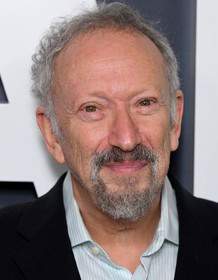
Allan Corduner
Poet
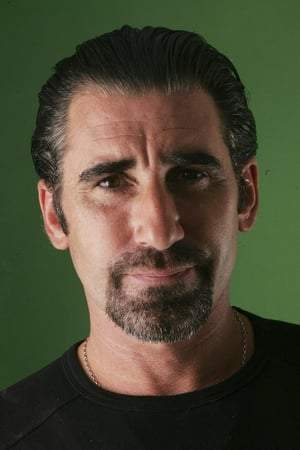
John Lynch
Spencer

Jody Graber
Prince Edward
Kevin Collins
Lightbourn, the Gaoler
Andrew Tiernan
Piers Gaveston
Nigel Terry
Roger Mortimer
Christopher Adamson
Thug
Dudley Sutton
Bishop of Winchester
Annie Lennox
Singer
Brian Mitchell
Chorus of Nobility
David Oliver
Thug
Chris McHallem
Thug
Andrea Miller
Chorus of Nobility
Roger Hammond
Bishop
Sandy Powell
Seamstress
Jill Balcon
Chorus of Nobility
Christopher Hobbs
Equery
John Quentin
Chorus of Nobility
Barbara New
Chorus of Nobility
Tony Forsyth
Captive Policeman
Andrew Charleson
Chorus of Nobility
Nigel Charnock
Dancer
Andy Jeffrey
Sailor
Barry John Clarke
Man with Snake
John Henry Duncan
Altar Boy
Thomas Duncan
Altar Boy
Giles de Montigny
Soldier on Guard
Michael Watkins
Soldier on Guard
Jonathan Stables
Soldier on Guard
Robb Dennis
Soldier on Guard
Danny Earl
Thug
Kim Dare
Wild Girl
Kristina Overton
Wild Girl
Trevor Skingle
Gym Instructor
Kate Temple
Seamstress
Andrew Lee Bolton
Masseur
Liz Ranken
Sexy Girl
Renee Eyre
Sexy Girl
Sharon Munro
Sexy Girl
Daniel Bevan
Youth
Ian Francis
Youth
Tristam Cones
Youth
Jocelyn Pook
Elektra Quartet; Viola
Abigail Brown
Elektra Quartet; Violin
Sonia Slaney
Elektra Quartet; Violin
Dinah Beamish
Elektra Quartet; Cello
External Links and Streaming Options
Discover where to watch Edward II online, including streaming platforms, rental options, and official sources. Compare reviews, ratings, and in-depth movie information across sites like IMDb, TMDb, Wikipedia or Rotten Tomatoes.






Take the Ultimate Edward II Movie Quiz
Challenge your knowledge of Edward II with this fun and interactive movie quiz. Test yourself on key plot points, iconic characters, hidden details, and memorable moments to see how well you really know the film.
Edward II (1991) Quiz: Test your knowledge of the 1991 film Edward II, its characters, plot points, and production details.
Who portrays King Edward II in the 1991 film?
Full Plot Summary and Ending Explained for Edward II
Read the complete plot summary of Edward II, including all major events, twists, and the full ending explained in detail. Explore key characters, themes, hidden meanings, and everything you need to understand the story from beginning to end.
Edward II Steven Waddington is crowned and immediately reopens the door to a high-risk romance, inviting his longtime friend and lover, Piers Gaveston Andrew Tiernan, back to England from exile. He showers Gaveston with gifts, titles, and unwavering affection, turning their relationship into a blazing center of attention that gleams with passion yet casts a long, sharp shadow over the kingdom. The court, the clergy, and the military all oscillate between fascination and scorn as the pair move through political corridors that tremble at the idea of a king who prioritizes desire over decorum. The dynamic is a stark collision of personal hunger and public duty, where every gesture Gaveston makes is a flashpoint for scandal, and every gesture Edward returns is a gamble with the throne.
From the moment Gaveston returns, the story tightens around the mounting opposition. Kent [Jerome Flynn], Edward’s brother and a vocal defender of the realm’s codes, is among the first to voice protests about Gaveston’s influence over the king. The Bishop of Winchester [Dudley Sutton], a figure of piety and authority, along with Lord Mortimer [Nigel Terry], who commands the kingdom’s military forces, echo the chorus of dissent that begins to threaten the couple’s safety. Yet Edward remains resolute, shielding Gaveston from the growing chorus of enemies who whisper about dethronement or exile. The court’s somber, businesslike mood—where officials in tailored suits replace ornate robes in a symbol-laden court—underscores the collision between a love story and a state that refuses to bend to private passions.
Isabella, Edward’s French wife, cast in the role of the queen who seeks to reclaim a broken marriage, launches a desperate campaign to win back her husband. Tilda Swinton embodies a woman who tries the full array of appeals, from pleas to displays of desire, but she meets a king transfixed by Gaveston’s spell. When she cannot pull him back, Isabella turns to Gaveston herself, drawn into the same intoxication that has ensnared the king. Their exchanges are charged with a wicked wit, and Gaveston’s whispered provocations puncture every layer of royal restraint. The tension between duty and desire becomes the engine of the drama, as Isabella’s attempts to mediate fail to break the bond that defines Edward’s reign.
As Gaveston’s popularity grows among some factions and his enemies sharpen their knives, the king’s court is rocked by interruptions and escalations that threaten to tear the realm apart. The lovers’ separation follows a moment of brutal political calculation: Gaveston is sent away, and the court tunes itself to a melancholy cadence, even as the memory of their closeness lingers like a haunting melody. The moment is punctuated by a serenade, with Annie Lennox lending her voice to Cole Porter’s “Ev’ry Time We Say Goodbye,” a musical choice that mirrors the bittersweet, almost operatic sorrow that threads through the narrative. The tone blends romantic intoxication with a chilling undercurrent of political calculation, a reminder that private passion can illuminate a king’s weaknesses just as surely as it can illuminate his realm’s vulnerabilities.
Despite the separation, the cycle of intrigue continues. The queen’s hope for reconciliation flickers briefly, only to be extinguished when Gaveston returns to the king’s side. The lovers refill the well of their forbidden closeness, yet the court—tired of scandal and hungry for control—prepares for a more decisive intervention. Isabella, now allied with Mortimer in a more cynical bid for power, schemes to shepherd the king’s lineage toward a future in which their own influence over England remains unchallenged. The young Edward III, Edward and Isabella’s neglected son who has witnessed the hostilities, becomes a chilling symbol of what is at stake: a kingdom where a prince’s image is shaped by the quarrels of his parents rather than by real authority.
Tensions erupt into outright brutality as Mortimer’s leadership turns sadistic. In scenes that fuse political plotting with personal cruelty, Gaveston and their ally Spencer [John Lynch] are subjected to torture. The narrative does not flinch from showing a brutal, orchestrated assault on power and affection alike as Outrage, a symbol of resistance to oppression, collides with state force. The torture sequences are contrasted with political maneuvering and the slow, inexorable march toward catastrophe, highlighting how quickly a realm that once celebrated love can descend into vengeance and cruelty.
The end arrives with a cascade of assassinations. Gaveston, Spencer, and others are killed in a purge that leaves Edward, the king who loved too deeply, imprisoned. The execution is rendered as a nightmare sequence in which he faces a grisly, almost ritual end: impalement on a red-hot poker. The moment is framed as a nightmare from which the imprisoned monarch awakens, a disturbing reminder of the fragility of power and the cost of passion. When the executioner finally appears, he discards the ancient weapon and instead kisses the man he was sent to kill, a final, unsettling note on the paradoxes of loyalty and desire that haunt the tale.
In the castle’s shadowed halls, Mortimer and Isabella savor a fleeting triumph. But the victory is hollow, because the crown’s future is scrawled in the margins of the palace’s personal dramas. The scene shifts to the young Edward III, who, isolated from his parents’ quarrels, reveals the cost of ruling through fear and manipulation. Wearing his mother’s earrings and lipstick, and listening to a classical refrain on a Walkman as he stands atop a cage that imprisons his mother and Mortimer, the scene crystallizes the tragedy: a prince who inherits a fractured throne and a heart that has learned too well the language of power, betrayal, and control.
The film unfolds as a sweeping, operatic tragedy that blends historical entanglement with intimate, dangerous love. It traces the arc from royal adoration to political ruin with a cool, unflinching lens, allowing the viewer to witness how personal loyalties collide with national ambitions. It is a story of how passion can both empower and condemn, how a king’s devotion to a beloved can become the very seed of his downfall, and how a child, growing up amid the wreckage of his parents’ rivalry, must navigate a realm shaped by a long memory of power, rebellion, and the cost of mercy.

Coming soon on iOS and Android
The Plot Explained Mobile App
From blockbusters to hidden gems — dive into movie stories anytime, anywhere. Save your favorites, discover plots faster, and never miss a twist again.
Sign up to be the first to know when we launch. Your email stays private — always.
Explore the mobile appWatch Trailers, Clips & Behind-the-Scenes for Edward II
Watch official trailers, exclusive clips, cast interviews, and behind-the-scenes footage from Edward II. Dive deeper into the making of the film, its standout moments, and key production insights.
Edward II Themes and Keywords
Discover the central themes, ideas, and keywords that define the movie’s story, tone, and message. Analyze the film’s deeper meanings, genre influences, and recurring concepts.
Edward II Other Names and Titles
Explore the various alternative titles, translations, and other names used for Edward II across different regions and languages. Understand how the film is marketed and recognized worldwide.
Similar Movies To Edward II You Should Know About
Browse a curated list of movies similar in genre, tone, characters, or story structure. Discover new titles like the one you're watching, perfect for fans of related plots, vibes, or cinematic styles.


Quick Links: Summary, Cast, Ratings, More

What's After the Movie?
Not sure whether to stay after the credits? Find out!
Check out our other apps:

SAT Sphere
Build confidence for the Digital SAT.

Mori Atlas
Discover wild places worth protecting.

Luntero
Search smarter for a home in Amsterdam.

Plot Explained
Unravel movie endings and hidden clues.

Pokechamp
Dive into Pokémon data and battle logic.

Driving Theory
Get ready for your European theory test.

Movie Dust
Plan your next cinema trip with ease.

Musemap
Find art and culture as you travel.

Selkobase
Compare credentials before committing.

Local Manual
Turn an unfamiliar country into practical next steps.

Lernavi
Compare school systems before your next move.

GymRoam
Find a workout stop wherever your plans take you.
Explore Our Movie Platform
New Movie Releases (2026)
Famous Movie Actors
Top Film Production Studios
Movie Plot Summaries & Endings
Major Movie Awards & Winners
Best Concert Films & Music Documentaries
Movie Collections and Curated Lists
© 2026 What's After the Movie. All rights reserved.
Privacy Policy